Artwork
Tynemouth Priory and Lighthouse
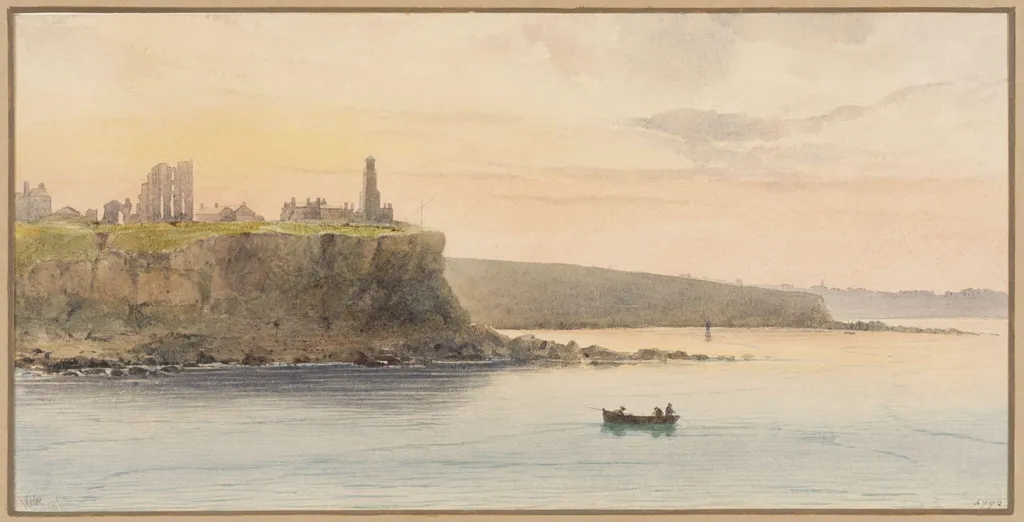
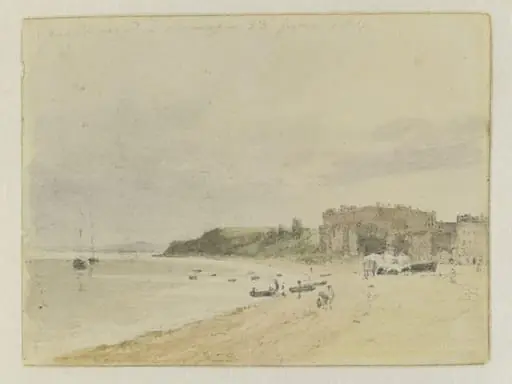
Tynemouth Priory and Lighthouse is a watercolor work on paper by the British Romanticist artist William Cosens Way. It dates from 1832 and is held in the collection of the Victoria and Albert Museum.
About this work
Overview
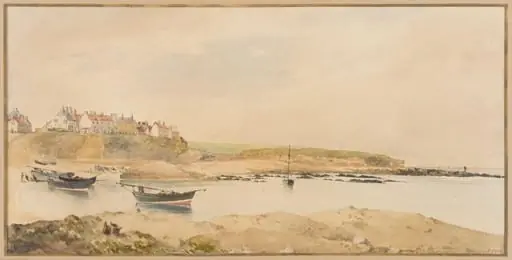
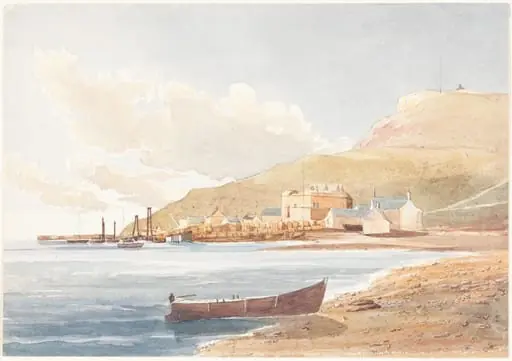
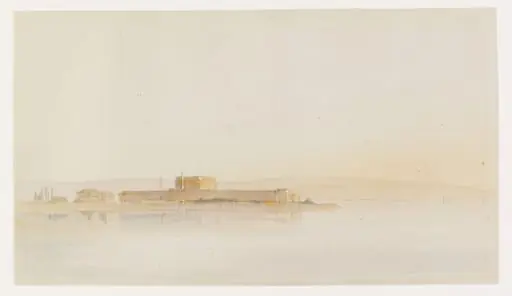
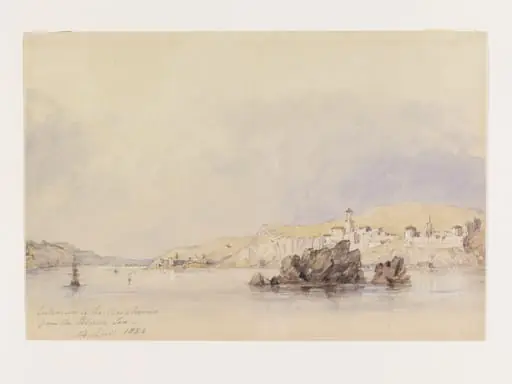
This watercolour captures the coastal landscape of Tynemouth, focusing on the ruins of a medieval priory and a lone lighthouse perched on rugged cliffs. The sea in the foreground reflects a muted sky, while a small vessel drifts near the shore. Distant outlines of the town soften the horizon, creating a quiet, contemplative atmosphere. The composition emphasizes stillness and the passage of time.
Subject & Meaning
The scene centers on the priory ruins and lighthouse—symbols of spiritual and navigational endurance. The empty boat suggests human presence as fleeting, contrasting with the enduring stone structures. The subdued sky and calm water reinforce a mood of solitude, inviting reflection on decay, memory, and the relationship between human endeavor and the natural world.
Technique & Style
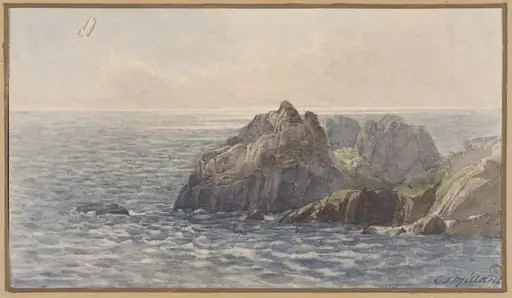
The artist employed delicate washes of pale watercolour to render the sky and sea, allowing the paper’s whiteness to suggest light. The cliffs are defined with sparse, textured strokes, contrasting with the smooth, even gradients of the water. Minimal detail in the distant town and boat enhances the sense of distance and quietude, aligning with a restrained, observational approach.
History & Provenance
The work originates from a period when British artists increasingly turned to coastal and monastic sites as subjects of quiet reverence. While specific ownership records are limited, its subject matter aligns with 19th-century topographical watercolours produced for private collectors interested in regional heritage and landscape.
Context
Created during a time when Romanticism influenced artistic responses to nature, the painting avoids dramatic emotion in favor of subtle atmosphere. It reflects a broader trend among British watercolourists who sought to convey the dignity of ruins and the serenity of the coast, often as meditations on time and impermanence rather than grand narratives.
Legacy
Though not widely exhibited, the work contributes to a body of modest, intimate watercolours that documented England’s coastal heritage with restraint. Its quiet tone and attention to light and texture influenced later topographical artists who valued understated observation over theatricality.
Artist & collection