Artwork
S 16 - Peisaj la Sulina (Mal cu bărci și case)
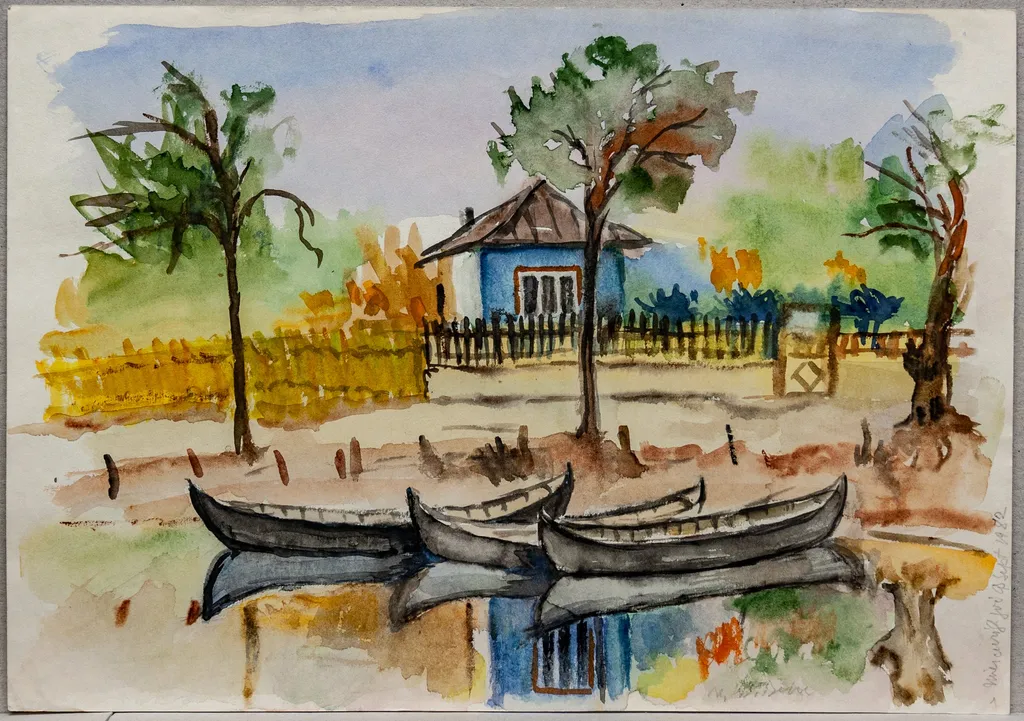
S 16 - Peisaj la Sulina (Mal cu bărci și case) is a print by Medi Wechsler Dinu. It dates from 1958 and is held in the collection of the Gavrila Simion Eco-Museum Research Institute Tulcea.
About this work
Overview
Created around 1958 by Romanian painter Medi Wechsler Dinu, this work captures a tranquil riverside view at Sulina, a port town on the Danube Delta.
Created around 1958 by Romanian painter Medi Wechsler Dinu, this work captures a tranquil riverside view at Sulina, a port town on the Danube Delta. The painting belongs to the Museum of Ethnography’s collection and reflects the artist’s interest in quiet, everyday landscapes. Its subdued palette and gentle composition convey a sense of stillness, avoiding dramatic emphasis in favor of observational realism.
Subject & Meaning
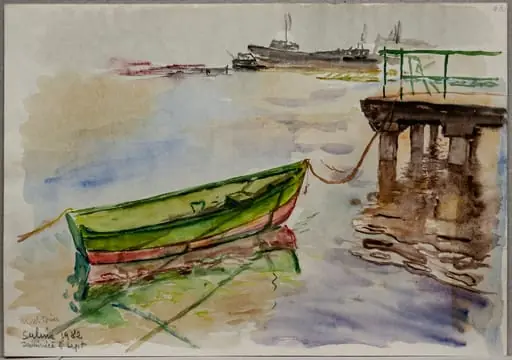
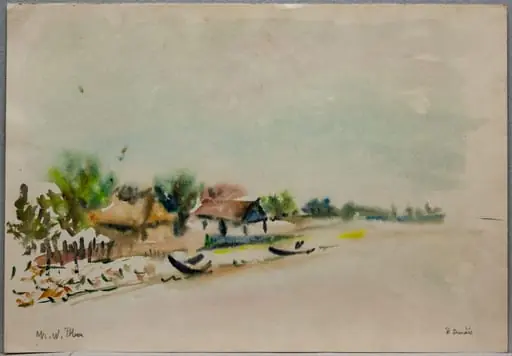
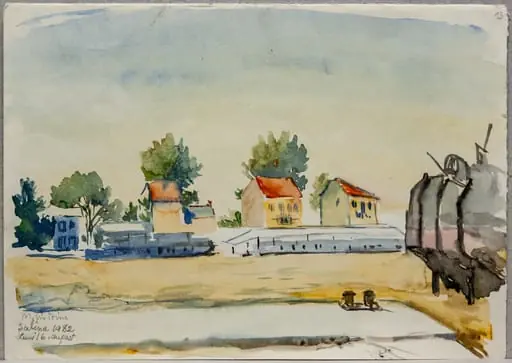
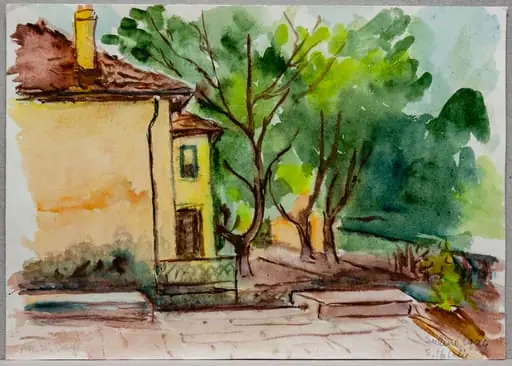
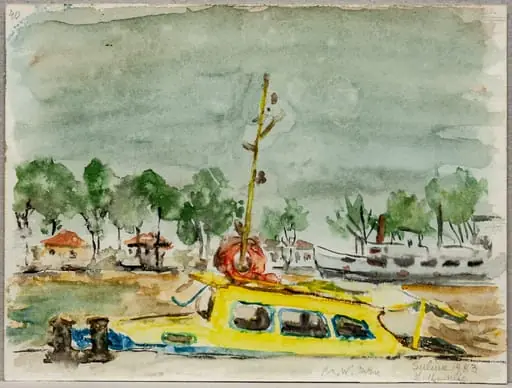
The scene depicts three moored boats along a muddy shore, accompanied by a small blue house with a pitched roof, a wooden fence, and scattered trees. No human figures are present, yet the arrangement suggests recent activity and domestic life. The absence of movement or narrative tension invites contemplation of routine existence, framing the landscape as a quiet record of place rather than a symbolic statement.
Technique & Style
Wechsler Dinu employed loose, fluid brushwork to render light and atmosphere, with soft transitions between hues of pale sky, green-brown foliage, and yellowed grass. Reflections of the boats in the water are blurred, suggesting ripples without sharp definition. The paint is thinly applied, creating a watercolor-like transparency that enhances the sense of air and moisture in the environment.
History & Provenance
The painting entered the Museum of Ethnography’s holdings after its creation in the late 1950s. Its acquisition aligns with the institution’s focus on documenting regional life and vernacular architecture. While little is documented about its exhibition history, its preservation within a cultural heritage collection underscores its value as a record of postwar Romanian landscape painting.
Context
Painted during Romania’s communist era, the work avoids political themes, instead focusing on a peripheral location often overlooked in official art. Sulina’s remote position on the Danube Delta and its modest infrastructure made it a site of quiet resilience. Wechsler Dinu’s choice to depict such a scene reflects a personal, non-ideological engagement with place, contrasting with state-promoted heroic realism.
Legacy
Though not widely exhibited outside institutional collections, the painting contributes to a quieter strand of Romanian modernism that valued observation over spectacle. Wechsler Dinu’s approach—calm, unadorned, and attentive to light and texture—offers a counterpoint to more overtly expressive or propagandistic art of the period, preserving a nuanced vision of everyday Romanian life.
Artist & collection
Artist
Margareta "Medi" Dinu, née Wechsler (January 4, 1909 – July 18, 2016) was a Romanian classical painter of Jewish origin.
Museum
Gavrila Simion Eco-Museum Research Institute Tulcea
Continue through works from the same source collection.
 S 38 - Peisaj la Sulina (Stradă cu case și pomi)
 S6 - Peisaj la Sulina (Malul Dunării și case)
 S 28 - Peisaj la Sulina (Intrare de casă cu flori)
 S 9 - Peisaj la Sulina
 S 12 - Peisaj la Sulina (Stradă și 2 case)
 S4 - Peisaj la Sulina (Ochi de apă cu bărci și case)
 S 19 - Peisaj la Sulina (Casă și copaci)
 S 27 - Peisaj la Sulina (Dunăre, vapor în prim plan, case în planul doi)