Artwork
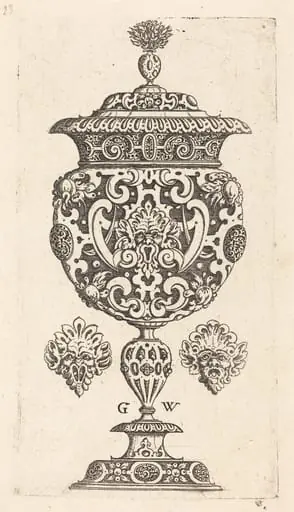
Goblet, rim decorated with masque and bouquet of fruit
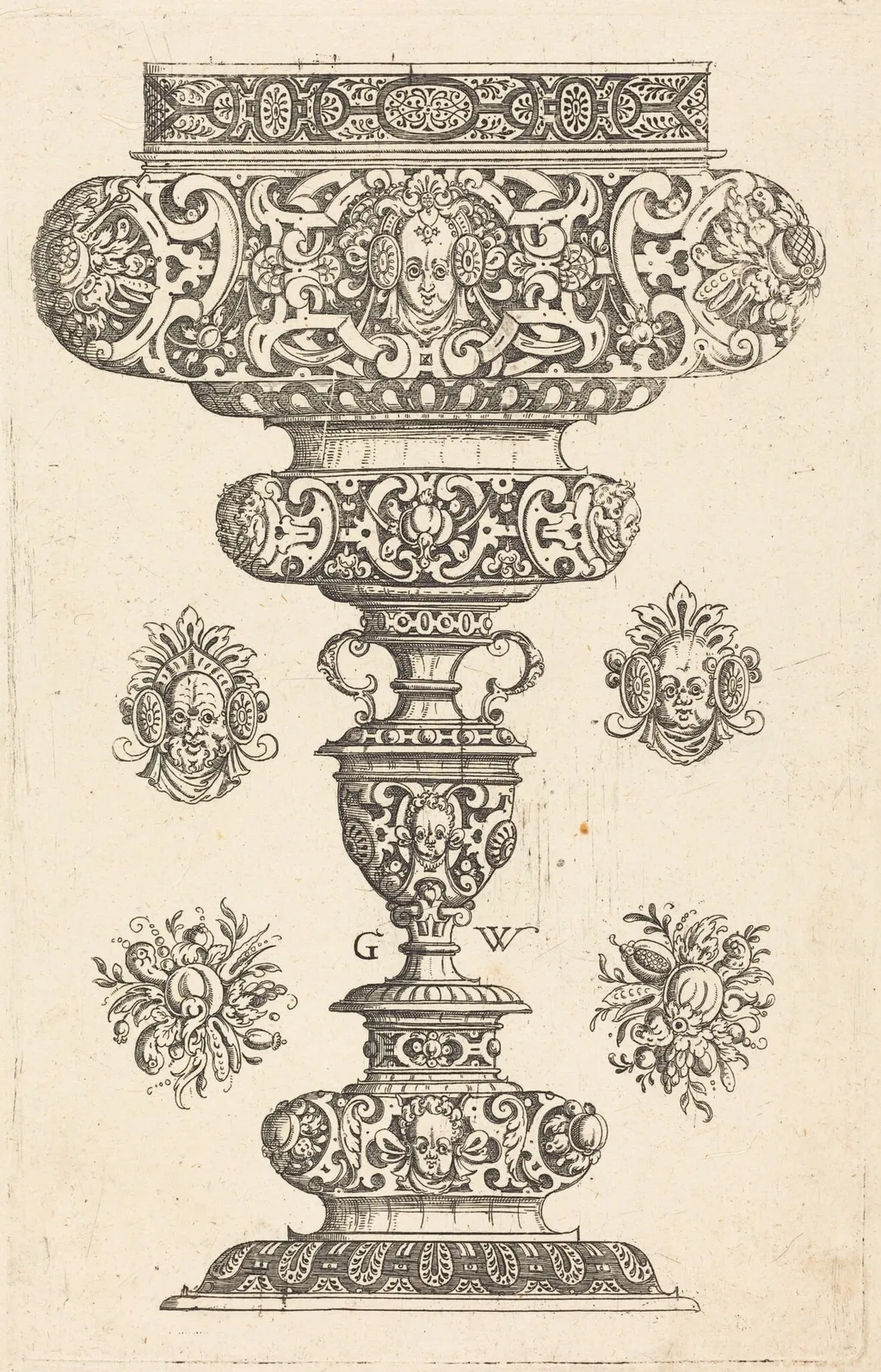
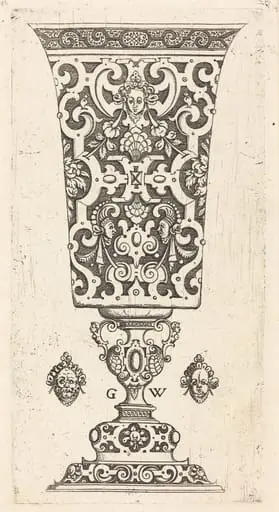
Goblet, rim decorated with masque and bouquet of fruit is an ink print by the Renaissance artist Georg Wechter I. It dates from 1579 and is held in the collection of the National Gallery of Art. This engraving, dated 1579, depicts a ceremonial goblet designed with intricate surface ornamentation.
About this work
Overview
Created by Georg Wechter I, the work captures the rim of a vessel adorned with two masked figures flanking a central fruit bouquet.
This engraving, dated 1579, depicts a ceremonial goblet designed with intricate surface ornamentation. Created by Georg Wechter I, the work captures the rim of a vessel adorned with two masked figures flanking a central fruit bouquet. Surrounding the central motif are delicate floral and fruit motifs, rendered in fine linear detail. The piece functions as a decorative study rather than a functional design, reflecting the era’s fascination with ornamental craft.
Subject & Meaning
The masked faces and fruit bouquet suggest themes of celebration, transformation, or theatrical ritual, common in Renaissance decorative arts. Masks may allude to the duality of human expression or seasonal festivals, while the fruit symbolizes abundance and the fleeting nature of earthly pleasures. The arrangement avoids overt religious or mythological references, instead favoring secular symbolism tied to courtly or civic festivity.
Technique & Style
Wechter employed fine-line engraving with cross-hatching to model volume and texture across the goblet’s surface. The precision of the lines creates subtle gradations of light and shadow, enhancing the illusion of carved relief. This method, standard among 16th-century German goldsmiths and printmakers, allowed for intricate repetition of patterns and delicate rendering of organic forms like leaves and fruit.
History & Provenance
The engraving originates from the workshop of Georg Wechter I, a Nuremberg-based goldsmith active in the late 16th century. Likely produced as a pattern sheet for metalworkers, it circulated among artisans as a reference for decorative motifs. No known physical goblet corresponds to this design, suggesting the work served primarily as a design prototype within a craft network rather than a finished object.
Context
In late 1500s Germany, engraved pattern books were essential tools for artisans, disseminating ornamental ideas across regions. Wechter’s work aligns with a broader trend of combining classical motifs—like masks—with naturalistic elements such as fruit and flowers, reflecting humanist interests in antiquity and the natural world. Such designs often adorned tableware, armor, or architectural details for elite patrons.
Legacy
Wechter’s engravings contributed to the standardization of decorative vocabulary in Northern European metalwork. Though not widely known today, his pattern sheets influenced regional craftsmanship for decades, particularly in Nuremberg and Augsburg. The survival of such prints offers insight into the collaborative, transmission-based nature of Renaissance design, where individual artists often worked within established visual traditions.
Artist & collection


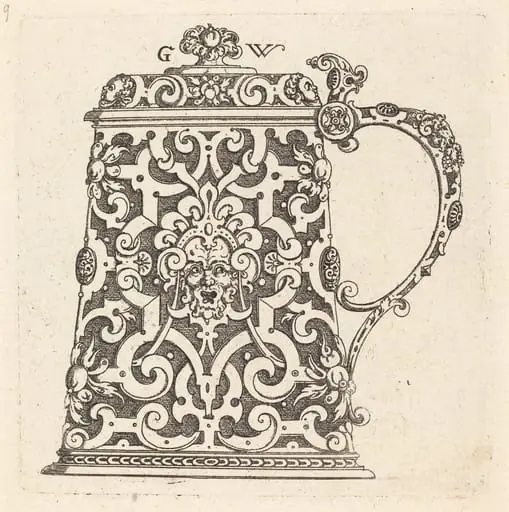
 Goblet, rim decorated with masque with gaping mouth
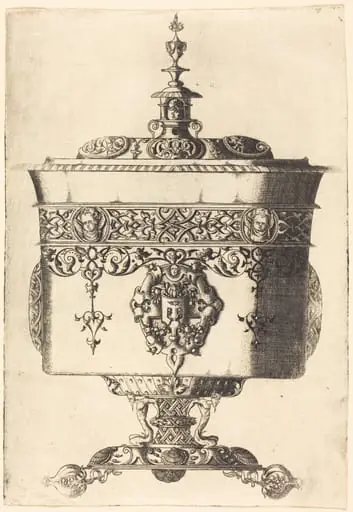 Richly Embellished Goblet
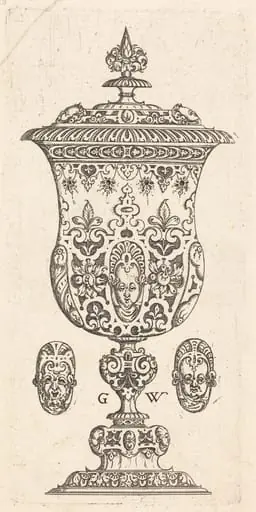 Goblet with two Masques on lid
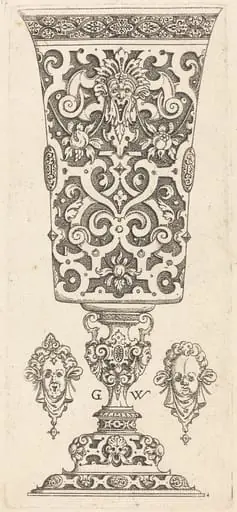 Goblet with base decorated with two large scallops
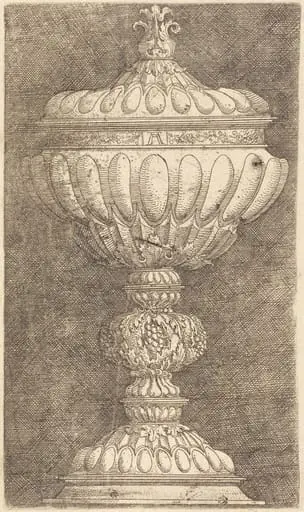 Covered Goblet with Grapes on the Stem
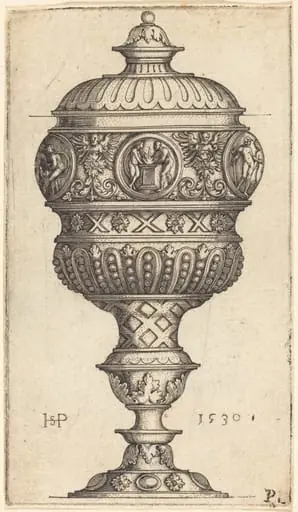 Goblet with Medallions
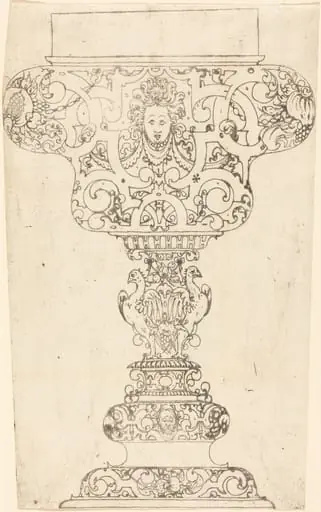 Ornament - Large Goblet
 Goblet with Lillies of the Valley
 Covered Goblet with Winged Ball
 Ornate Goblet