Artwork
Study for "War and Peace"
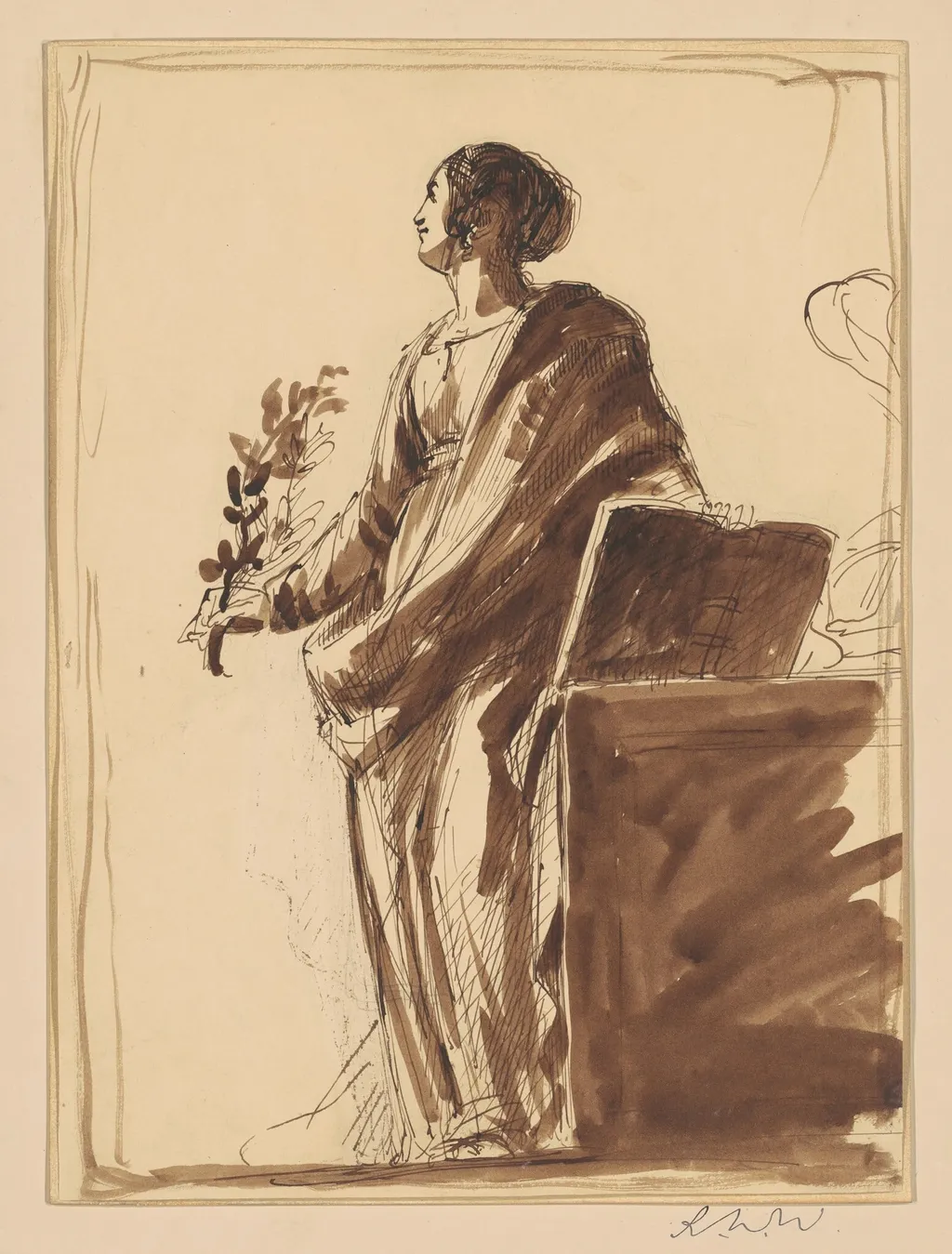
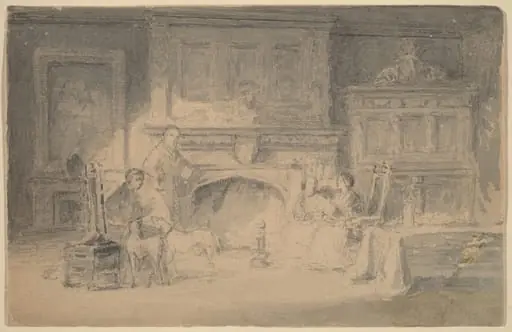
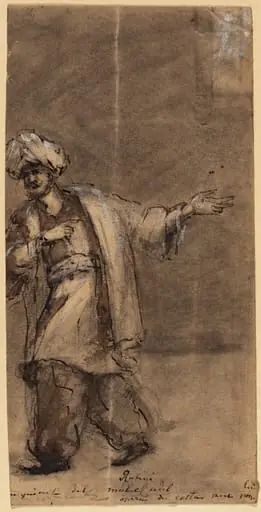
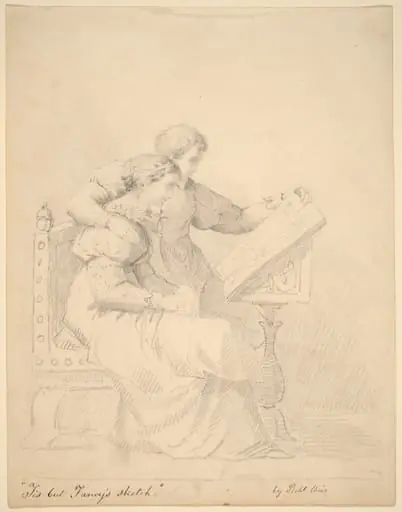
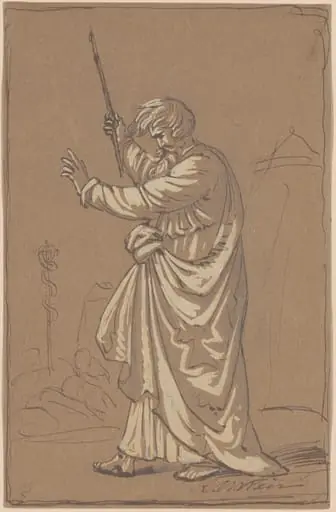
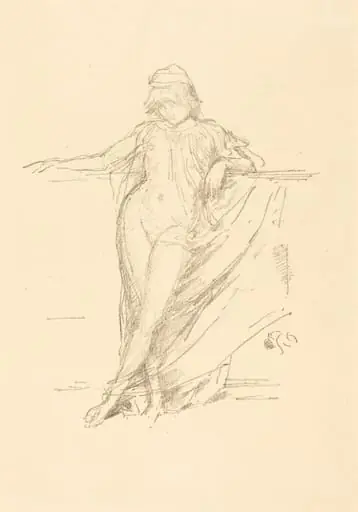
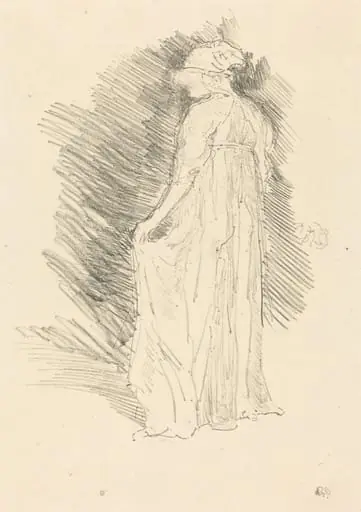
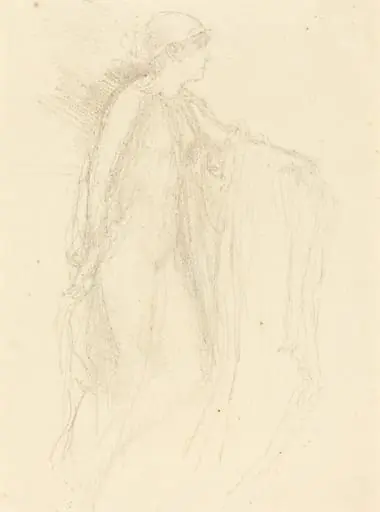
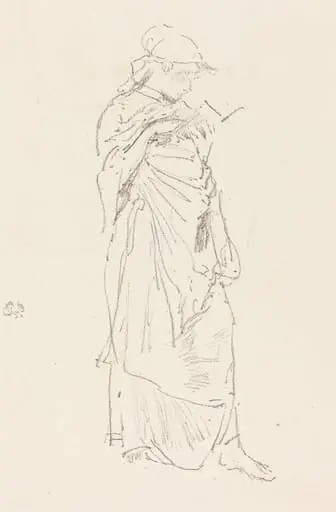
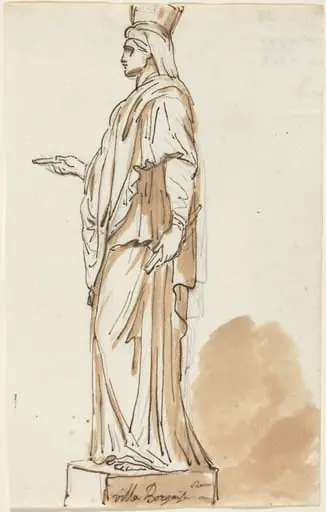
Study for "War and Peace" is an ink drawing by the Romanticist artist Robert Walter Weir. It dates from 1836 and is held in the collection of the National Gallery of Art.
About this work
Overview
Robert Walter Weir’s preparatory drawing, dated around 1836, serves as a study for his larger historical composition titled “War and Peace.” Executed with pen and brown ink wash on wove paper that has been mounted to paperboard, the work exemplifies the artist’s early-stage planning process for a complex narrative scene.
Subject & Meaning
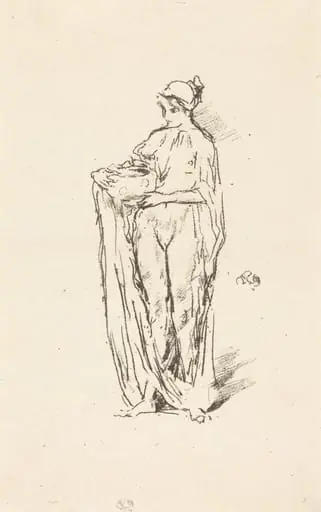
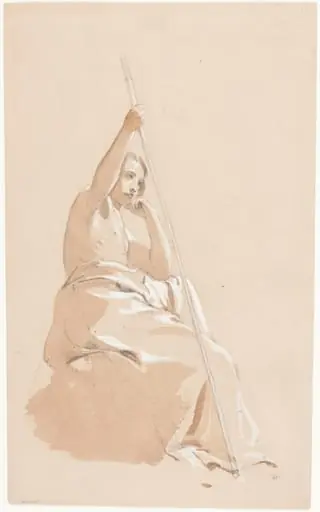
The sketch depicts a solitary female figure positioned in profile, her posture relaxed as she leans against a slender pedestal. She holds a modest branch adorned with leaves in one hand, an element that may allude to themes of renewal or peace within the broader composition. Her hair is neatly gathered, and the drapery of her dress falls in loose, natural folds.
Technique & Style
Weir employs rapid, gestural lines characteristic of a working study, using brown ink to outline the figure and its surroundings. Areas of darker wash suggest layered ink to indicate shadow, while cross‑hatching provides texture and depth. The minimal detailing of the branch indicates an exploratory approach, focusing on overall form rather than fine ornamentation.
History & Provenance
Created circa 1836, the drawing was likely produced in Weir’s studio as part of the preparatory phase for the final “War and Peace” canvas. The paperboard mounting suggests it was intended for preservation or presentation to patrons or collaborators during the painting’s development.
Context
During the 1830s, American artists such as Weir frequently tackled grand historical subjects, reflecting contemporary interest in nation‑building narratives. This study illustrates the methodical process of constructing a multi‑figure scene, where individual poses and symbolic objects were refined before being integrated into the larger work.
Legacy
Although a modest sketch, the drawing offers insight into Weir’s compositional planning and his handling of ink as a medium for quick visual experimentation. It remains a valuable document for scholars examining the evolution of historical painting practices in early nineteenth‑century American art.
Artist & collection

Artist
Robert Walter Weir (June 18, 1803 – May 1, 1889) was an American artist and educator and is considered a painter of the Hudson River School.