Artwork
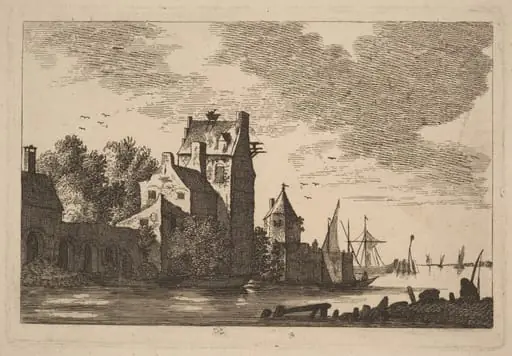
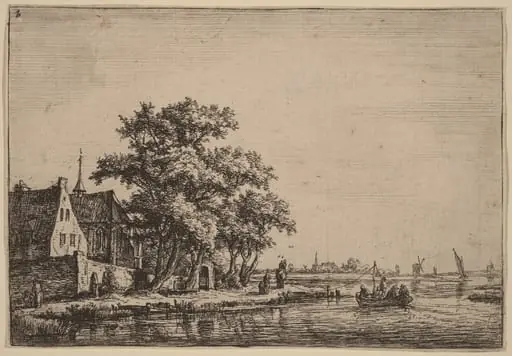
Church in an Inlet with Rowboat in the Foreground
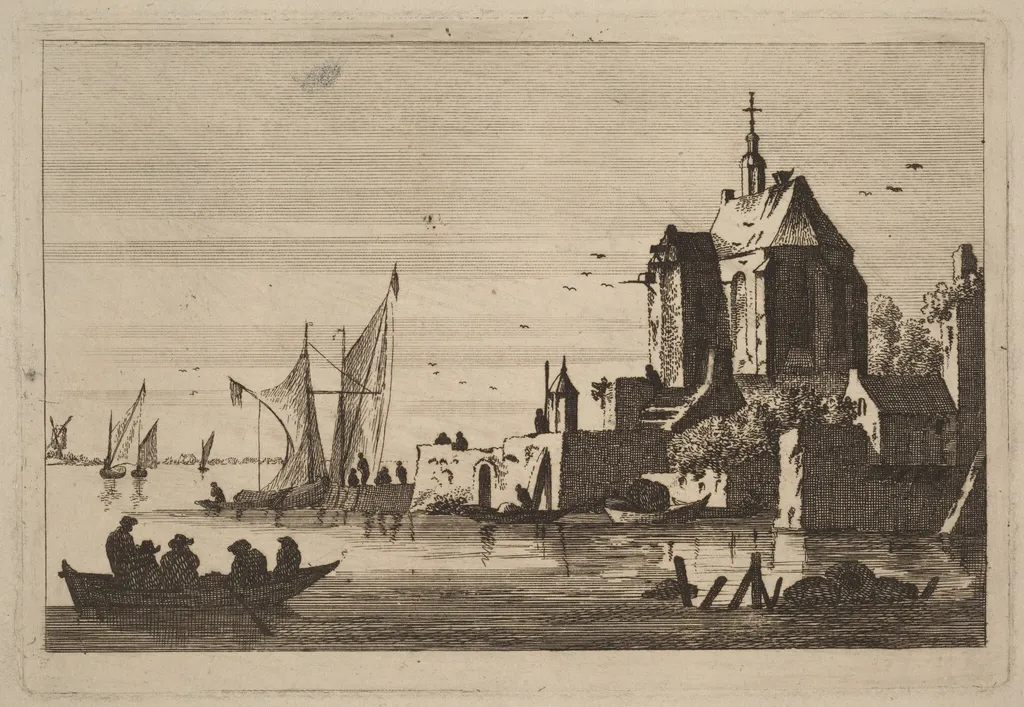
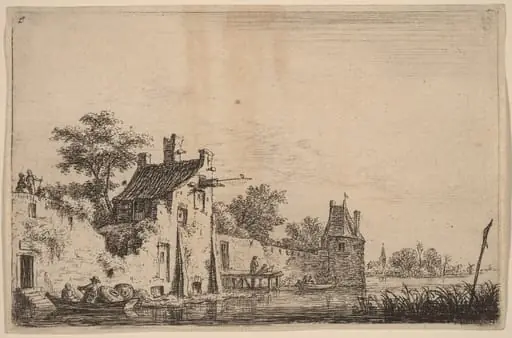
Church in an Inlet with Rowboat in the Foreground is an ink print by the Baroque artist Franz Edmund Weirotter. It dates from 1750 and is held in the collection of the National Gallery of Art.
About this work
Overview
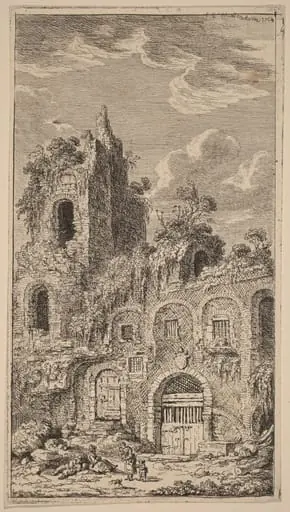
An etching by Franz Edmund Weirotter from around 1750, this print depicts a quiet coastal scene centered on a church situated near a still inlet.
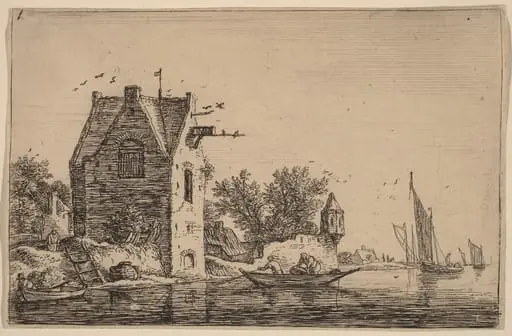
An etching by Franz Edmund Weirotter from around 1750, this print depicts a quiet coastal scene centered on a church situated near a still inlet. A small rowboat rests at the water’s edge, with figures gathered nearby. The composition balances architectural detail with natural elements, using fine linear marks to suggest texture and spatial depth characteristic of 18th-century printmaking traditions.
Subject & Meaning
The scene presents a modest ecclesiastical structure nestled within a rural landscape, suggesting a harmonious relationship between faith and nature. The presence of people near the boat implies daily life unfolding without drama—fishing, travel, or quiet contemplation. The absence of grandeur or narrative tension emphasizes stillness, reflecting a contemplative, perhaps devotional, mood rather than a ceremonial one.
Technique & Style
Weirotter employed fine, controlled etching lines to render the church’s steeple, foliage, and water’s surface with precision. Light and shadow are suggested through varying line density rather than tonal washes, creating subtle gradations. The foreground boat and figures are rendered with minimal detail, drawing focus to the church and its surroundings. This restrained approach aligns with the precision favored in Austrian printmaking of the period.
History & Provenance
Created in the mid-18th century, the etching likely circulated as part of a series of topographical or landscape prints popular among educated collectors. While specific early ownership records are unverified, similar works by Weirotter appear in European collections, particularly in Austria and southern Germany, where his depictions of regional architecture were valued for their accuracy and calm aesthetic.
Context
Produced during the late Baroque era, the work diverges from the dramatic intensity typical of the movement, instead favoring quiet observation. It reflects a growing interest in localized, everyday landscapes among Central European artists, influenced by Dutch and German print traditions. This shift signaled a move toward intimate, secularized views of the natural and built environment, even when religious structures remained central.
Legacy
Weirotter’s etching contributes to a body of work that documented regional architecture with quiet fidelity, influencing later topographical artists. Though not widely known today, his prints remain valued in specialized collections for their technical discipline and understated atmosphere. The piece exemplifies how printmaking served as a medium for preserving local scenery beyond grand historical or religious themes.
Artist & collection