Artwork
Roerort
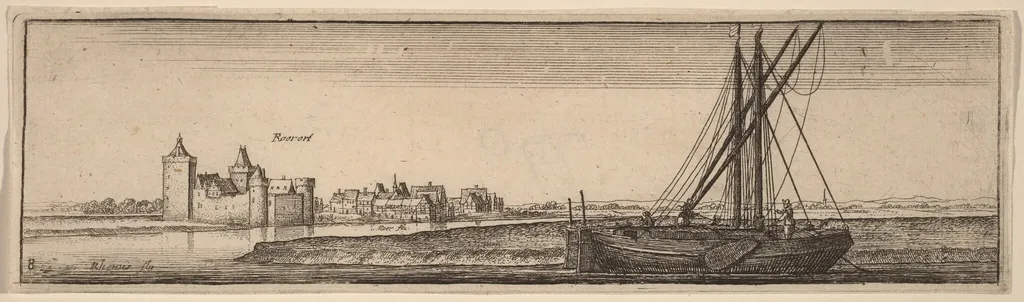
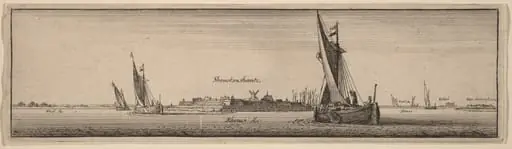
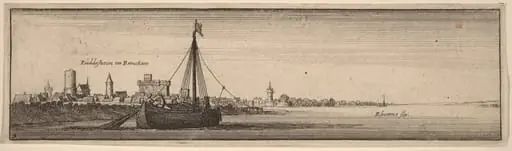
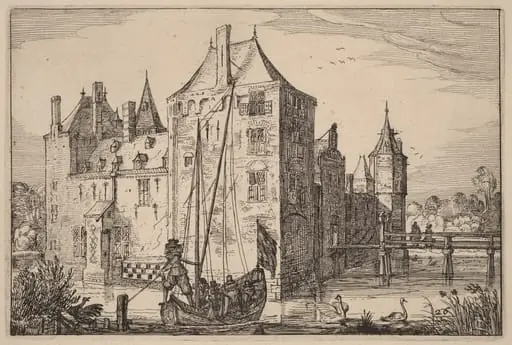
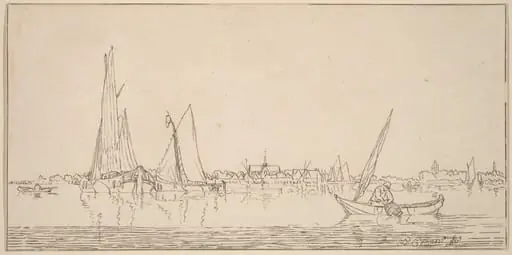
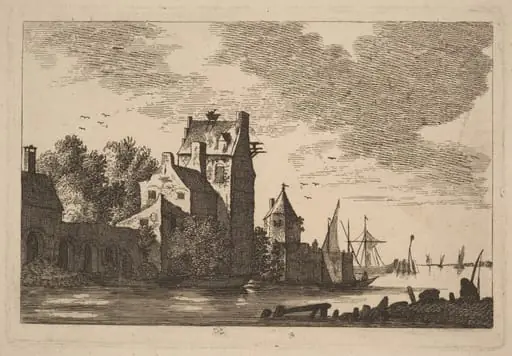
Roerort is an ink print by the Baroque artist Wenceslaus Hollar. It dates from 1632 and is held in the collection of the National Gallery of Art.
About this work
Overview
Created around 1632 by Wenceslaus Hollar, *Roerort* is an etching on laid paper depicting a riverside European settlement.
Created around 1632 by Wenceslaus Hollar, *Roerort* is an etching on laid paper depicting a riverside European settlement. Hollar, a Czech artist active in England, specialized in precise topographical views. The work exemplifies his skill in capturing architectural and nautical detail through the etching technique, which involves incising lines into a metal plate for ink transfer. The image is rendered in monochrome, emphasizing texture and spatial depth without color.
Subject & Meaning
The scene portrays a modest riverside community with a fortified structure on the left, likely a manor or castle, flanked by clustered dwellings with steeply pitched roofs. A large, fully rigged vessel anchors in the foreground, its rigging meticulously rendered. The composition suggests a functional port, possibly engaged in regional trade. The absence of human figures directs focus to the built and natural environment, reinforcing the work’s documentary intent.
Technique & Style
Hollar employed fine, controlled etching lines to render every element with precision—from the individual ropes of the ship’s rigging to the texture of brickwork and water’s surface. The use of laid paper, with its subtle chain lines, complements the delicate line work. His style prioritizes accuracy over dramatic effect, aligning with the topographical tradition of recording places as they appeared, making the image both artistic and observational.
History & Provenance
Hollar produced *Roerort* during his early career, likely while traveling in northern Europe before settling permanently in London. The etching reflects his practice of documenting landscapes and towns during his journeys. Though its early ownership is undocumented, the work entered broader circulation through Hollar’s prolific print output, which was widely collected by patrons interested in cartographic and architectural records of the period.
Context
In the early 17th century, detailed topographical prints were in demand among scholars, merchants, and nobility seeking visual records of distant places. Hollar’s work emerged within this context, bridging art and geography. His training in Prague and subsequent move to England placed him at the intersection of Central European draftsmanship and English intellectual circles, where such images served both aesthetic and utilitarian purposes.
Legacy
Hollar’s etchings, including *Roerort*, contributed to the development of topographical printmaking as a distinct genre. His meticulous approach influenced later generations of engravers and surveyors. Though not widely known to the public today, his works remain important references for historians studying urban and maritime landscapes of early modern Europe, valued for their fidelity and technical discipline.
Artist & collection
Artist
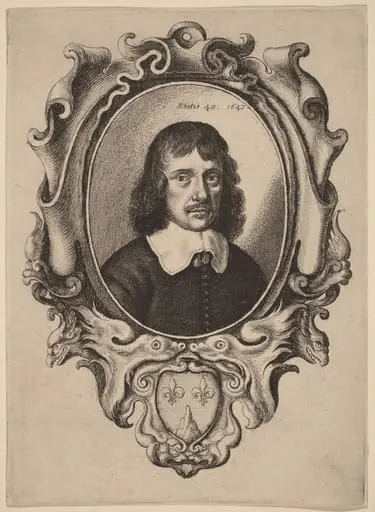
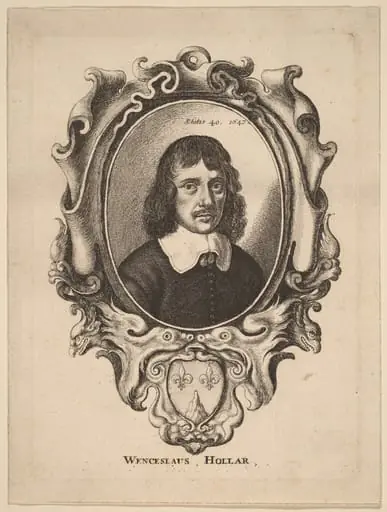
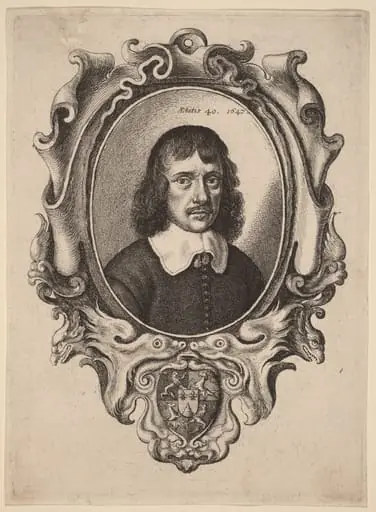
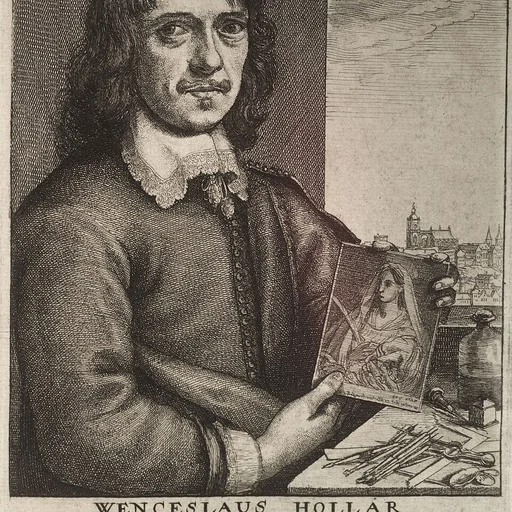
Wenceslaus Hollar (Czech: Václav Hollar (Czech pronunciation: ), German: Wenzel Hollar; 23 July 1607 – 25 March 1677) was a Czech engraver, etcher and painter.