Artwork
The Sentry Box on the Wall
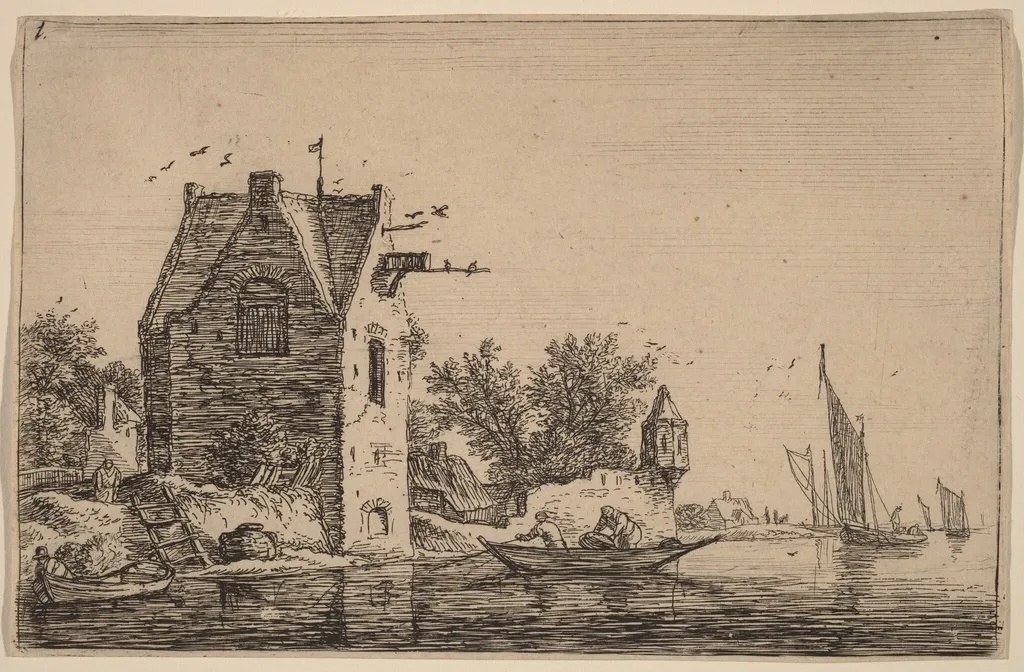
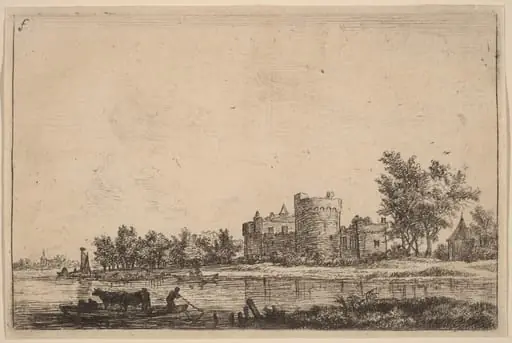
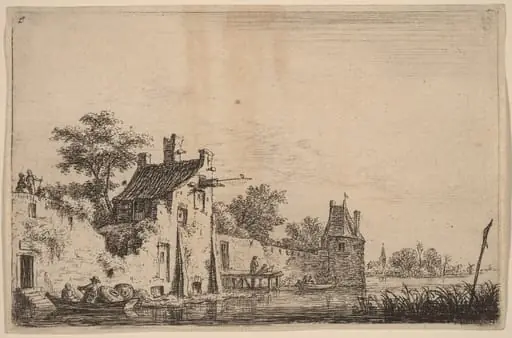
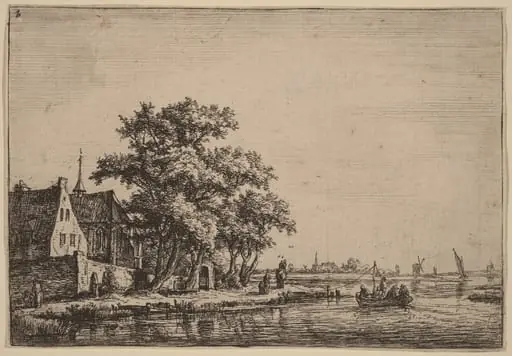
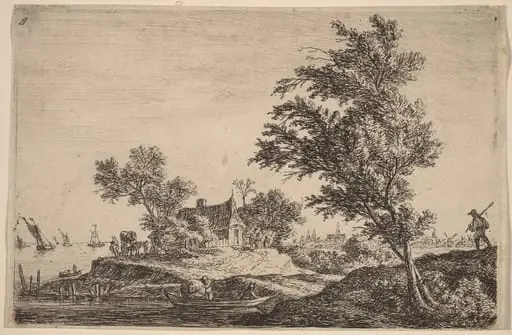
The Sentry Box on the Wall is an ink print by the Baroque artist Antonie Waterloo. It dates from 1650 and is held in the collection of the National Gallery of Art. Anthonie Waterloo created this etching around 1650, capturing a tranquil Dutch waterway scene.
About this work
Overview
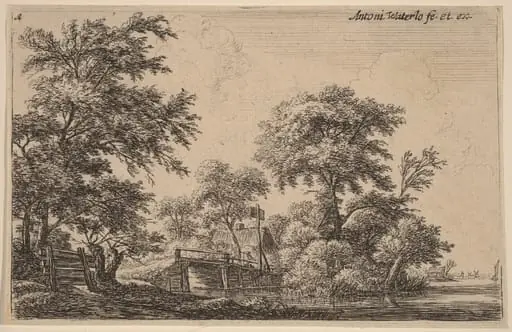
The composition centers on a modest wooden sentry box perched along the shore, its steep roof contrasting with the calm water and distant skyline.
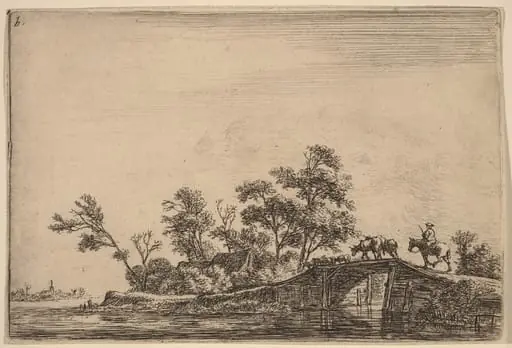
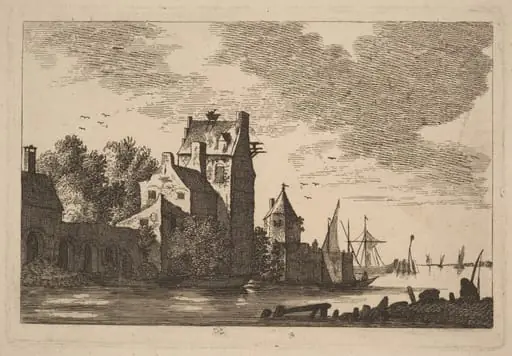
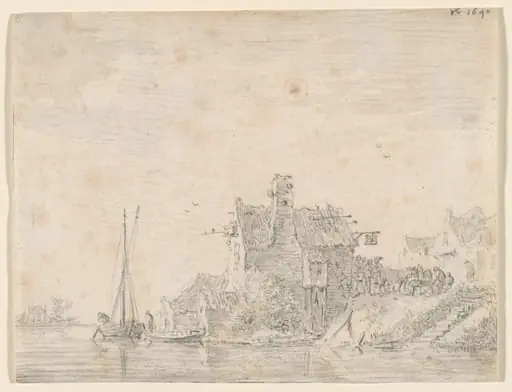
Anthonie Waterloo created this etching around 1650, capturing a tranquil Dutch waterway scene. The composition centers on a modest wooden sentry box perched along the shore, its steep roof contrasting with the calm water and distant skyline. Two rowboats and a sailboat drift gently, while a bridge with a small tower appears in the background, suggesting a quiet, functional landscape rather than a grand vista.
Subject & Meaning
The sentry box, a utilitarian structure with no ornamentation, implies surveillance or control over water traffic, possibly for customs or defense. Its placement amid serene natural elements—trees, still water, distant buildings—hints at the quiet integration of authority into everyday rural life. The scene avoids drama, instead emphasizing routine observation and the rhythm of waterborne activity.
Technique & Style
Waterloo employed fine, controlled etching lines to render textures: the roughness of tree bark, the subtle ripples of water, and the delicate outlines of distant structures. The tonal range is restrained, relying on line density rather than heavy shading to suggest depth and atmosphere. This precise, intimate handling reflects the Northern European tradition of detailed landscape observation.
History & Provenance
The print is one of several known works by Waterloo, a Dutch artist active in the mid-17th century who spent time in Germany and Italy. While the specific provenance of this impression is undocumented, its subject and technique align with his known focus on quiet, atmospheric water scenes and architectural details observed during his travels.
Context
In the 1650s, Dutch printmakers frequently depicted modest landscapes and waterways, reflecting a cultural interest in domestic environments and civic order. The presence of a sentry box speaks to the era’s emphasis on local governance and maritime regulation, even in rural settings. Such images were often circulated as affordable, collectible views of everyday life.
Legacy
Waterloo’s etchings, including this one, contributed to a broader tradition of Dutch printmaking that valued quiet observation over grandeur. Though not widely known today, his works influenced later artists interested in subtle tonal effects and the poetic potential of ordinary scenes. This print endures as a quiet record of 17th-century Dutch waterways and their oversight.
Artist & collection