Artwork
Saying Farewell at Xunyang (Song of the Pipa)

Saying Farewell at Xunyang (Song of the Pipa) is an unspecified painting by the Renaissance artist Wen Boren. It dates from 1504 and is held in the collection of the Cleveland Museum of Art.
About this work
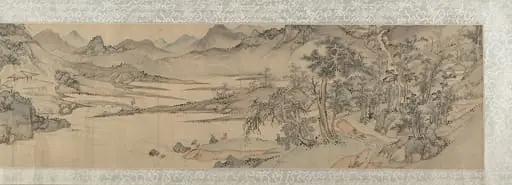
You see a long scroll of misty riverbanks, willow trees, and tiny figures saying goodbye under a pale sky.
You see a long scroll of misty riverbanks, willow trees, and tiny figures saying goodbye under a pale sky.
The painting illustrates a famous poem about a musician who played for a poet one night. Both had lost their place in the world—one through age, the other through politics. The soft colors and empty spaces make the sadness feel quiet, not loud.
To see more paintings like this, look up china, ming dynasty (1368–1644).
Overview
The hand‑scroll presents a mist‑shrouded river scene in which slender willows line the banks and diminutive figures stand beneath a pallid sky. The composition stretches horizontally, inviting the viewer to follow the quiet flow of water as it recedes into distance, while the overall atmosphere is one of subdued melancholy.
Subject & Meaning
The image visualizes the narrative of Bai Juyi’s poem “The Song of the Pipa,” which recounts a night when the poet met a former court musician forced to wander after her fame faded. Both the poet, recently demoted, and the pipa player share a sense of displacement, and the painting’s somber tone reflects their mutual loss of purpose and lingering sorrow.
Technique & Style
Executed in delicate brushwork characteristic of the Ming period, the scroll employs a limited palette of muted blues, grays, and soft greens. The rendering of mist and distant landscape relies on washes that dissolve outlines, creating an impression of atmospheric depth and quiet stillness that enhances the emotional restraint of the scene.
History & Provenance
The work originates from the Ming dynasty (1368–1644) and belongs to a tradition of literary painting that pairs visual art with classical poetry. Though the exact patron is unknown, the scroll has been preserved in Chinese collections and is cited in catalogues of Ming-era handscrolls that illustrate the era’s interest in integrating poetic narrative with visual expression.
Artist & collection



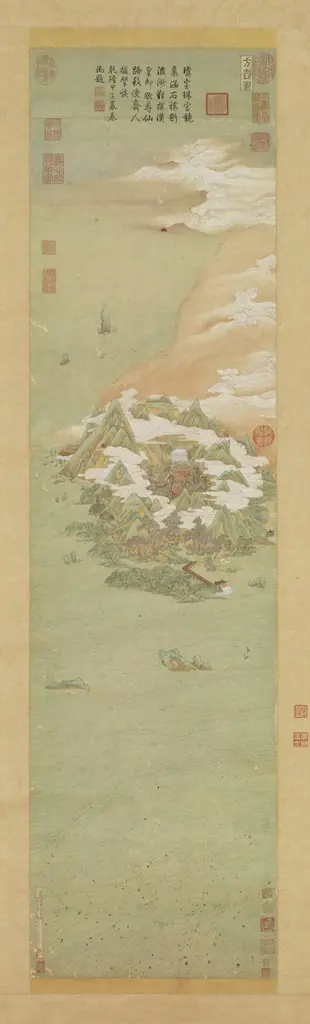
 Bamboo, Rocks and Lonely Orchids
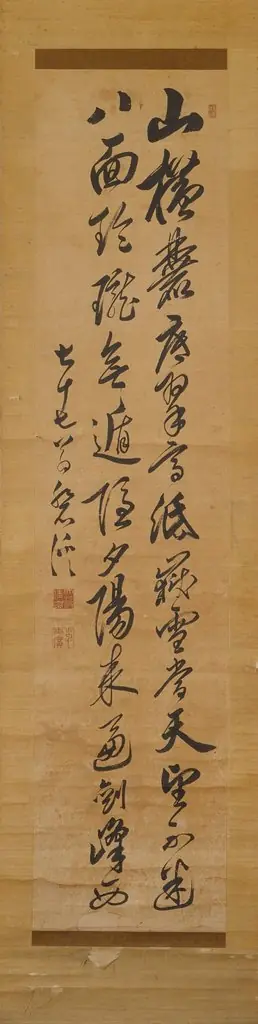 Chinese Poem: Seven-character-quatrain
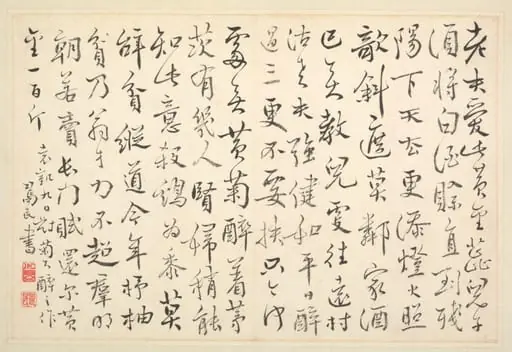 Album of Calligraphy and Paintings
 "In Exchange for Tea" with Wen Zhengming’s Calligraphy of The Heart Sutra
 Traveling to Ugeumam, Buan
 Bamboo, Rocks and Lonely Orchids
 Landscape with Bamboo
 Small Self-Portrait Planting a Tree
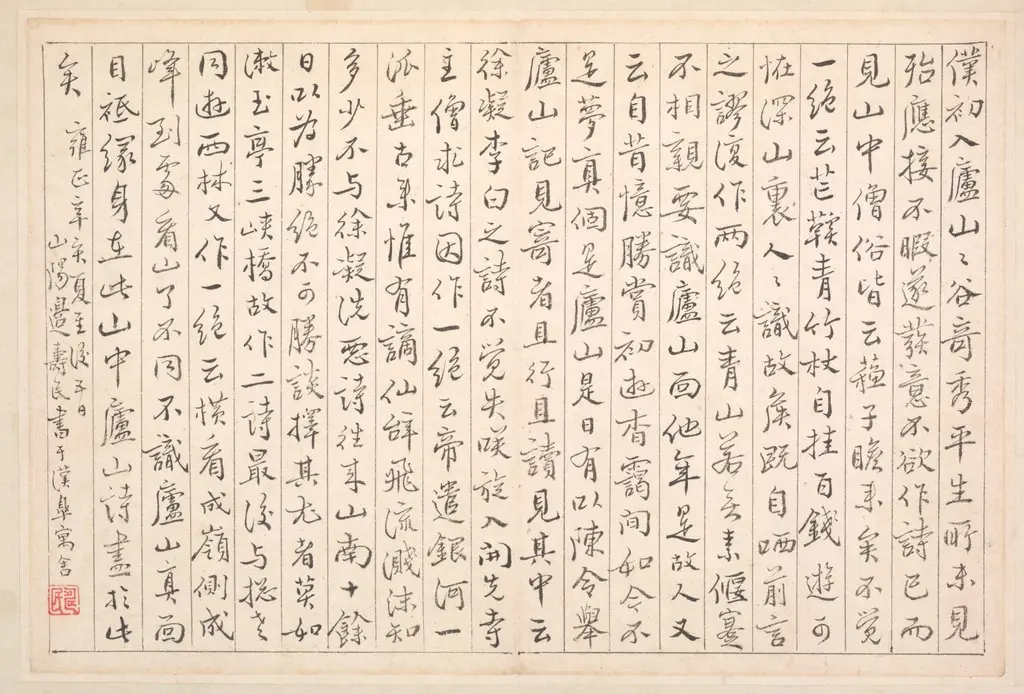 Album of Calligraphy and Paintings
 北宋–清 睢陽五老圖引首題跋 冊|Frontispiece and Colophons to the Album "Five Old Men of Suiyang"