Artwork
Views of London: New Palace Yard with Westminster Hall, and the Clock House
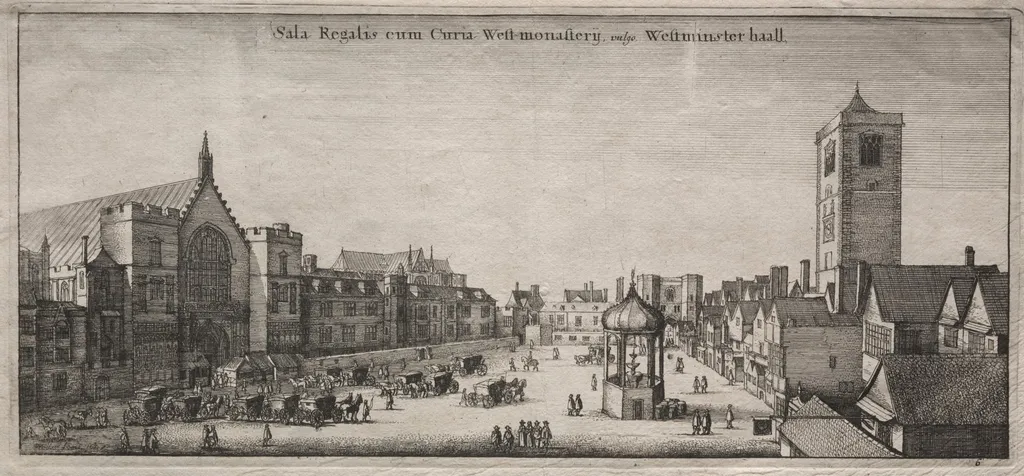
Views of London: New Palace Yard with Westminster Hall, and the Clock House is a print by the Baroque artist Wenceslaus Hollar. It dates from 1647 and is held in the collection of the Cleveland Museum of Art.
About this work
Overview
Created in 1647 by Wenceslaus Hollar, this etching captures a view of New Palace Yard in London, centered on Westminster Hall and its adjacent clock tower.
Created in 1647 by Wenceslaus Hollar, this etching captures a view of New Palace Yard in London, centered on Westminster Hall and its adjacent clock tower. As part of a broader series documenting the city’s architecture, the print reflects Hollar’s commitment to precise topographical representation. His work, executed in fine linear detail, offers a snapshot of London’s urban fabric during a period of political and social transition.
Subject & Meaning
The scene portrays Westminster Hall, a medieval royal courthouse, flanked by the Clock House and surrounding structures. Figures in period dress—pedestrians, horse-drawn carriages—animate the courtyard, suggesting daily civic activity. The inclusion of these elements underscores the building’s role as a center of legal and royal authority, while the bustling atmosphere conveys the vitality of London’s public spaces during the mid-seventeenth century.
Technique & Style
Hollar employed etching to render intricate textures: cobblestones, slate roofs, fabric folds, and architectural ornamentation. His use of fine, controlled lines creates depth and clarity without color, relying on tonal variation and density. The composition follows veduta traditions, prioritizing spatial accuracy over dramatic effect, aligning with the scientific and observational ethos of the era’s topographical art.
History & Provenance
Hollar, born in Prague in 1607, settled in England in the 1630s and became a prolific chronicler of its urban landscapes. He produced this print during the Interregnum, shortly after the execution of Charles I, when London’s public spaces retained their ceremonial significance despite political upheaval. The work was likely circulated among collectors and scholars interested in documenting the city’s evolving topography.
Context
The print emerged during a time when London was expanding and redefining its civic identity. Westminster Hall, one of the few surviving medieval structures, stood as a symbol of continuity amid the Civil War’s disruptions. Hollar’s detailed renderings served both documentary and aesthetic purposes, reflecting broader European interests in mapping and preserving urban environments with scientific rigor.
Legacy
Hollar’s etchings, including this view, remain valuable historical records of London’s pre-fire architecture. His method influenced later topographical artists and provided reference for historians studying urban development. Though not widely exhibited in his lifetime, his body of work has since become essential for understanding the visual culture and built environment of 17th-century England.
Artist & collection
Artist
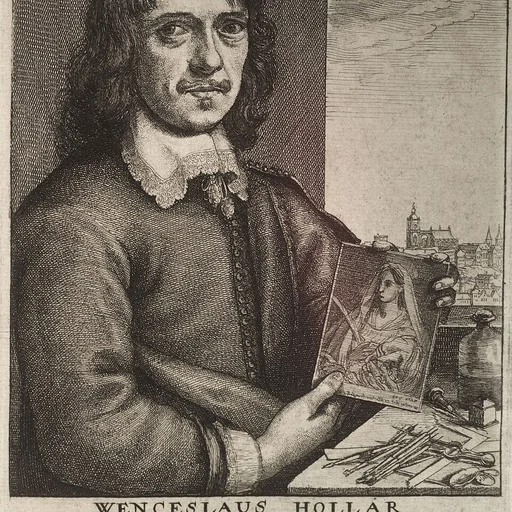
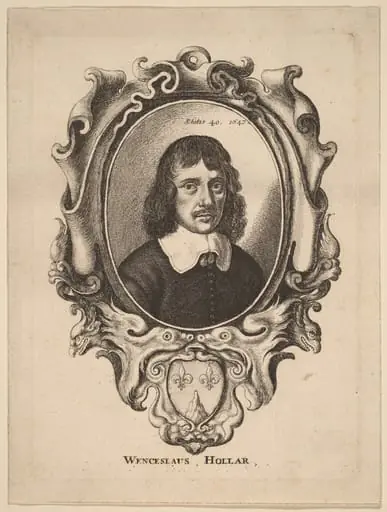
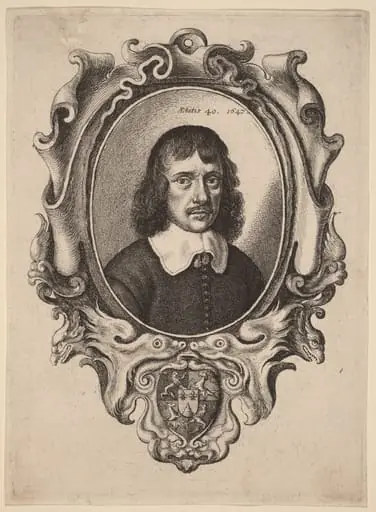
Wenceslaus Hollar (Czech: Václav Hollar (Czech pronunciation: ), German: Wenzel Hollar; 23 July 1607 – 25 March 1677) was a Czech engraver, etcher and painter.


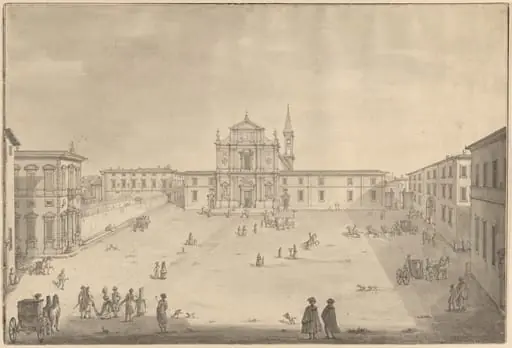 A View of the Piazza San Marco in Florence
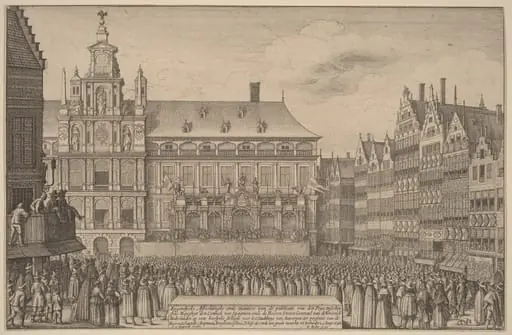 The Peace of Munster
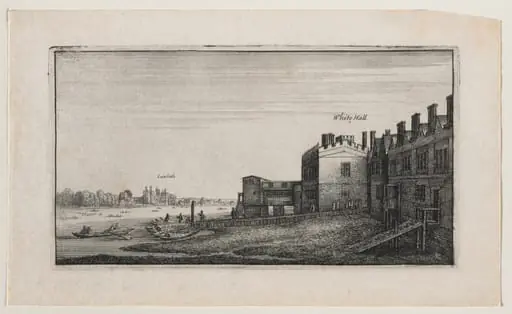 Whitehall from the River, with Lambeth in the Distance
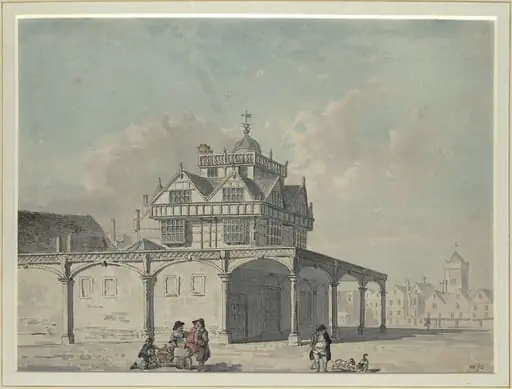 The Old Council House, Salisbury
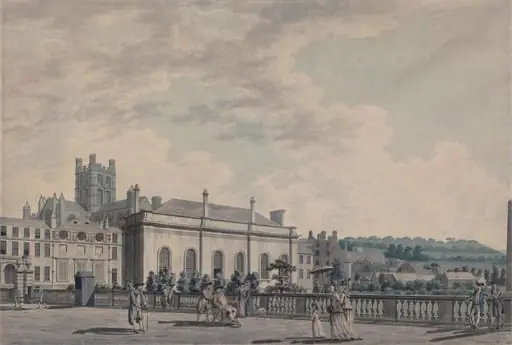 North Parade, Bath
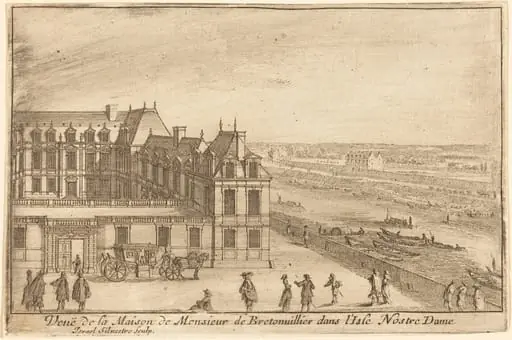 Veue de la Maison de Monsieur de Bretonuillerdans l'Isle Nostre Dame
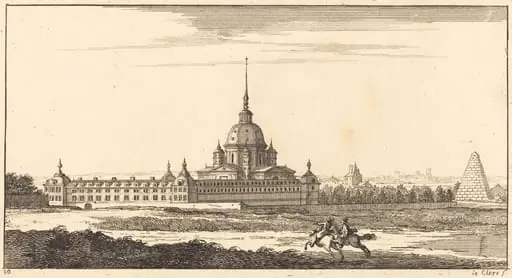 Landscape with Monastery
![Foro Romano from "Prospectus Locurum Urbis Romae Insign[ium]", by Lievin Cruyl](https://artifactworldgallery.com/img/lievin-cruyl--foro-romano-from-prospectus-locurum-urbis-romae-insign-ium--30ee5e2aeedd53b6-w320.webp) Foro Romano from "Prospectus Locurum Urbis Romae Insign[ium]"
Foro Romano from "Prospectus Locurum Urbis Romae Insign[ium]" H Beard Print Collection
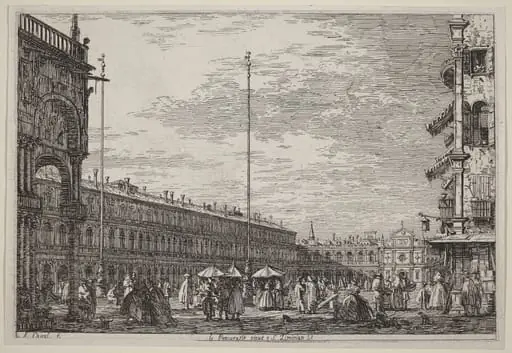 Le Procuratie niove e S. Ziminian V.