Artwork
Interior of the Dome of the Rock, Jerusalem
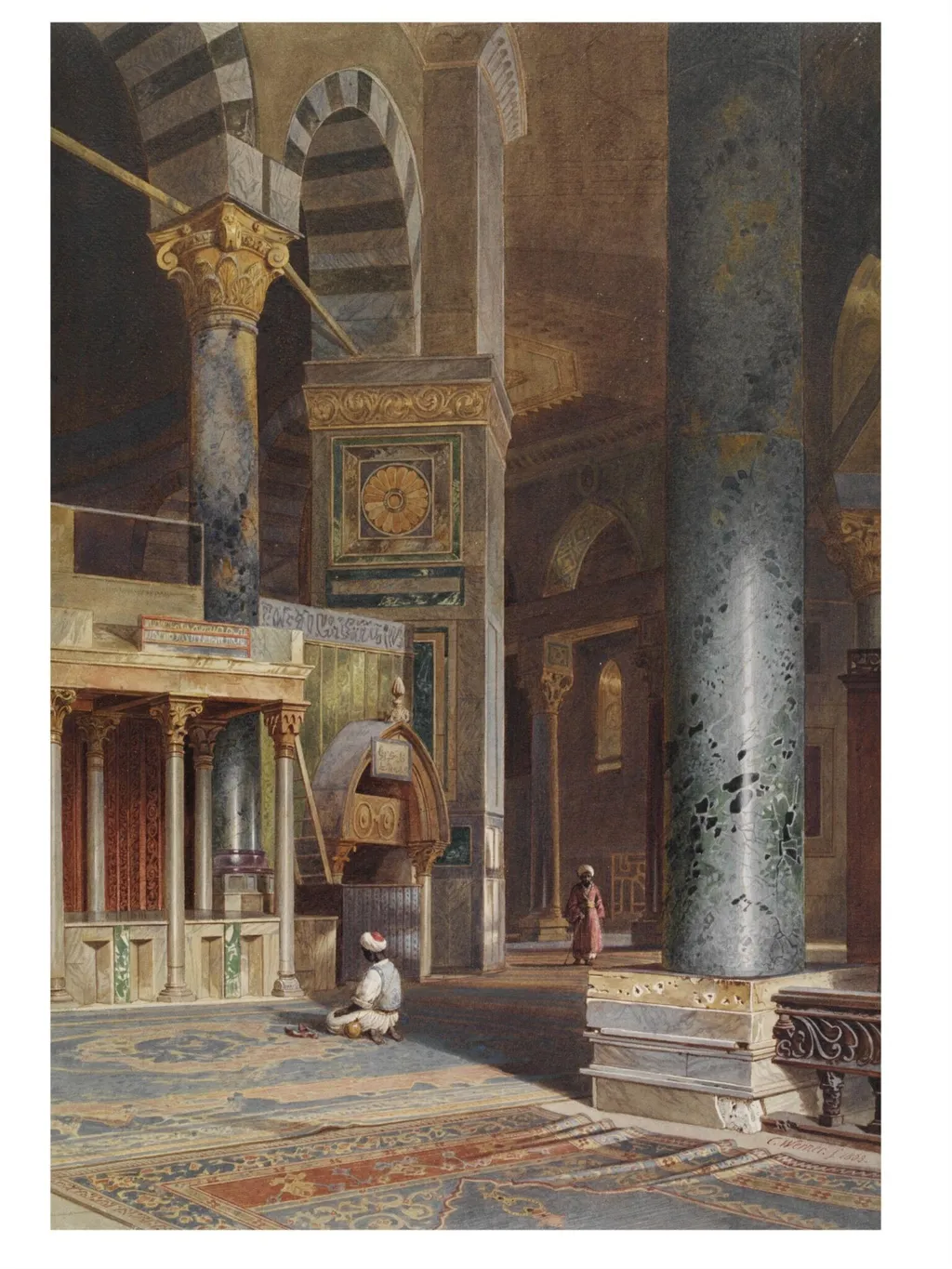
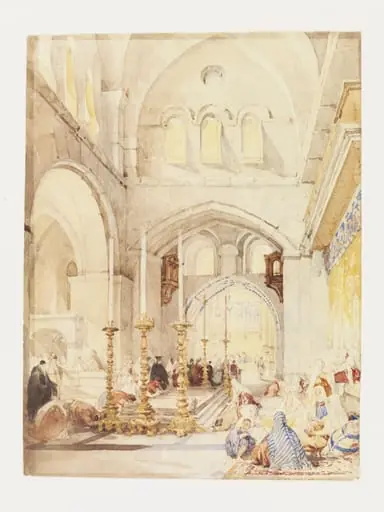
Interior of the Dome of the Rock, Jerusalem is a watercolor work on paper by the German Romanticist artist Carl Friedrich Heinrich Werner. It dates from 1863 and is held in the collection of the Victoria and Albert Museum.
About this work
Morning light pours through arched windows, painting the marble in soft blues and golds.
You see an 1863 watercolor inside the Dome of the Rock. Morning light pours through arched windows, painting the marble in soft blues and golds. A lone figure kneels on the patterned floor, tiny against the vast octagonal space.
This was painted during a travel boom. More Europeans saw the Middle East firsthand and brought back sketchbooks. Watercolors like this fed a hunger for “exotic” holy sites back home.
Look at Werner’s other work at the Victoria and Albert Museum.
Overview
This 1863 watercolour depicts the interior of the Dome of the Rock in Jerusalem, showcasing the shrine's intricate architecture and ornate details.
Subject & Meaning
The Dome of the Rock is a sacred site in both Islamic and Jewish traditions, associated with Muhammad's ascension to Heaven and Abraham's sacrifice of Isaac, respectively.
Technique & Style
The watercolour demonstrates the artist's architectural training, evident in its accurate rendering of the shrine's marble surfaces, inlaid stonework, and octagonal layout.
History & Provenance
Carl Werner, a German-born artist who spent nearly twenty years in Rome, visited Palestine and Egypt between 1862 and 1864, and later published this image as a colour lithograph in his 1865 book 'Jerusalem, Bethlehem and the Holy places'.
Context
The painting reflects the growing European interest in the Middle East during the 19th century, as travel became more accessible and illustrated books on the region proliferated.
Artist & collection


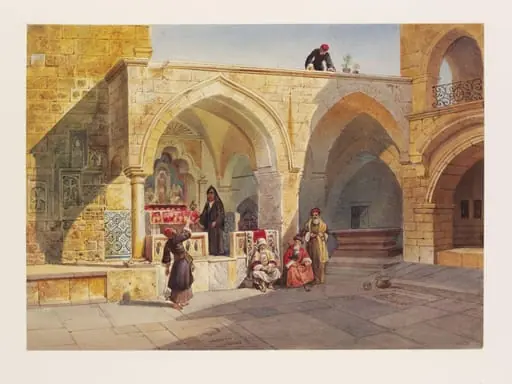 Court of the House of Caiaphus
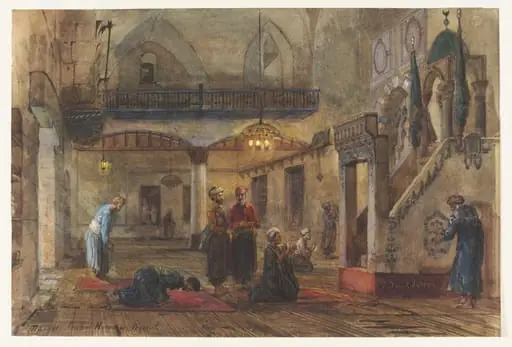 Mosque. Souk el Hommos. Byrout
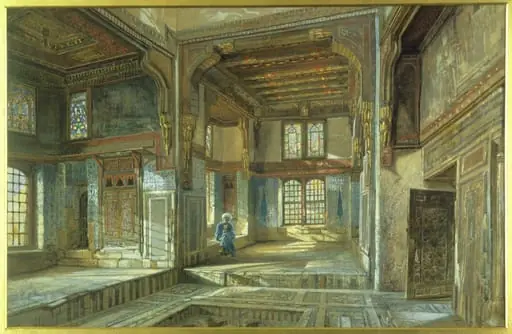 Interior of the House of the Mufti Sheikh El Mahadi, Cairo
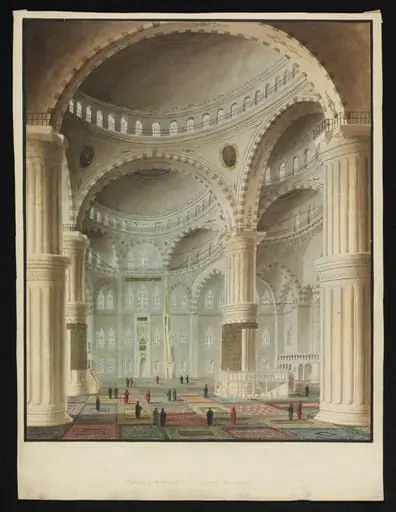 Interior of Sultan Achmet's Mosque. Stamboul'
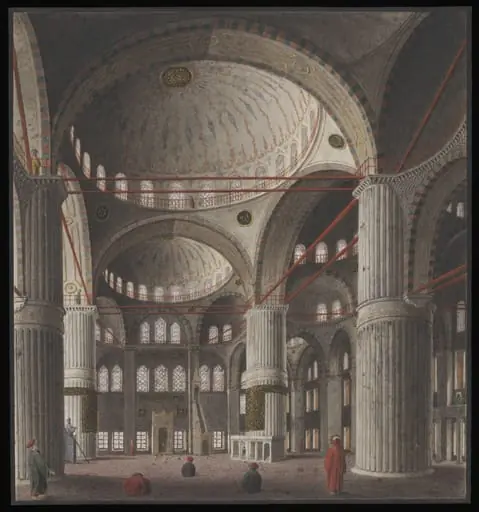 The interior of Sultan Ahmet Camii
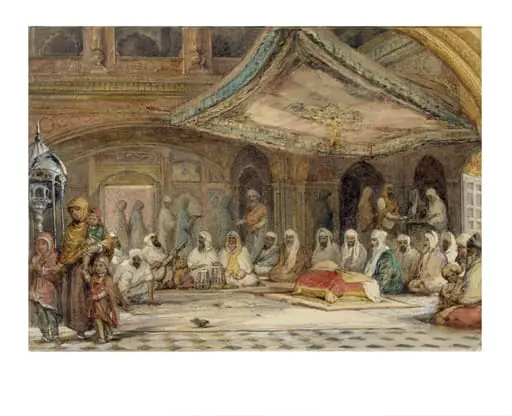 Interior of the Golden Temple, Amritsar
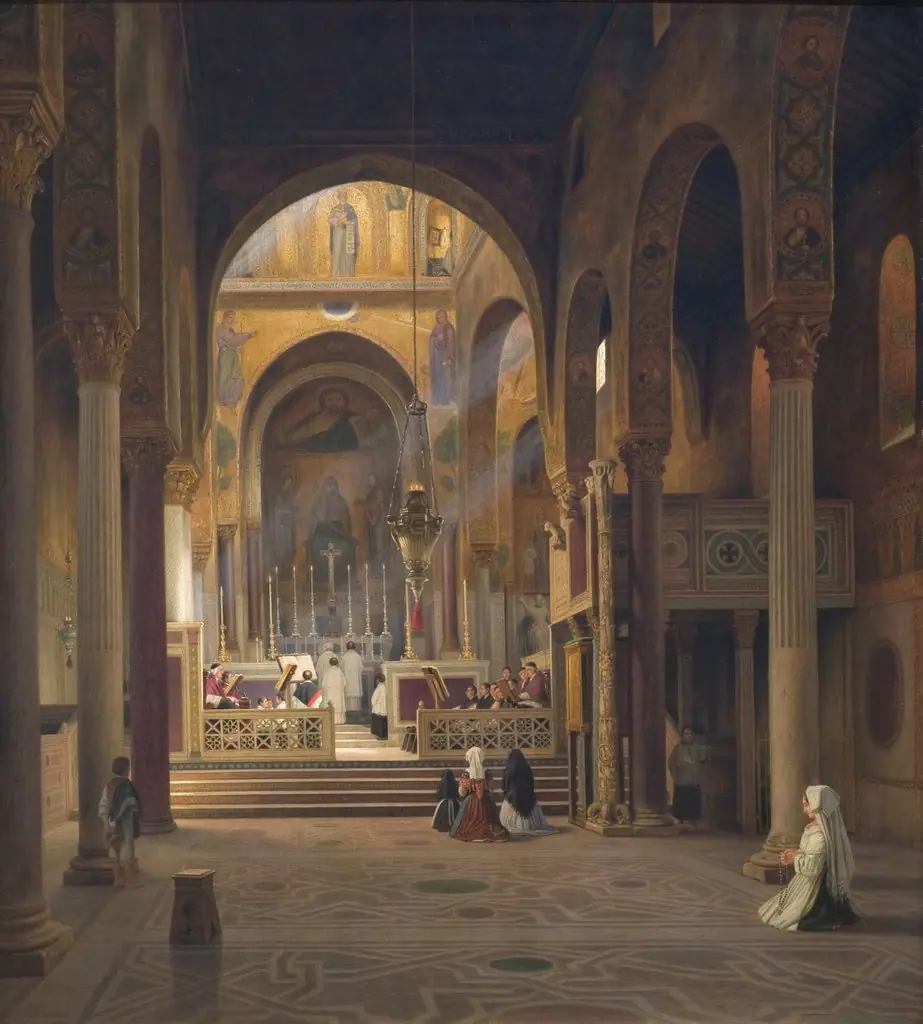 Interior of the Capella Palatina in Palermo, Italy
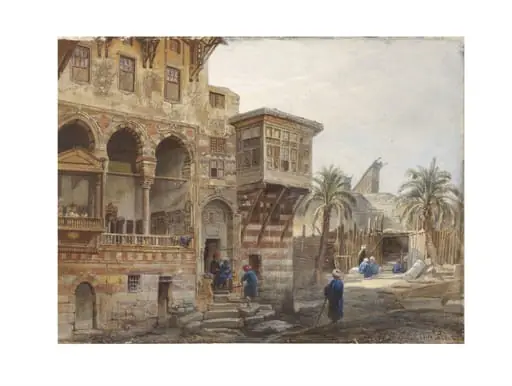 Exterior of the House of the Memluk Raduan Bey, Cairo
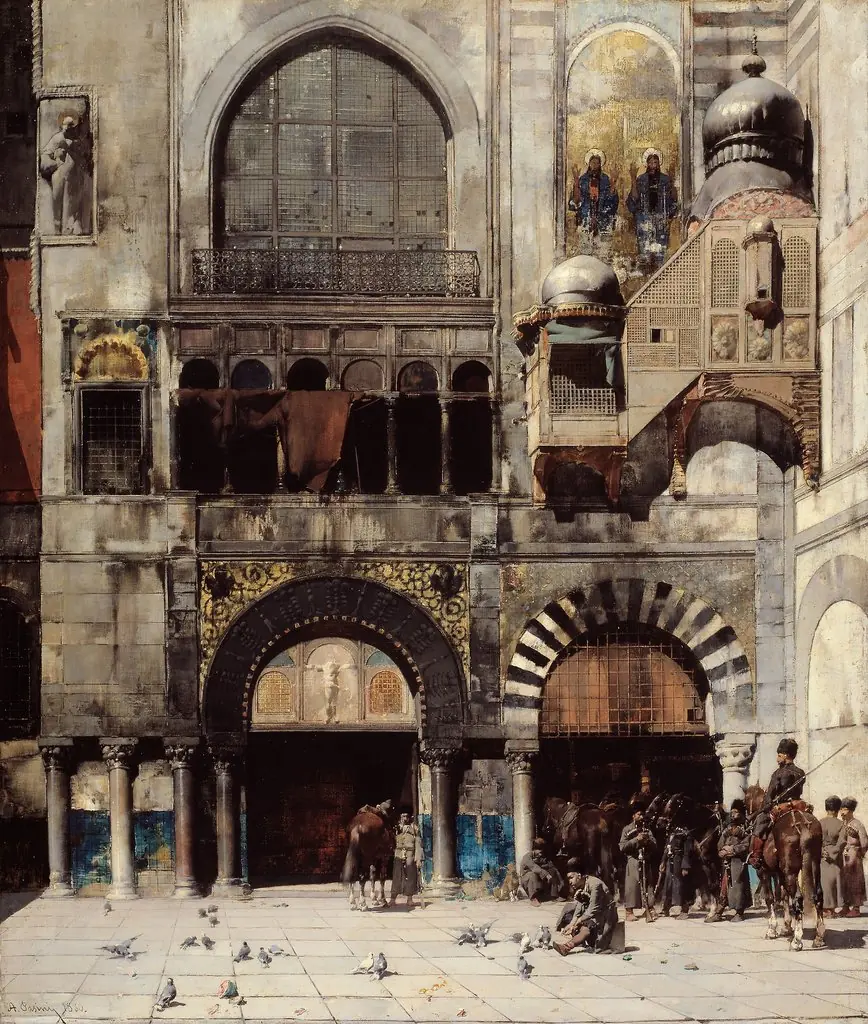 Circassian Cavalry Awaiting their Commanding Officer at the Door of a Byzantine Monument; Memory of the Orient
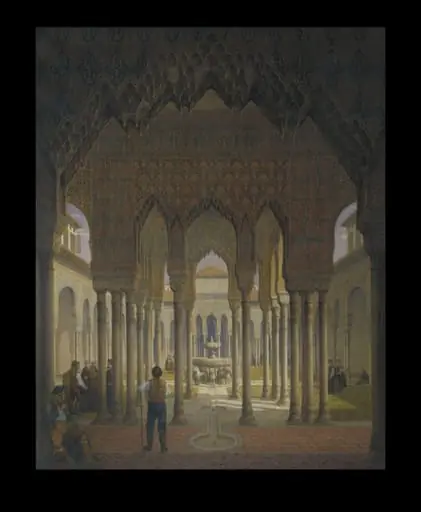 The Court of Lions in the Alhambra, Granada.
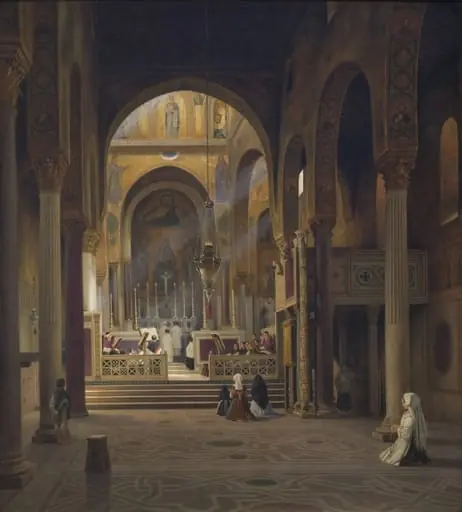 Interior of the Capella Palatina in Palermo, Italy
 Entrance to the Church of the Holy Sepulchre