Artwork
Court of the House of Caiaphus
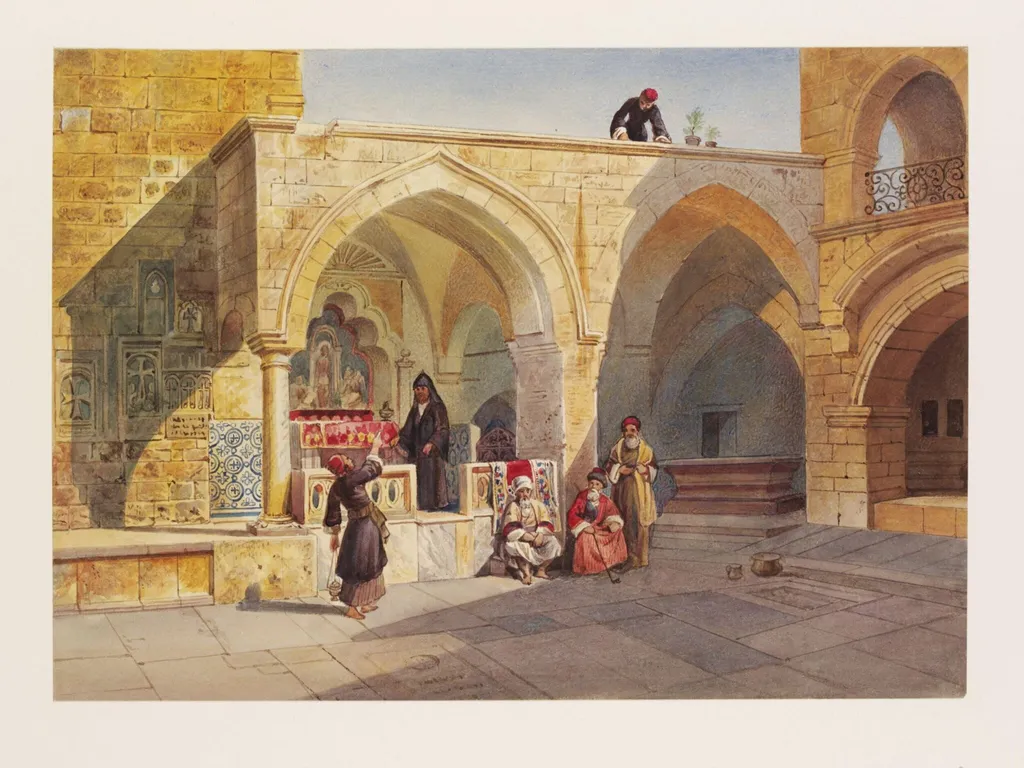
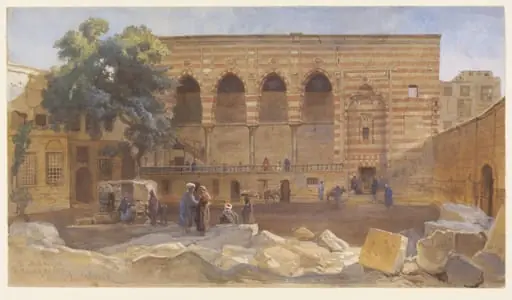
Court of the House of Caiaphus is a watercolor work on paper by the Impressionist artist Unknown. It dates from 1860 and is held in the collection of the Victoria and Albert Museum. This watercolour, dated 1860, portrays a quiet courtyard scene associated with the trial of Jesus before Caiaphas.
About this work
Overview
This watercolour, dated 1860, portrays a quiet courtyard scene associated with the trial of Jesus before Caiaphas. Attributed anonymously in the Searight Archive, it was once loosely linked to C. Werner. The work is executed in delicate washes, emphasizing light and texture over dramatic narrative, reflecting a 19th-century interest in biblical settings rendered with observational precision.
Subject & Meaning
The scene centers on a group of figures gathered in a stone courtyard, their postures suggesting tension without overt action.
The scene centers on a group of figures gathered in a stone courtyard, their postures suggesting tension without overt action. Figures in traditional robes and turbans surround a central individual, implied to be the accused. The composition avoids theatricality, instead evoking a moment of suspended judgment, aligning with 19th-century devotional art’s preference for contemplative rather than explosive biblical moments.
Technique & Style
The artist employs soft watercolour washes to model stone surfaces and fabric folds, using subtle gradations to suggest volume. Chiaroscuro is restrained, with warm ochres and pale yellows establishing a serene, sunlit atmosphere. Architectural elements like arches and steps are rendered with careful linear precision, grounding the scene in tangible space without excessive detail.
History & Provenance
The work entered the Searight Archive with no definitive attribution, later tentatively linked to C. Werner based on stylistic comparisons. Its provenance prior to the archive remains undocumented. The piece was likely produced for private devotional use or as part of a series illustrating biblical episodes, common among Victorian-era artists working in watercolour.
Context
Created during a period when biblical subjects were widely depicted in British art, this watercolour reflects a trend toward intimate, archaeologically informed scenes rather than grand historical tableaux. Artists often drew from contemporary travel accounts and Orientalist imagery to reconstruct ancient settings, blending observation with religious sentiment.
Legacy
Though not widely exhibited or reproduced, the work contributes to a body of 19th-century watercolours that reimagined biblical narratives through quiet realism. Its survival in archival collections underscores its role as a modest but thoughtful example of devotional art, valued more for its quiet composition than for its authorship.
Artist & collection

 Domestic Scene
 Giacomo and Cardinal Marco, investing Andrea, Abbot of San Zeno, with his Benefice
 The Nymph of Fontainebleau
 Portrait of a Woman
 Madonna and Child with Saints in the Enclosed Garden
 Venus and Minerva
 Family Group of Four on Sofa
 Wall painting from Room H of the Villa of P. Fannius Synistor at Boscoreale
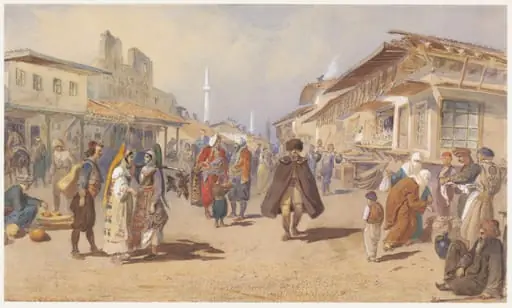 Vue de Belgrad la ruine du Prince Eugene
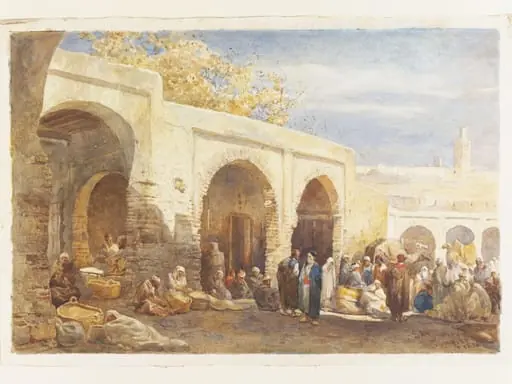 The Corn Market, Tangier
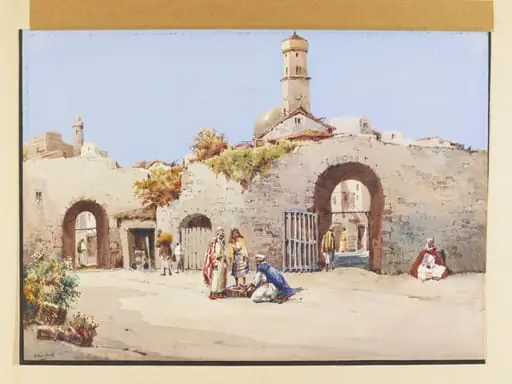 The City Walls, Jaffa, Palestine
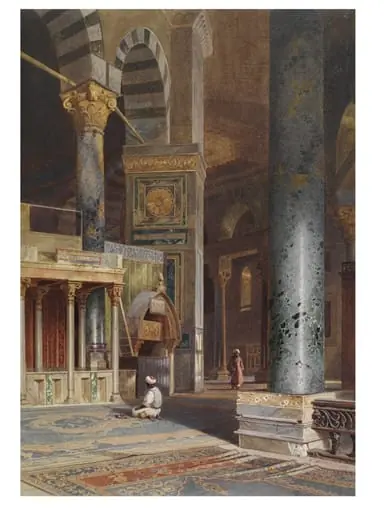 Interior of the Dome of the Rock, Jerusalem
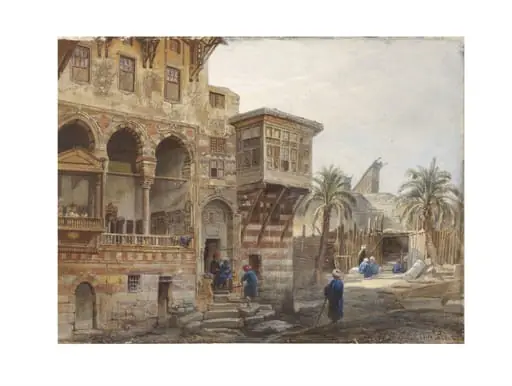 Exterior of the House of the Memluk Raduan Bey, Cairo
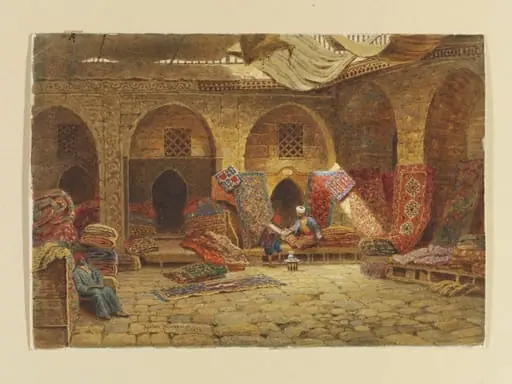 Carpet Merchant's Shop Cairo
 Stradă din Constantinopol
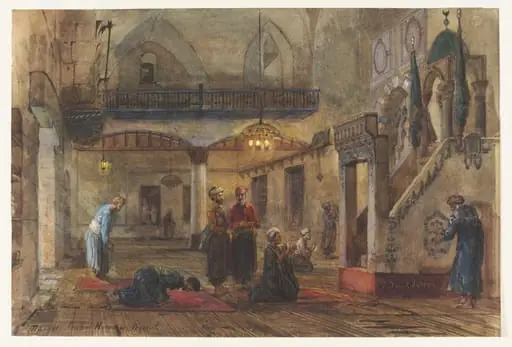 Mosque. Souk el Hommos. Byrout
 El Mahkemeh or Court of the Cadi Cairo
 A Lady of Cairo Visiting
 Circassian Cavalry Awaiting their Commanding Officer at the Door of a Byzantine Monument; Memory of the Orient
 A Turkish Coffee-House, Constantinople