Artwork
Oriental Capriccio: Ruined Temple on the Nile
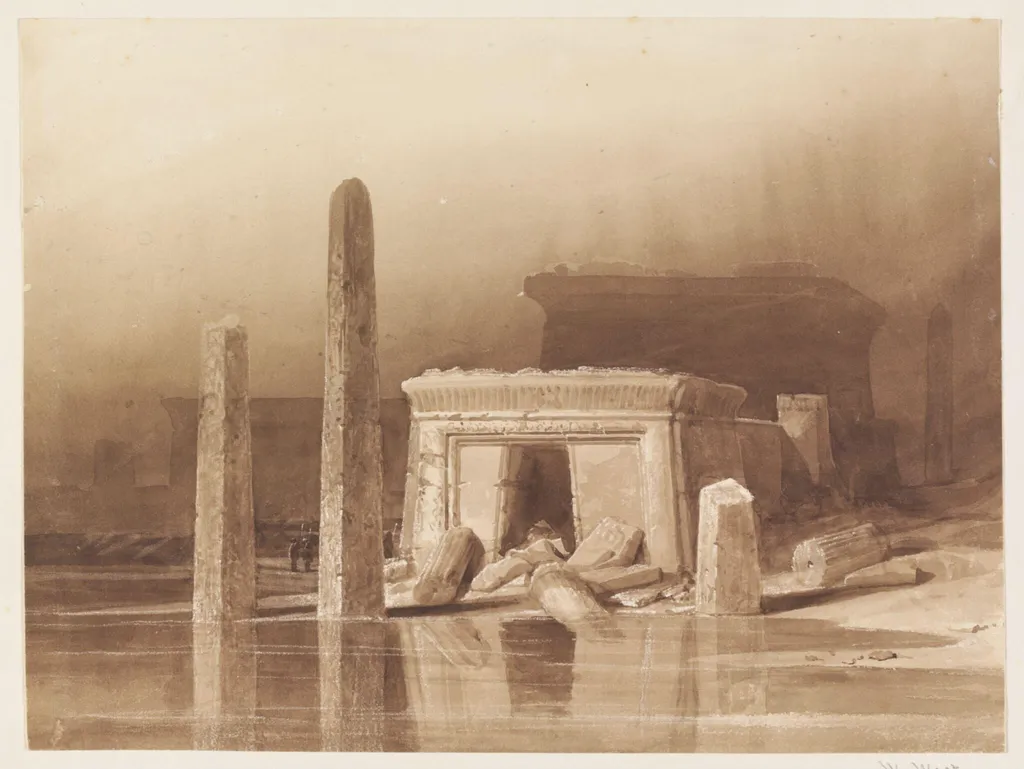
Oriental Capriccio: Ruined Temple on the Nile is a watercolor work on paper by the Orientalist artist William SBA West. It dates from 1828 and is held in the collection of the Victoria and Albert Museum.
About this work
Overview
Its composition suggests an imaginative response to contemporary interest in the East, shaped more by romantic sensibility than topographical fidelity.
William West’s watercolour *Oriental Capriccio: Ruined Temple on the Nile* presents a fictionalized landscape blending Egyptian architectural fragments with a tranquil, reflective river. Executed in delicate washes, the scene evokes a sense of quiet decay rather than historical accuracy. Its composition suggests an imaginative response to contemporary interest in the East, shaped more by romantic sensibility than topographical fidelity.
Subject & Meaning
The temple, half-submerged and fragmented, stands as a symbol of time’s erosion rather than a specific monument. Small human figures, nearly lost in the vastness, emphasize the insignificance of individuals against enduring ruins. The still water mirrors the fading architecture, reinforcing themes of memory and loss. The scene invites contemplation rather than narration, avoiding overt historical or religious reference.
Technique & Style
West employs transparent watercolour washes to suggest atmospheric depth and muted light, likely captured during twilight sketching sessions. Delicate tonal gradations define the crumbling stonework, while minimal detail in the figures enhances their anonymity. The composition’s balance between solid ruins and fluid water reflects a sensitivity to light and texture characteristic of Bristol’s artistic circle during the early 19th century.
History & Provenance
The work was once in the collection of Schidlof and later entered the auction market at Sotheby’s, where it was withdrawn before sale. Its prior ownership and exhibition history remain limited in public records. Its stylistic alignment with other works held at Bristol City Art Gallery suggests it originated within a local network of artists who shared sketching excursions and thematic interests in antiquity.
Context
Created during a period of heightened European fascination with Egypt following Napoleon’s campaign, the image reflects a romanticized, non-archaeological approach to Oriental subjects. West’s rendering diverges from topographical precision, instead aligning with a broader trend among British artists who used ruins as vessels for mood and introspection, detached from scholarly documentation.
Legacy
Though not widely exhibited or reproduced, the work contributes to an understudied body of early 19th-century British watercolours that reimagined the East through poetic abstraction. Its survival in private hands and absence from major institutional collections underscore its role as a quiet, personal meditation rather than a public statement within the art historical canon.
Artist & collection
Artist
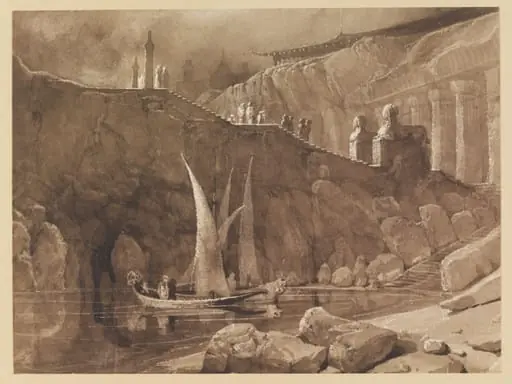
William SBA West painted watercolours of exotic places between 1825 and 1847. Two of his works here are set in North Africa: “Oriental Capriccio: Ruined Temple on the Nile” and “Oriental Capriccio, with water, boats and…

 Egypt and Nubia, Volume II: Edfou
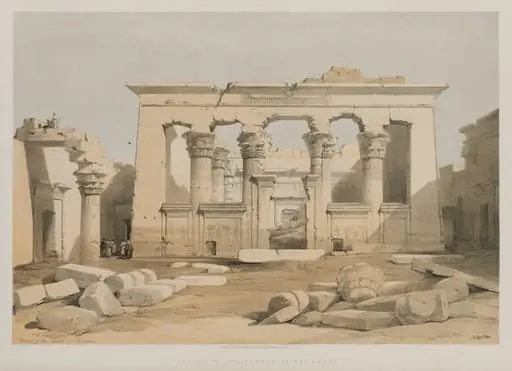 Egypt and Nubia, Volume I: Portico of the Temple of Kalabshe
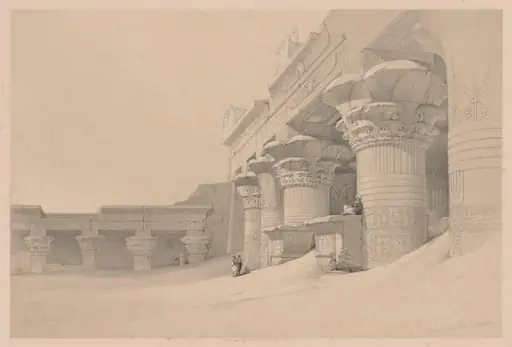 Egypt and Nubia: Volume I - No. 10, Edfou
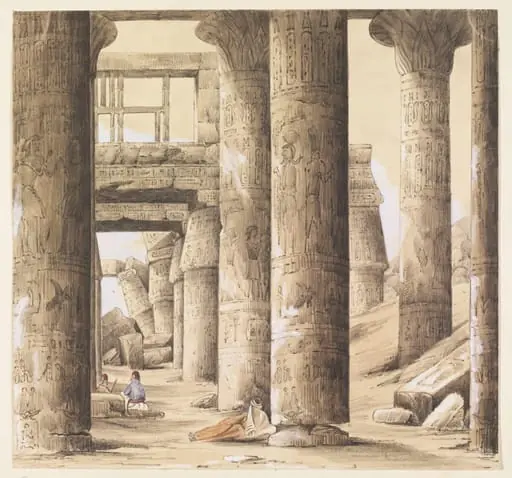 Interior of the Temple of Karnak, Thebes Upper Egypt.
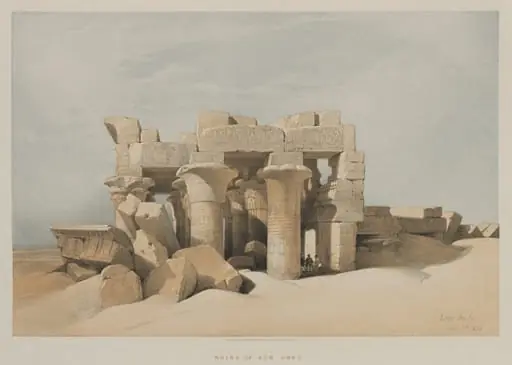 Egypt and Nubia, Volume I: Kom-Ombo
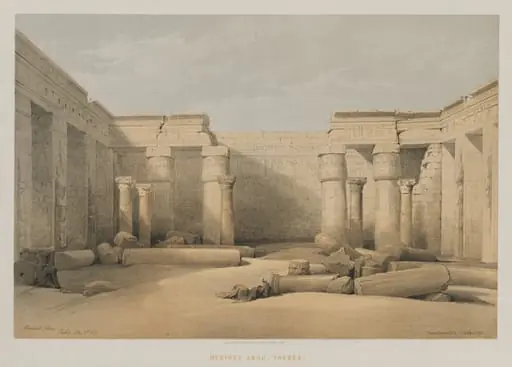 Egypt and Nubia, Volume II: Medinet Abou, Thebes
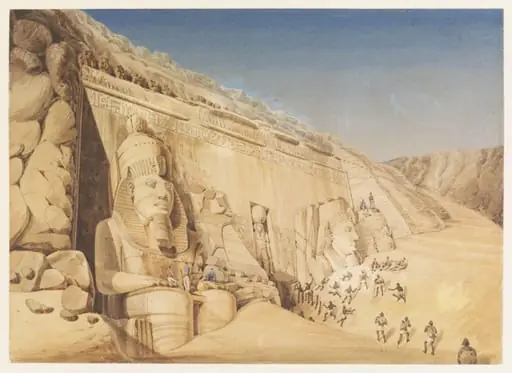 Excavation of the Great Temple of Ramesses II at Abu Simbel
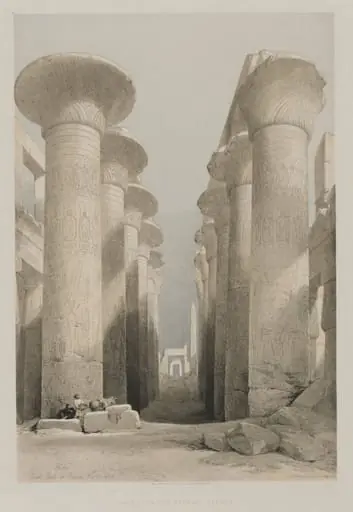 Egypt and Nubia, Volume I: Thebes, Great Hall at Karnac
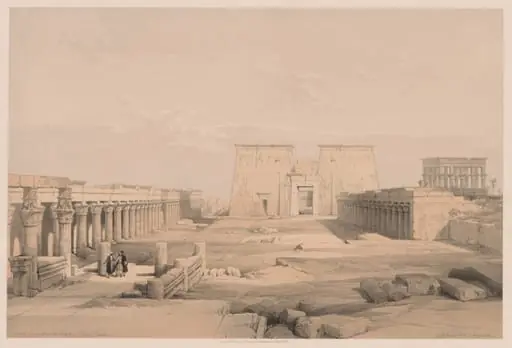 Egypt and Nubia: Volume I - No. 42, Grand Approach to the Temple of Philae, Nubia
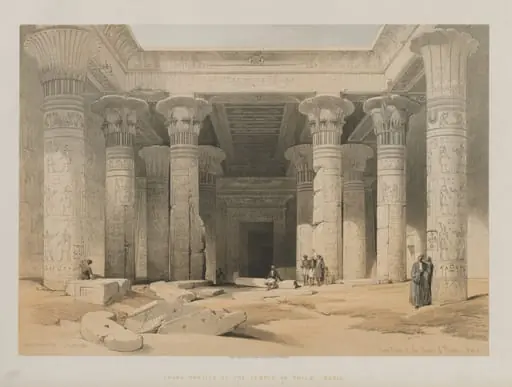 Egypt and Nubia, Volume I: Grand Portico of the Temple of Philae, Nubia
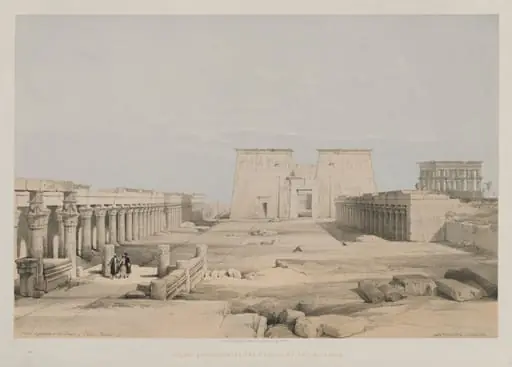 Egypt and Nubia, Volume I: Grand Approach to the Temple of Philae, Nubia