Artwork
Chelsea Bridge and Church
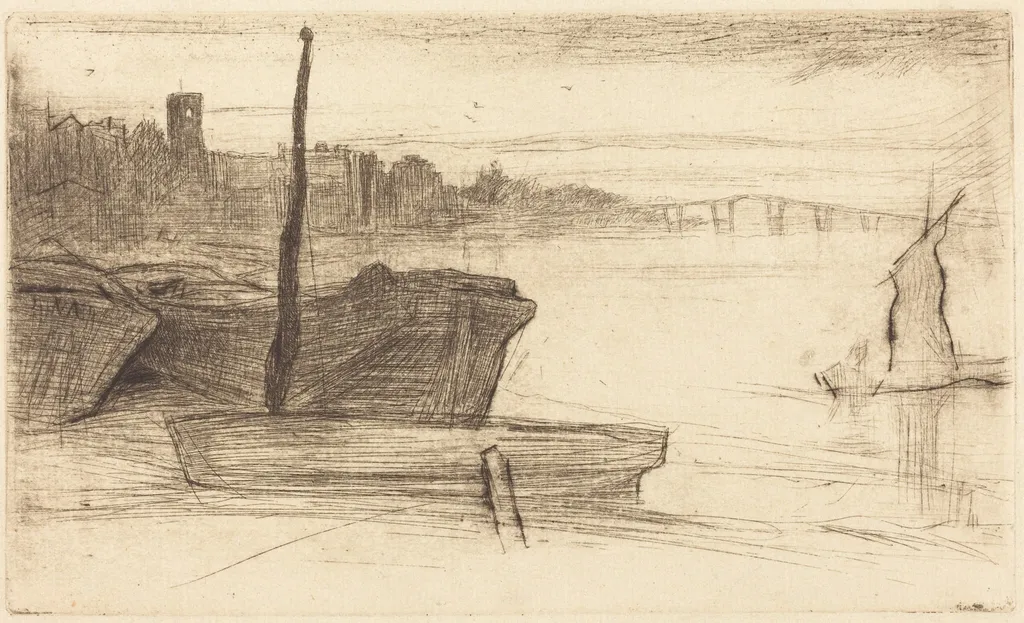
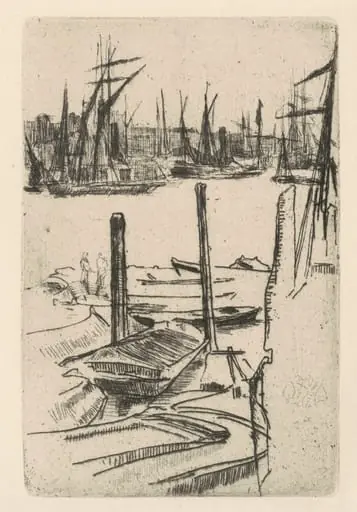
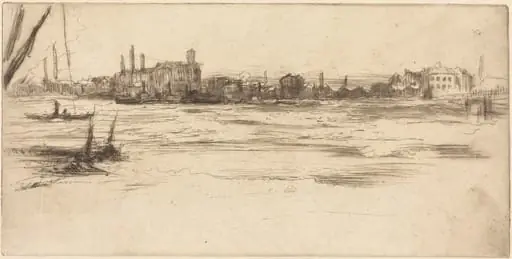
Chelsea Bridge and Church is an ink print by the Impressionist artist James McNeill Whistler. It dates from 1870 and is held in the collection of the National Gallery of Art.
About this work
This sketch was made around 1870, when artists were experimenting with quick, expressive lines.
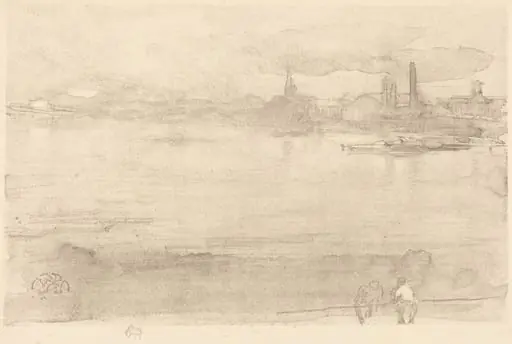
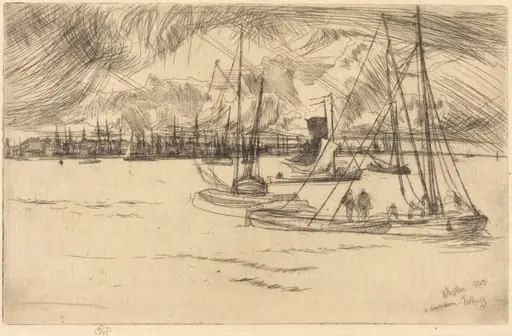
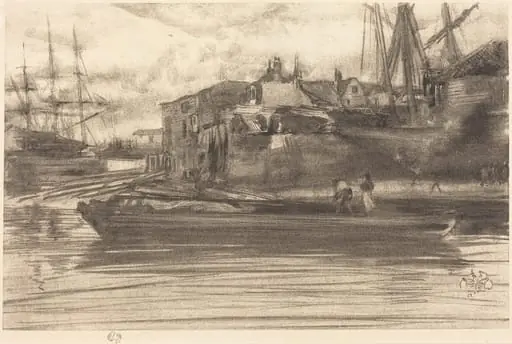
This sketch shows a simple scene of a bridge and a church in the distance. The bridge has a tall pole with something on top, maybe a light or signal. Below it, a small boat floats on the water, and a larger boat sits closer to shore. The lines are loose and scratchy, like quick notes.
The artist used a method called drypoint to make these marks—it leaves a rough texture. This sketch was made around 1870, when artists were experimenting with quick, expressive lines.
Look up etching to see how this technique works.
Overview
Chelsea Bridge and Church is a print created around 1870 by James McNeill Whistler, an American artist based in London. The work combines etching and drypoint techniques on laid paper to capture a serene urban landscape.
Subject & Meaning
The print depicts a tranquil scene of Chelsea Bridge and a distant church along the Thames River, with boats on the water. The composition prioritizes aesthetic simplicity over narrative or moral themes, reflecting Whistler's adherence to the 'art for art's sake' movement.
Technique & Style
Characterized by loose, scratchy lines, the print showcases Whistler's expressive use of drypoint, which imparts a rough texture. This approach, combined with etching, achieves subtle tonal effects, emphasizing the atmospheric quality of the scene.
History & Provenance
Created circa 1870, during a period of experimentation with expressive line work in art, the print exemplifies Whistler's exploration of urban landscapes and atmospheric effects through printmaking.
Own this work as a print
Artist & collection
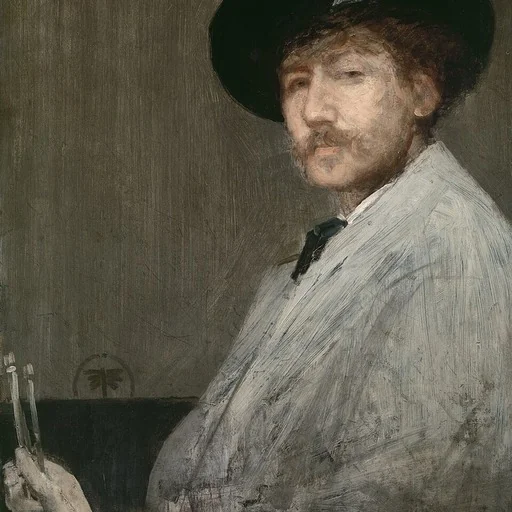
Artist
James Abbott McNeill Whistler was an American painter in oils and watercolor, and printmaker, active during the American Gilded Age and based primarily in the United Kingdom.

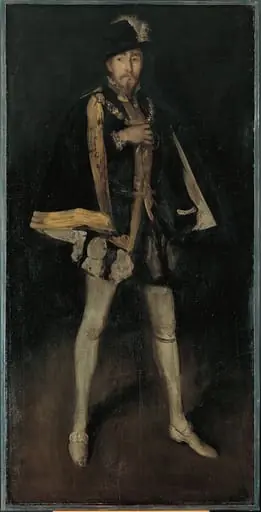 Arrangement in Black, No. 3: Sir Henry Irving as Philip II of Spain
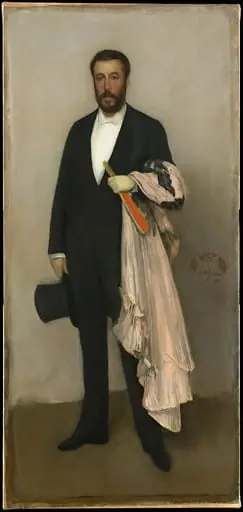 Arrangement in Flesh Colour and Black: Portrait of Theodore Duret
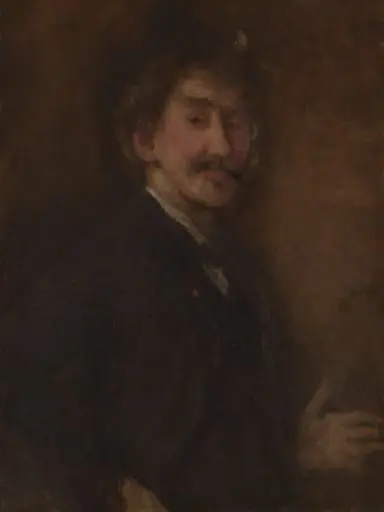 Gold and Brown: Self-Portrait
 Edward Guthrie Kennedy
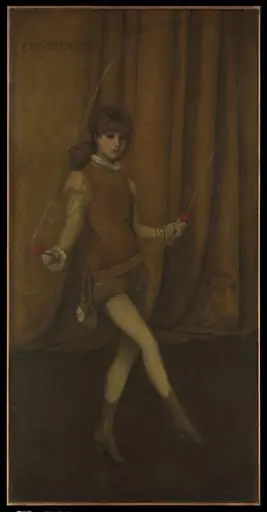 Harmony in Yellow and Gold: The Gold Girl—Connie Gilchrist
 George W. Vanderbilt
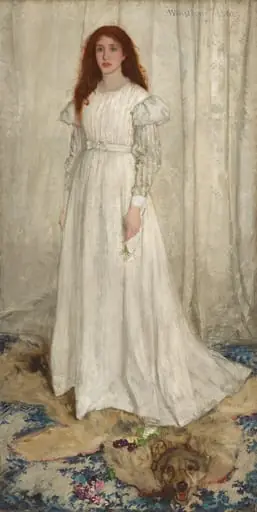 Symphony in White, No. 1: The White Girl
 Henry Irving as Philip II of Spain