Artwork
Bridge over an Estuary
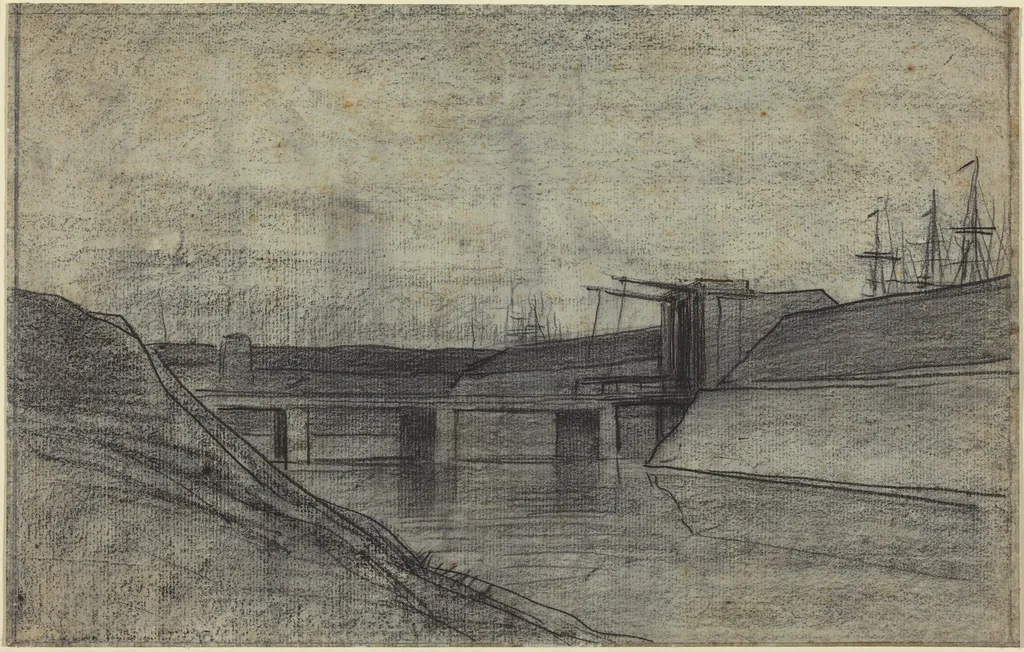
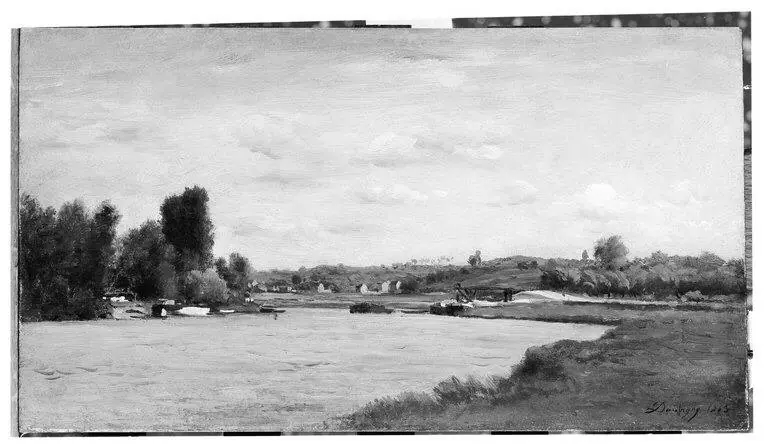
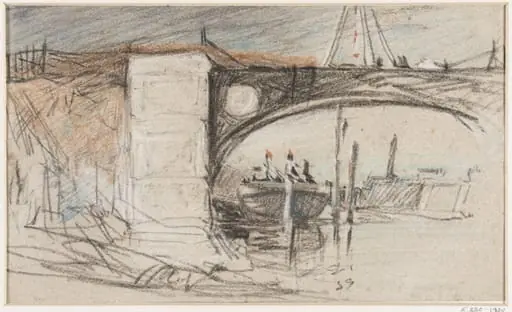
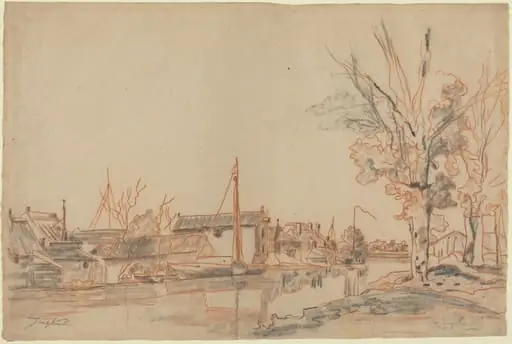
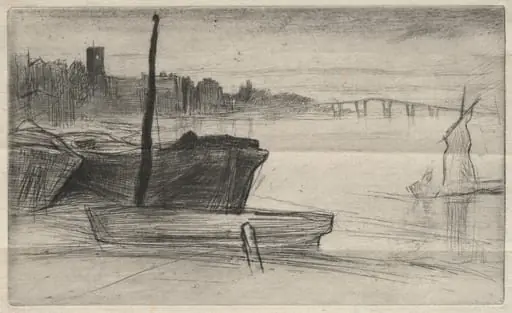
Bridge over an Estuary is an ink drawing by the Romanticist artist Charles François Daubigny. It dates from 1848 and is held in the collection of the National Gallery of Art.
About this work
Overview
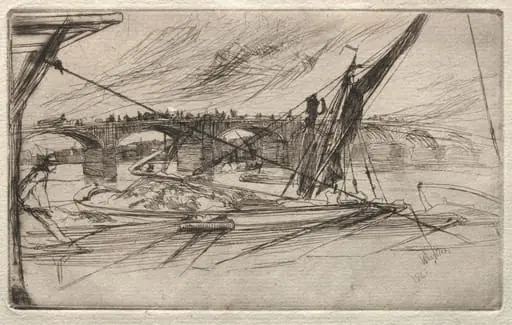
Created in 1848, *Bridge over an Estuary* is a drawing executed in charcoal, pen and brown ink on laid paper. The composition presents a modest bridge spanning a tranquil waterway, with distant vessels hinted at on the horizon. The work exemplifies the artist’s early engagement with rural and riverine subjects, a focus that would recur throughout his career.
Subject & Meaning
The scene captures a functional crossing set within a quiet estuarine landscape, emphasizing the relationship between human infrastructure and the surrounding environment. By placing anchored ships in the background, the drawing suggests a modest commercial activity while maintaining a serene atmosphere, inviting contemplation of everyday life along France’s waterways.
Technique & Style
Daubigny employed a dense network of fine lines and cross‑hatching to model volume and surface texture. Charcoal provides broad tonal washes, while pen and brown ink delineate structural details of the bridge and the faint outlines of the ships. The laid paper’s texture contributes to the subtle rendering of sky and water, creating depth through tonal variation.
History & Provenance
The drawing originates from the artist’s early period, when he was associated with the Barbizon school and beginning to explore the effects of light and atmosphere in landscape work. It reflects his experimentation with drawing media that preceded his later ventures into etching and cliché‑verre, marking a formative stage in his development as a precursor to Impressionist concerns.
Artist & collection
Artist
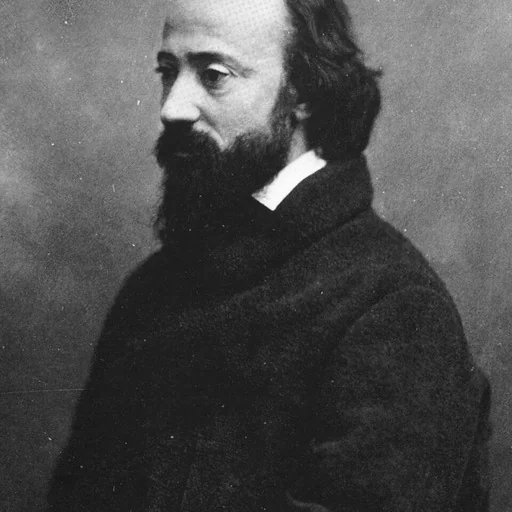
Charles-François Daubigny ( DOH-bin-yee, US: DOH-been-YEE, doh-BEEN-yee, French: ; 15 February 1817 – 19 February 1878) was a French painter, one of the members of the Barbizon school, and is considered an important precursor of…