Artwork
Rotherhithe
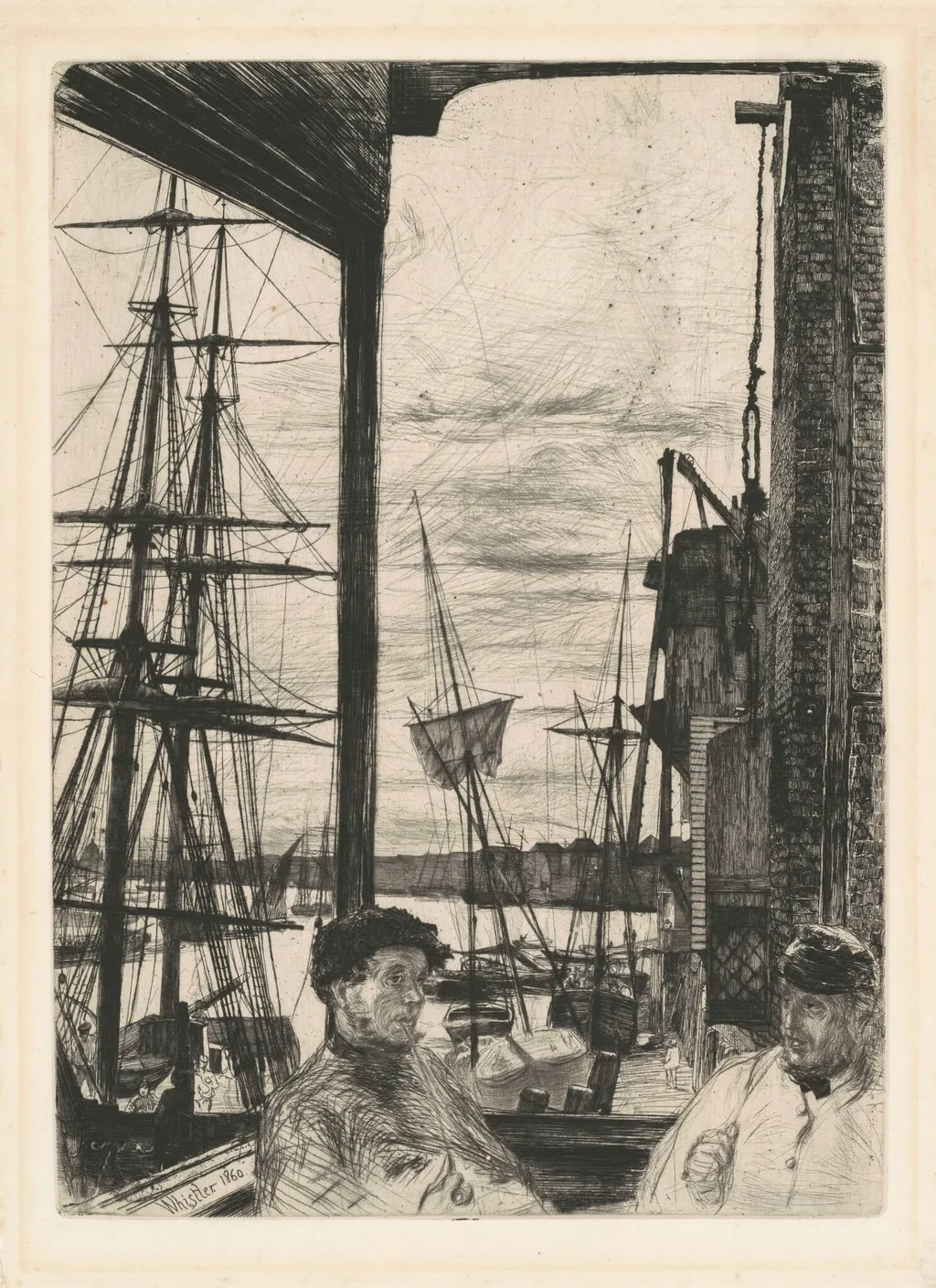
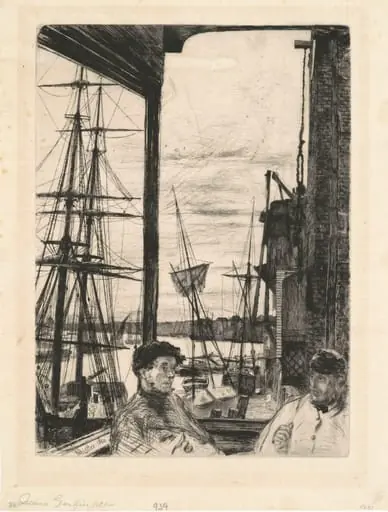
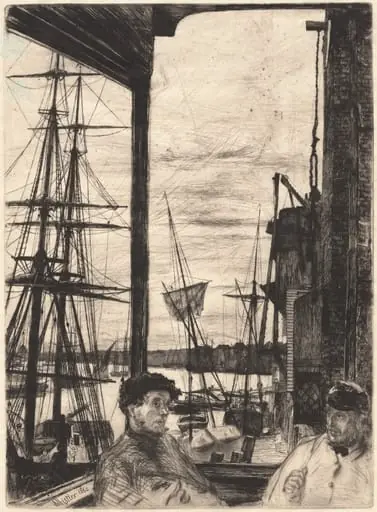
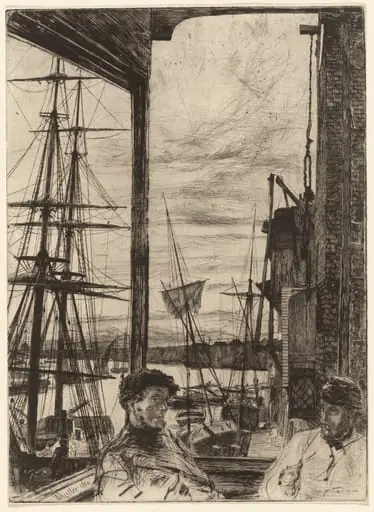
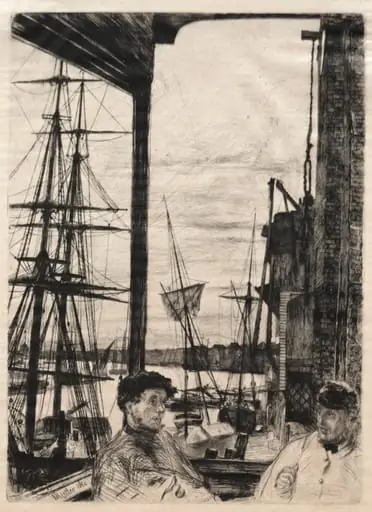
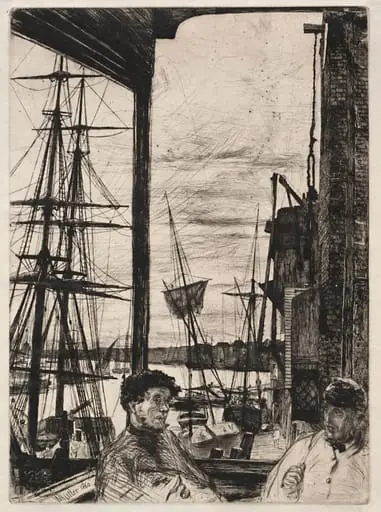
Rotherhithe is an ink print by the Impressionist artist James McNeill Whistler. It dates from 1860 and is held in the collection of the National Gallery of Art.
About this work
Overview
James McNeill Whistler’s print titled “Rotherhithe” is a black‑and‑white etching and drypoint executed on laid paper. The image presents a quiet harbor scene in which several tall vessels are moored alongside a dockside structure, rendered in a restrained monochrome palette that emphasizes form over colour.
Subject & Meaning
The composition records a moment of ordinary maritime activity on the Thames at Rotherhithe, focusing on the stillness of ships at rest and the solidity of the adjacent building. By isolating the scene from narrative detail, Whistler invites contemplation of the harbor’s routine rhythm and the subtle beauty of its everyday landscape.
Technique & Style
Whistler combined traditional etching with drypoint, using fine, incised lines and dense hatching to model volume and surface texture. The drypoint scratches produce a slightly fuzzy edge that softens the crispness of the etched lines, creating a tonal range that mimics the play of light and shadow on water and architecture, reminiscent of a photographic observation yet unmistakably hand‑made.
History & Provenance
Created in the late 19th century, the print forms part of Whistler’s broader series of atmospheric urban and river scenes. It has circulated through private collections and museum holdings, reflecting the artist’s sustained interest in documenting London’s waterways during the industrial era.
Own this work as a print
Artist & collection

Artist
James Abbott McNeill Whistler was an American painter in oils and watercolor, and printmaker, active during the American Gilded Age and based primarily in the United Kingdom.

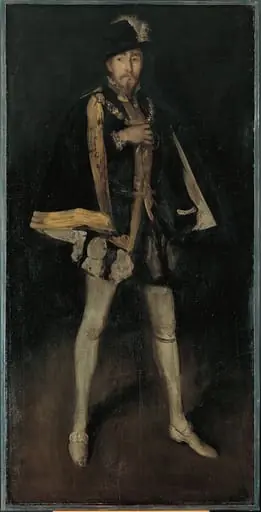 Arrangement in Black, No. 3: Sir Henry Irving as Philip II of Spain
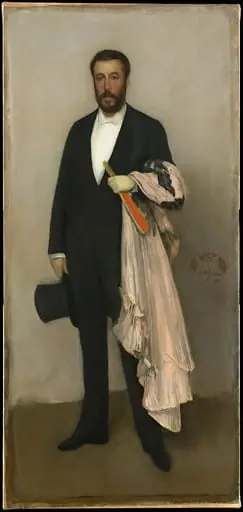 Arrangement in Flesh Colour and Black: Portrait of Theodore Duret
 Gold and Brown: Self-Portrait
 Edward Guthrie Kennedy
 Harmony in Yellow and Gold: The Gold Girl—Connie Gilchrist
 George W. Vanderbilt
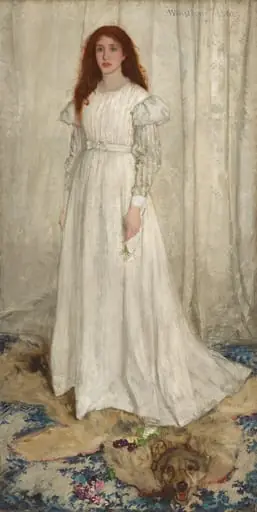 Symphony in White, No. 1: The White Girl
 Henry Irving as Philip II of Spain