Artwork
Sketching, No.I
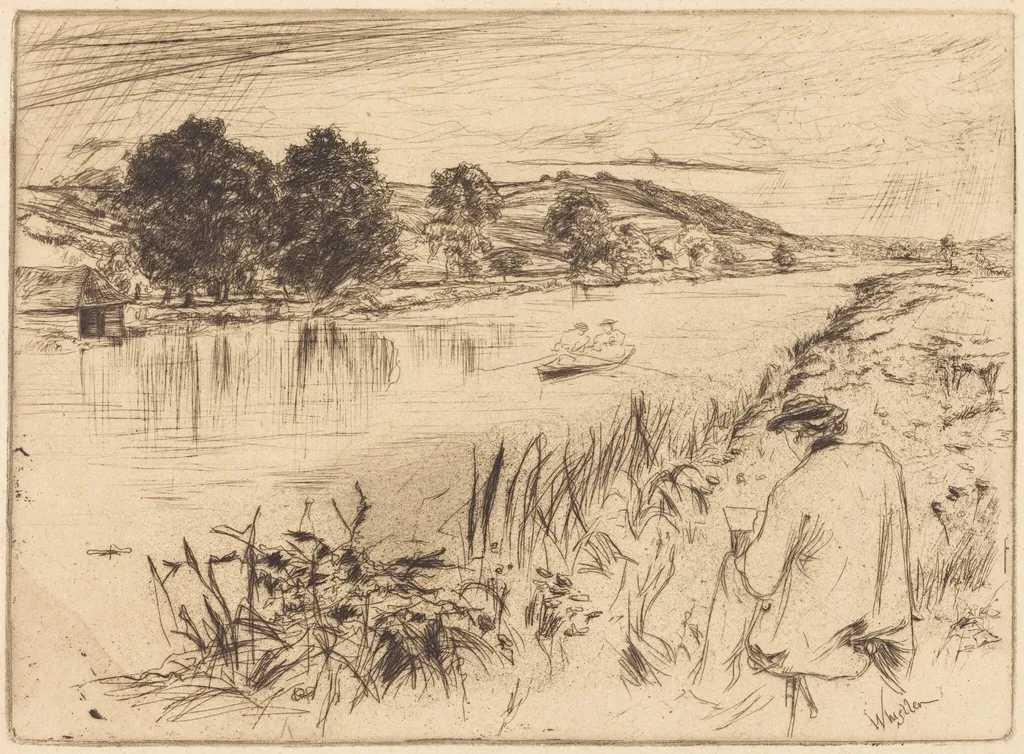
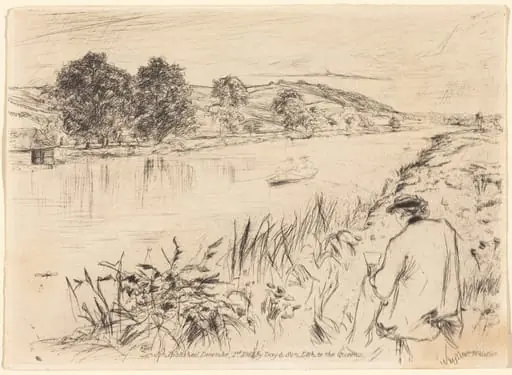
Sketching, No.I is an ink print by the Impressionist artist James McNeill Whistler. It dates from 1861 and is held in the collection of the National Gallery of Art. Created in 1861, *Sketching, No.
About this work
Overview
The work reflects his growing interest in quiet, observational scenes and his commitment to formal harmony over narrative.
Created in 1861, *Sketching, No.I* is an etching and drypoint by James McNeill Whistler, part of his early exploration of printmaking. Though better known for oil paintings, Whistler devoted significant attention to the graphic arts during this period, refining his ability to convey atmosphere through subtle tonal variations. The work reflects his growing interest in quiet, observational scenes and his commitment to formal harmony over narrative.
Subject & Meaning
The scene depicts a solitary figure engaged in sketching beside a still body of water, surrounded by reeds and gentle hills. The presence of the artist within the landscape suggests a meditation on the act of seeing and recording nature. There is no overt story or emotional climax; instead, the image invites stillness and introspection, aligning with Whistler’s belief in art’s autonomy from moral or sentimental instruction.
Technique & Style
Whistler combined etching and drypoint to achieve nuanced textures: fine lines define the water’s edge and foliage, while the richer, fuzzier marks of drypoint suggest shadow and depth. The delicate gradations of ink create a hazy, atmospheric effect, with the distant building and hills rendered in soft focus. This technical restraint emphasizes mood over detail, characteristic of his mature printmaking approach.
History & Provenance
Made during Whistler’s time in London, the print emerged from a period of intense experimentation with print media after his return from Europe. It was likely produced for private circulation among artists and collectors rather than mass distribution. The work is part of a small series of landscape etchings from the early 1860s, reflecting his transition from academic training toward a more personal visual language.
Context
In the 1860s, Whistler was distancing himself from the narrative-driven traditions of Victorian art. He aligned with emerging ideas of aestheticism, emphasizing composition, tone, and mood over storytelling. *Sketching, No.I* exemplifies this shift, echoing contemporary European printmakers like Daumier and aligning with the broader movement toward art valued for its formal qualities alone.
Legacy
Though less celebrated than his later nocturnes, *Sketching, No.I* represents a critical step in Whistler’s development as a printmaker. Its quiet intensity influenced later artists interested in tonal harmony and the expressive potential of etching. The work remains a quiet testament to his belief that art’s power lies not in what it depicts, but in how it is seen.
Own this work as a print
Artist & collection
Artist
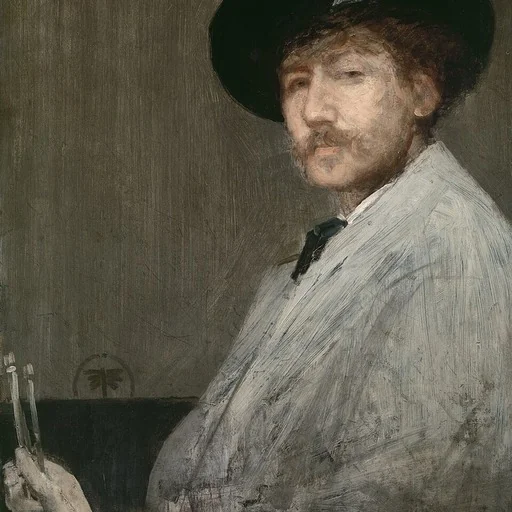
James Abbott McNeill Whistler was an American painter in oils and watercolor, and printmaker, active during the American Gilded Age and based primarily in the United Kingdom.

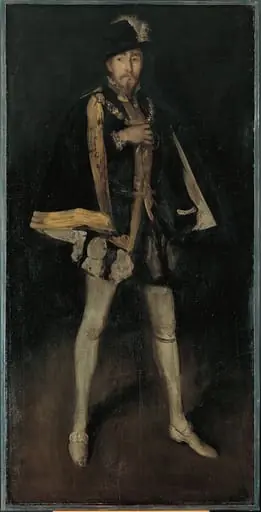 Arrangement in Black, No. 3: Sir Henry Irving as Philip II of Spain
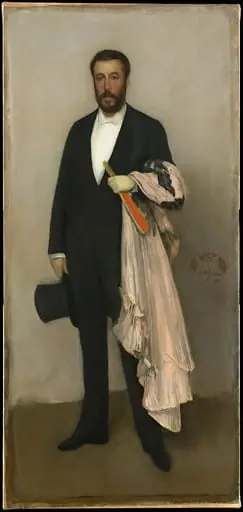 Arrangement in Flesh Colour and Black: Portrait of Theodore Duret
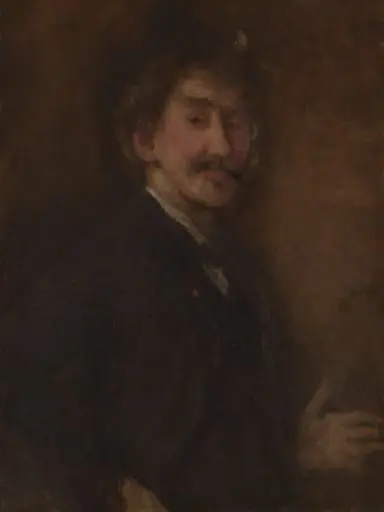 Gold and Brown: Self-Portrait
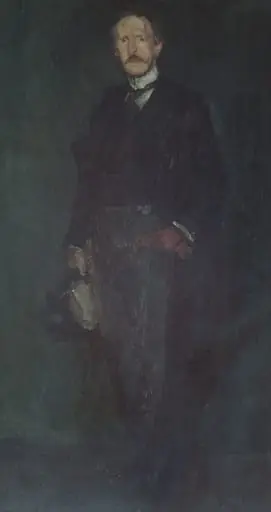 Edward Guthrie Kennedy
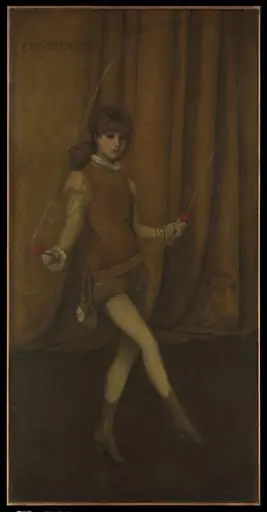 Harmony in Yellow and Gold: The Gold Girl—Connie Gilchrist
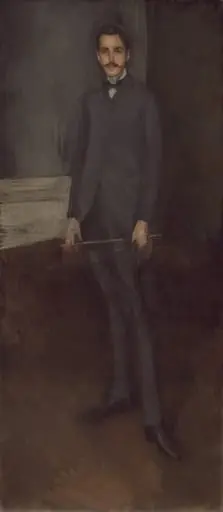 George W. Vanderbilt
 Symphony in White, No. 1: The White Girl
 Henry Irving as Philip II of Spain
 Thames Fishermen
 The Test at Longparish
 The Thames Towards Erith
 Landscape with Boat, 1st plate (Le paysage au bateau)
 Nursemaid and Child
 The Punt
 Dünenlandschaft (Landscape with Dunes)
 A Landscape with a River
 Landscape with Boat, 1st plate (Le paysage au bateau)
 On the Test
 Landscape (Paysage)
 Sketching, No. 1