Artwork
The Punt
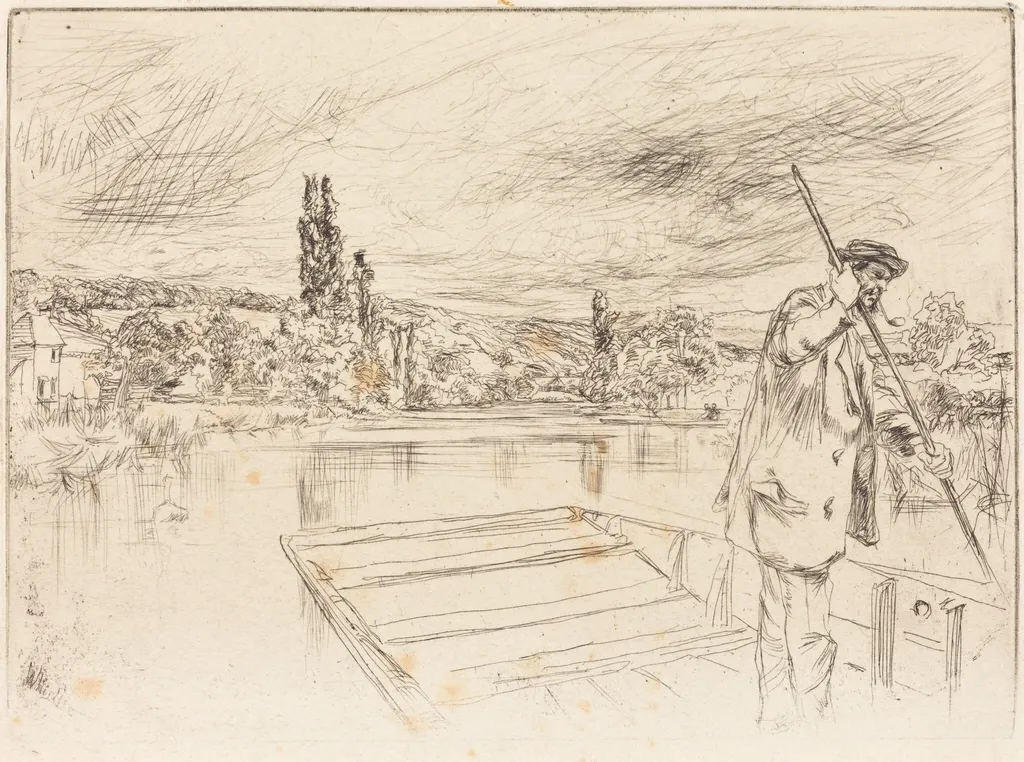
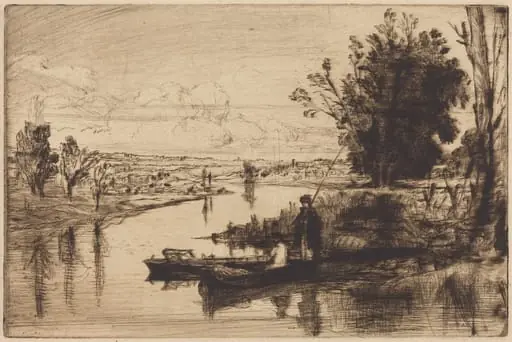
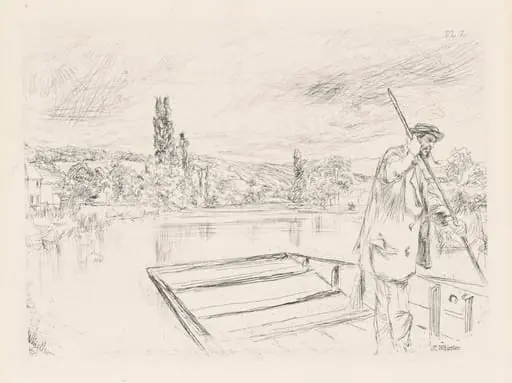
The Punt is an ink print by the Impressionist artist James McNeill Whistler. It dates from 1861 and is held in the collection of the National Gallery of Art.
About this work
Overview
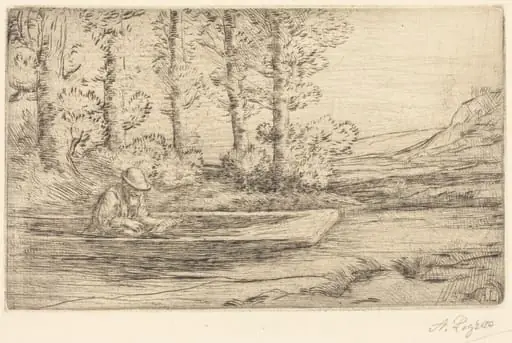
Created in 1861, *The Punt* is an early print by James McNeill Whistler that combines etching with drypoint on wove paper. The work presents a solitary figure beside a narrow boat on a tranquil river, rendered with swift, sketch‑like lines that convey both light and motion.
Subject & Meaning
The composition depicts a lone individual, dressed in loose garments and a hat, holding a long pole while standing beside the punt. Trees line the riverbank and a few structures emerge through the foliage, suggesting a quiet, everyday scene rather than a narrative episode.
Technique & Style
Whistler employed a hybrid of etching and drypoint, allowing him to produce fine, delicate lines alongside richer, more textured marks. The wove paper surface retains a subtle grain, enhancing the impression of immediacy and the atmospheric quality of the river setting.
History & Provenance
An American expatriate working chiefly in Britain, Whistler produced *The Punt* during the early phase of his printmaking career. The piece reflects his broader aesthetic concerns of the period, emphasizing visual harmony and technical control over overt storytelling.
Context
The print emerges from the mid‑19th‑century milieu in which Whistler and his contemporaries explored the possibilities of print media as a vehicle for refined, non‑illustrative art. Its modest subject matter aligns with the artist’s interest in everyday scenes rendered with an emphasis on tone and composition.
Artist & collection
Artist
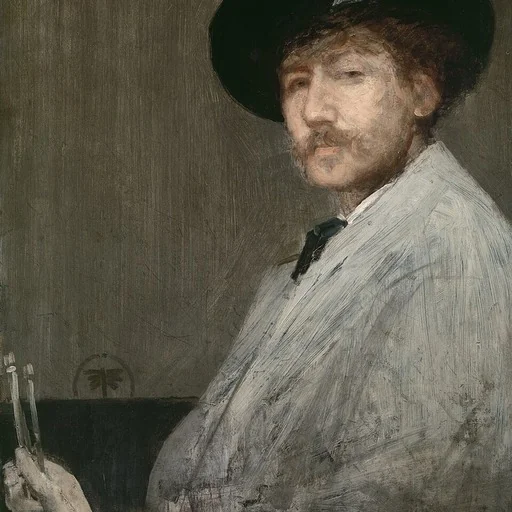
James Abbott McNeill Whistler was an American painter in oils and watercolor, and printmaker, active during the American Gilded Age and based primarily in the United Kingdom.

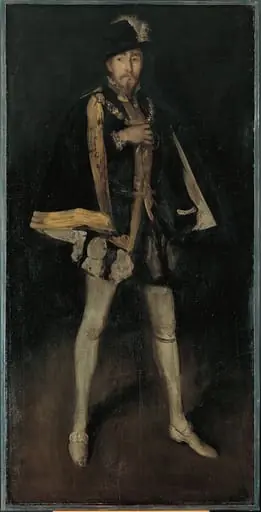 Arrangement in Black, No. 3: Sir Henry Irving as Philip II of Spain
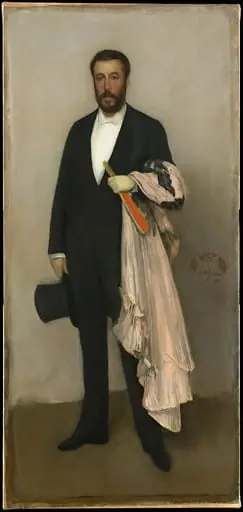 Arrangement in Flesh Colour and Black: Portrait of Theodore Duret
 Gold and Brown: Self-Portrait
 Edward Guthrie Kennedy
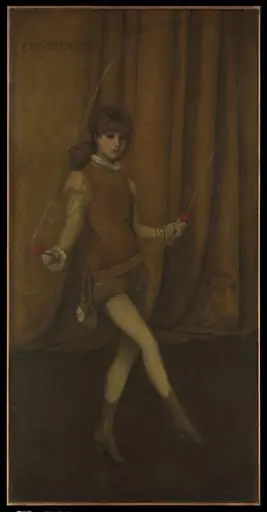 Harmony in Yellow and Gold: The Gold Girl—Connie Gilchrist
 George W. Vanderbilt
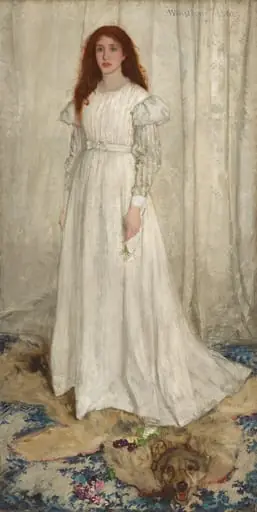 Symphony in White, No. 1: The White Girl
 Henry Irving as Philip II of Spain