Artwork
Steamboats off the Tower
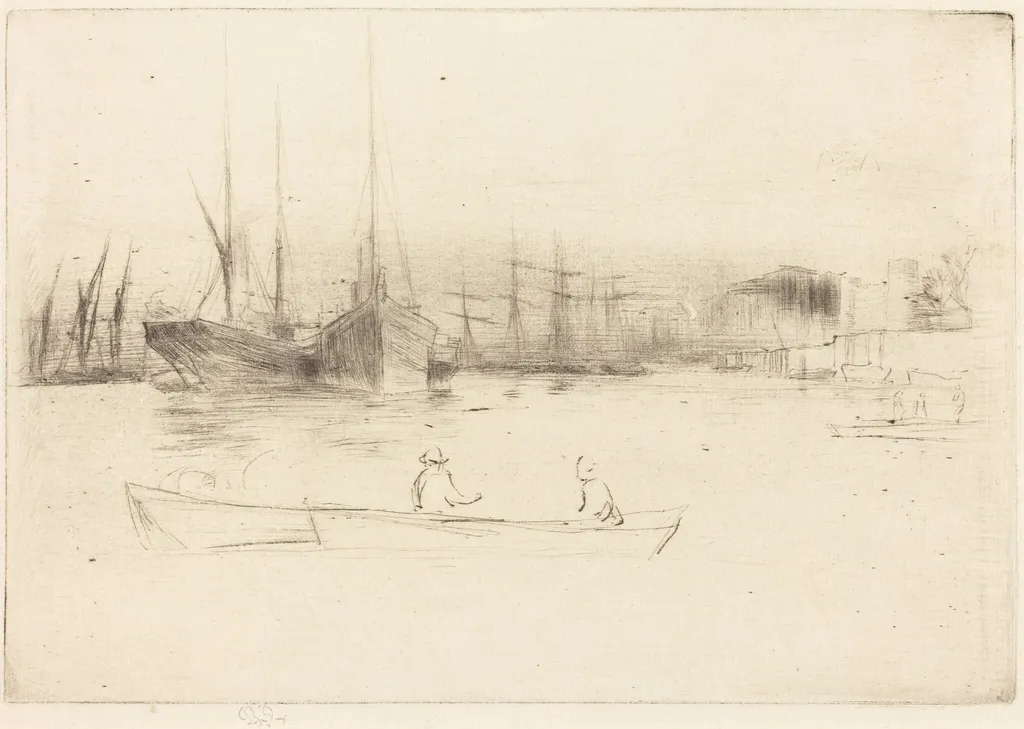
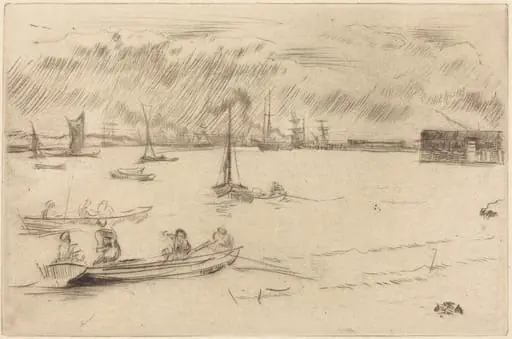
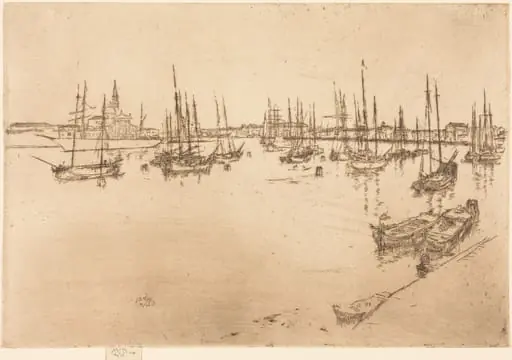
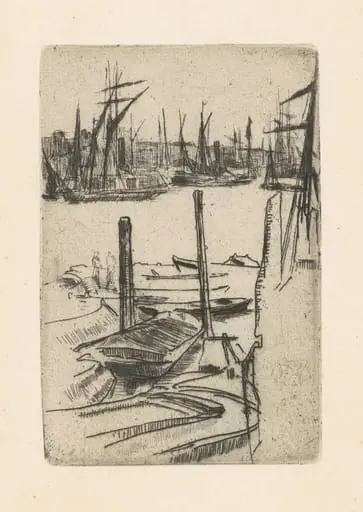
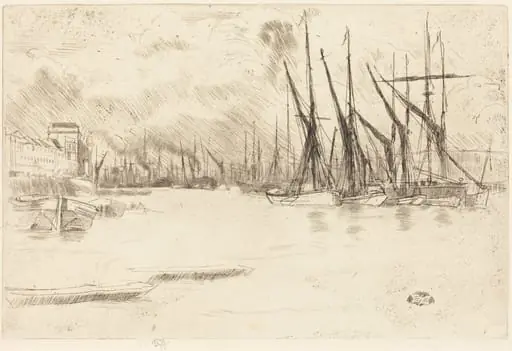
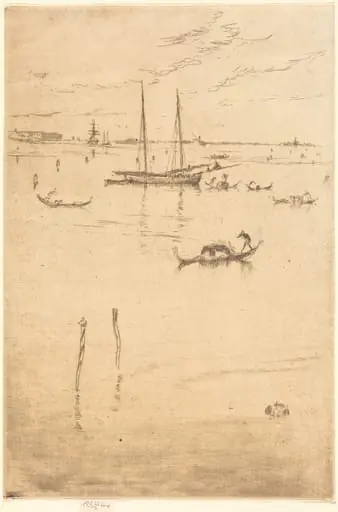
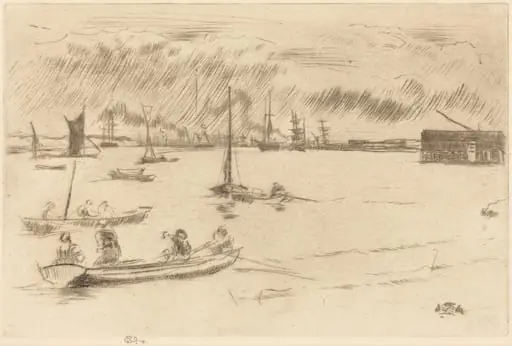
Steamboats off the Tower is an ink print by the Impressionist artist James McNeill Whistler. It dates from 1875 and is held in the collection of the National Gallery of Art.
About this work
Overview
Created in 1875, *Steamboats off the Tower* is a drypoint print on laid paper by James McNeill Whistler. Though known for his paintings, Whistler produced a significant body of prints during his time in London, often exploring urban waterways. This work captures a quiet moment on the Thames, focusing on the interplay between industrial vessels and historic architecture without narrative or drama.
Subject & Meaning
The composition suggests a contemplative observation of everyday life, aligning with his belief in art’s autonomy from moral or storytelling functions.
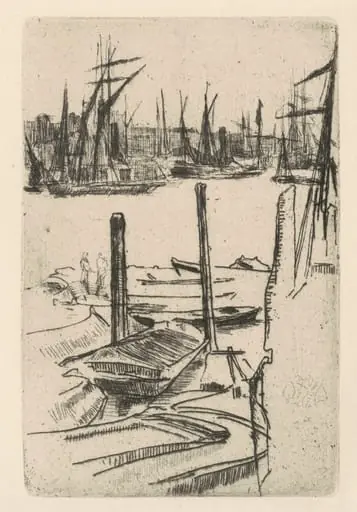
The scene portrays steamboats along the Thames, some anchored, others moving gently, with the Tower of London rising in the distance. Whistler avoids overt symbolism, instead presenting the vessels and landmark as coexisting elements of the modern city. The composition suggests a contemplative observation of everyday life, aligning with his belief in art’s autonomy from moral or storytelling functions.
Technique & Style
Whistler employed drypoint to etch fine, soft lines into the plate, creating rich tonal gradations through burr and ink retention. The contrast between dark, dense areas and pale washes of water suggests depth without hard outlines. His restrained palette and blurred edges emphasize atmosphere over detail, resulting in a hazy, meditative quality that prioritizes mood over precision.
History & Provenance
Made during Whistler’s mature period in London, the print was part of a series documenting the Thames and its traffic. It was likely produced for private collectors and print enthusiasts rather than public exhibition. The work remained within European collections, with no major public acquisition until the 20th century, when institutions began recognizing his graphic work as significant.
Context
In 1870s London, industrialization transformed the Thames into a bustling artery of commerce. Whistler’s prints quietly responded to this change, avoiding glorification or critique. His focus on light, reflection, and quiet movement aligned with Aesthetic Movement ideals, positioning art as an experience of form and tone rather than a vehicle for social commentary.
Legacy
Whistler’s drypoints, including this one, influenced later printmakers by demonstrating how subtle tonal variation could convey atmosphere without elaborate detail. Though less celebrated than his paintings, these works helped redefine printmaking as a medium for personal expression and visual poetry, paving the way for modernist approaches to urban landscapes.
Own this work as a print
Artist & collection
Artist
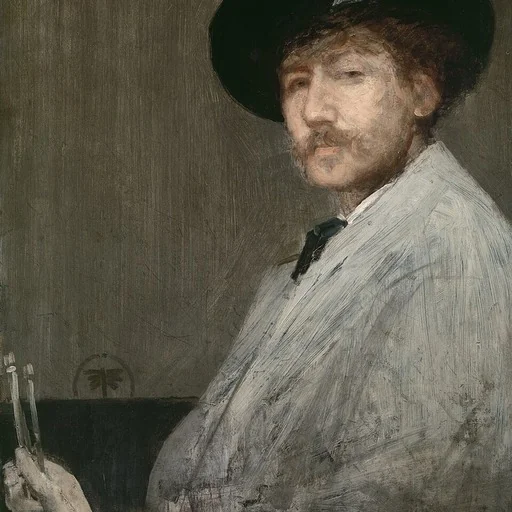
James Abbott McNeill Whistler was an American painter in oils and watercolor, and printmaker, active during the American Gilded Age and based primarily in the United Kingdom.

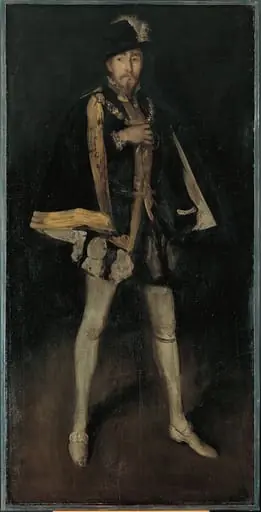 Arrangement in Black, No. 3: Sir Henry Irving as Philip II of Spain
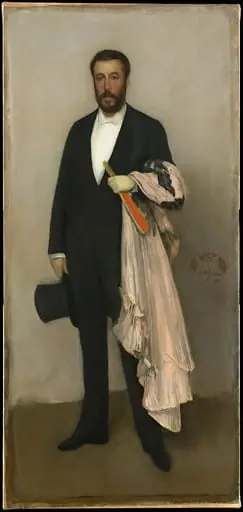 Arrangement in Flesh Colour and Black: Portrait of Theodore Duret
 Gold and Brown: Self-Portrait
 Edward Guthrie Kennedy
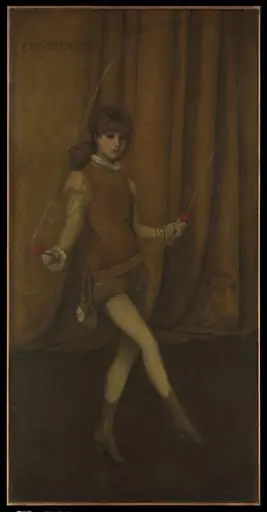 Harmony in Yellow and Gold: The Gold Girl—Connie Gilchrist
 George W. Vanderbilt
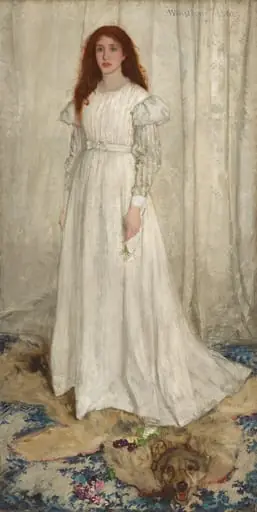 Symphony in White, No. 1: The White Girl
 Henry Irving as Philip II of Spain