Artwork
Omakuva
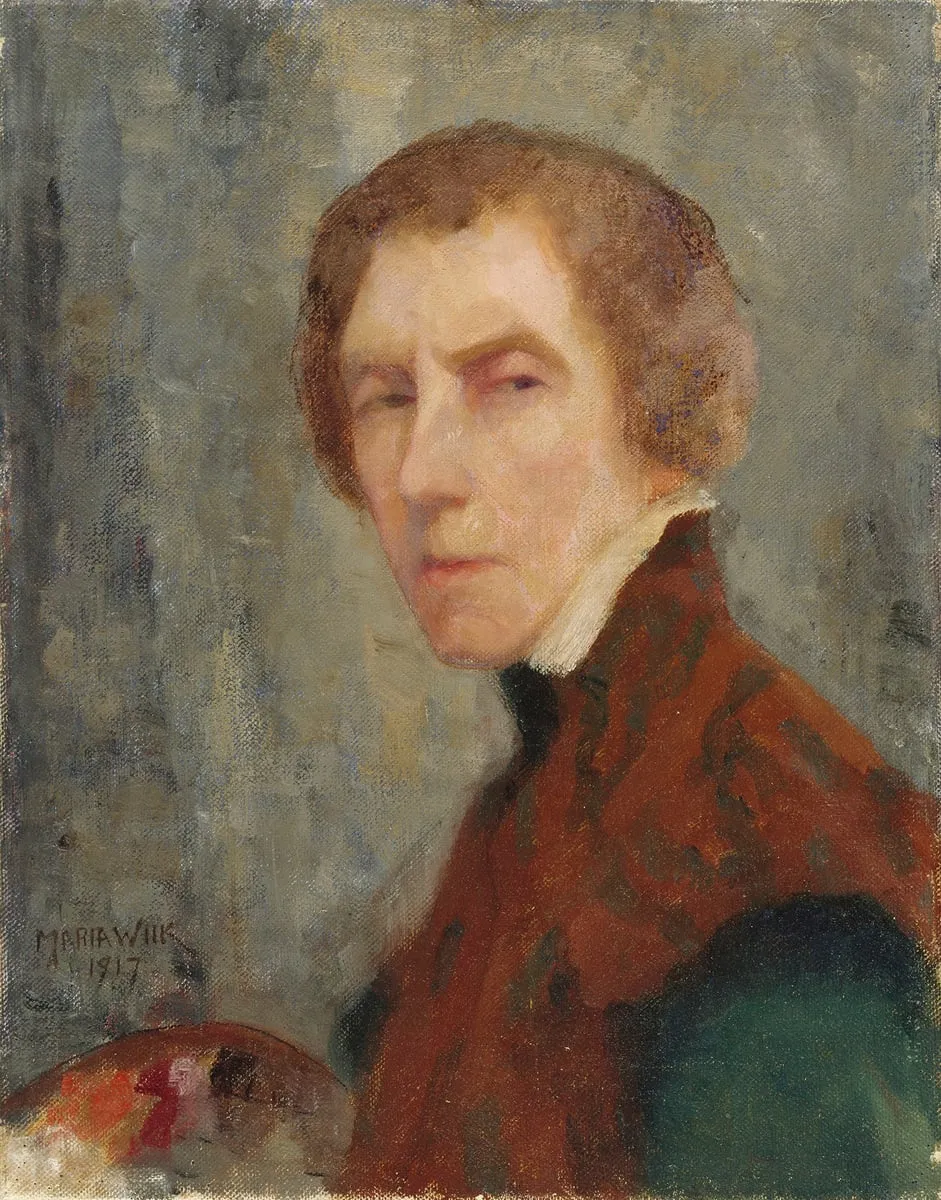
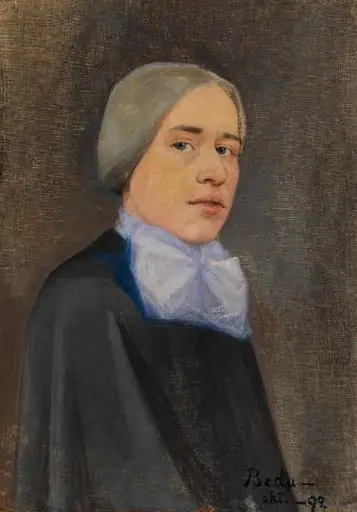
Omakuva is an unspecified painting by Maria Wiik. It is held in the collection of the Finnish National Gallery.
About this work
The background is a muted gray-green, and there’s a faint hint of another object—maybe a hat or cloth—at the bottom left corner.
This painting shows a person with short gray hair and a light beard, wearing a dark red-brown coat over a white collar. Their face is turned slightly to the side, with a calm expression and a soft gaze. The background is a muted gray-green, and there’s a faint hint of another object—maybe a hat or cloth—at the bottom left corner.
The brushstrokes are loose and warm, giving the painting a gentle, lived-in feel. The artist’s signature, *Maria Wiik*, is tucked in the corner, dated 1917.
Next, look up artist: Wiik, Maria to see more of her work.
Overview
Painted in 1917 by Maria Wiik, this portrait captures a quiet, introspective figure in a subdued palette. The subject, dressed in a dark red-brown coat with a white collar, faces slightly away from the viewer, their expression composed and gentle. The background, a soft gray-green, recedes without distraction, while loose, warm brushwork lends a sense of intimacy and immediacy. Wiik’s signature, discreetly placed, confirms authorship and date.
Subject & Meaning
The identity of the sitter is not recorded, but their calm demeanor and unadorned attire suggest a private, personal portrait rather than a formal commission. The slight turn of the head and soft gaze invite quiet contemplation, avoiding theatricality. The faint suggestion of a hat or cloth at the lower left hints at a moment paused in daily life, reinforcing the painting’s unpretentious, domestic character.
Technique & Style
Wiik employed loose, fluid brushstrokes that convey texture without detail—fabric, skin, and background are rendered with equal tactility. Warm tones in the brushwork contrast subtly with the cool gray-green backdrop, creating a sense of quiet harmony. The absence of sharp outlines and the soft blending of tones reflect an impressionistic influence, prioritizing mood over precision.
History & Provenance
The painting’s early ownership history is undocumented, but its date of 1917 places it within Wiik’s later period, after her active years in Finland and Paris. As a woman artist working in a male-dominated field, her works were often exhibited locally and retained within private collections. This piece likely remained in familial or regional hands, avoiding major public exposure.
Context
In early 20th-century Finland, female artists like Wiik navigated limited institutional support yet maintained active studio practices. Her training in Helsinki and Paris informed a style that balanced academic discipline with emerging modern sensibilities. This portrait reflects a broader trend among Nordic women painters: intimate, psychologically grounded depictions of individuals outside the public sphere.
Legacy
Maria Wiik’s body of work, though not widely known outside Scandinavia, contributes to the quiet legacy of women artists who documented everyday life with sensitivity. This portrait, like others in her oeuvre, resists grand narratives in favor of understated presence. Its preservation offers insight into the personal, often overlooked, visual culture of early modern Nordic art.
Artist & collection
Artist
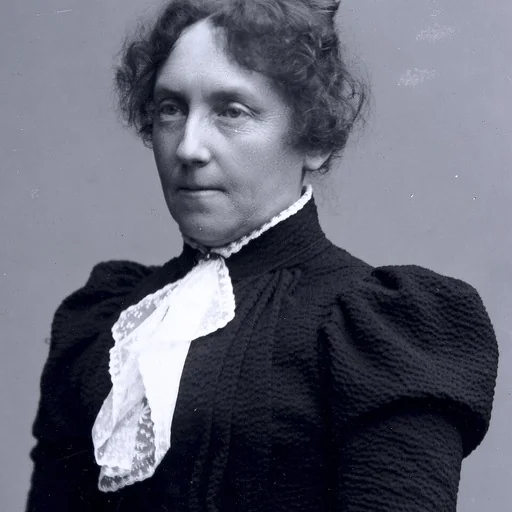
Maria Catharina Wiik (3 August 1853 – 19 June 1928) was a Finnish painter. She worked principally with still life, genre images, landscape paintings and portraits.

 Alfonso XIII, Rey de España
 Gold and Brown: Self-Portrait
 Tekla Hultinin muotokuva
 Portrait of William Orpen (1878-1931), Artist
 Portrait of a Man
 Self-Portrait
 Portrait of Lady Armstrong (née Ferrard)
 Autoportret
 El pintor Vicente Poleró
 Portrait of Augusta Gregory (1852-1932), Dramatist and Folklorist
 Bessie Potter
 Omakuva