Artwork
Finding the body of Tippoo Sahib
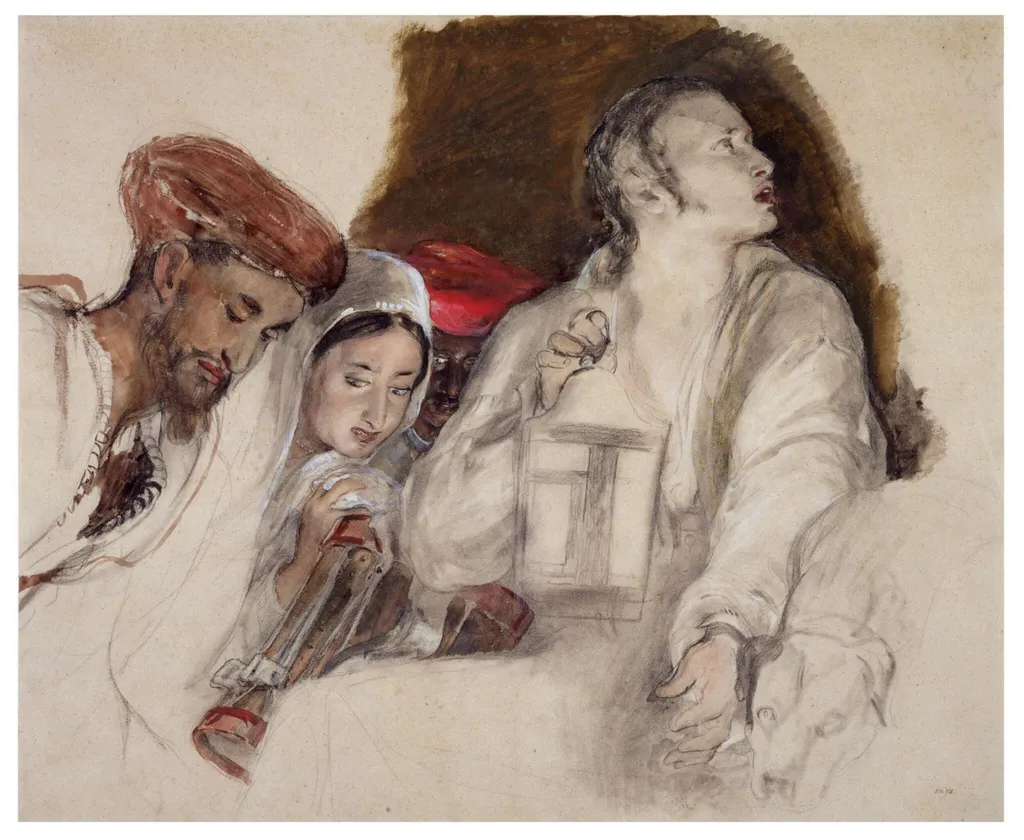
Finding the body of Tippoo Sahib is a watercolor work on paper by the Romanticist artist David RA Wilkie. It dates from 1805 and is held in the collection of the Victoria and Albert Museum.
About this work
Overview
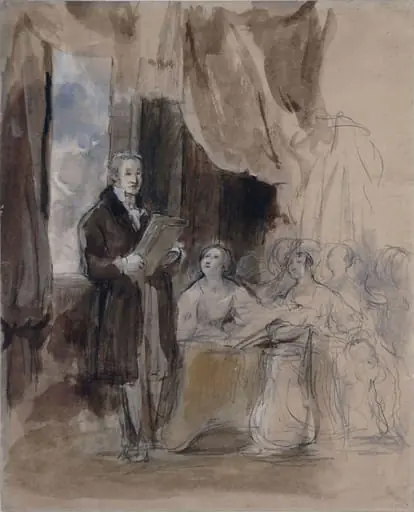
Sir David Wilkie’s watercolor and crayon composition records the moment when the body of Tipu Sultan was found after the 1799 Siege of Seringapatam. The work captures a solemn gathering of figures surrounding the fallen ruler, emphasizing the gravity of the event.
Subject & Meaning
The central focus is the lifeless form of Tipu Sultan, attended by several onlookers who lean in with expressions of grief and reverence. The scene conveys a collective acknowledgment of loss, reflecting the British perspective on the conclusion of the Mysore conflict.
Technique & Style
Wilkie combines watercolor washes with crayon detailing, employing a restrained palette of browns and beiges. Subtle chiaroscuro creates a contrast between illuminated faces and shadowed surroundings, enhancing the drama without resorting to vivid coloration.
History & Provenance
Created shortly after the siege, the piece was likely produced for a British audience interested in the recent Indian campaign. Its provenance traces back to private collections before entering a museum context, where it serves as a visual document of the period.
Context
The work belongs to a broader tradition of British artists documenting colonial wars. By portraying the aftermath of Seringapatam, Wilkie contributes to the visual narrative that framed the British victory and the demise of a prominent Indian ruler.
Own this work as a print
Artist & collection
Artist
Wilkie made watercolors and drawings that told detailed stories, often about real people and events.

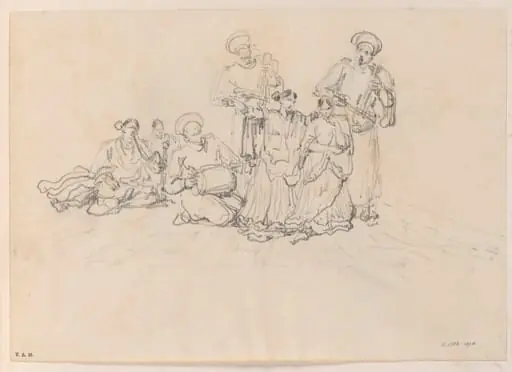 A group of Indian musicians and dancers
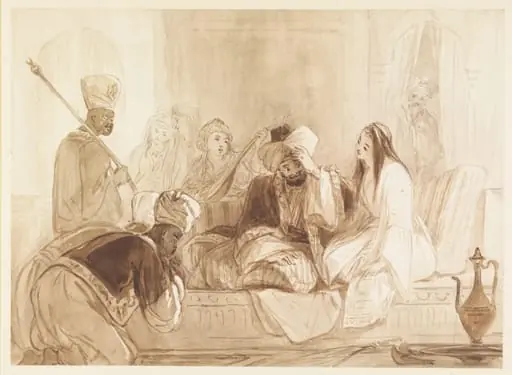 The Sleeper awakened
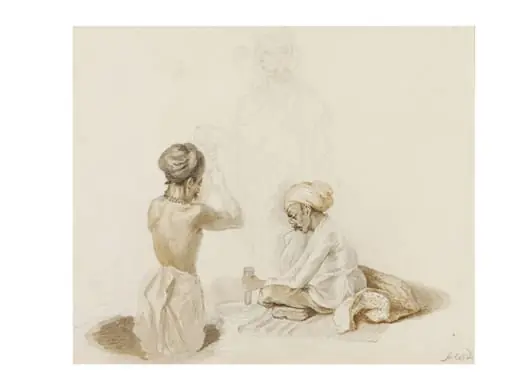 An Indian metal-worker seated cross-legged with his assistant, who raises and hammer, and another figure standing behind
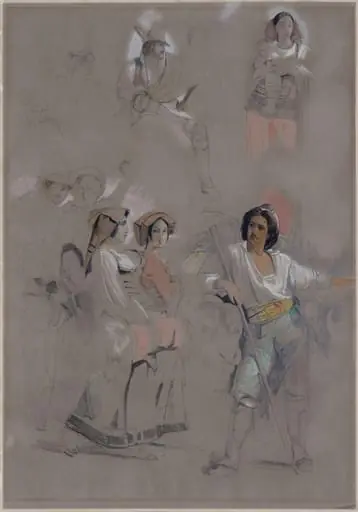 Figures in Italia Costume
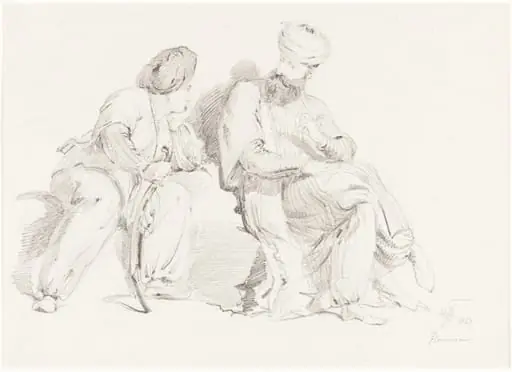 Two Men in Oriental Dress
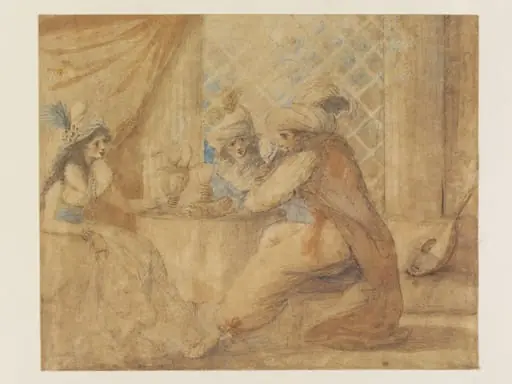 The Beautiful Stranger poisond by her Sister
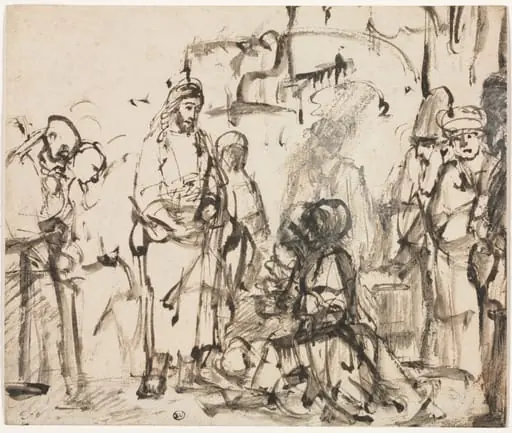 The Meeting of Christ with Martha and Mary after the Death of Lazarus
![Advanced guard & Baggage of the Royal artillery landi[ng] a[t] Alexandria en route for India, by T. B. S.](https://artifactworldgallery.com/img/t-b-s--advanced-guard-baggage-of-the-royal-artillery-landi-ng-a-t-a--605f6f4d9d8dfe93-w320.webp) Advanced guard & Baggage of the Royal artillery landi[ng] a[t] Alexandria en route for India
Advanced guard & Baggage of the Royal artillery landi[ng] a[t] Alexandria en route for India![Blind Egyptian with a Madrab [Teasel], by Egron Sillif Lundgren](https://artifactworldgallery.com/img/egron-sillif-lundgren--blind-egyptian-with-a-madrab-teasel--05374d5103b0d694-w320.webp) Blind Egyptian with a Madrab [Teasel]
Blind Egyptian with a Madrab [Teasel]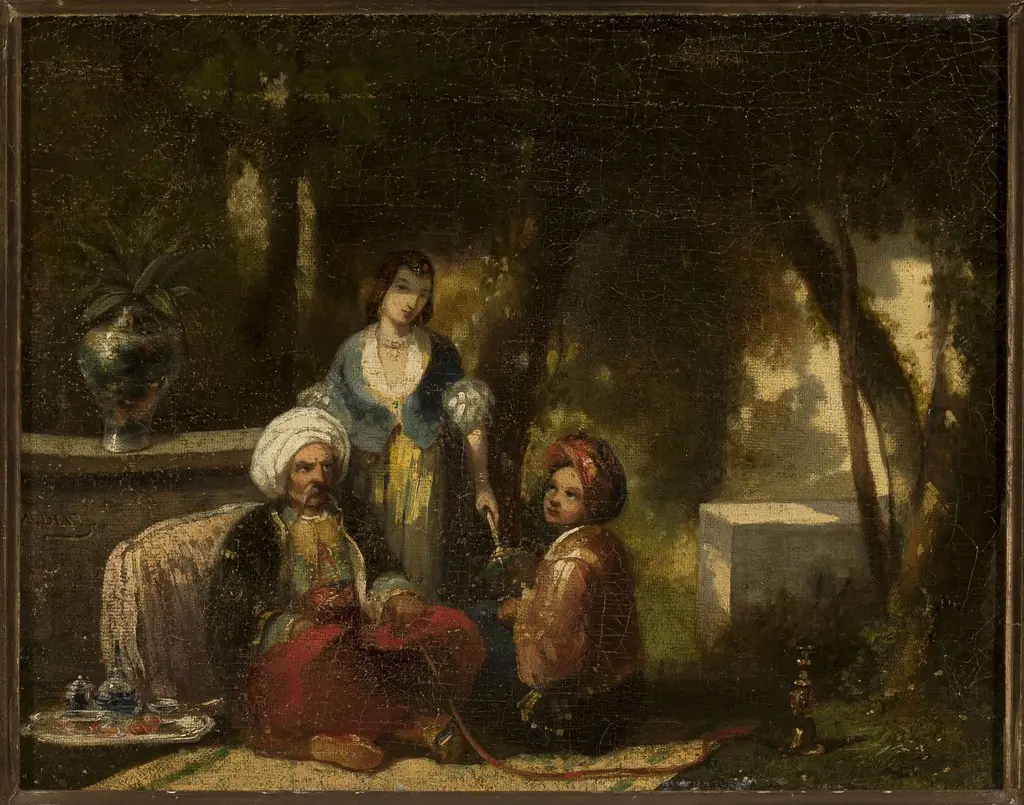 Man with a narghile against forest landscape
 Sketches of Figures