Artwork
Sir Robert Peel reading to the Queen
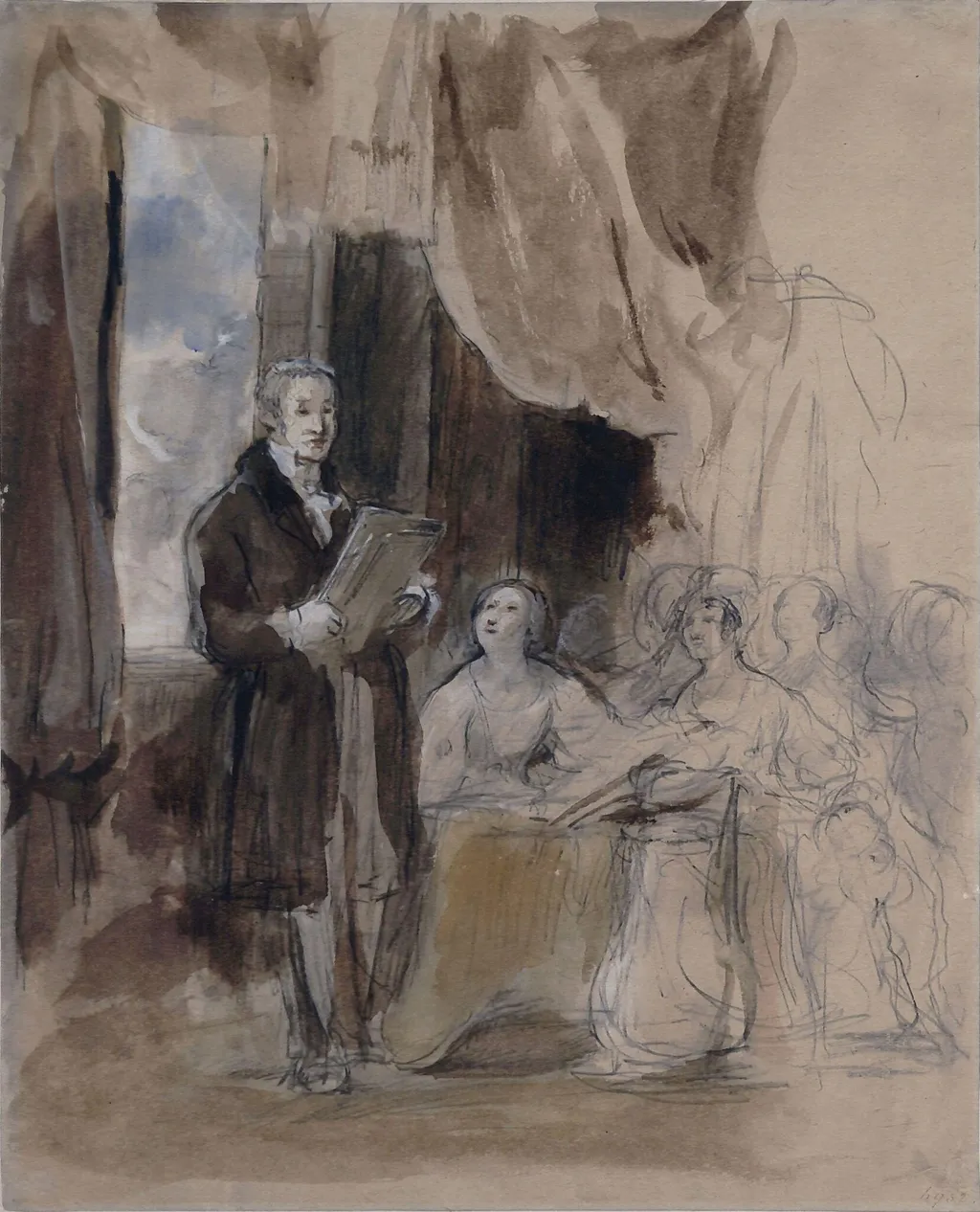
Sir Robert Peel reading to the Queen is a watercolor work on paper by the Romanticist artist David RA Wilkie. It dates from 1844 and is held in the collection of the Victoria and Albert Museum. David Wilkie created this watercolour as a intimate, spontaneous study of Sir Robert Peel reading aloud to Queen Victoria.
About this work
Overview
David Wilkie created this watercolour as a intimate, spontaneous study of Sir Robert Peel reading aloud to Queen Victoria. Executed with fluid, light washes and minimal detail, the work captures a quiet domestic moment rather than a formal portrait. The loose brushwork and muted palette suggest immediacy, as if the scene were observed in passing.
Subject & Meaning
The scene portrays Peel, then Prime Minister, engaged in a private act of reading to the monarch, reflecting the personal rapport between the two. Queen Victoria, seated nearby, appears absorbed in thought, her expression unguarded. The faint, indistinct figures behind them may hint at attendants or the ephemeral nature of the moment, emphasizing solitude within the royal setting.
Technique & Style
Wilkie employed translucent watercolour washes and delicate, sketch-like lines to convey atmosphere over precision. Faces and forms are suggested rather than defined, with edges dissolving into the paper. The technique prioritizes mood and movement, aligning with his interest in candid, everyday scenes rather than ceremonial grandeur.
History & Provenance
Created during Wilkie’s tenure as Painter to the Queen, the work likely dates to the early 1840s, when Peel served as Prime Minister. It was probably made as a private study, not for public display, and remained within the artist’s circle until later acquisition by a public collection. Its unfinished quality suggests it was a preparatory or personal exercise.
Context
Wilkie was known for genre scenes depicting ordinary life, and this watercolour extends that interest into the royal sphere. At a time when the monarchy was cultivating a more relatable image, such intimate portrayals helped humanize the royal family. The work reflects broader cultural shifts toward domesticity and emotional authenticity in Victorian visual culture.
Legacy
Though not widely exhibited, the watercolour exemplifies Wilkie’s ability to merge observational realism with poetic restraint. It stands as a quiet counterpoint to formal royal portraiture of the era, offering a glimpse into the private rhythms of court life through the lens of an artist attuned to subtle human presence.
Own this work as a print
Artist & collection
Artist
Wilkie made watercolors and drawings that told detailed stories, often about real people and events.

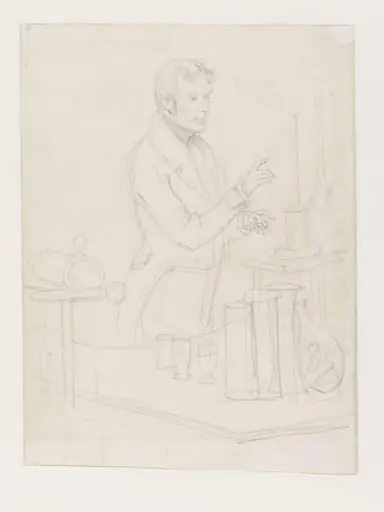 Michael Faraday
![Shepard Alonzo Mount, Age Twenty-Three [recto], by William Sidney Mount](https://artifactworldgallery.com/img/william-sidney-mount--shepard-alonzo-mount-age-twenty-three-recto--adf0b3e0763f0137-w320.webp) Shepard Alonzo Mount, Age Twenty-Three [recto]
Shepard Alonzo Mount, Age Twenty-Three [recto]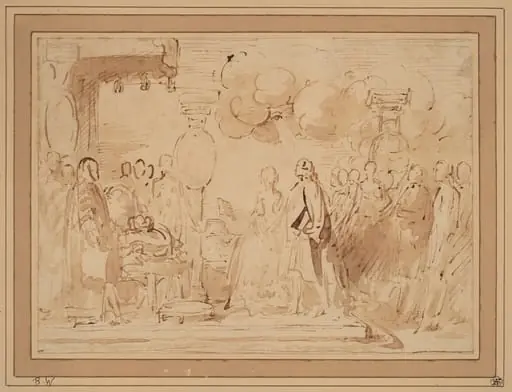 George III Resuming Royal Power in 1789
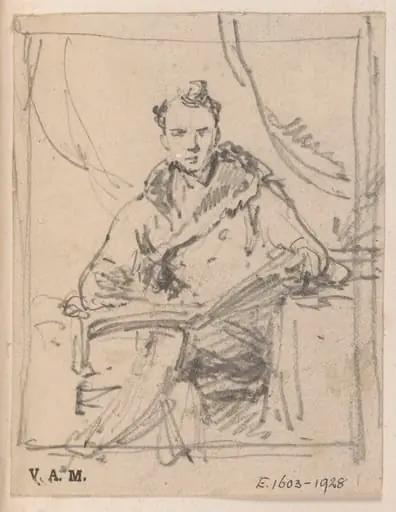 A Western man seated with a book on his knee
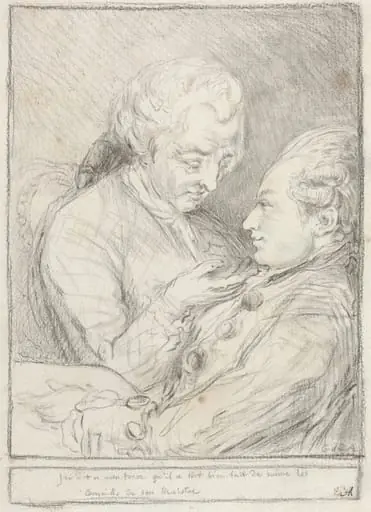 Portrait of the Artist with His Younger Brother, Augustin Saint-Aubin
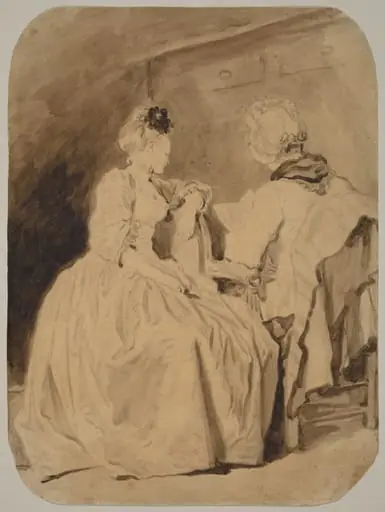 The Reading
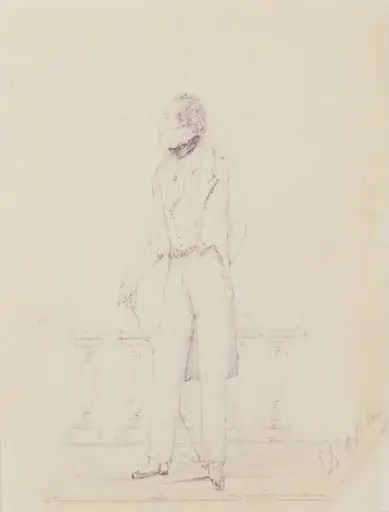 Lord Byron (1788-1824)
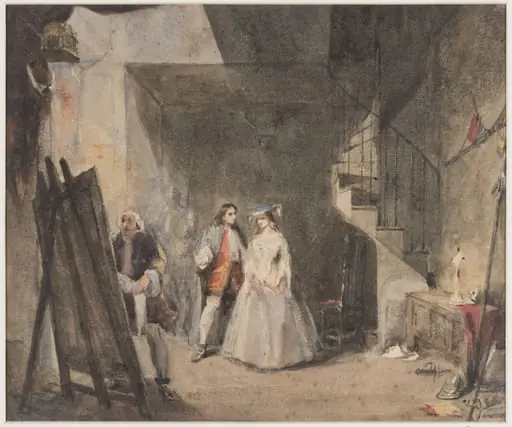 Interior of an artist's studio
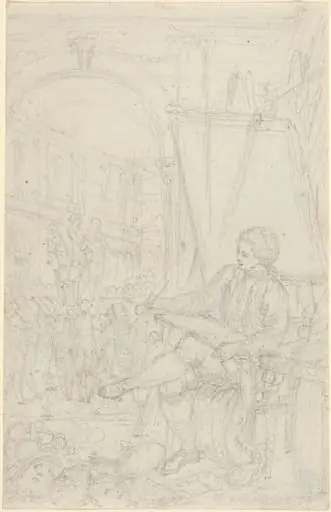 Self-Portrait
![Man with a Walking Stick, Seen in Profile [recto], by Hubert Robert](https://artifactworldgallery.com/img/hubert-robert--man-with-a-walking-stick-seen-in-profile-recto--9a2de0af8c4d35fd-w320.webp) Man with a Walking Stick, Seen in Profile [recto]
Man with a Walking Stick, Seen in Profile [recto]![Study of a Seated Man [recto], by Allan Ramsay](https://artifactworldgallery.com/img/allan-ramsay--study-of-a-seated-man-recto--ecc95c68788b0e76-w320.webp) Study of a Seated Man [recto]
Study of a Seated Man [recto]![Group of Men Seated in a Circle [recto], by William Blake](https://artifactworldgallery.com/img/william-blake--group-of-men-seated-in-a-circle-recto--630d4ede0642e80d-w320.webp) Group of Men Seated in a Circle [recto]
Group of Men Seated in a Circle [recto]