Artwork
A Rustic House in the Grand Rue at Sceaux-Les-Chartreux
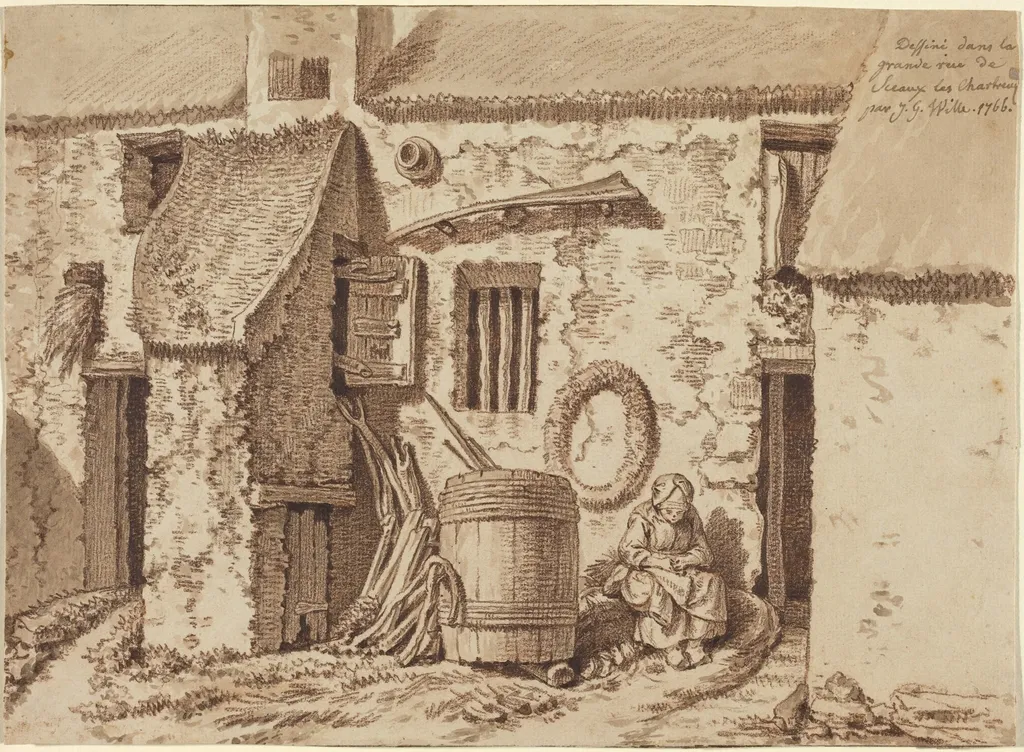
A Rustic House in the Grand Rue at Sceaux-Les-Chartreux is a chalk drawing by the Romanticist artist Johann Georg Wille. It dates from 1766 and is held in the collection of the National Gallery of Art.
About this work
Overview
Created in 1766, this drawing by Johann Georg Wille portrays a modest dwelling on the Grand Rue of Sceaux‑Les‑Chartreux. Executed with brown chalk and a brown wash on laid paper, the composition centers on a thatched‑roofed house fronted by a solitary woman in a long skirt and headscarf, suggesting everyday rural activity.
Subject & Meaning
The work captures a quiet moment of domestic life, juxtaposing the sturdy, timber‑framed house with the figure of a woman possibly engaged in spinning or weaving. The inclusion of ordinary architecture and a working individual reflects an interest in the quotidian realities of provincial France during the mid‑eighteenth century.
Technique & Style
Wille employs a restrained palette of brown tones, using chalk for line work and a wash to model form and atmosphere. The drawing demonstrates careful attention to texture—such as the thatch, wooden door, and fabric—while chiaroscuro subtly models light and shadow, creating depth without relying on color.
History & Provenance
Johann Georg Wille (1715–1808), a German‑born copper engraver who established his career in France, produced this piece during his most active period as a printmaker and art dealer. The drawing remains a representative example of his draughtsmanship, illustrating the cross‑cultural artistic exchanges of the Enlightenment era.
Artist & collection

Artist
Johann Georg Wille, or Jean Georges Wille (5 November 1715, near Biebertal – 5 April 1808, Paris) was a German-born copper engraver, who spent most of his life in France. He also worked as an art dealer.

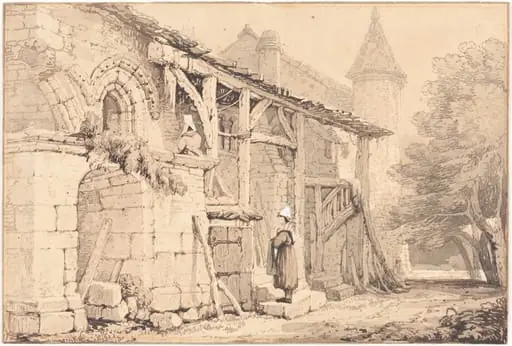 Scene at Jumièges
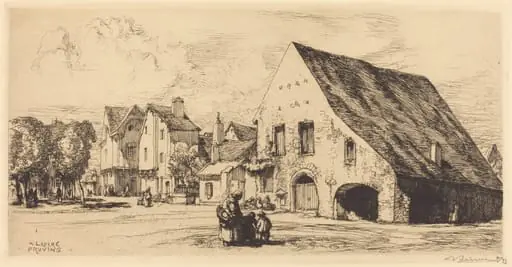 Provins (Seine et Marne)
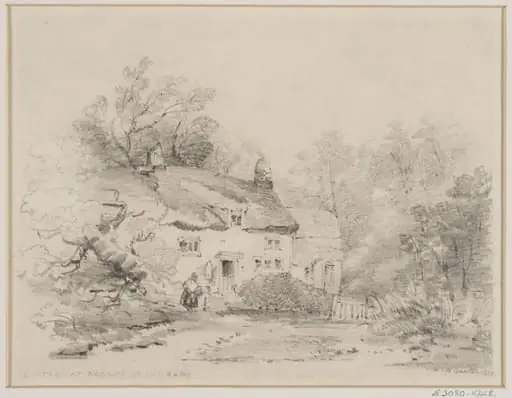 Cottage at Scalby, nr. Scarborough
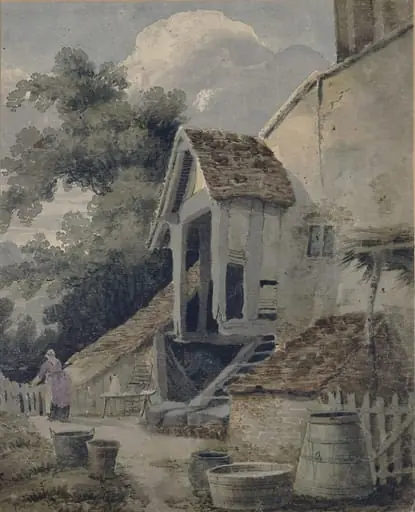 The Old Farm, near Selby Hall
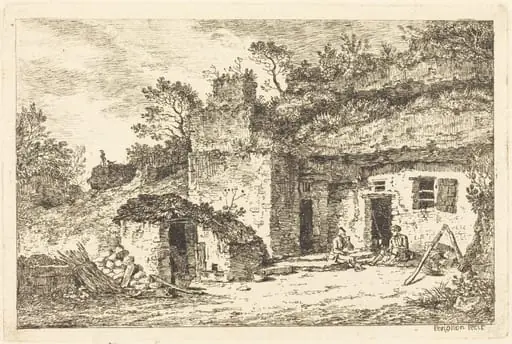 A Cottage with Two Men Seated at the Doorway
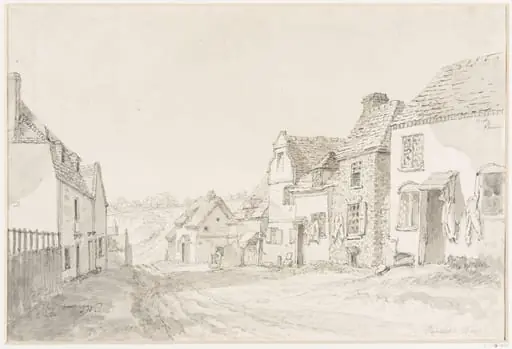 Pegwell Bay
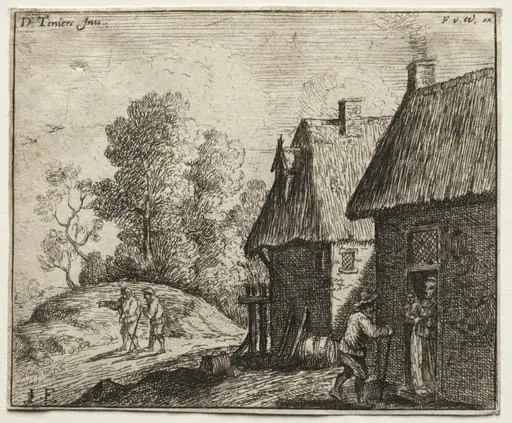 Peasant Talking to a Woman
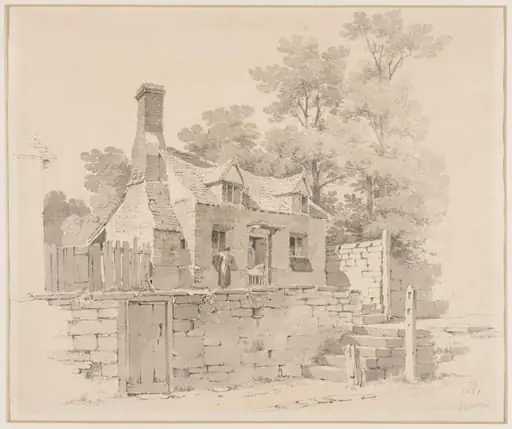 A Cottage in High Street, Hastings
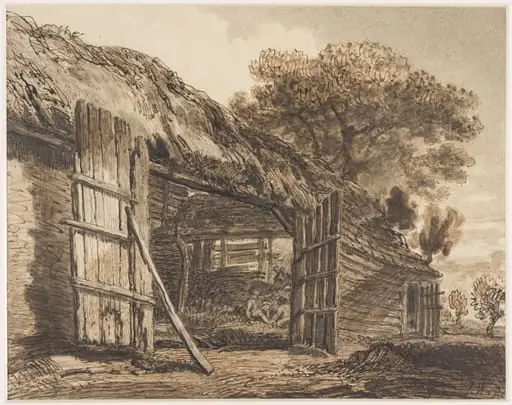 A Study from Nature.
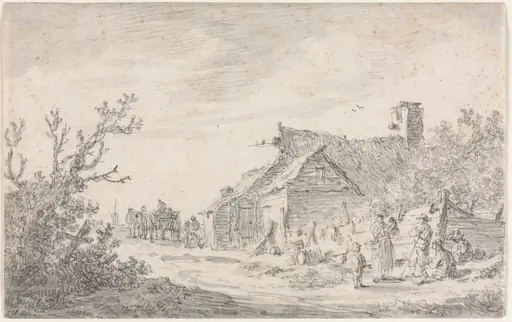 Landscape with a Cottage and Figures
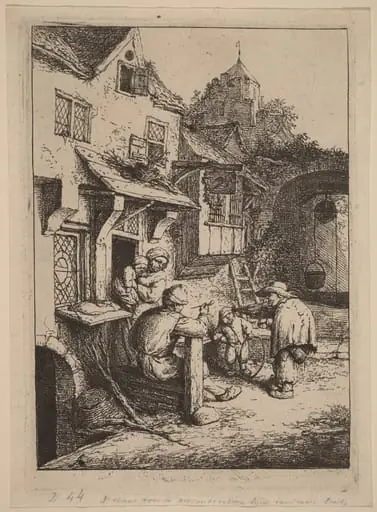 Peasant Family Entertained by a Fiddler with a Hunchback
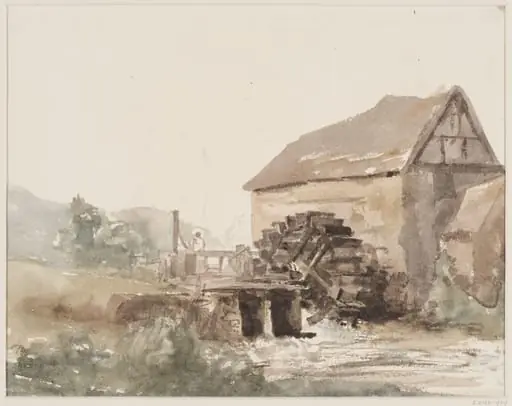 View of a water-mill near Ridware