Artwork
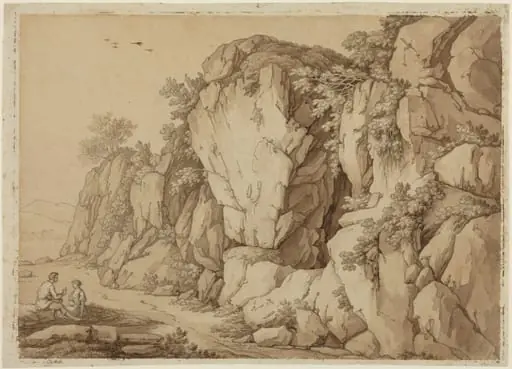
Two Children Seated near Overgrown Ruins
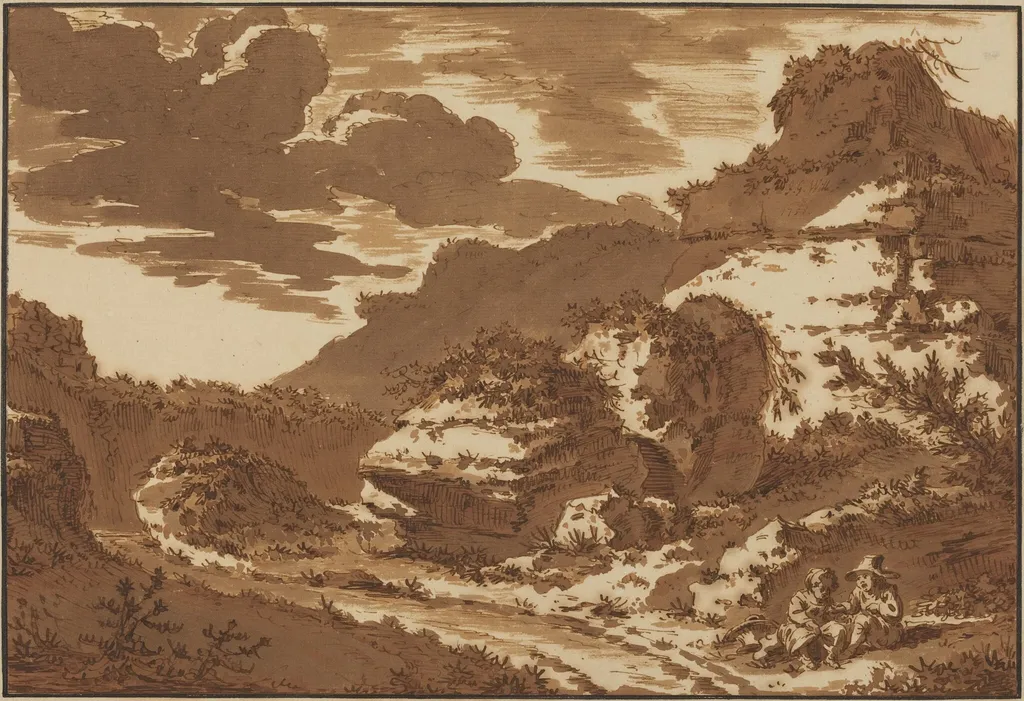
Two Children Seated near Overgrown Ruins is an ink drawing by the Romanticist artist Johann Georg Wille. It dates from 1758 and is held in the collection of the National Gallery of Art.
About this work
This painting is titled Two Children Seated near Overgrown Ruins.
It was created in 1758 by Johann Georg Wille.
The artist used a mix of pen, brown ink, and brown wash over red chalk on laid paper, which was a common technique at the time, and this specific combination of media adds a unique texture to the work.
You can learn more about this style by exploring the movement: Romanticism.
Overview
Executed in 1758, this drawing by Johann Georg Wille combines pen and brown ink with brown wash over red chalk on laid paper. The artist, a German expatriate active in Paris, employed these materials to depict two children amid crumbling, foliage-choked ruins. The work exemplifies mid-18th-century draftsmanship, balancing precise linework with subtle tonal gradations.
Subject & Meaning
The scene centers on two young figures seated within the remnants of a decaying structure, its stones overtaken by vegetation. The juxtaposition of childhood innocence with architectural decline may suggest themes of transience, nature’s reclamation of human endeavors, or the passage of time. The ruins, devoid of grandeur, evoke a quiet meditation rather than overt narrative.
Technique & Style
Wille’s method layers red chalk underdrawing with fine penwork and delicate washes, creating depth through controlled tonal shifts. The interplay of crisp outlines and fluid shading lends the composition a tactile quality, while the restrained palette emphasizes form over color. Though not strictly Romantic, the drawing’s atmospheric treatment aligns with emerging sensibilities of the period.
History & Provenance
Created during Wille’s Parisian tenure, the drawing reflects his dual roles as engraver and art dealer. Its early ownership remains undocumented, but its survival suggests inclusion in private collections or studio holdings. The work’s medium and scale indicate it may have served as a preparatory study or an independent work for connoisseurs of draftsmanship.
Context
Produced in an era fascinated by ruins—both classical and imagined—Wille’s drawing participates in a broader 18th-century interest in decay as a metaphor. Unlike monumental ruins in grand landscapes, this intimate scene focuses on modest, overgrown remnants, possibly reflecting contemporary shifts toward more personal or pastoral interpretations of nature and history.
Own this work as a print
Artist & collection

Artist
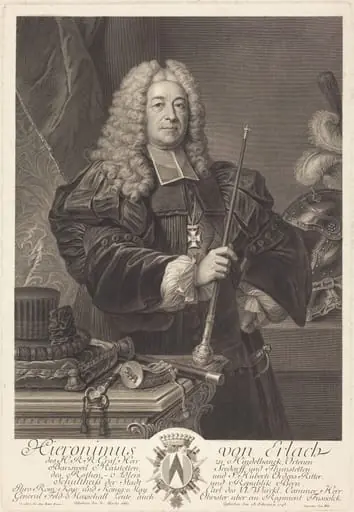
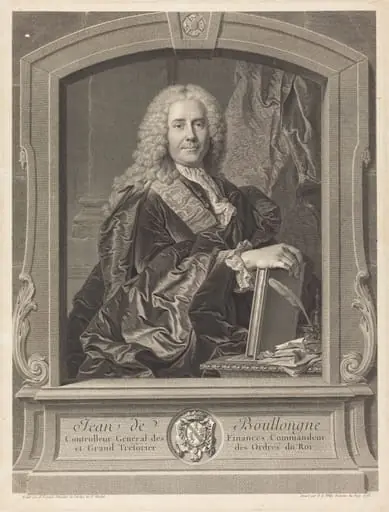
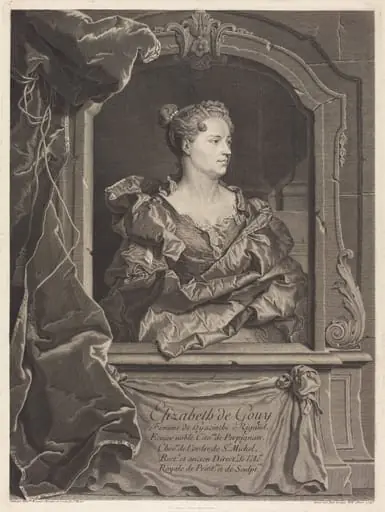
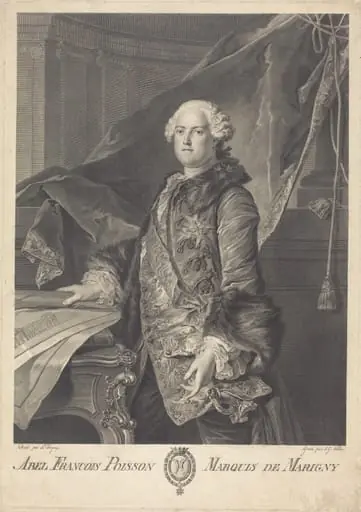
Johann Georg Wille, or Jean Georges Wille (5 November 1715, near Biebertal – 5 April 1808, Paris) was a German-born copper engraver, who spent most of his life in France. He also worked as an art dealer.

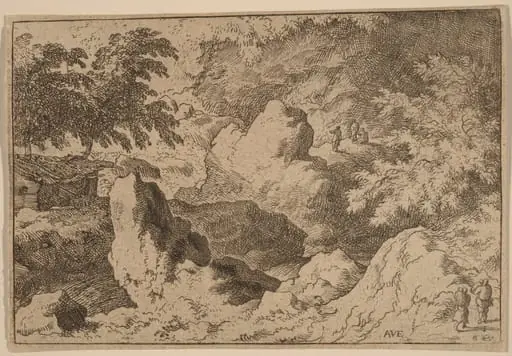 Three Men on a Rock
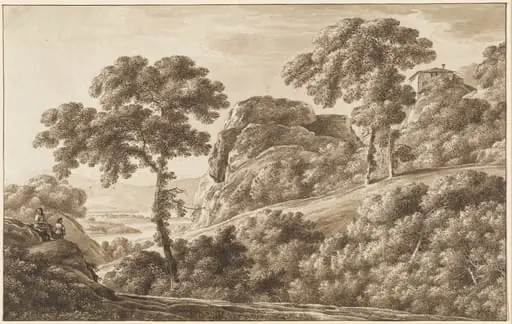 The Isar with Boulders on the Isarhohe
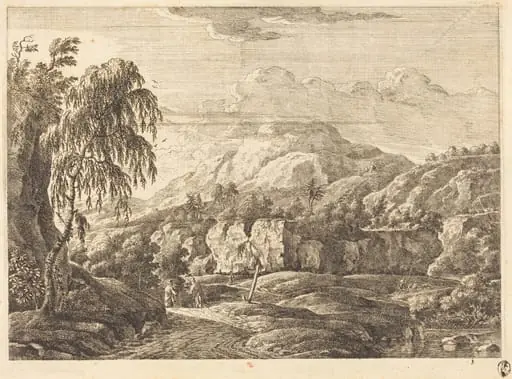 Landscape with Cross and Figures
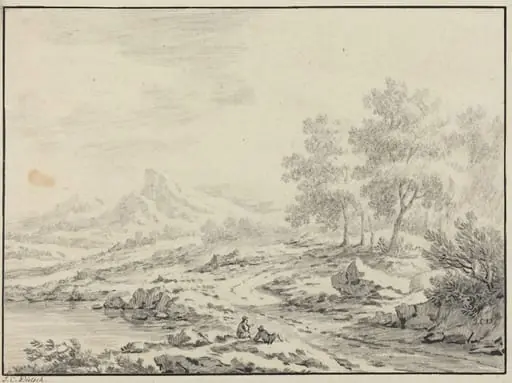 Two Men Resting near a Lake
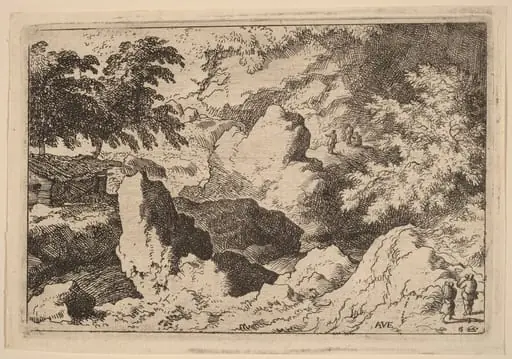 Three Men on a Rock
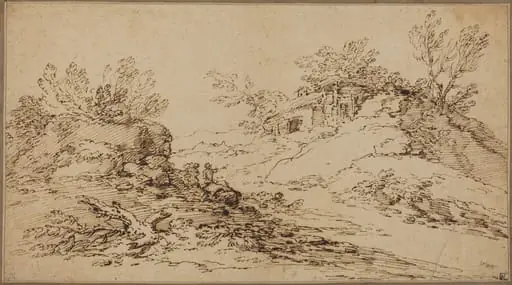 Rocky Landscape with a Rustic House
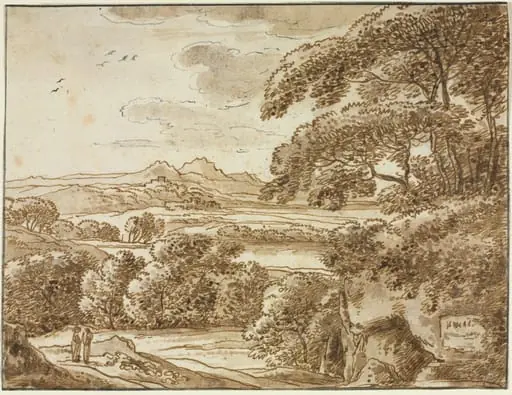 Landscape
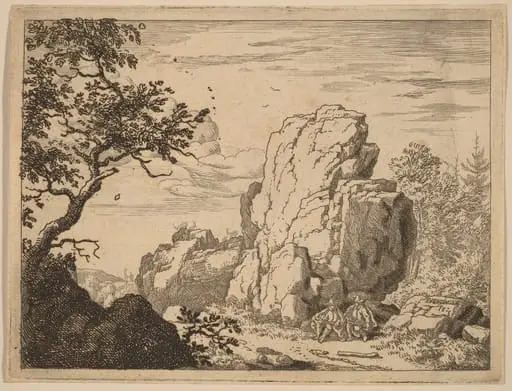 Two Men Seated at the Foot of a High Rock
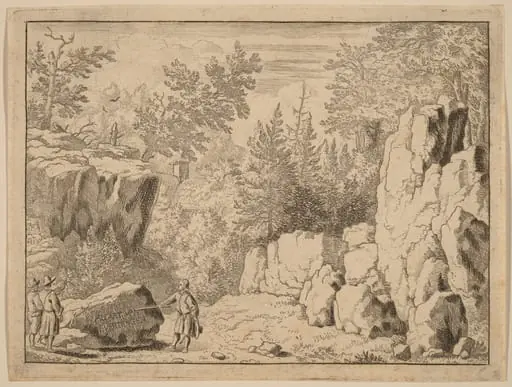 The Inscription on the Rock
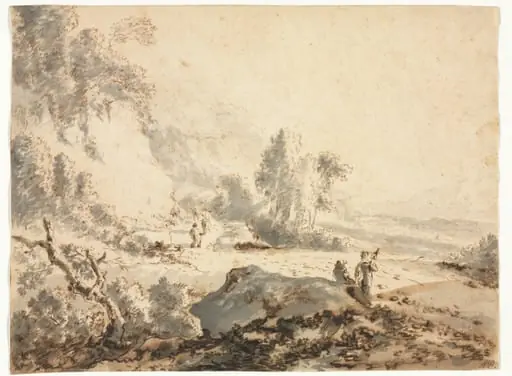 Landscape
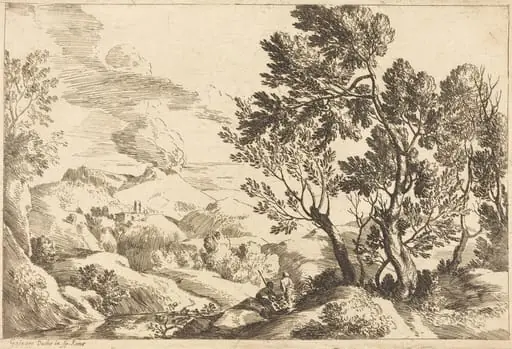 Roman Landscape
 A Young Couple Seated near a Massive Rock Formation