Artwork
Elizabeth de Gouy, femme de Hyacinthe Rigaud
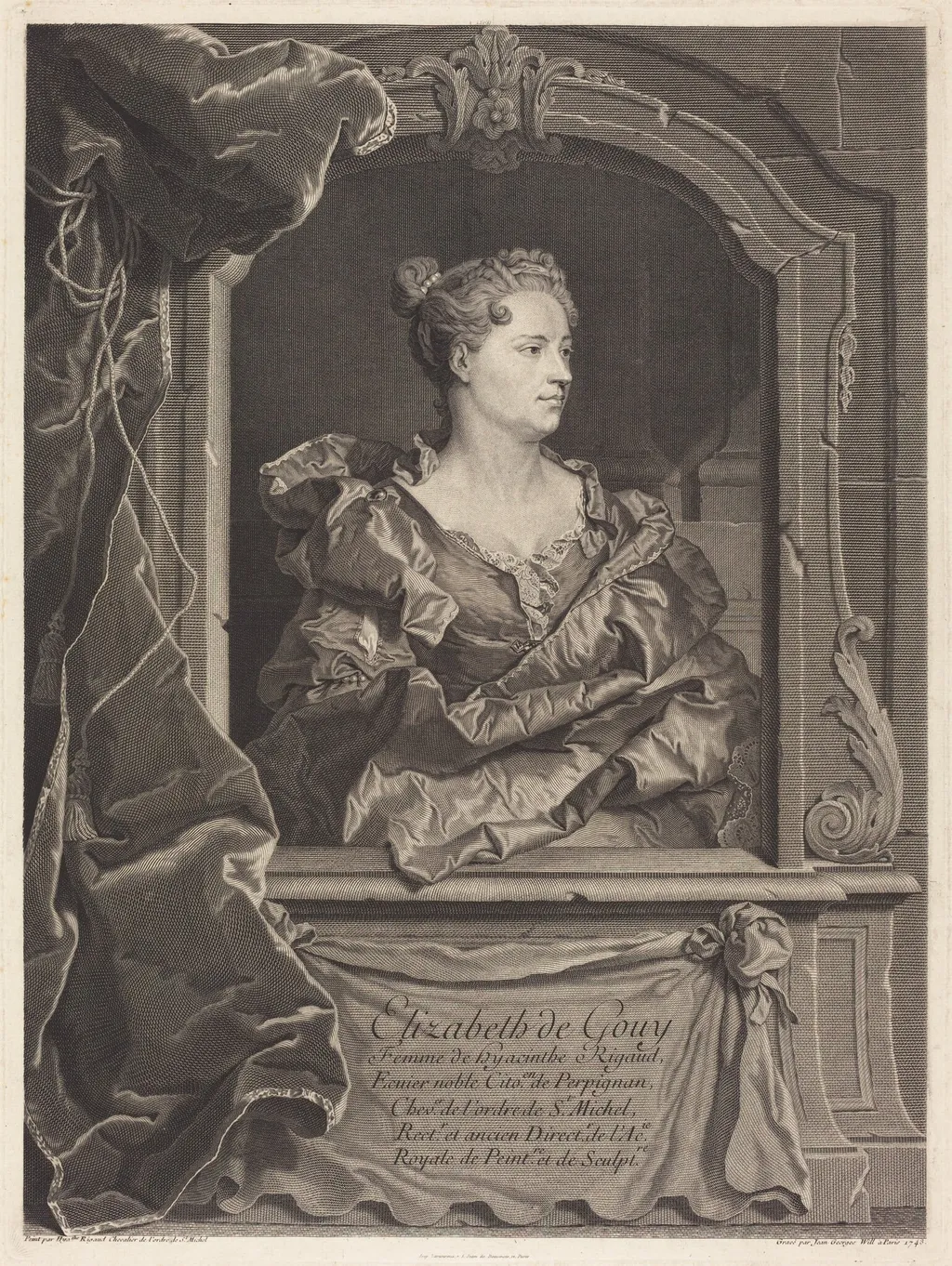
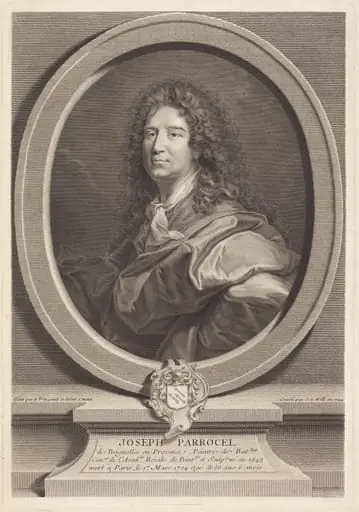
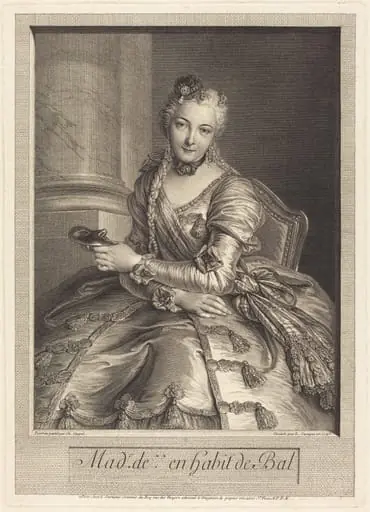
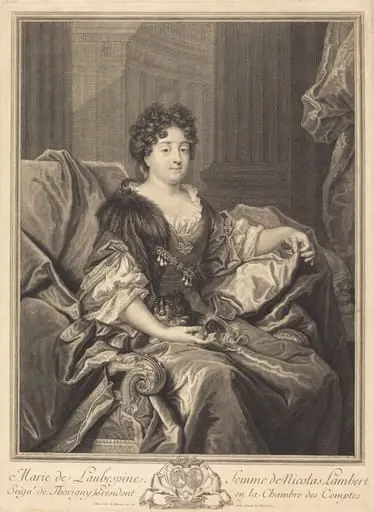
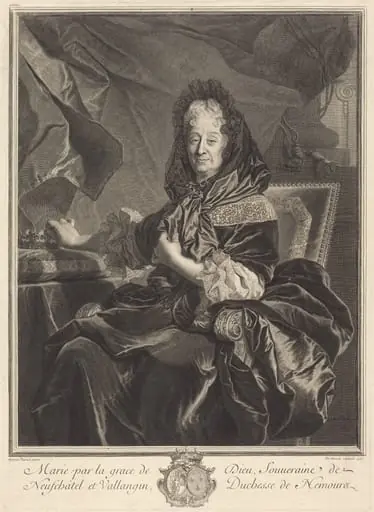
Elizabeth de Gouy, femme de Hyacinthe Rigaud is an ink print by the Baroque artist Johann Georg Wille. It dates from 1743 and is held in the collection of the National Gallery of Art.
About this work
Overview
This 1743 print by Johann Georg Wille translates a painted portrait into etched and engraved lines. Executed in Paris, where Wille worked as both artisan and dealer, the image reproduces a likeness originally created by Hyacinthe Rigaud. As a reproductive print, it preserves the visual details of the source while adapting them to the constraints and possibilities of intaglio techniques.
Subject & Meaning
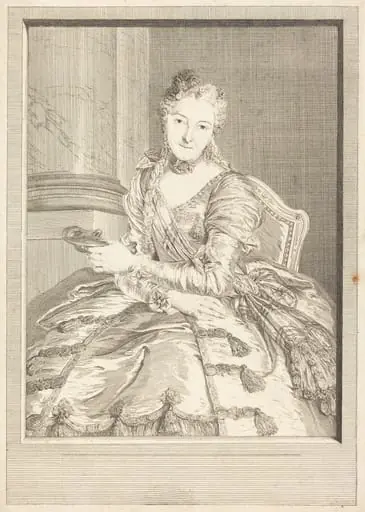
The sitter is Elizabeth de Gouy, wife of the painter Hyacinthe Rigaud. Presented in an elaborate gown with intricate ruffles and an ornate hairstyle, she occupies a space framed by carved moldings and draped fabric. While the inscription remains partially obscured, the composition conveys status and refinement, aligning with conventions of aristocratic portraiture in eighteenth-century France.
Technique & Style
Wille combined etching’s fluid lines with engraving’s precise control to render textures—fabric folds, lace, and hair—while maintaining the polished finish characteristic of reproductive prints. The layered technique allowed him to replicate Rigaud’s painterly effects in black and white, emphasizing tonal contrasts and fine details without color.
History & Provenance
Born in Germany, Wille established himself in Paris, where he produced prints after works by leading artists. This etching belongs to a broader practice of disseminating painted portraits through printmaking, extending their reach beyond private collections. Its survival reflects the role of reproductive prints in circulating images before photography.
Context
Reproductive prints like this one served as both artistic records and commercial objects. Wille’s workshop catered to collectors who valued fidelity to original paintings, while also functioning as a marketplace for images. The print’s subject, Elizabeth de Gouy, embodies the era’s fascination with portraiture as a means of asserting social presence.
Artist & collection

Artist
Johann Georg Wille, or Jean Georges Wille (5 November 1715, near Biebertal – 5 April 1808, Paris) was a German-born copper engraver, who spent most of his life in France. He also worked as an art dealer.