Artwork
Dessert
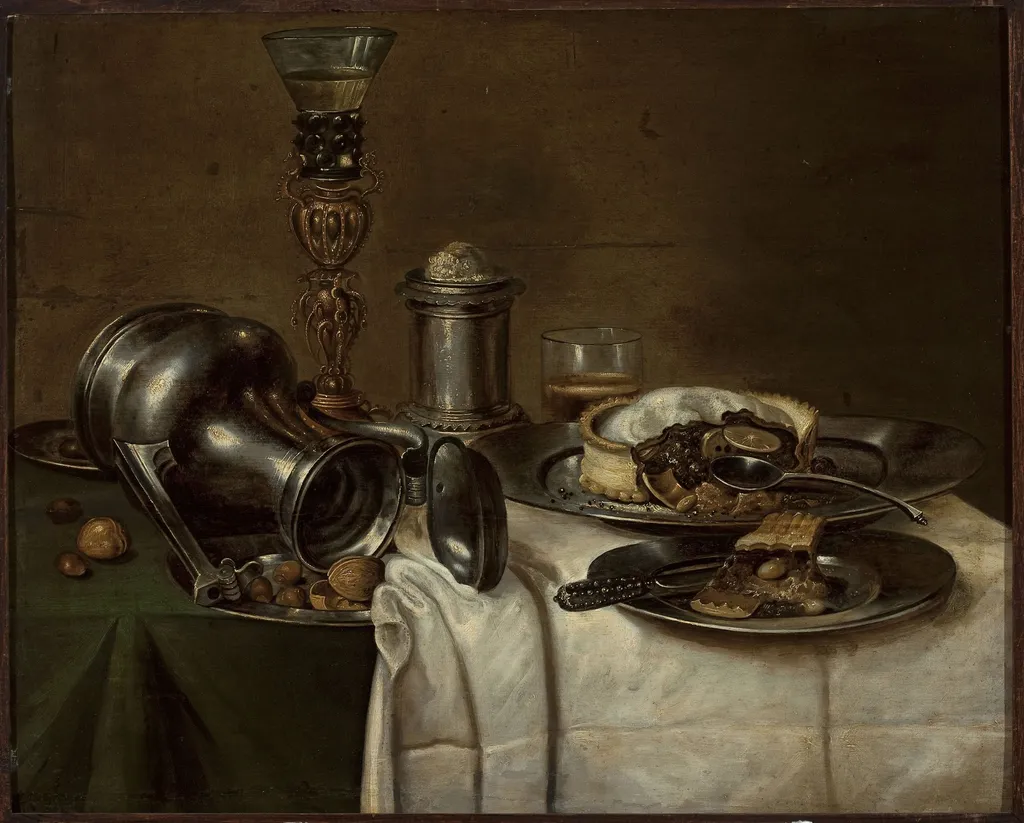
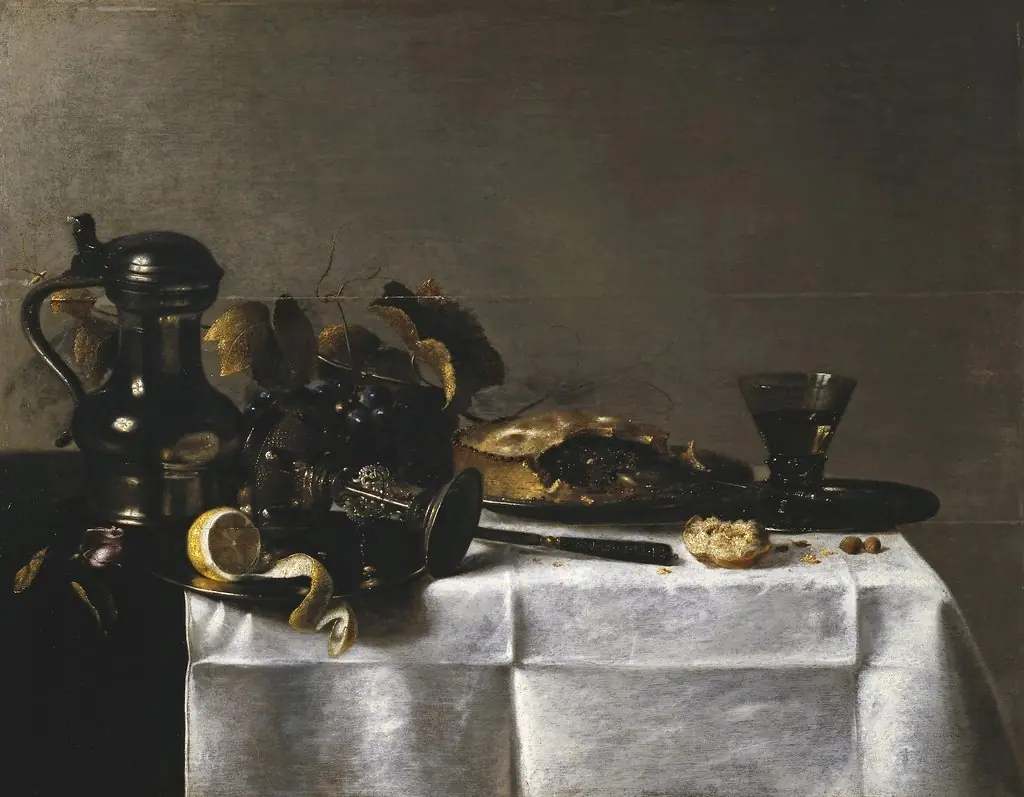
Dessert is an oil painting by the Dutch Golden Age artist Cornelis Mahu. It dates from 1670 and is held in the collection of the National Museum in Warsaw.
About this work
Overview
It reflects the broader tradition of Dutch Golden Age painting, where everyday domestic scenes were rendered with meticulous attention to material detail.
Painted in 1670 by the Flemish artist Cornelis Mahu, this oil-on-canvas still life presents a carefully composed arrangement of tableware and food. It reflects the broader tradition of Dutch Golden Age painting, where everyday domestic scenes were rendered with meticulous attention to material detail. The work is part of the National Museum in Warsaw’s collection, where it remains a quiet example of 17th-century Northern European still-life practice.
Subject & Meaning
The painting displays a modest banquet of bread, nuts, fruit, and drinkware arranged on a draped table. No grand feast is implied; instead, the selection suggests a private, intimate moment. The inclusion of polished metal vessels and scattered nuts hints at themes of transience and domestic order. The absence of human figures invites contemplation of the objects themselves, emphasizing quiet abundance rather than excess.
Technique & Style
Mahu employed precise brushwork to capture the reflective surfaces of silver and glass, using subtle gradations of light to model form. The dark, unbroken background enhances the three-dimensionality of the objects, a technique rooted in chiaroscuro. The white linen cloth is rendered with soft folds, contrasting with the sharp edges of metal and the matte texture of bread. Each element is observed with clinical accuracy, typical of Northern European still-life conventions.
History & Provenance
The painting entered the National Museum in Warsaw’s collection in the 19th century, likely through acquisitions of European works during a period of renewed interest in Dutch and Flemish art. Its journey from the Low Countries to Poland remains undocumented, but its preservation suggests it was valued as a representative example of 17th-century still-life painting. No major restorations or alterations are recorded.
Context
Created during the height of the Dutch Golden Age, the painting aligns with a cultural moment when middle-class patrons commissioned art that celebrated domestic life and material culture. While grand historical or religious subjects dominated elsewhere, Northern artists like Mahu focused on the aesthetic potential of ordinary objects. This work reflects a broader trend of valuing observation, craftsmanship, and the quiet dignity of the everyday.
Legacy
Though not widely exhibited outside Poland, the painting contributes to the understanding of Flemish still-life traditions beyond the more famous Dutch masters. Its restrained composition and technical precision offer insight into the regional variations of genre painting in the 17th century. It remains a quiet testament to the skill of artists who found significance in the stillness of the table.
Artist & collection
Artist
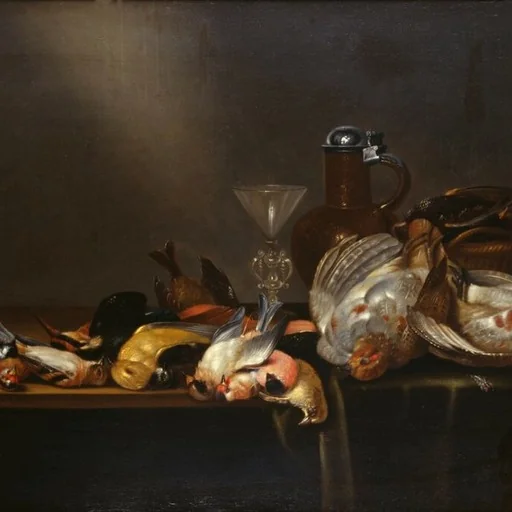
Cornelis Mahu (1613 – 16 November 1689) was a Flemish painter of still lifes, genre paintings and seascapes who showed a very high level of craftsmanship in his compositions.

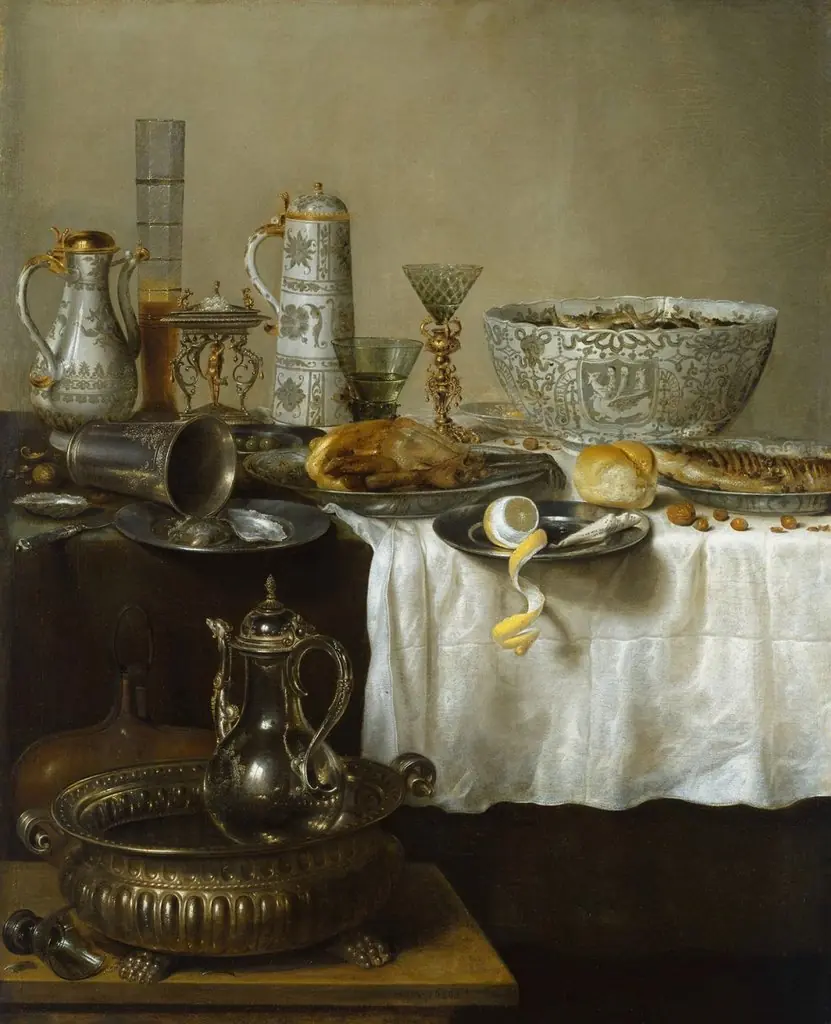 Sumptuous still life
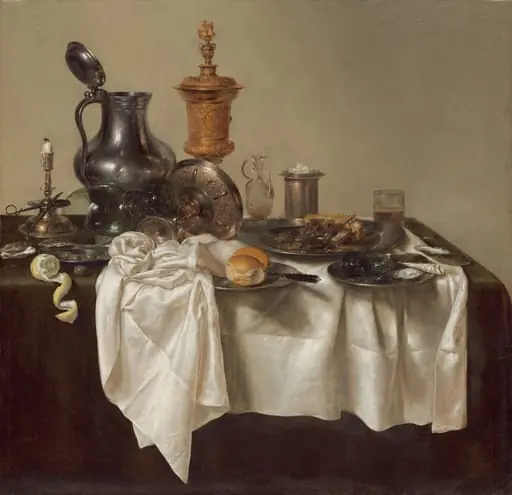 Banquet Piece with Mince Pie
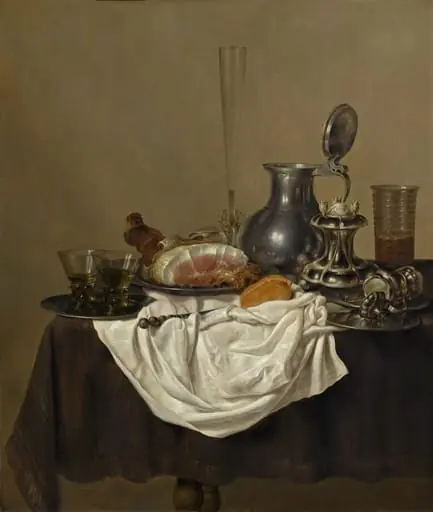 Still Life with Ham
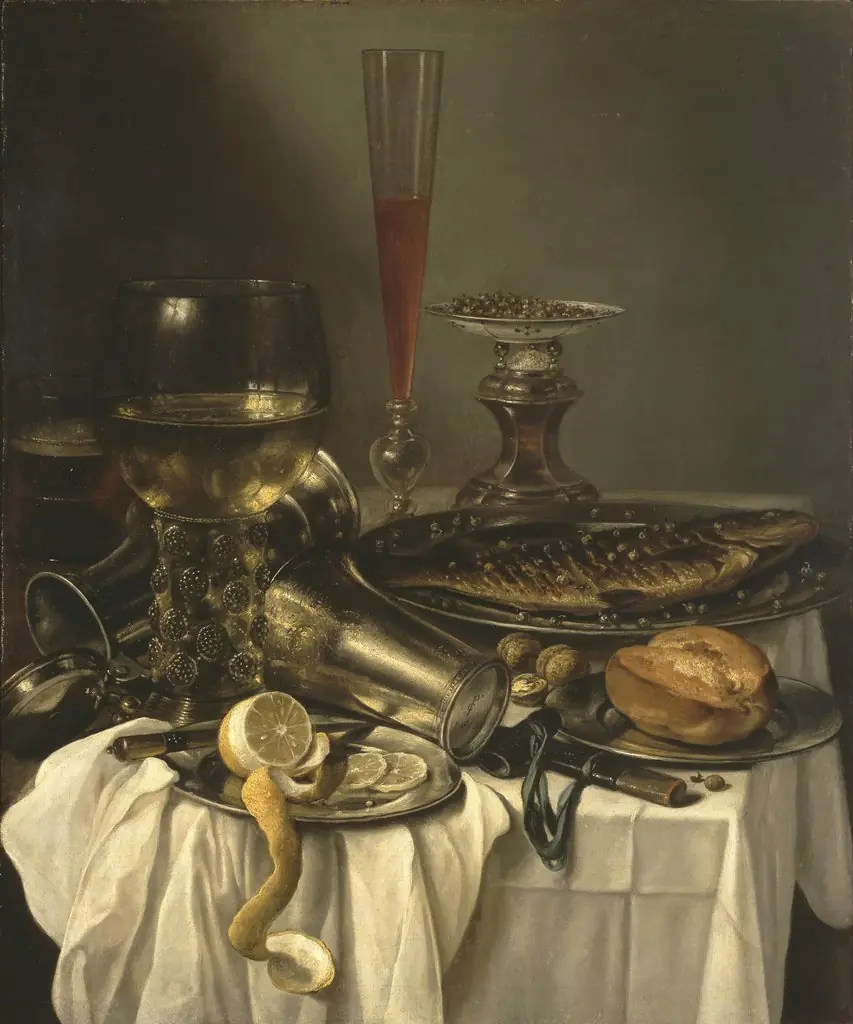 Breakfast with Fish
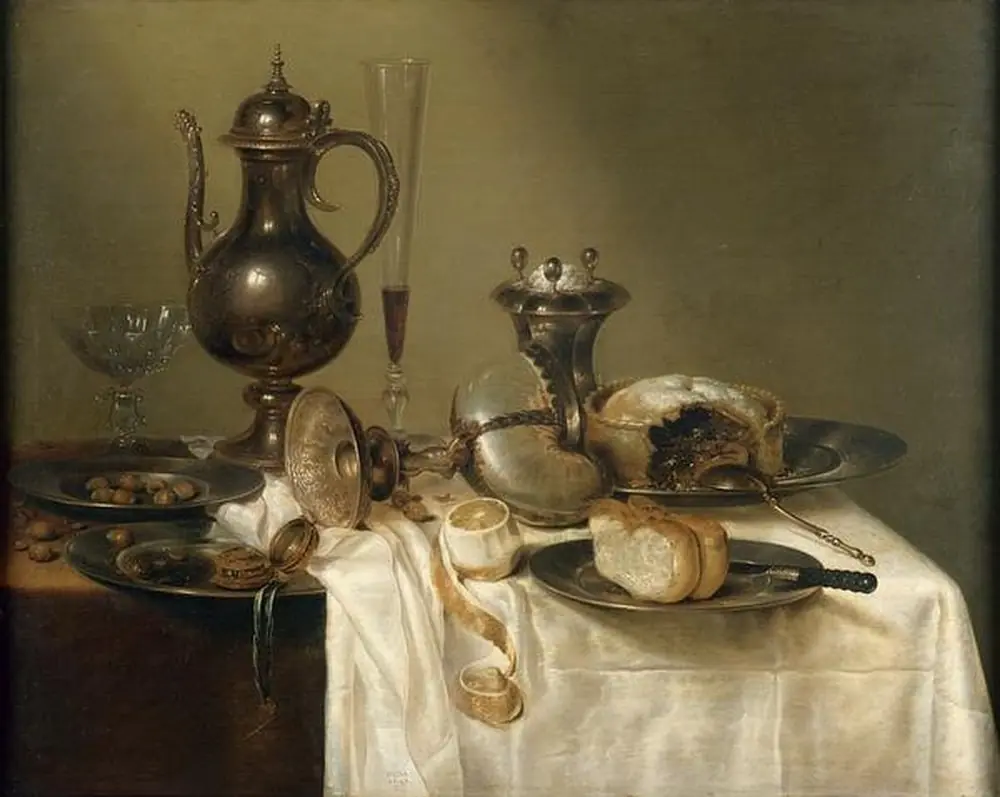 Still life with decanter, nautilus cup, wine glasses and pie
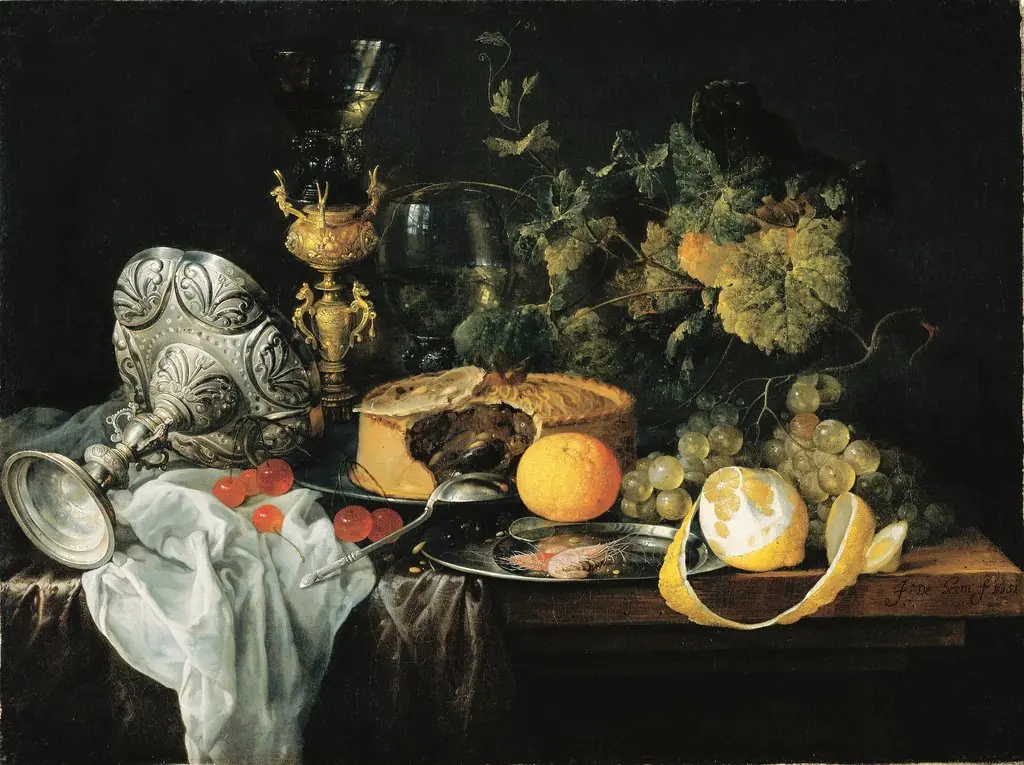 Sumptuous Still Life with Fruits, Pie and Goblets, 1651
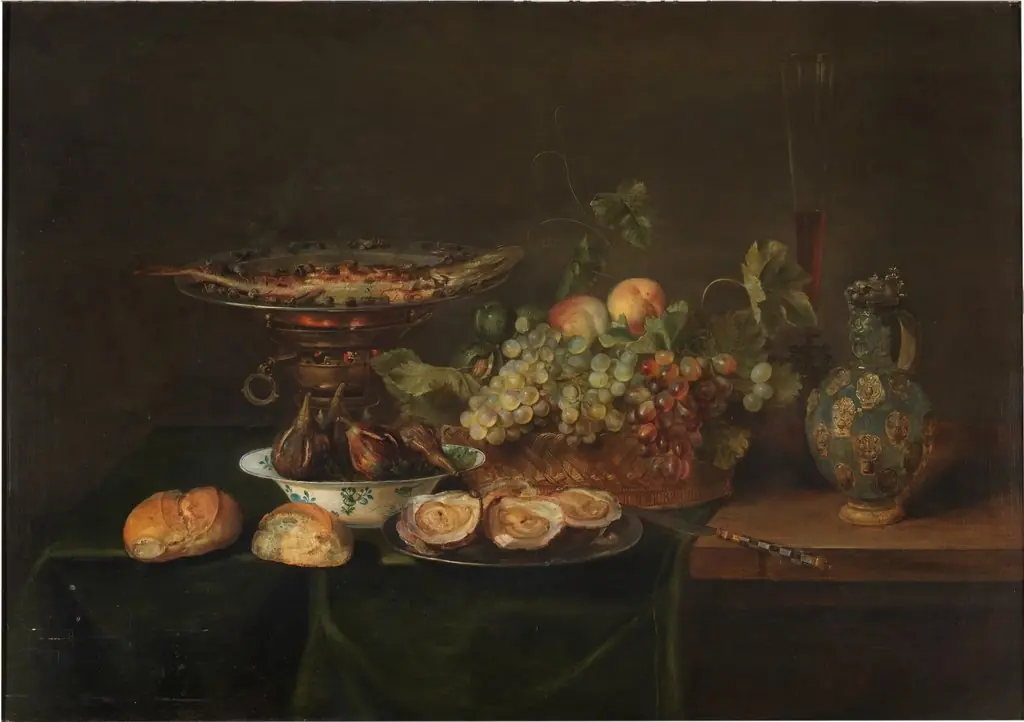 PBanquet still life
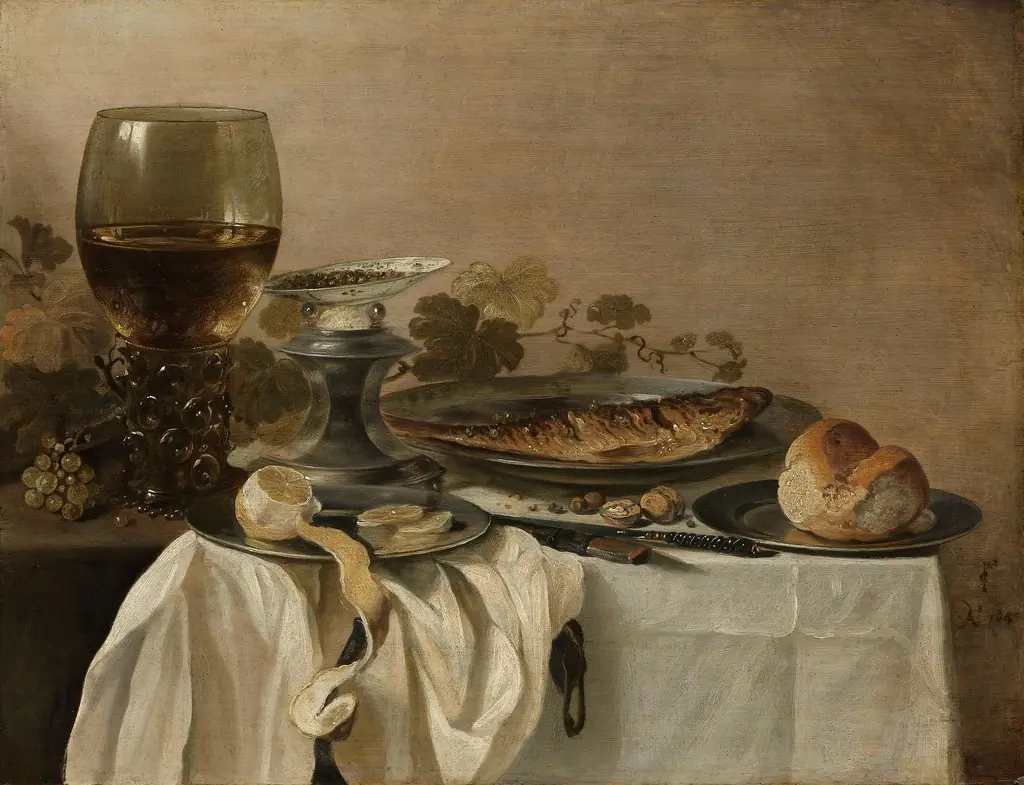 Still life with a fish
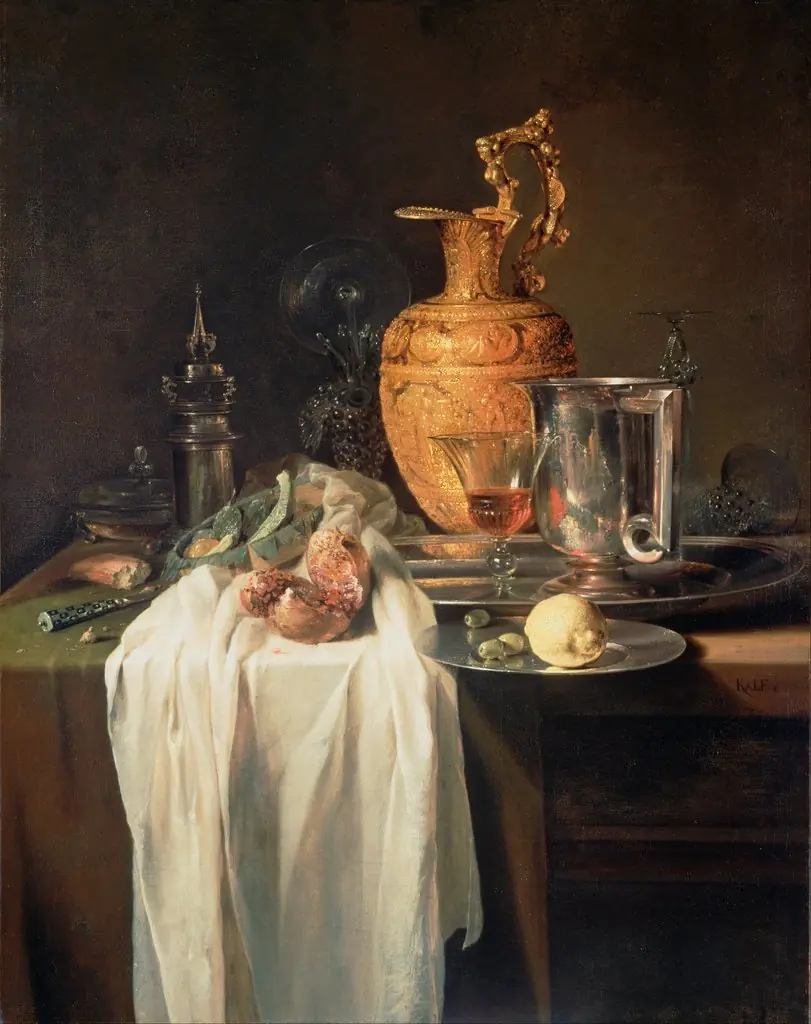 Still Life with Ewer, Vessels and Pomegranate
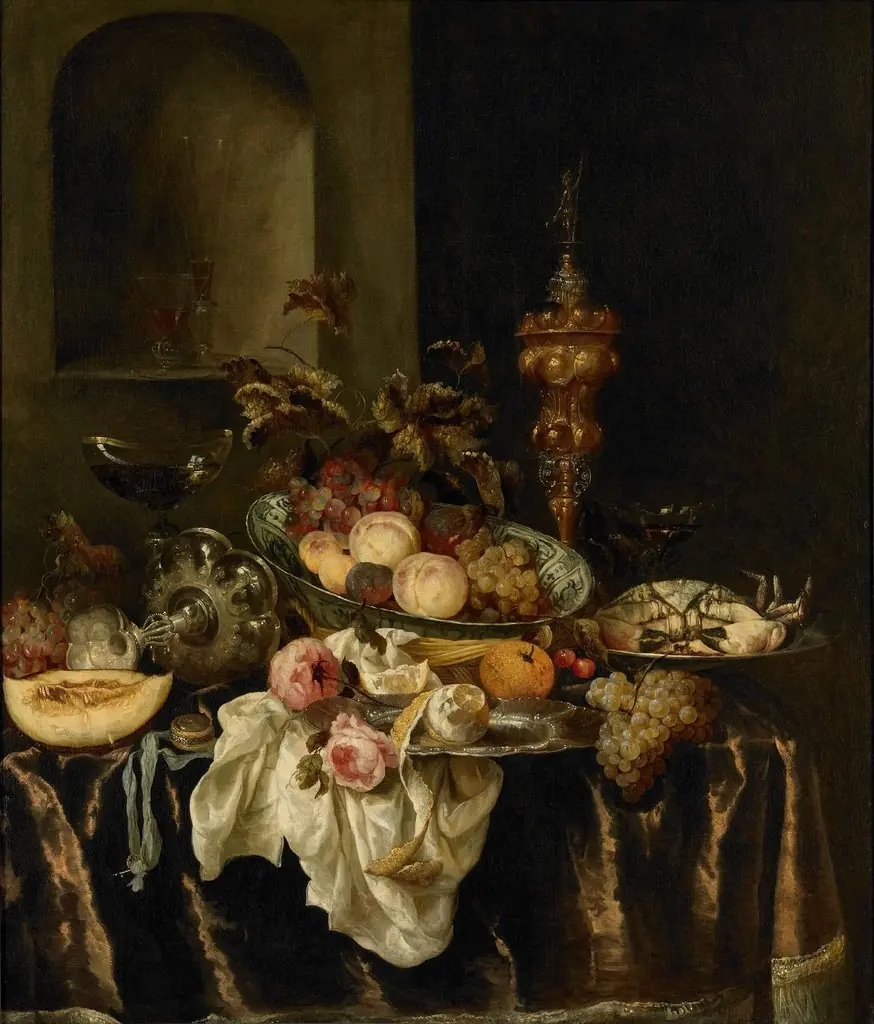 Stille life
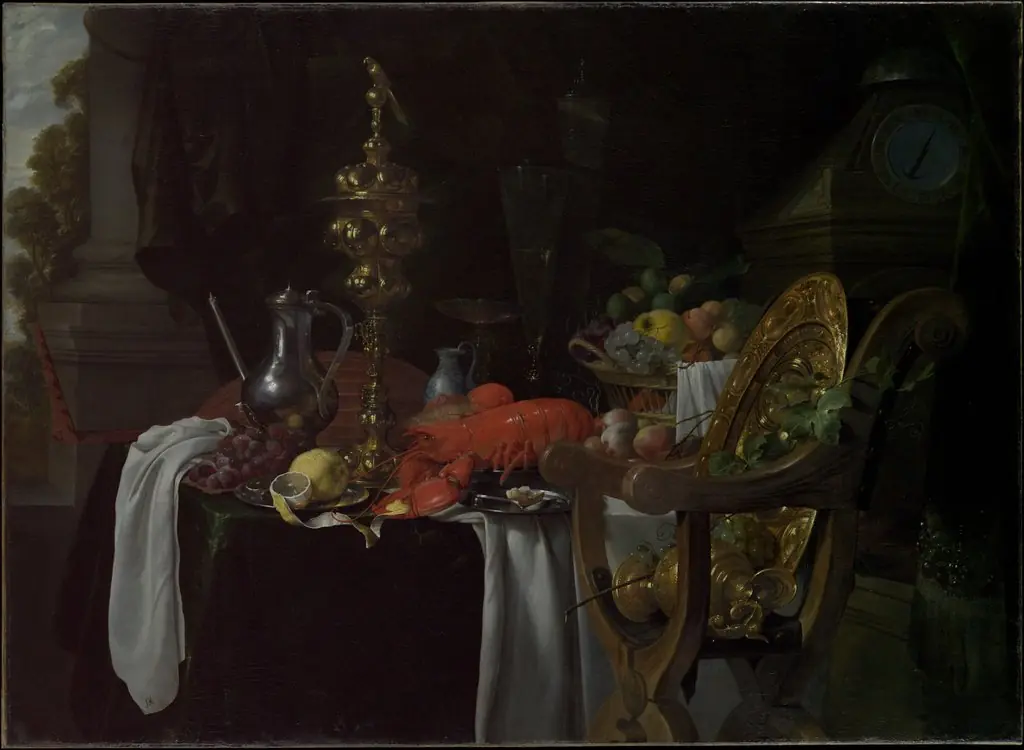 Still Life: A Banqueting Scene
 Breakfast