Artwork
Odysseus und Athene verbergen die trojanische Beute
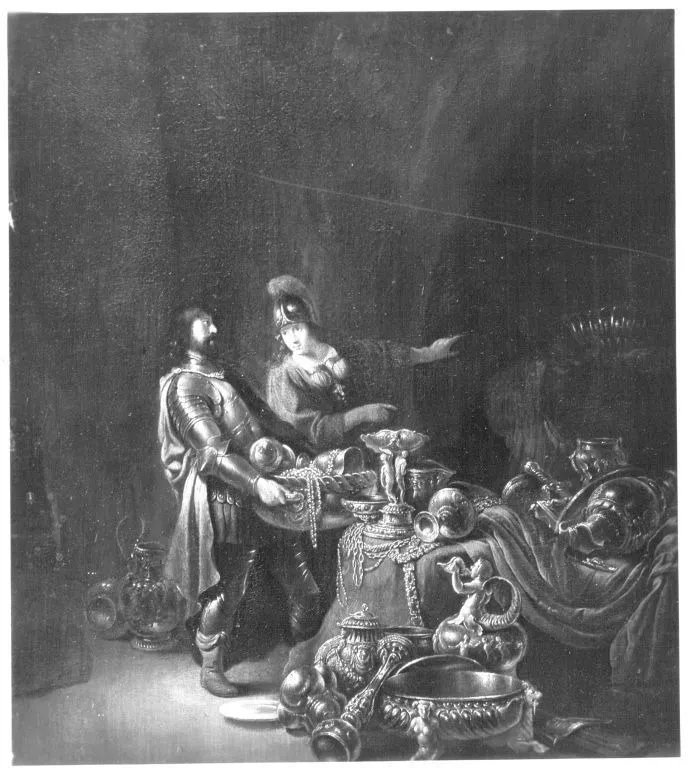
Odysseus und Athene verbergen die trojanische Beute is an unspecified painting by the Dutch Golden Age artist Willem de Poorter. It dates from 1638 and is held in the collection of the Bavarian State Painting Collections.
About this work
Overview
Willem de Poorter painted this scene in 1638, drawing on Greek mythology to show a moment of clandestine activity. The Alte Pinakothek in Munich now holds the work. Two figures occupy a shadowy interior, their interaction suggesting secrecy and strategic purpose rather than open confrontation.
Subject & Meaning
The armored man grips a helmet while the seated goddess gestures toward a table heaped with gleaming vessels, a golden bowl, and a mask-like object.
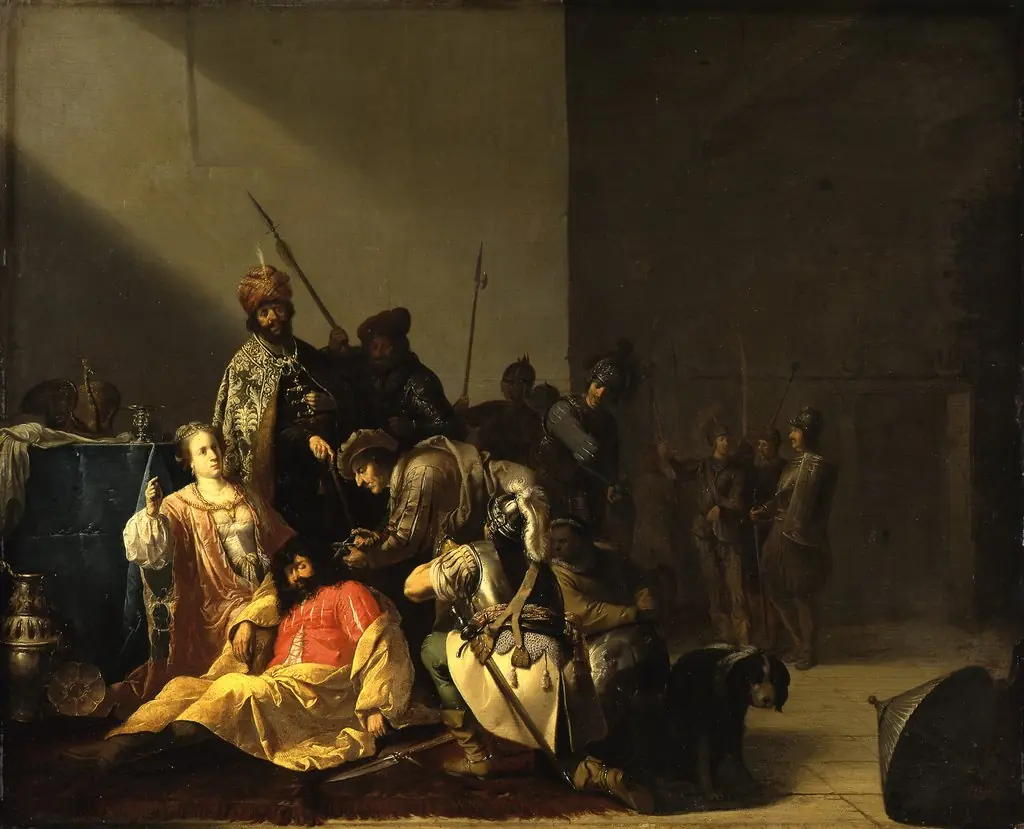
The painting illustrates Odysseus and Athena concealing treasure taken from Troy. The armored man grips a helmet while the seated goddess gestures toward a table heaped with gleaming vessels, a golden bowl, and a mask-like object. Her explanatory motion implies divine instruction in this act of hiding spoils. The accumulated wealth and military gear together signal both the fruits of war and the need for cunning that defines Odysseus's character.
Technique & Style
Light enters from the left, carving the figures out of deep shadow through pronounced chiaroscuro. This dramatic illumination isolates the protagonists and directs attention to the reflective surfaces of metal and gold. The dark, undefined background compresses the space, intensifying the sense of a private, enclosed transaction. De Poorter uses contrast to advance narrative without textual explanation.
Artist & collection

 Bildhauerwerkstätte
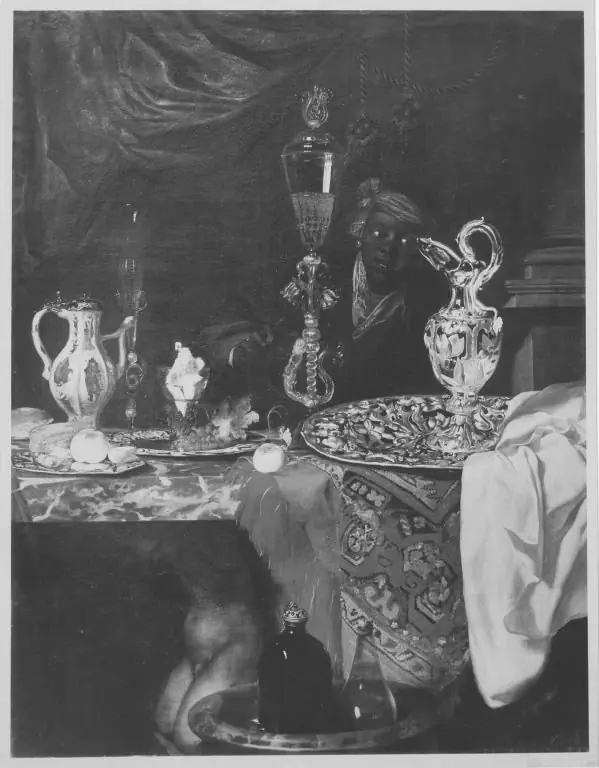 Still life with moor and splendor dishes
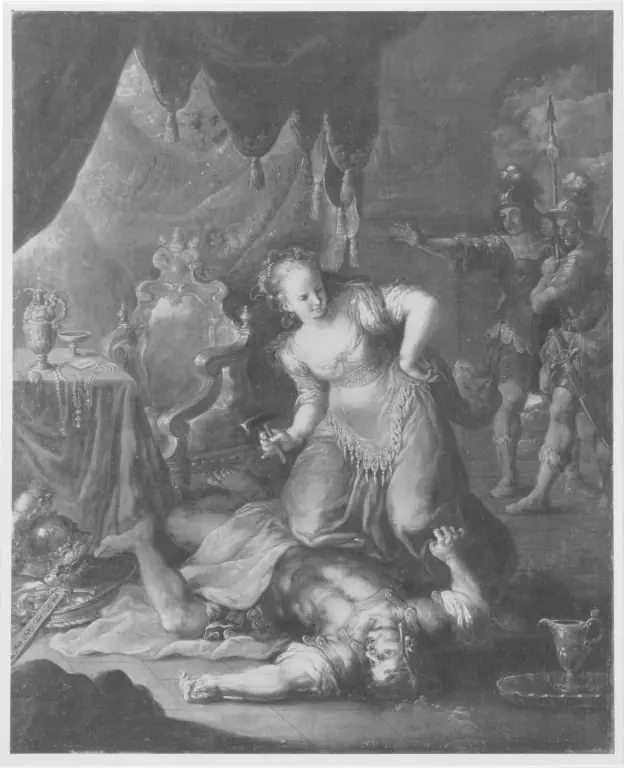 Jael und Sisera
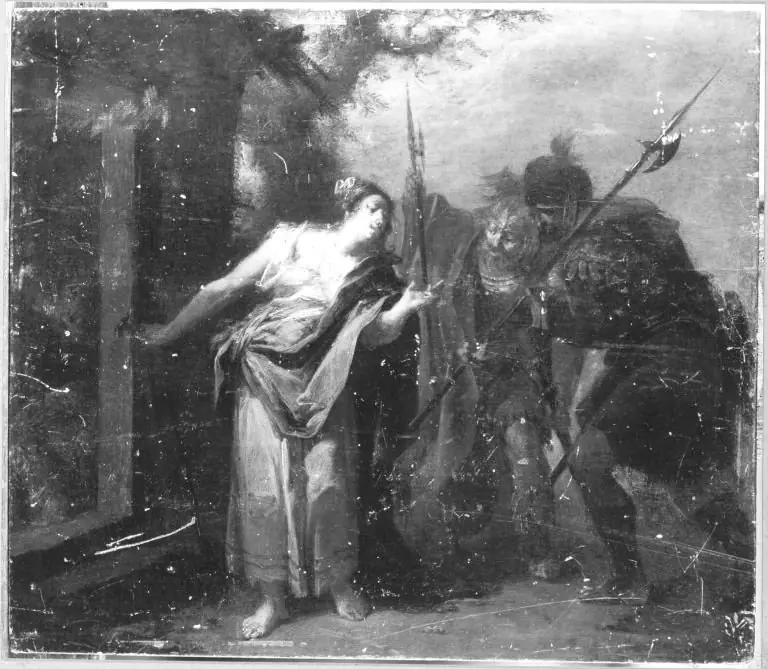 Jael und Sisera (vermutlich)
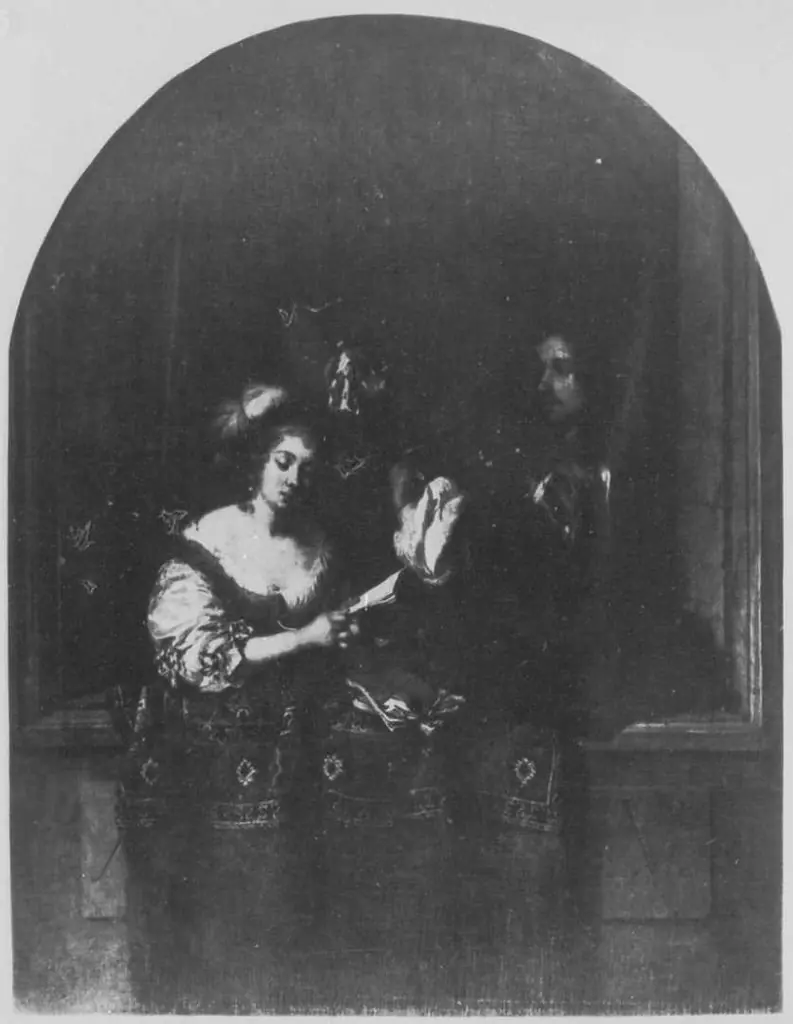 Woman singing and man playing a lute in a window
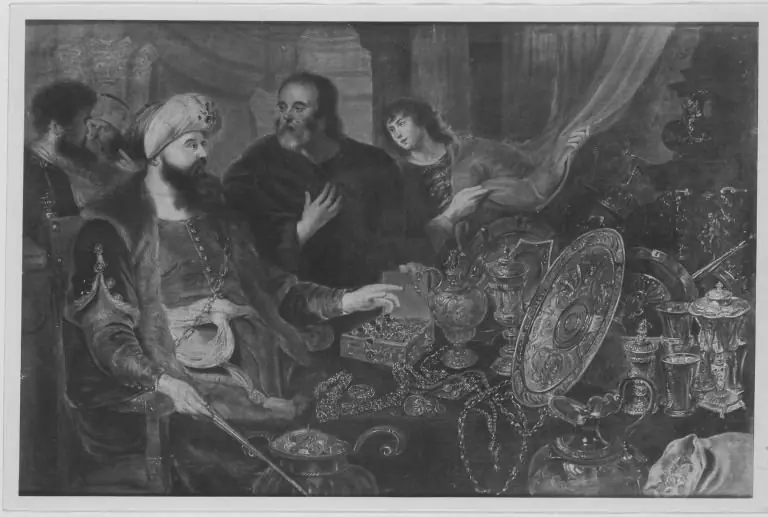 Croesus showing off his richess to Solon
 Opferung der Iphigenie
 Semele and Juno
 Aeneas verlässt das brennende Troja
 Kurfürst Johann Wilhelm übergibt den Kommandostab
 Judith mit dem Haupt des Holofernes
 Rebecca am Brunnen (Nachahmer)