Artwork
A Peasant Handing a Fruit Basket to an Enthroned Woman
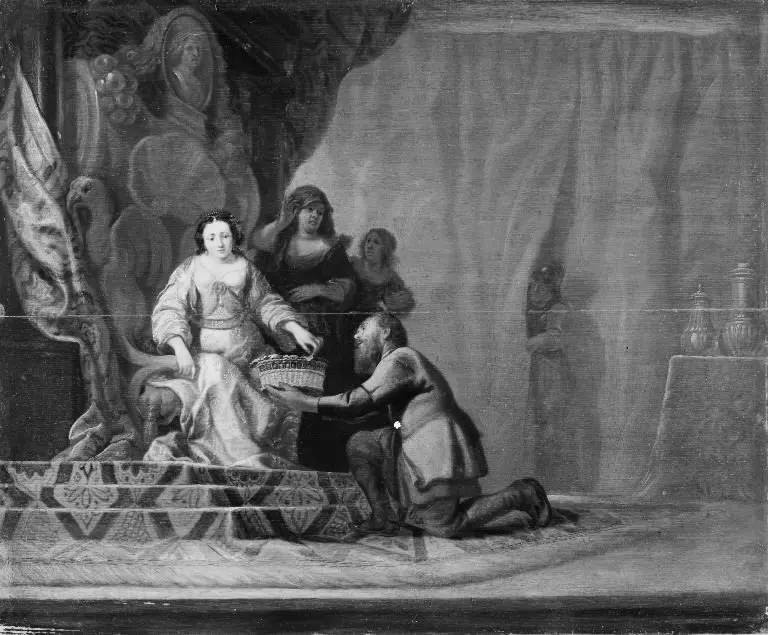
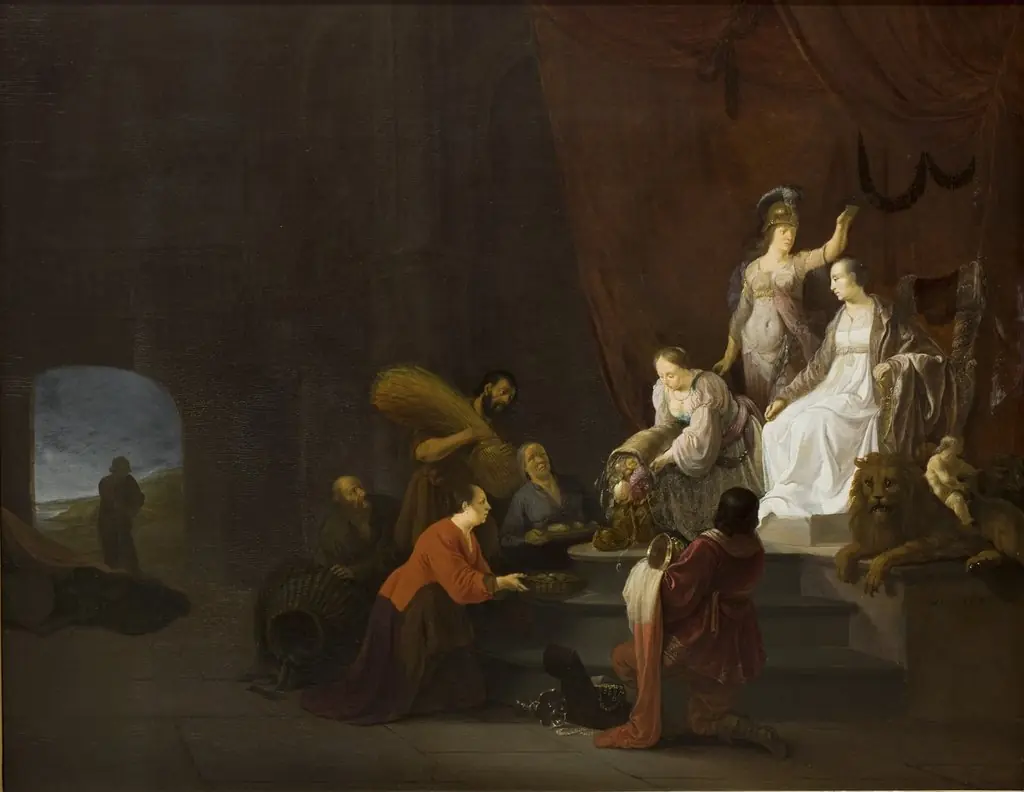
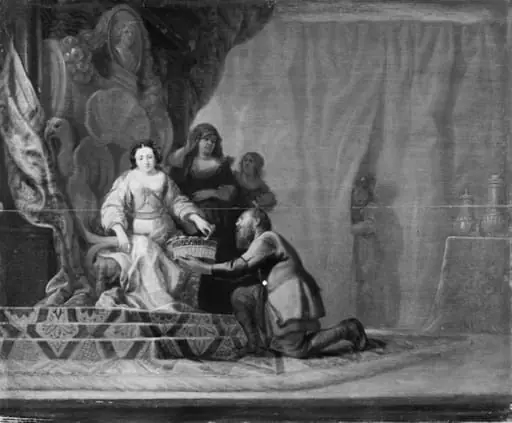
A Peasant Handing a Fruit Basket to an Enthroned Woman is an unspecified painting by the Dutch Golden Age artist Willem de Poorter. It dates from 1635 and is held in the collection of the Statens Museum for Kunst.
About this work
Overview
In the background, two standing female attendants and a draped curtain frame the scene, adding depth and emphasizing the formal nature of the encounter.
Painted in 1635 by the Dutch artist Willem de Poorter, 'A Peasant Handing a Fruit Basket to an Enthroned Woman' is an allegorical work characteristic of the artist's output during the Dutch Golden Age. The composition centers on a seated female figure on a throne, dressed in a long gown, who represents an allegorical entity such as Justice, Charity, or a personification of a province. A kneeling peasant presents a basket of fruit to her, a gesture symbolizing tribute or the offering of earthly goods to virtue. The woman extends her right hand to receive the offering, establishing a dynamic connection between the figures. In the background, two standing female attendants and a draped curtain frame the scene, adding depth and emphasizing the formal nature of the encounter. De Poorter, known for his history paintings and allegories, frequently employed such classical themes to convey moral or civic messages. This work exemplifies his skill in rendering historical costumes and structured compositions, reflecting the period's interest in didactic imagery that combined narrative clarity with symbolic richness.
Subject & Meaning
The central figure, a woman in a long dress, occupies a throne, suggesting authority or elevated status, while the kneeling man presents a laden fruit basket, an act that may symbolize offering, service, or abundance. The presence of two other women and the theatrical curtain adds a sense of staged ceremony, hinting at themes of hierarchy and generosity within a domestic or allegorical setting.
Technique & Style
De Poorter employs strong contrasts of light and shadow reminiscent of Rembrandt’s chiaroscuro, giving the scene a three‑dimensional quality. The illumination highlights the textures of the fruit, the sheen of the woman’s garments, and the polished surface of the throne, while the darker background recedes, focusing attention on the interaction between the figures.
History & Provenance
Created in 1635, the painting entered the Statens Museum for Kunst’s holdings at an unspecified date, where it remains on display. Its attribution to de Poorter has been consistently accepted by scholars, linking the work to his mid‑seventeenth‑century output in the Dutch Golden Age.
Context
The composition reflects the Dutch Golden Age’s interest in genre scenes that blend everyday activity with symbolic meaning. By portraying a peasant offering fruit to a figure of higher rank, de Poorter engages with contemporary visual conventions that explore social relations, abundance, and the moral undertones of generosity.
Artist & collection

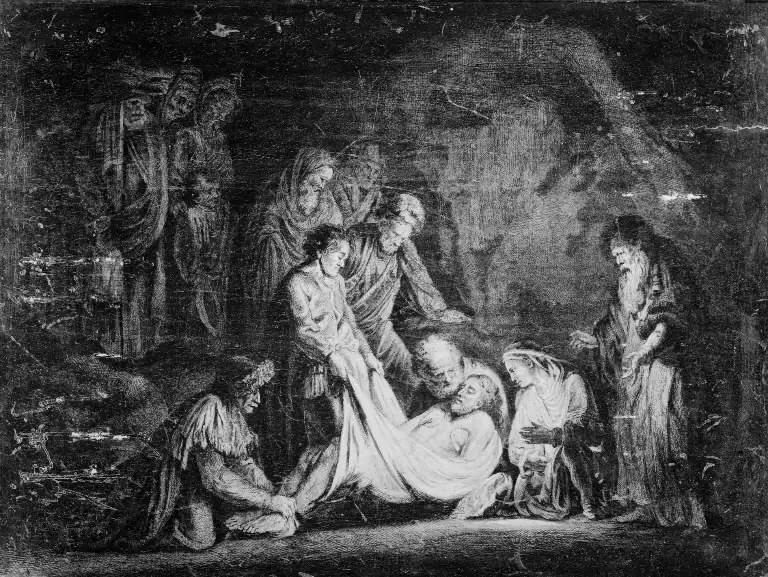 The Entombment of Christ
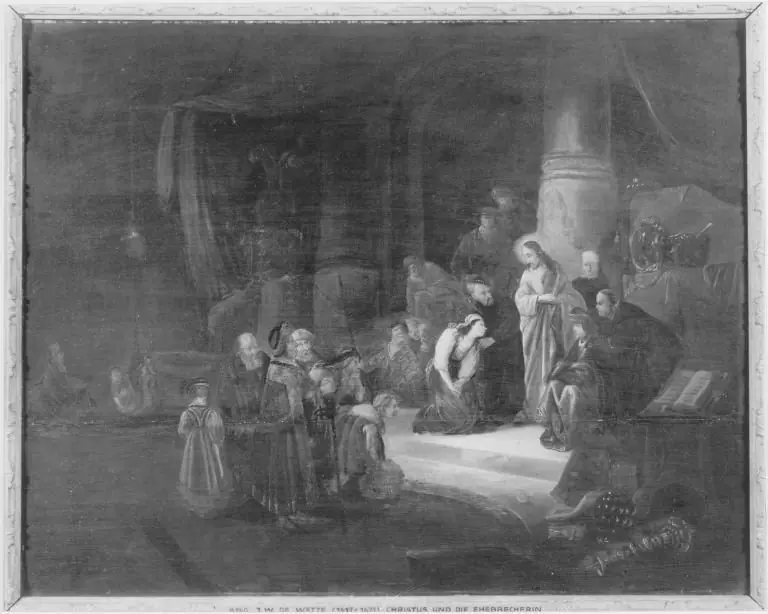 Christ and the woman taken in adultery (John 8:2-11)
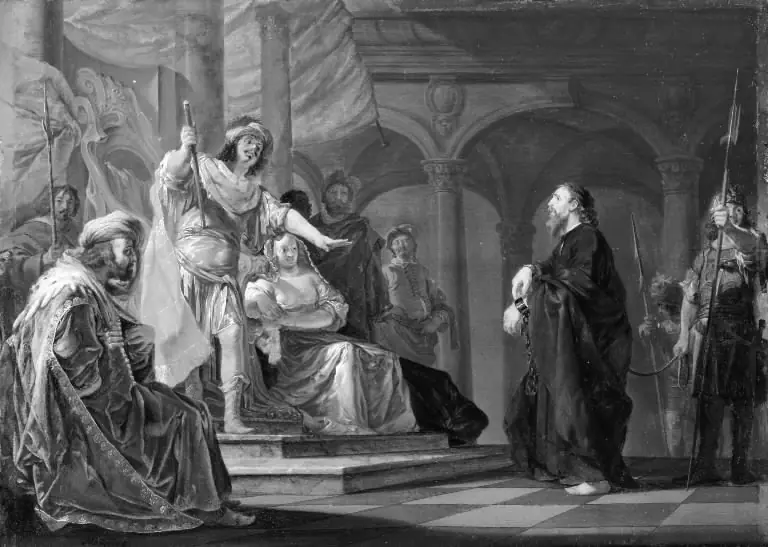 Paulus the Apostle defending himself at the Trial in Caesarea
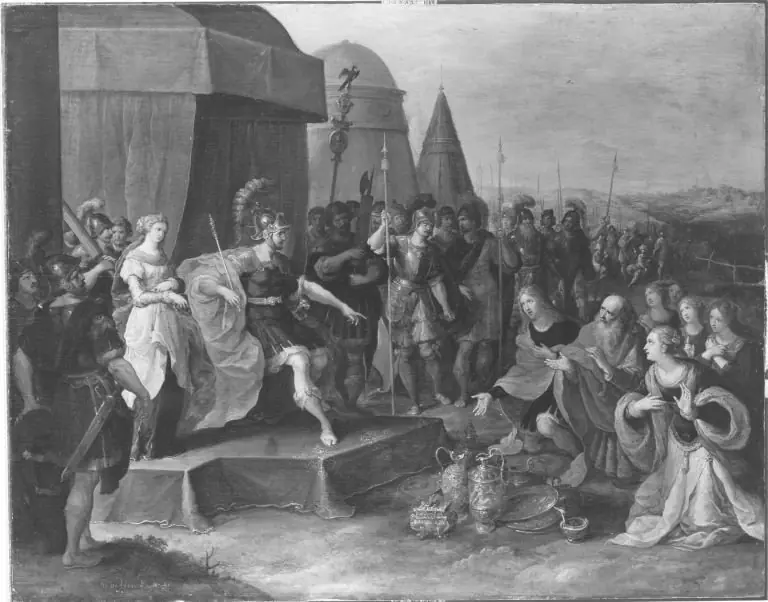 Enthaltsamkeit des Scipio
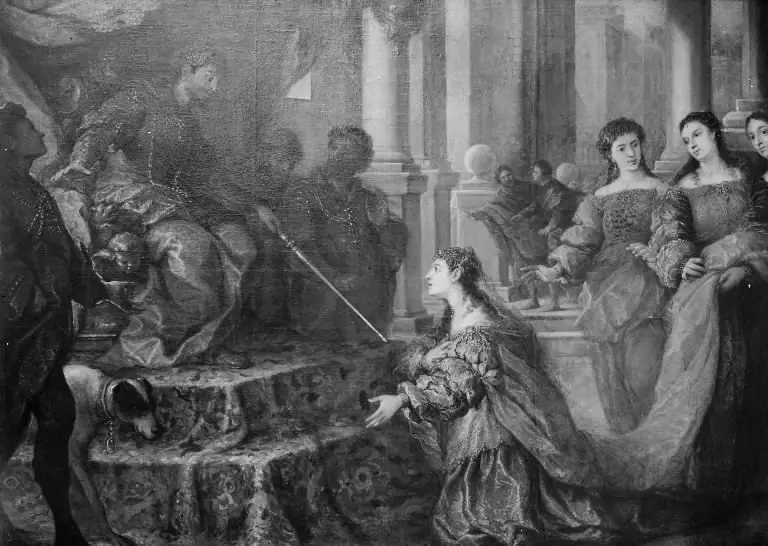 Esther Kneeling before Ahasverus
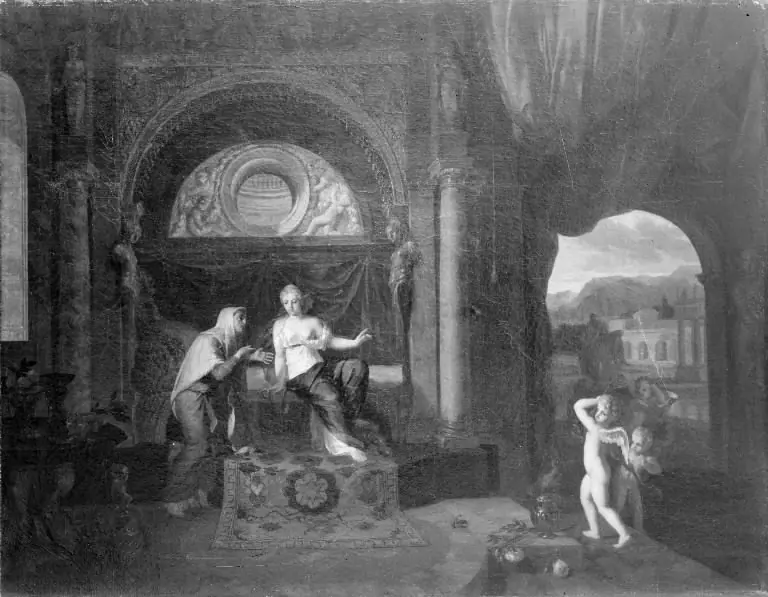 Semele and Juno
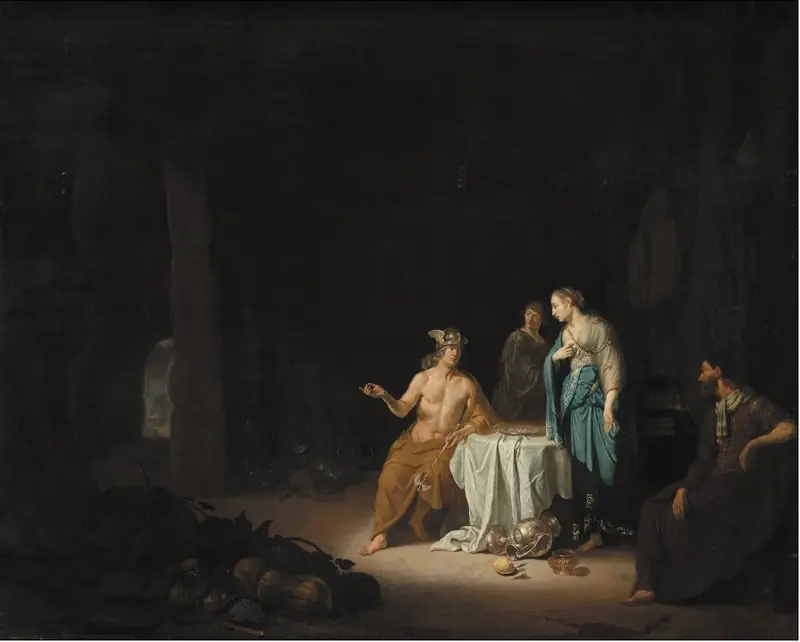
 Hermes befaler Kalypso at frigive Odysseus
 Hermes befaler Kalypso at frigive Odysseus
 Esther Kneeling before Ahasverus
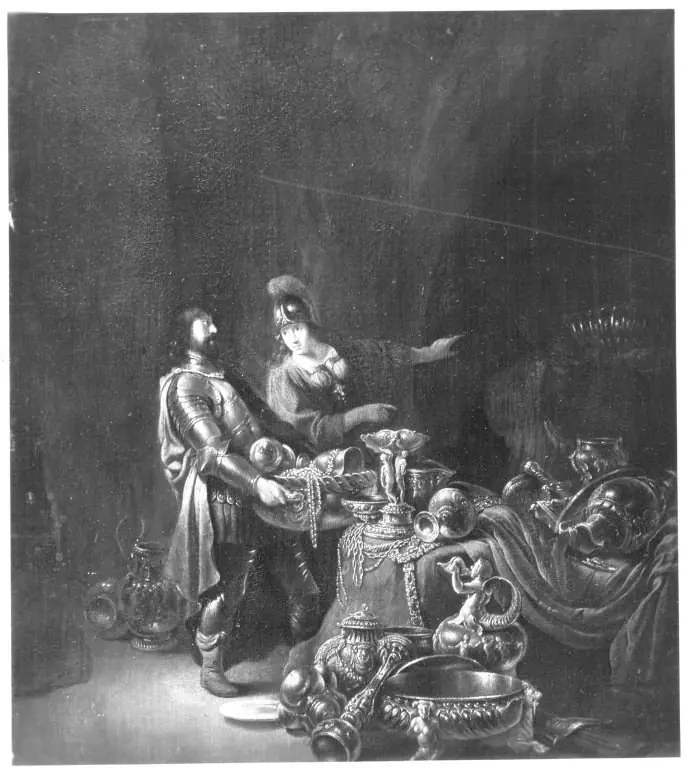
 Belshazzar's Feast
 Semele and Juno
 A Peasant Handing a Fruit Basket to an Enthroned Woman