Artwork
The idolatry of King Solomon
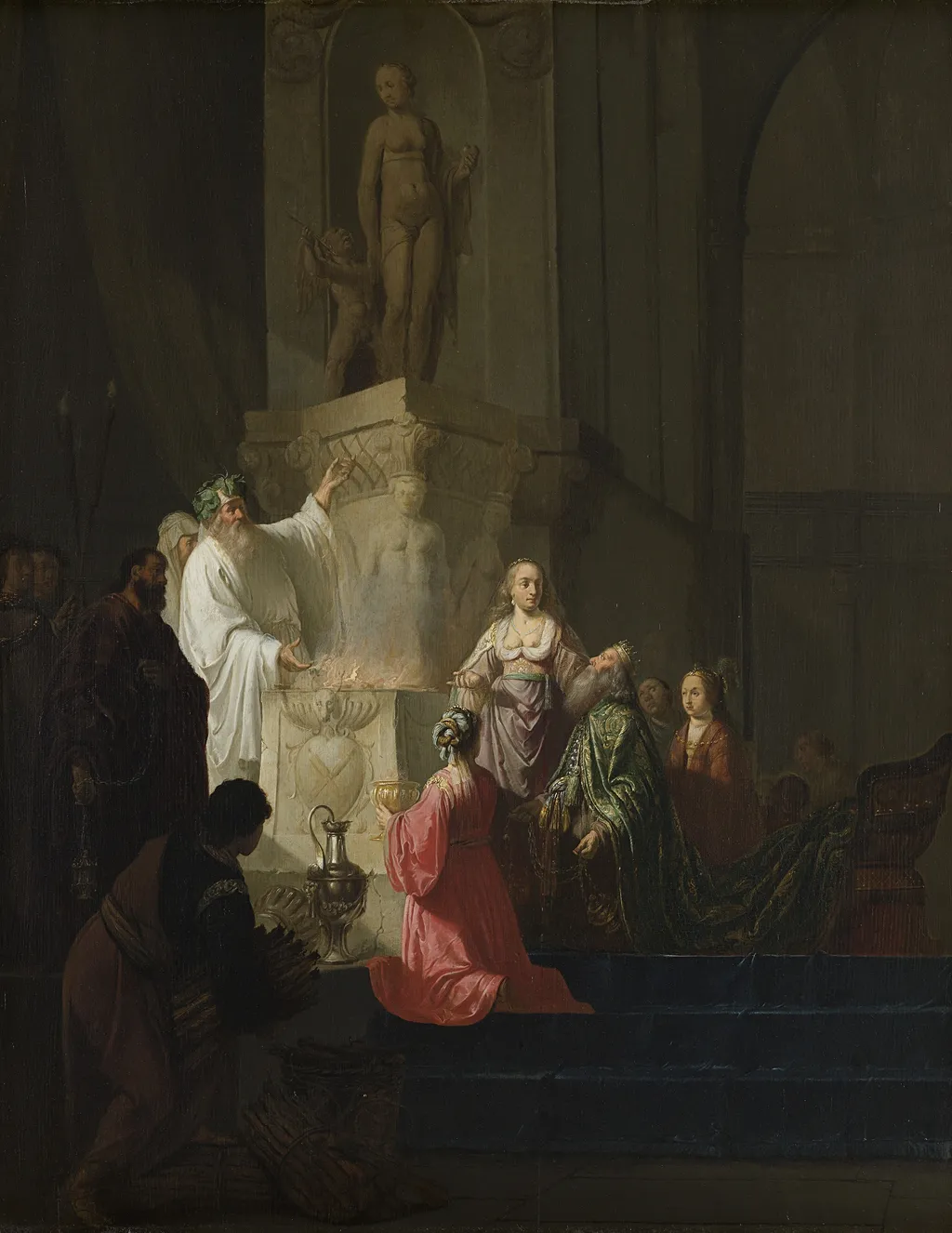
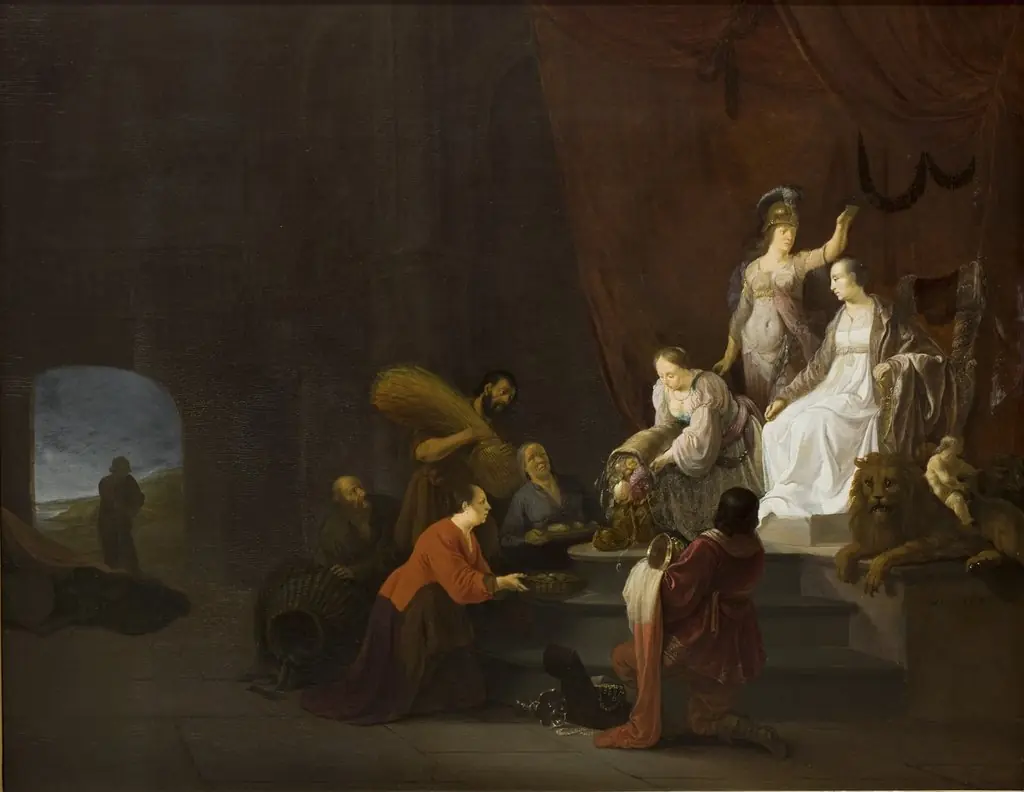
The idolatry of King Solomon is an oil painting by the Dutch Golden Age artist Willem de Poorter. It dates from 1639 and is held in the collection of the Rijksmuseum.
About this work
Overview
The composition centers on Solomon, distinguished by white robes and a laurel wreath, seated amidst a gathering that signifies his abandonment of monotheism.
Painted in 1639 by the Dutch artist Willem de Poorter, The Idolatry of King Solomon illustrates the biblical narrative of the monarch's spiritual decline through the influence of his foreign wives. The composition centers on Solomon, distinguished by white robes and a laurel wreath, seated amidst a gathering that signifies his abandonment of monotheism. A woman in a pink dress kneels before the king, presenting a golden bowl, an act symbolizing the introduction of idol worship. In the background, a statue of a female deity stands as a visual anchor for the theme of idolatry. De Poorter, known for his historical and biblical scenes, employs a rich palette and detailed rendering of textiles to emphasize the opulence of the court while underscoring the moral gravity of the subject. This work reflects the artist's engagement with Old Testament themes popular in 17th-century Dutch art, where moral instruction was often conveyed through elaborate historical settings. The painting serves as a specific example of Poorter's mature style, characterized by careful attention to costume and the dramatic interplay of figures within a structured interior space.
Subject & Meaning
The composition draws on the biblical episode in which Solomon, despite his wisdom, succumbs to foreign worship. The central figure points toward the statue, emphasizing the act of idolatry. The surrounding attendants, dressed in varied hues, appear to participate in or observe the ceremony, highlighting the tension between royal authority and forbidden devotion.
Technique & Style
De Poorter employs chiaroscuro to model the figures, using strong contrasts of light and shadow to create depth and focus on the king and the statue. The luminous white of the monarch’s garments against the darker interior amplifies the dramatic atmosphere, while the careful rendering of textures—fabric folds, marble surfaces, and metallic bowl—demonstrates his mastery of oil paint.
History & Provenance
Painted in the Dutch Golden Age, the work entered the Rijksmuseum’s holdings in the early twentieth century, though its earlier ownership records remain sparse. Its inclusion in the museum’s collection reflects the institution’s interest in Dutch religious narratives and the oeuvre of lesser‑known Baroque painters such as de Poorter.
Own this work as a print
Artist & collection

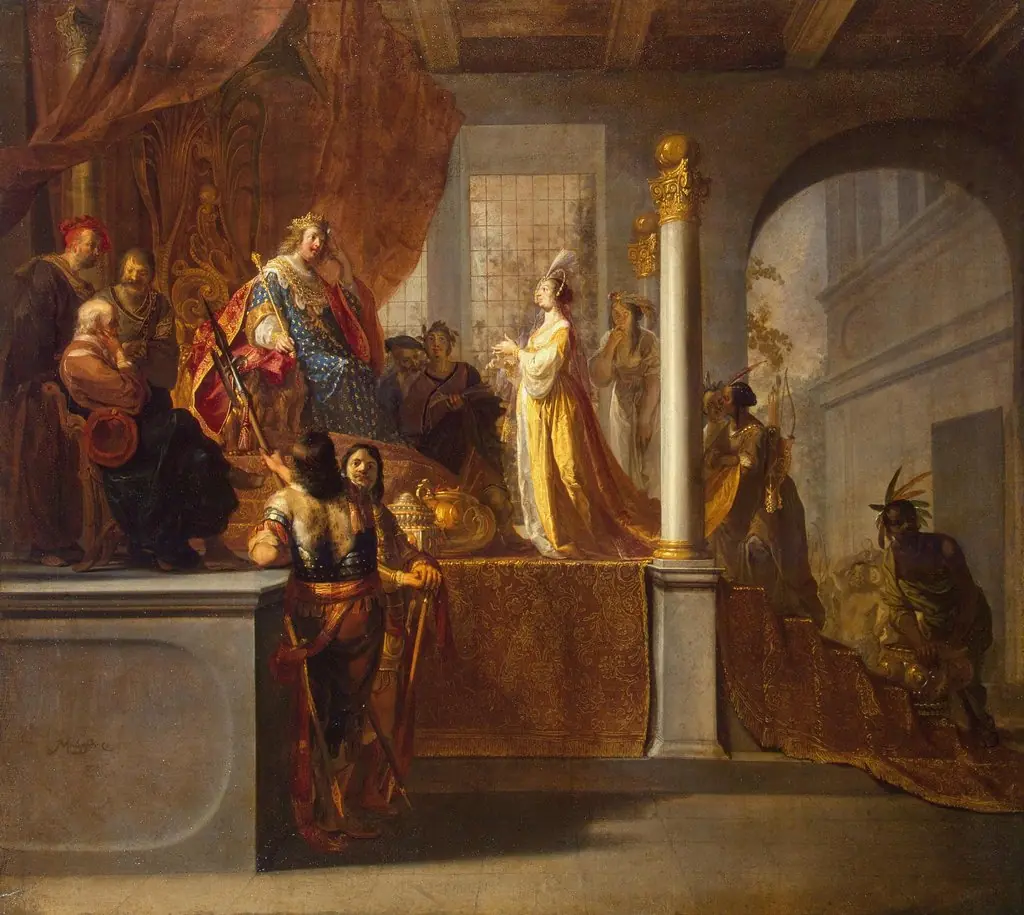 Queen of Sheba before Solomon
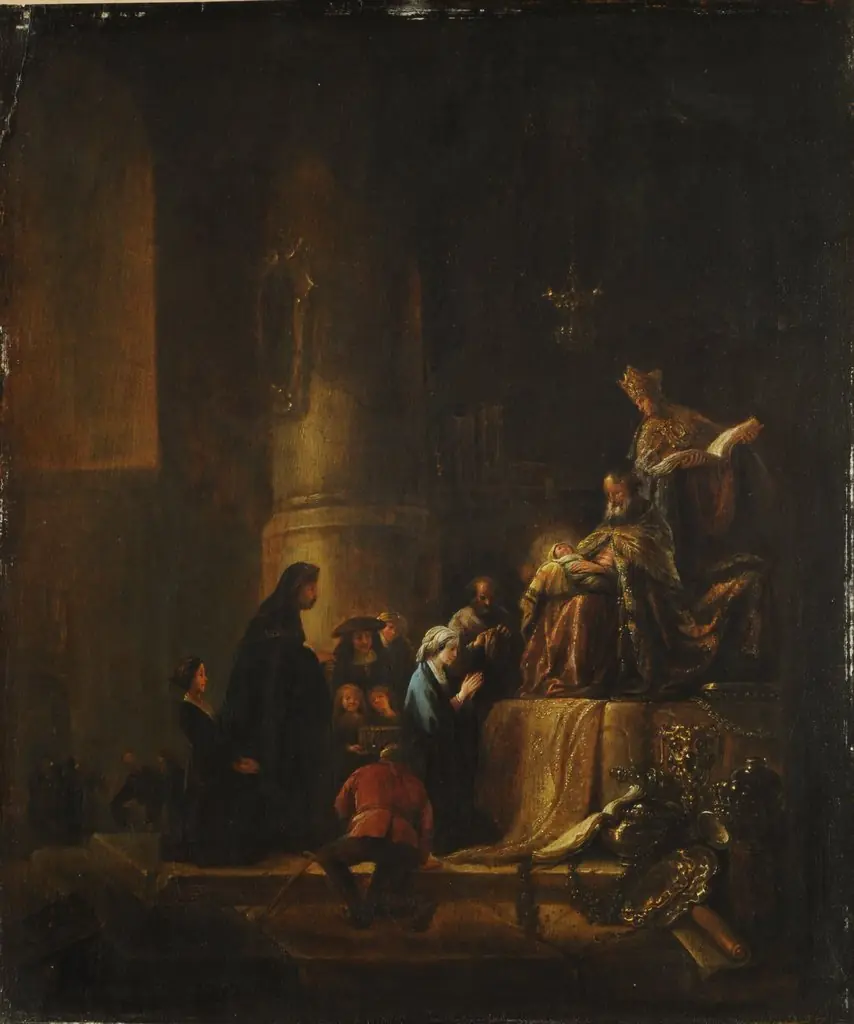 Presentation to the temple
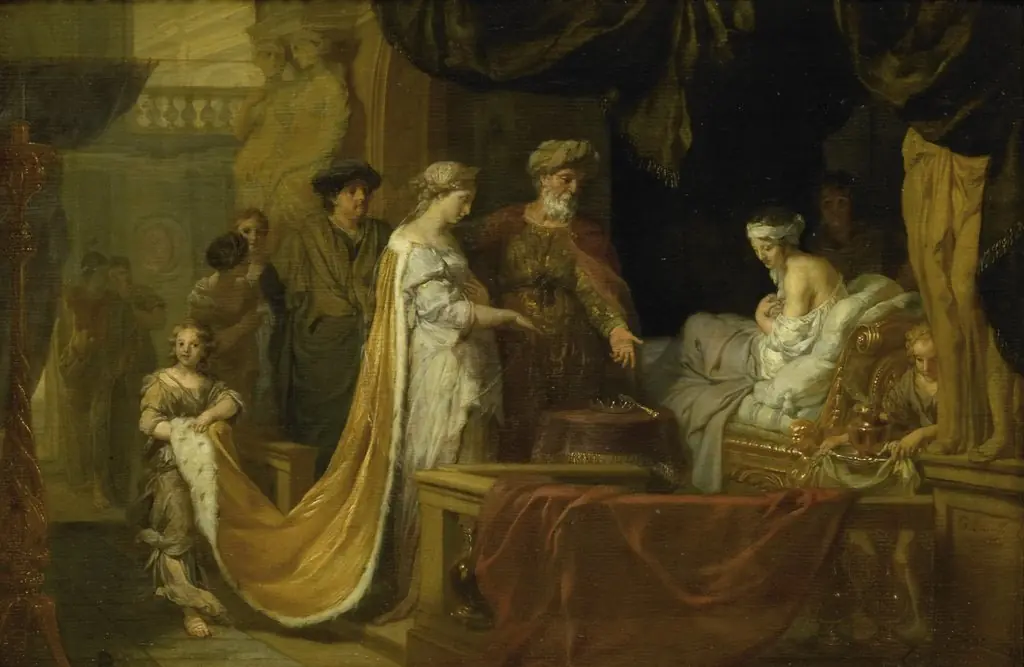 Antiochus and Stratonice
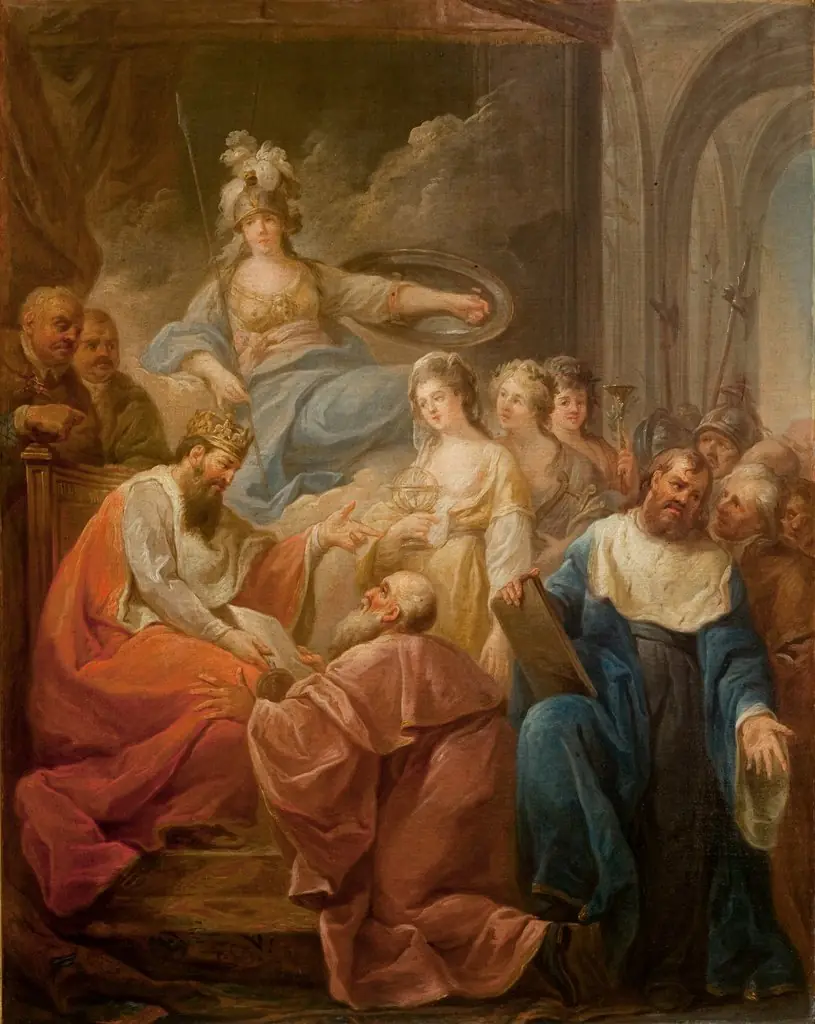 Granting of Privileges to Academy of Krakow
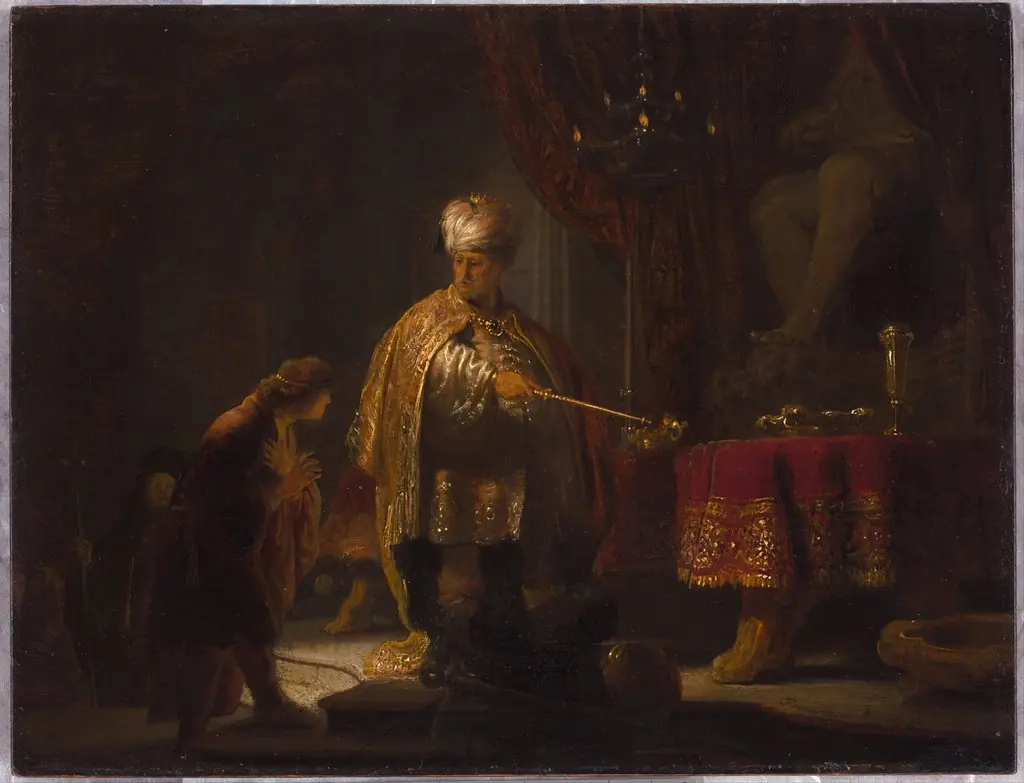 Daniel and Cyrus Before the Idol Bel
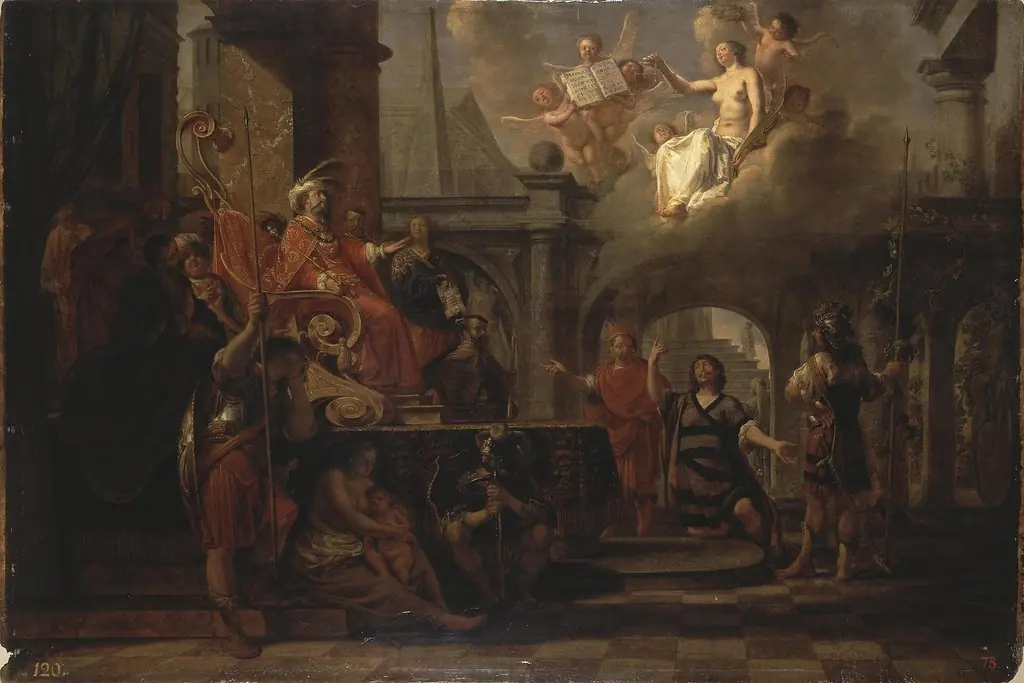 Zorovavel and Darius
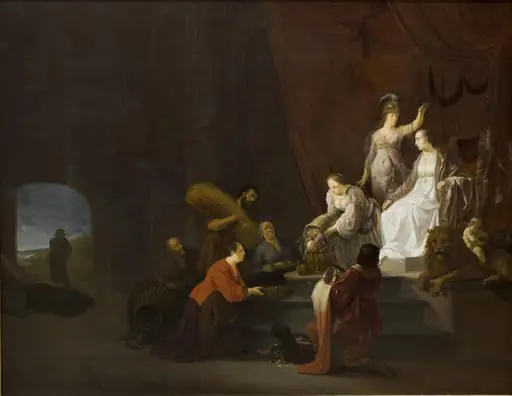 Allegory on Peace. Pax Being Crowned by Minerva
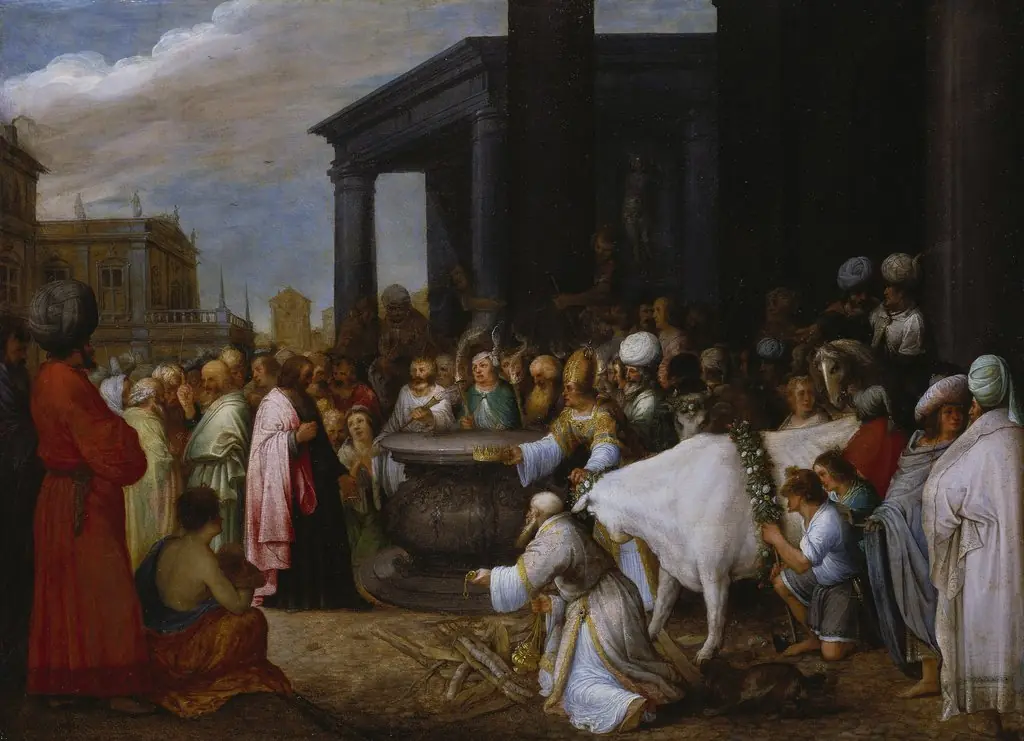 Paul and Barnabas are worshiped as gods in Lystra
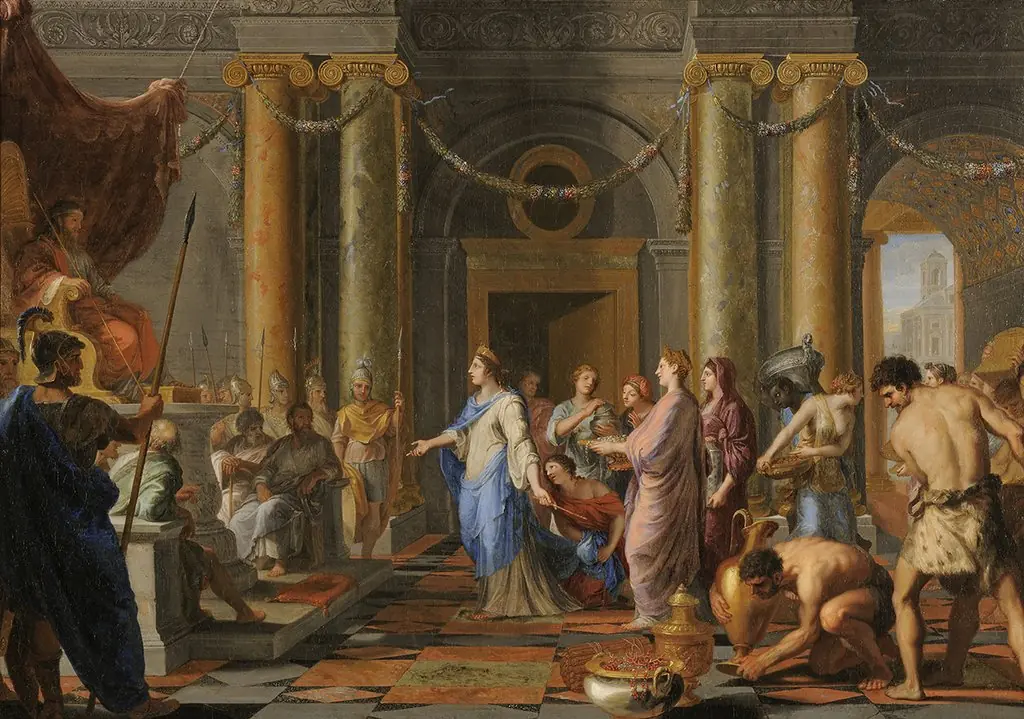 Solomon Receiving the Queen of Sheba