Artwork
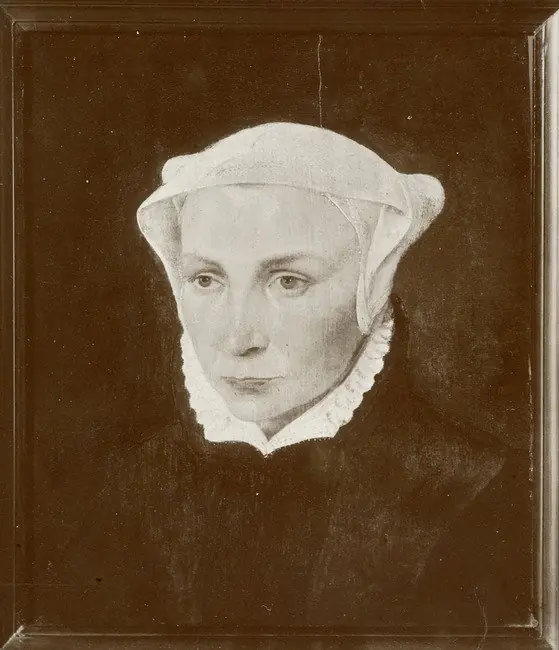
Portrait of a 36-year-old woman
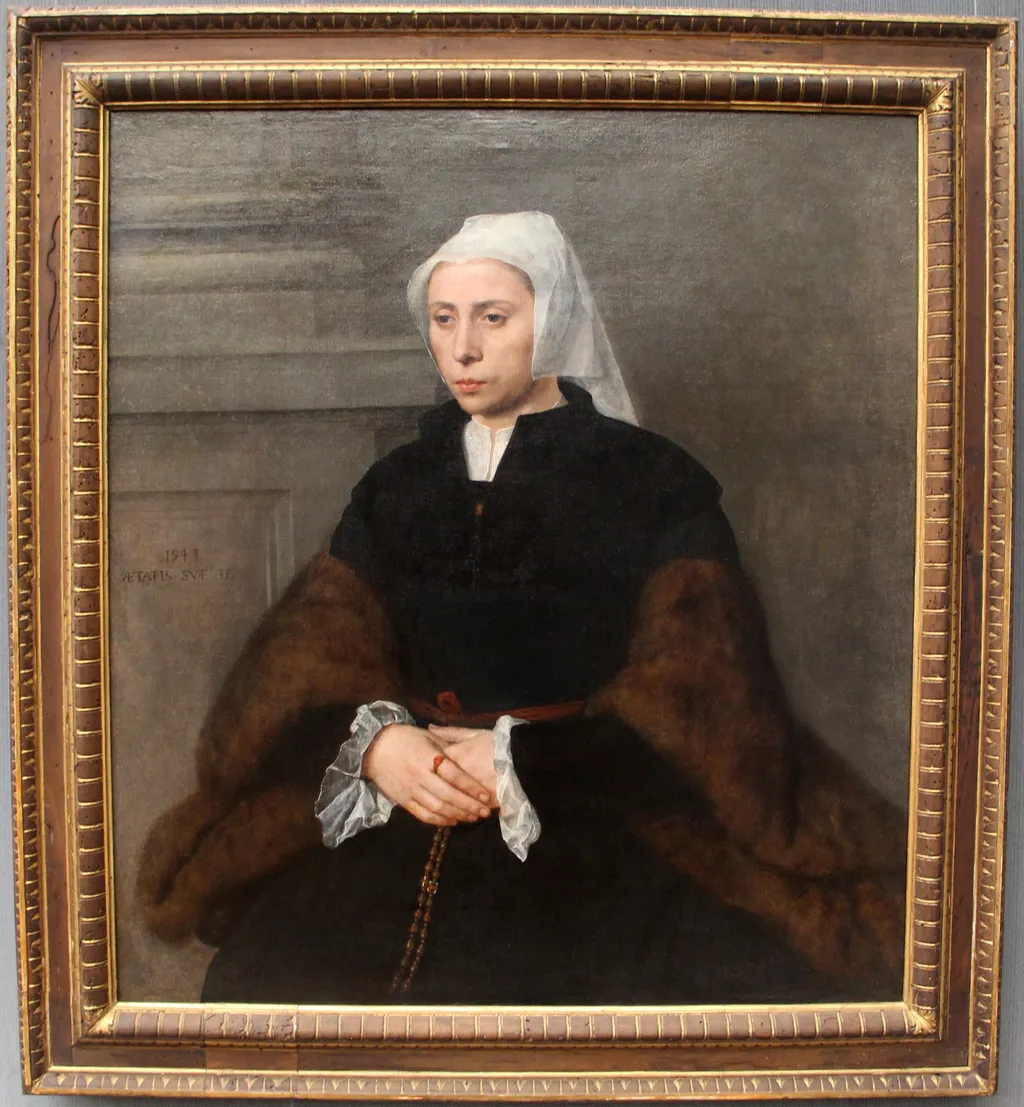
Portrait of a 36-year-old woman is an unspecified painting by the Mannerist artist Willem Key. It dates from 1543 and is held in the collection of the Gemäldegalerie Berlin.
About this work
If you're interested in learning more about the artist who created this piece, you might want to look up Willem Key.
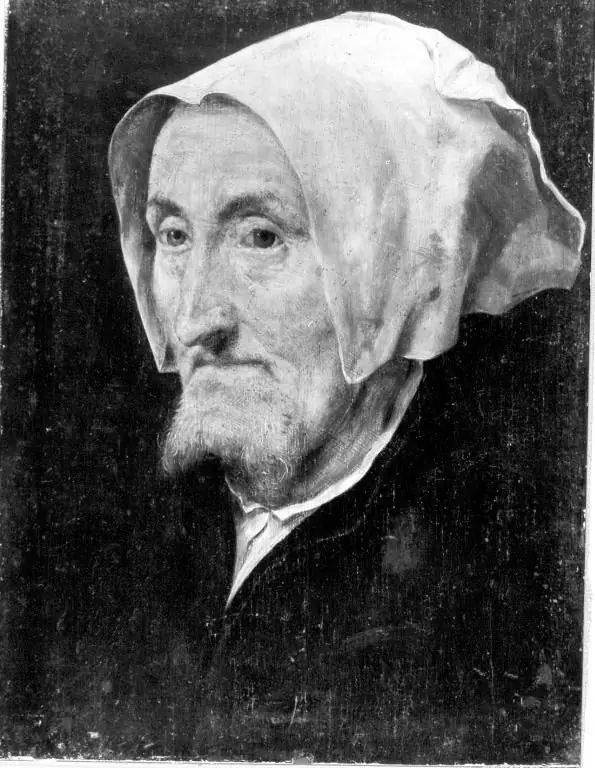
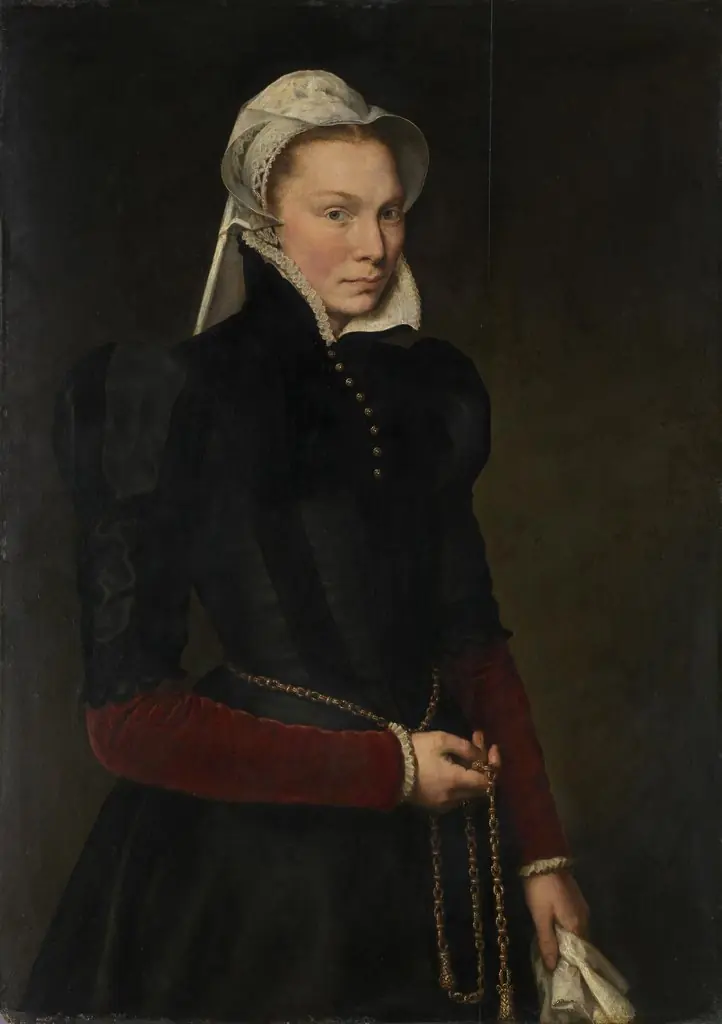
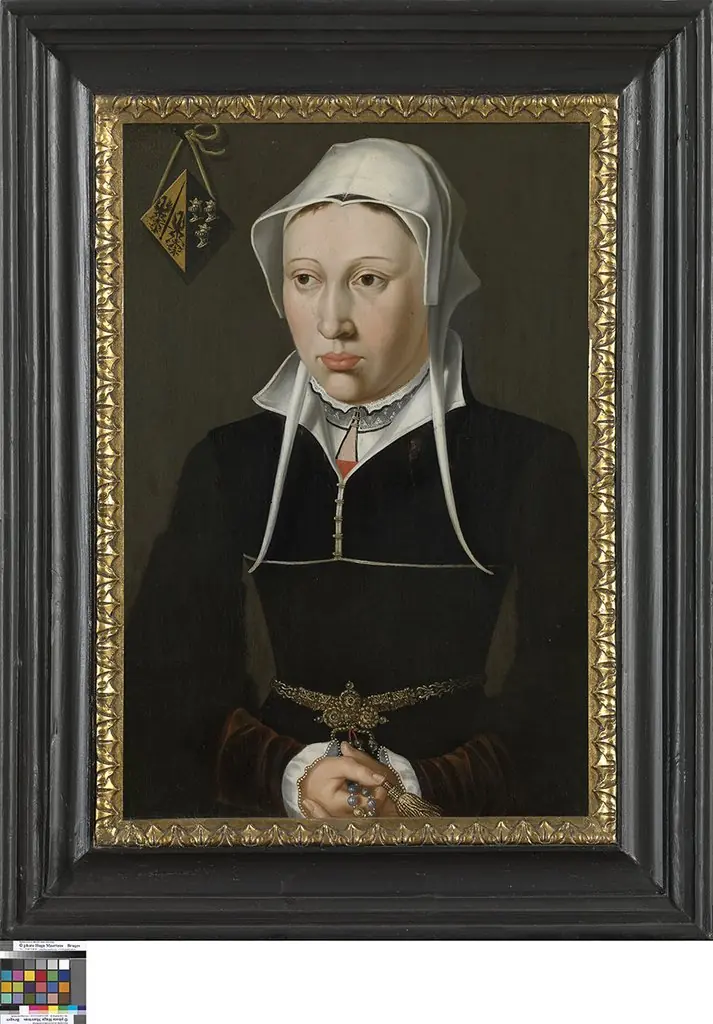
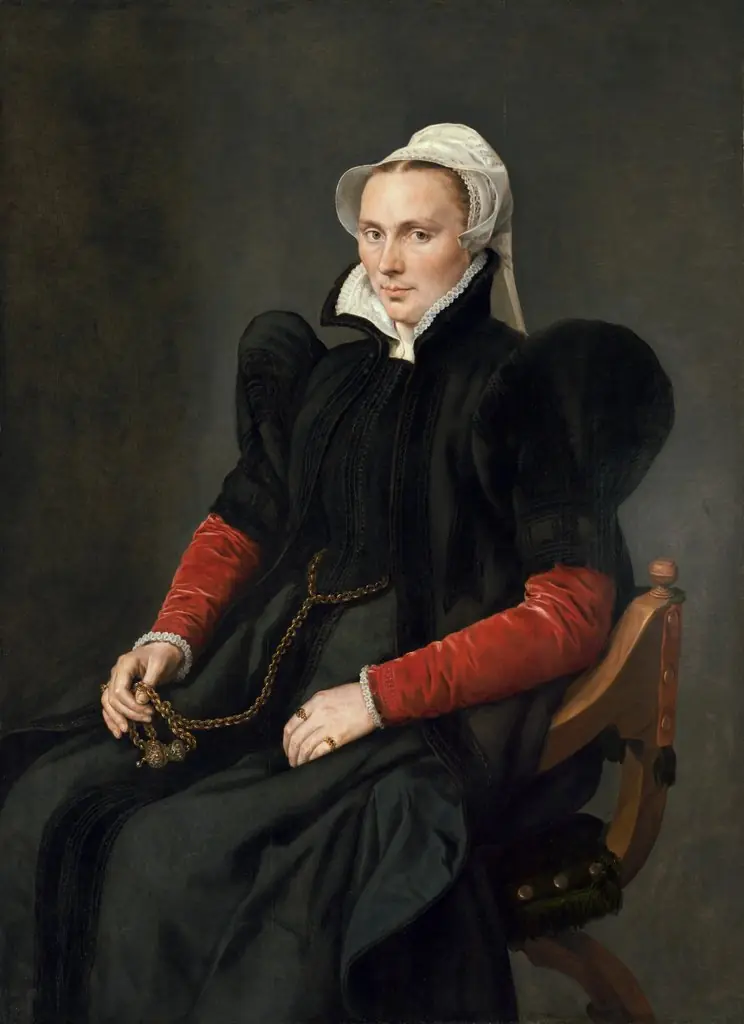
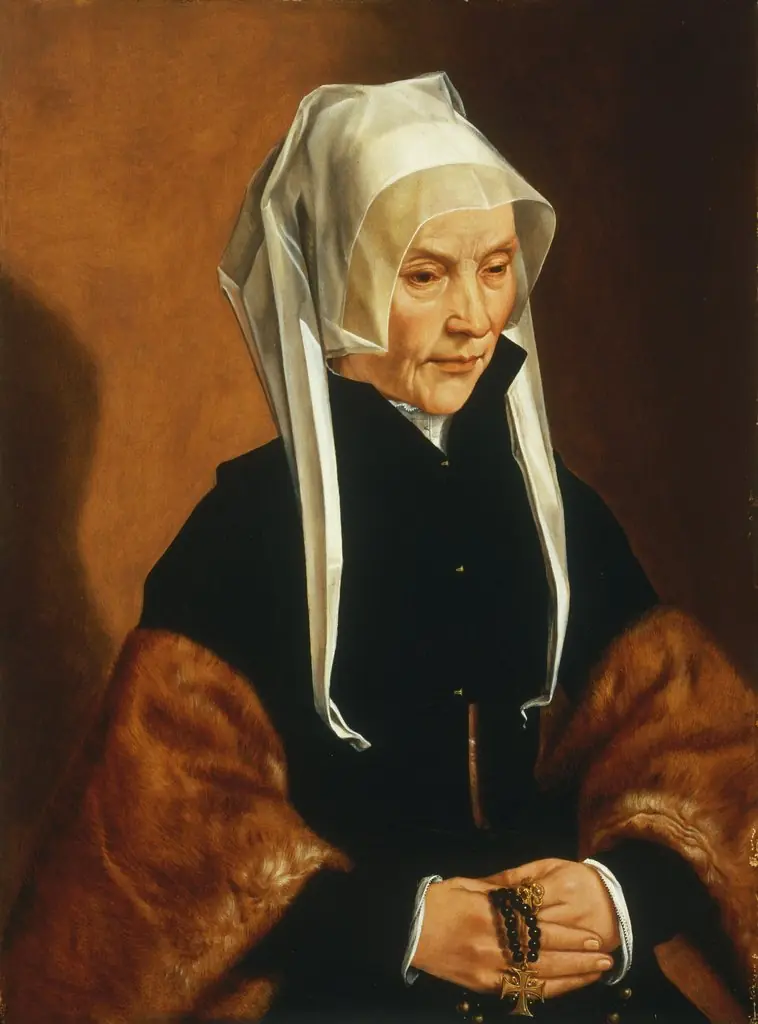
This painting depicts a woman in a black dress with a white head covering, sitting in front of a gray wall. She wears a brown fur shawl and a white ruffled collar. Her hands are clasped together in her lap, with a rosary hanging from them.
The woman's attire and the style of the painting suggest that it is from the 16th century. The artist's use of dark colors and the woman's somber expression create a sense of solemnity.
The painting's attention to detail and realistic portrayal of the subject make it a notable work. If you're interested in learning more about the artist who created this piece, you might want to look up Willem Key.
Overview
Willem Key’s 1543 oil portrait presents a woman, identified as thirty‑six years old, seated before a plain gray backdrop. She is dressed in a black gown, a white coif, and a brown fur shawl, with a white ruffled collar framing her face. Her hands rest together on her lap, a rosary draped across them, conveying a restrained, contemplative demeanor.
Subject & Meaning
The sitter’s modest attire and the presence of a rosary suggest a pious or socially respectable identity, typical of mid‑16th‑century portraiture. The subdued expression and somber palette reinforce a sense of dignity and religious devotion, while the careful positioning of the hands may allude to prayerful intent.
Technique & Style
Key employs a restrained color scheme dominated by dark tones, allowing subtle contrasts of white and brown to define form. Fine brushwork renders the textures of fur, fabric, and the delicate ruffles of the collar, while the smooth background isolates the figure, emphasizing her presence and the realism characteristic of Northern Renaissance portraiture.
History & Provenance
Created in 1543, the work entered the collection of the Gemäldegalerie in Berlin, where it remains on display. Its documented provenance traces back to the artist’s workshop, though earlier ownership records are scarce, reflecting the typical survival pattern of private portraits from the period.
Context
The painting aligns with the Dutch tradition of intimate, individualized portraiture emerging in the early 1500s. Key’s approach mirrors contemporary trends that favored realistic representation over idealization, catering to a growing middle class that sought visual affirmation of personal virtue and status through commissioned likenesses.
Artist & collection