Artwork
Gezicht op het Nederlandse kasteel van Elmina aan de Goudkust
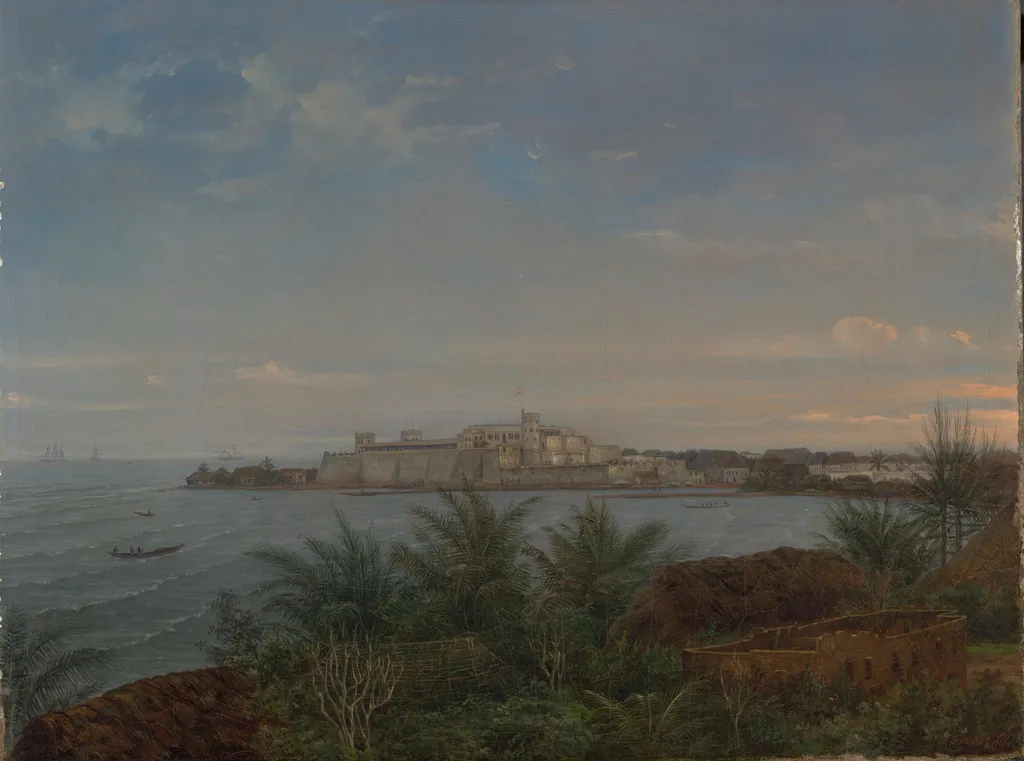
Gezicht op het Nederlandse kasteel van Elmina aan de Goudkust is an oil painting by the Realist artist Willem Troost. It dates from 1870 and is held in the collection of the Rijksmuseum.
About this work
Overview
Painted in 1870 by Willem Troost, this oil on canvas depicts a coastal view of Elmina Castle on the Gold Coast. The work is part of the Rijksmuseum’s collection and reflects 19th-century Dutch interest in colonial architecture and distant landscapes. Its composition centers on the castle’s imposing structure rising from a rocky islet, framed by tropical vegetation and bathed in twilight hues.
Subject & Meaning
The painting presents the structure not as a site of violence, but as a serene, almost monumental presence against a tranquil seascape.
Elmina Castle, a Portuguese-built fortress later controlled by the Dutch, served as a hub in the transatlantic trade network. The painting presents the structure not as a site of violence, but as a serene, almost monumental presence against a tranquil seascape. The calm dusk light and isolated setting suggest contemplation rather than commentary, aligning with 19th-century aesthetic preferences for picturesque distance.
Technique & Style
Troost employed loose, fluid brushwork to render the sky and water, creating a soft, atmospheric effect. The castle’s architecture is rendered with more defined edges, contrasting with the hazy, diffused light of the setting sun. Palm fronds and undergrowth in the foreground are suggested with quick strokes, framing the scene without detailed realism, emphasizing mood over topographical accuracy.
History & Provenance
The painting was completed in 1870 and entered the Rijksmuseum’s collection shortly thereafter. It likely originated from Troost’s personal travels or from studies based on earlier Dutch colonial records and sketches. Its preservation in a major Dutch institution reflects the state’s institutional interest in documenting overseas holdings during the height of colonial administration.
Context
In the late 19th century, Dutch artists increasingly turned to colonial subjects as national identity and imperial legacy became cultural themes. While Elmina Castle had lost much of its economic significance by this time, it remained a symbolic landmark. Troost’s depiction aligns with a broader trend of romanticizing colonial architecture through serene, non-confrontational landscapes.
Legacy
The painting endures as a visual record of how Dutch artists interpreted colonial architecture through a lens of quiet beauty. It contributes to the museum’s broader collection of 19th-century landscape works that reflect both aesthetic ideals and the complex relationship between the Netherlands and its overseas territories, without overt political messaging.
Own this work as a print
Artist & collection

 View of Ischia from the Sea
 Southern Harbour Town
 View of the Dardanelles
 Untitled
 Outeiro da Glória (atribuído)
 Brazilian Landscape
 View of Olinda, Brazil
 Porto do Bispo, Santos, SP
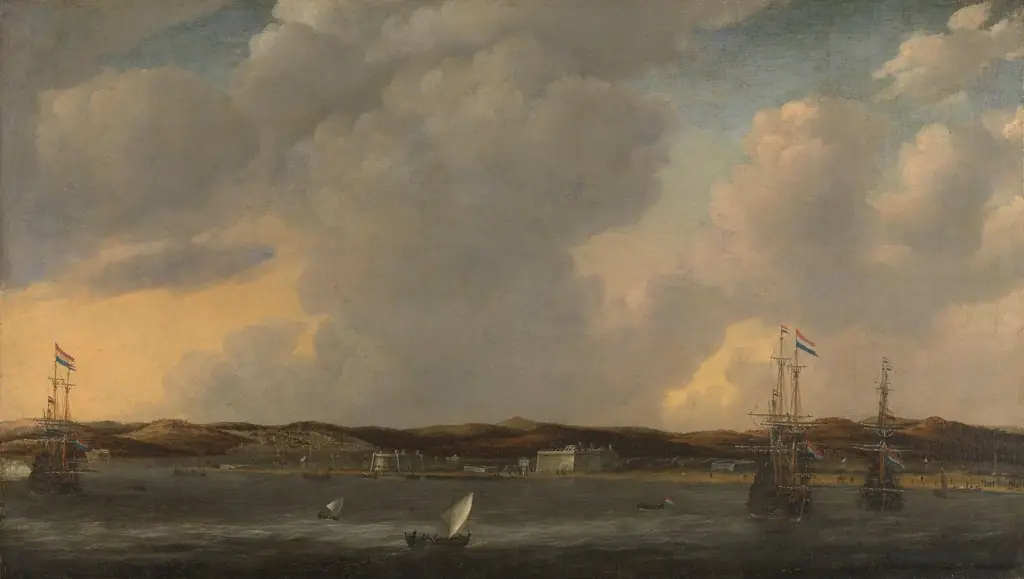 View of Tunis
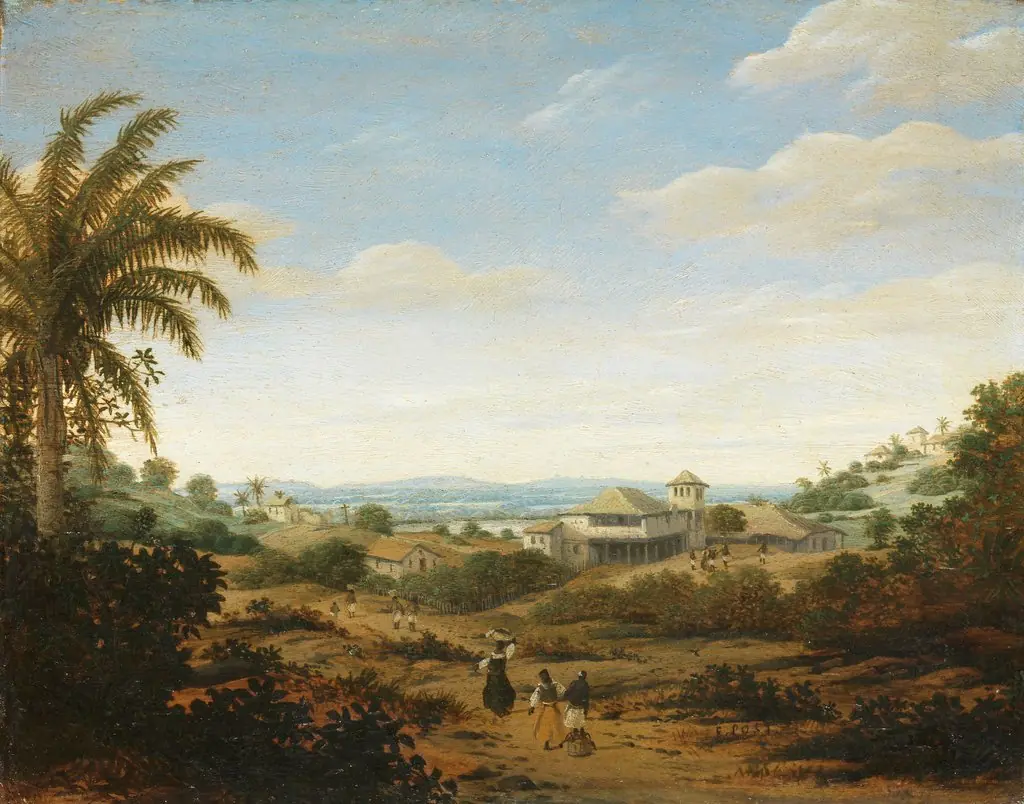 Landscape by the Rio Senhor de Engenho, Brazil
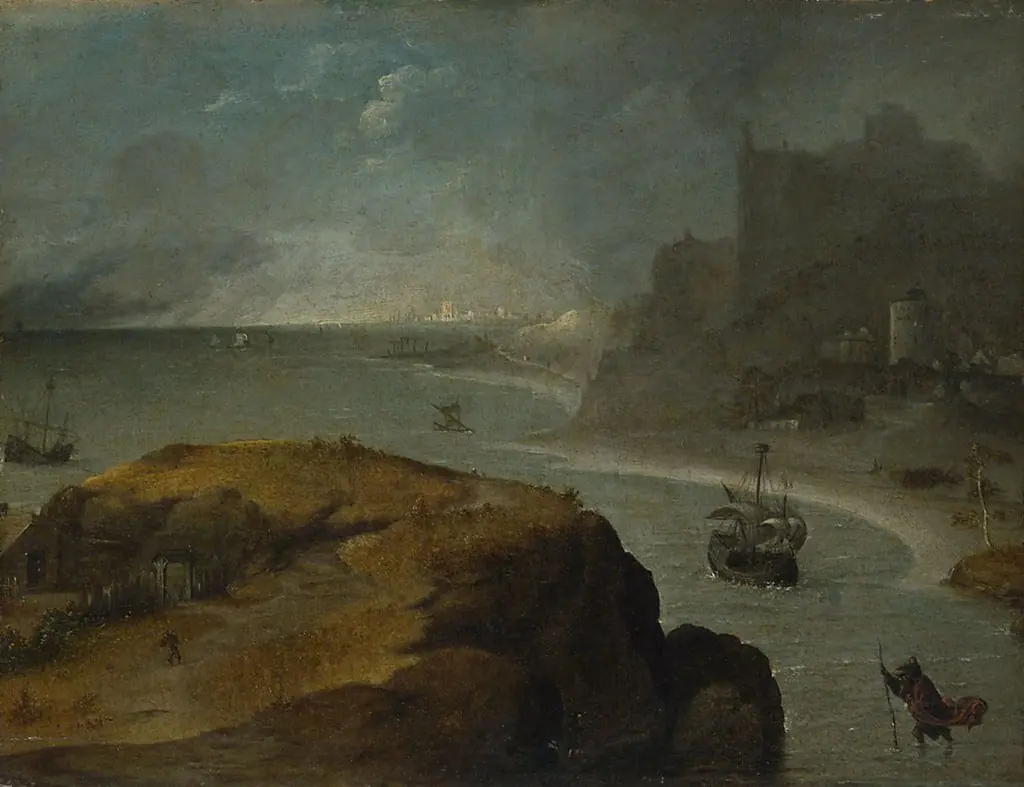 Seegestade mit Hl. Christophorus
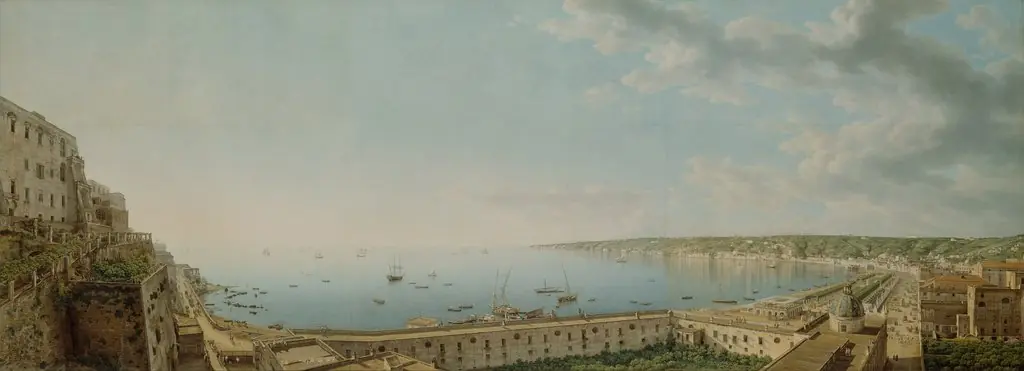 A View of the Bay of Naples, Looking Southwest from the Pizzofalcone towards Capo di Posilippo