Artwork
Front View of Buitenzorg Palace during the Earthquake of 10 October 1834
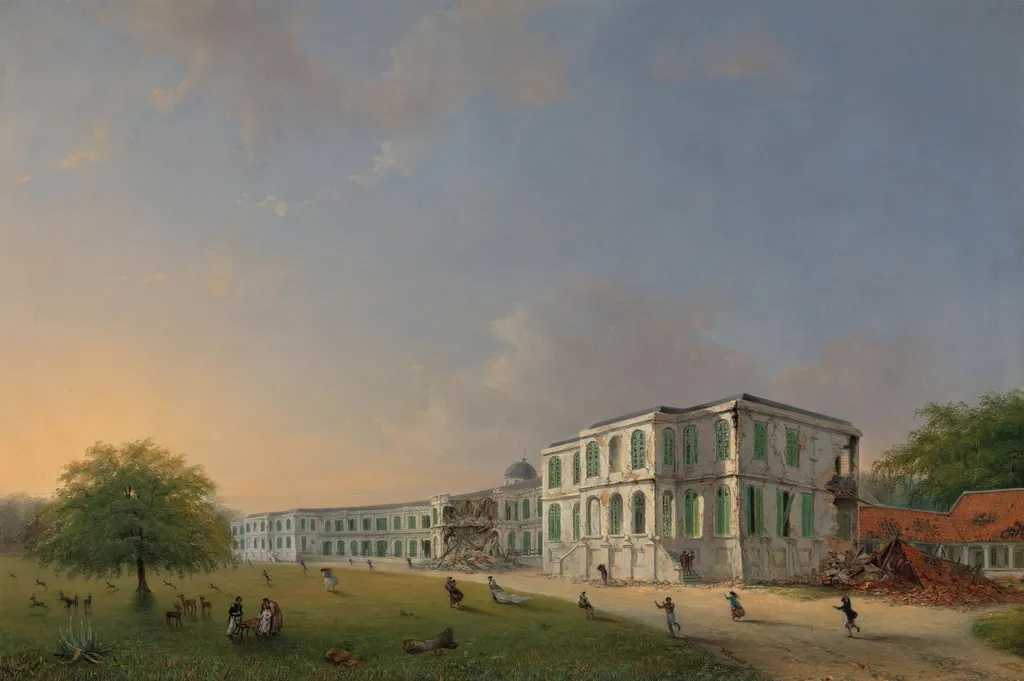
Front View of Buitenzorg Palace during the Earthquake of 10 October 1834 is an unspecified painting by the Dutch Golden Age artist Willem Troost. It dates from 1835 and is held in the collection of the Rijksmuseum.
About this work
Overview
Though Troost never traveled to the Dutch East Indies, he constructed the scene from sketches sent by Governor-General J.
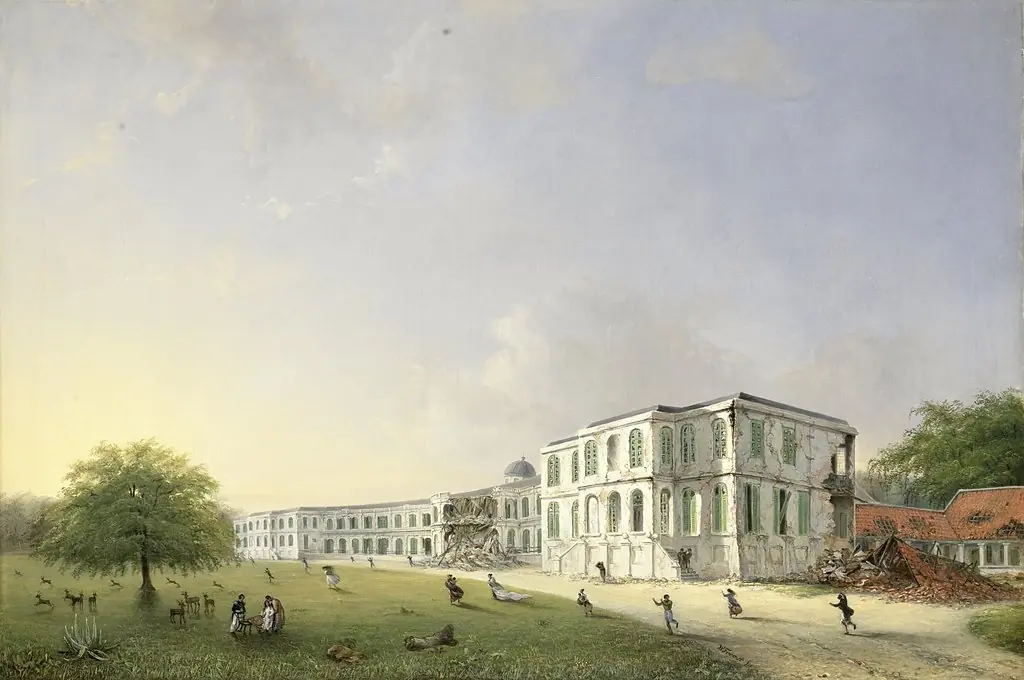
Painted in 1834 by Willem Troost, this work depicts Buitenzorg Palace in Java moments after a violent earthquake. Though Troost never traveled to the Dutch East Indies, he constructed the scene from sketches sent by Governor-General J.C. Baud, who commissioned the painting upon returning to the Netherlands. The composition captures structural collapse and human panic, blending documentary detail with personal narrative.
Subject & Meaning
The painting portrays the palace’s damaged architecture—cracked walls, displaced roof tiles—and figures in motion: fleeing servants, clustered onlookers. A woman seated on a chair in the foreground, likely Baud’s wife, adds a human anchor to the chaos. Her presence transforms the event from a distant calamity into a private tragedy, reinforcing the governor’s emotional connection to the site and his desire to memorialize its rupture.
Technique & Style
Troost employed a precise, almost topographical approach to render the palace’s colonial architecture, with careful attention to architectural detail. The figures are rendered with restrained emotion, their postures suggesting urgency rather than theatrical distress. The palette is muted, emphasizing the gray of falling debris and the pale tones of damaged stucco, enhancing the scene’s somber realism despite the artist’s lack of firsthand experience.
History & Provenance
Commissioned by Governor-General J.C. Baud after the 1834 earthquake, the painting was one of two commissioned works—one showing the palace intact, the other after the disaster. The sketches used by Troost were likely made by Dutch officials or local artists in Java and sent to the Netherlands. The work entered European collections shortly after completion, reflecting colonial interest in documenting imperial infrastructure under duress.
Context
The earthquake of October 10, 1834, was one of several seismic events to strike Java during the Dutch colonial period. Official records noted damage to government buildings, but few visual records survived. Troost’s painting, based on secondhand accounts, became a rare visual testimony. Its creation reflects a broader colonial practice of using art to assert control over distant territories through documentation and commemoration.
Legacy
The painting remains a key example of how colonial administrators shaped visual narratives of empire from afar. Its reliance on intermediary sketches highlights the mediation inherent in colonial representation. Today, it serves as a historical artifact not only of natural disaster but of the mechanisms through which distant events were interpreted, curated, and memorialized in Europe.
Own this work as a print
Artist & collection

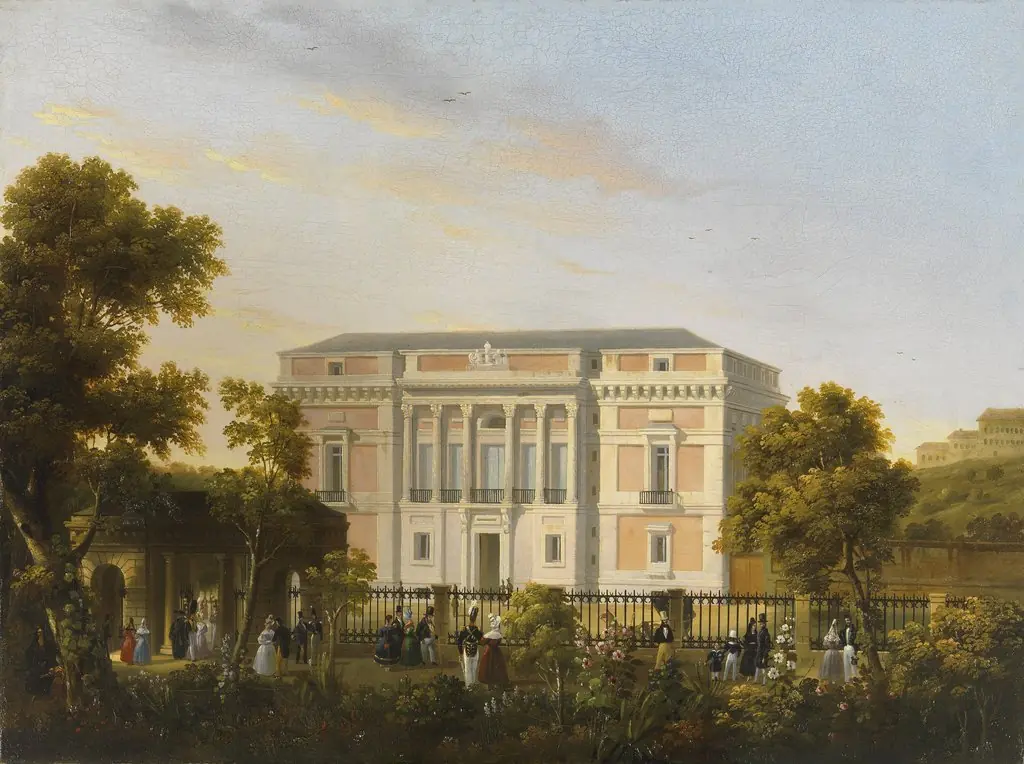 View of the south Façade of the Museo del Prado from inside the Botanical Gardens
![Topçular Barracks on the outskirts of Pera[?], by Anonymous Greek artist](https://artifactworldgallery.com/img/anonymous-greek-artist--topcular-barracks-on-the-outskirts-of-pera--81cd3e7e912c2328-w320.webp) Topçular Barracks on the outskirts of Pera[?]
Topçular Barracks on the outskirts of Pera[?]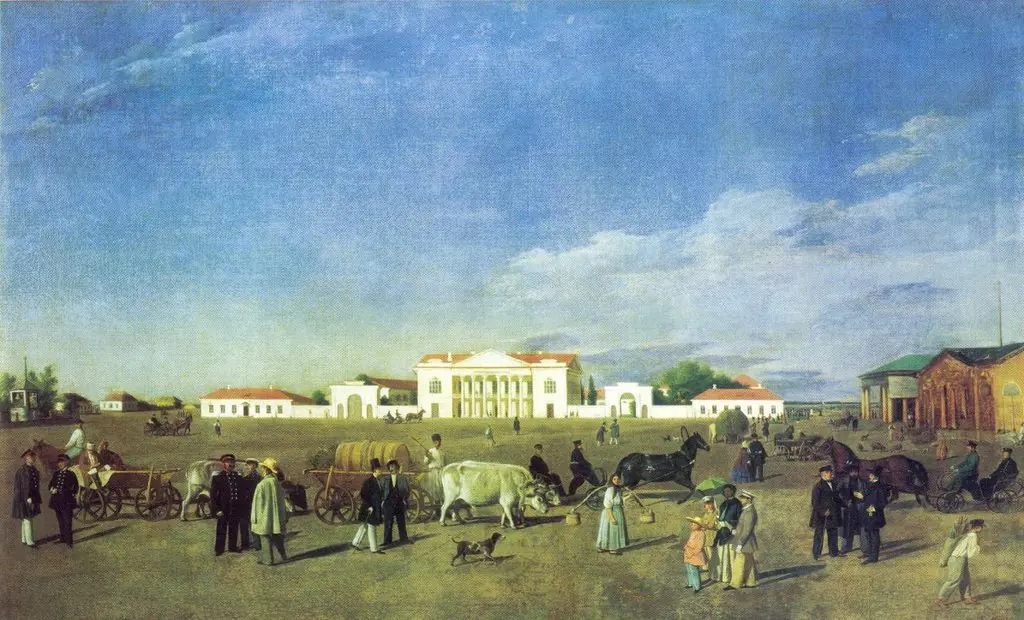 Poltava Main Square
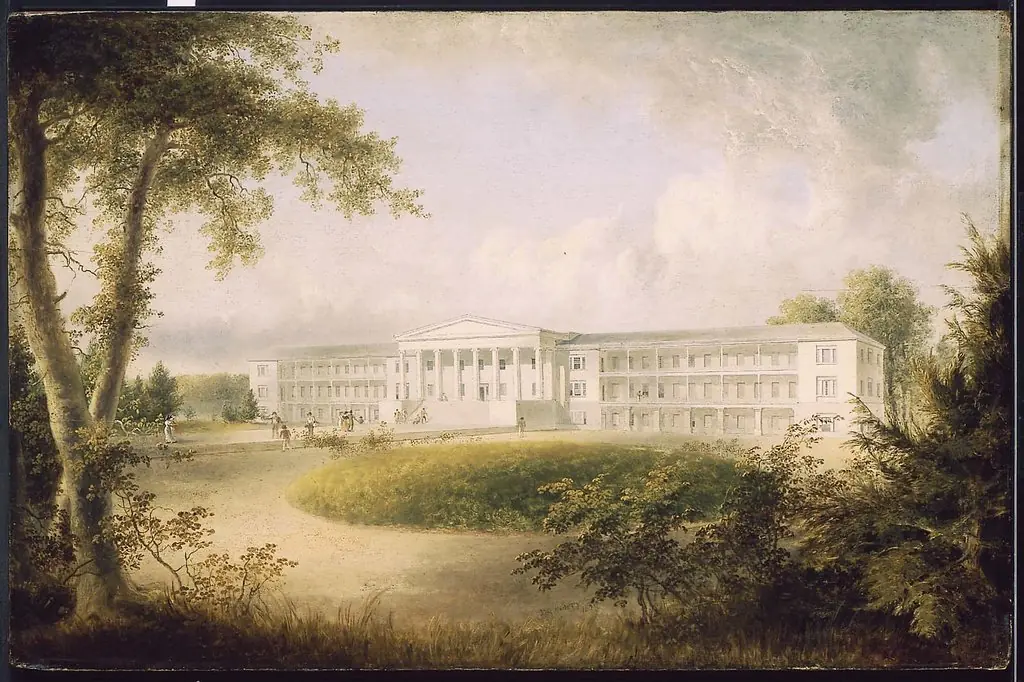 The Naval Home, Gray's Ferry, Philadelphia
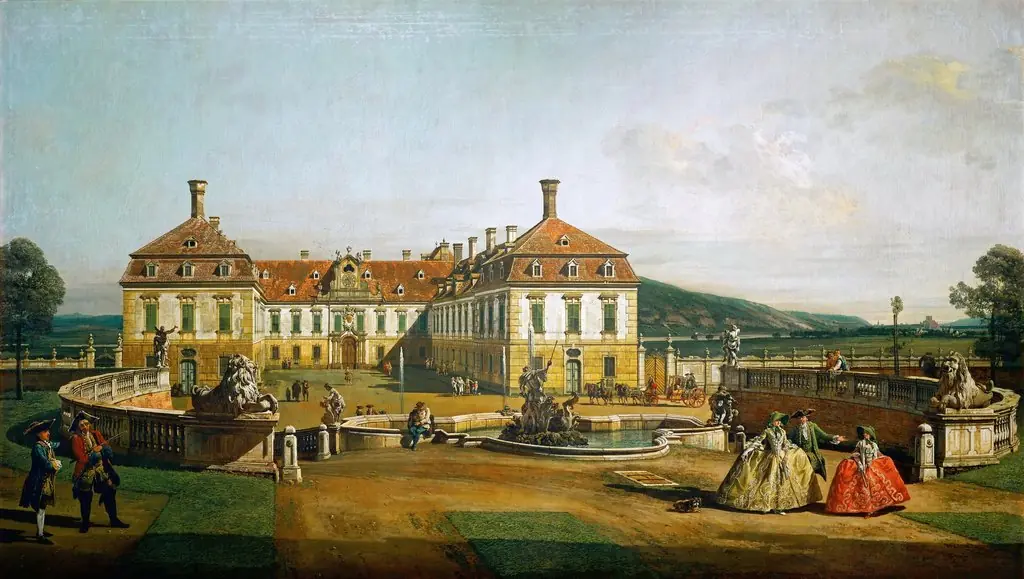 Das kaiserliche Lustschloß Schloss Hof, Ehrenhofseite
 Sítio Sossego, São Luís, Maranhão (atribuído)
 Alexander Palace in Tsarskoye Selo
 Palácio Imperial de Petrópolis
 View of the Wilanów Palace from the entrance
 The Garden of Palazzo Contarini dal Zaffo