Artwork
The unsuccessful English attack against the returning Dutch fleet in the harbor of Bergen, Norway, 12 August 1665: episode from the Second Anglo-Dutch War (1665-67)
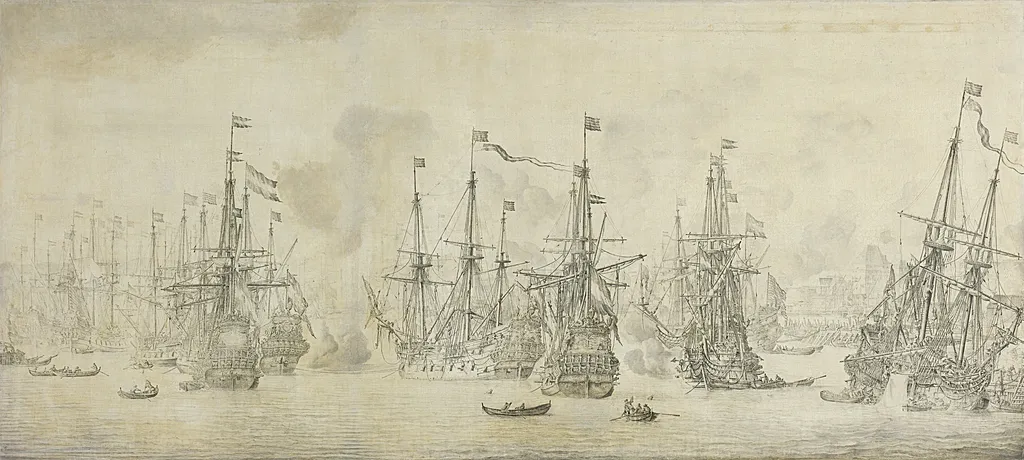
The unsuccessful English attack against the returning Dutch fleet in the harbor of Bergen, Norway, 12 August 1665: episode from the Second Anglo-Dutch War (1665-67) is an unspecified painting by the Dutch Golden Age artist Willem van de Velde the elder. It dates from 1669 and is held in the collection of the Rijksmuseum.
About this work
Overview
Willem van de Velde the Elder’s 1669 oil on canvas records the failed English assault on a Dutch fleet anchored in Bergen, Norway, on 12 August 1665.
Willem van de Velde the Elder’s 1669 oil on canvas records the failed English assault on a Dutch fleet anchored in Bergen, Norway, on 12 August 1665. The composition captures a turbulent harbor scene in which warships exchange cannon fire, their masts and rigging rendered with meticulous attention. The painting belongs to the Rijksmuseum’s collection and exemplifies the artist’s reputation for accurate maritime representation.
Subject & Meaning
The work depicts the moment when English vessels attempted to intercept returning Dutch ships during the Second Anglo‑Dutch War, only to be repelled within the protected waters of Bergen harbor. By emphasizing the chaos of smoke, exploding shot, and the crowded array of ships, van de Velde conveys both the strategic importance of the Norwegian port and the intensity of 17th‑century naval warfare.
Technique & Style
Executed in oil, the canvas showcases van de Velde’s characteristic precision: rigging, cannon placements, and wave patterns are rendered with fine brushwork and a restrained palette of muted blues, grays, and earthy tones. The artist’s use of light highlights billowing smoke and the glint of cannon fire, while the overall composition balances detailed ship studies with a broader, dynamic sense of movement.
History & Provenance
Painted four years after the actual engagement, the piece served as a visual record rather than a contemporary illustration. It entered the Rijksmuseum’s holdings as part of the museum’s effort to document Dutch maritime history, joining a broader corpus of van de Velde’s naval scenes that document the nation’s seafaring legacy.
Context
The painting belongs to the broader tradition of Dutch Golden Age history paintings that blend documentary purpose with artistic ambition. Set against the backdrop of the Second Anglo‑Dutch War (1665‑67), it reflects the period’s preoccupation with naval power, trade protection, and the rivalry between England and the Dutch Republic for control of European sea lanes.
Artist & collection

Artist
Willem van de Velde the Elder (1610/11 – 13 December 1693) was a Dutch Golden Age seascape painter, who produced many precise drawings of ships and ink paintings of fleets, but later learned to use oil paints like his son.

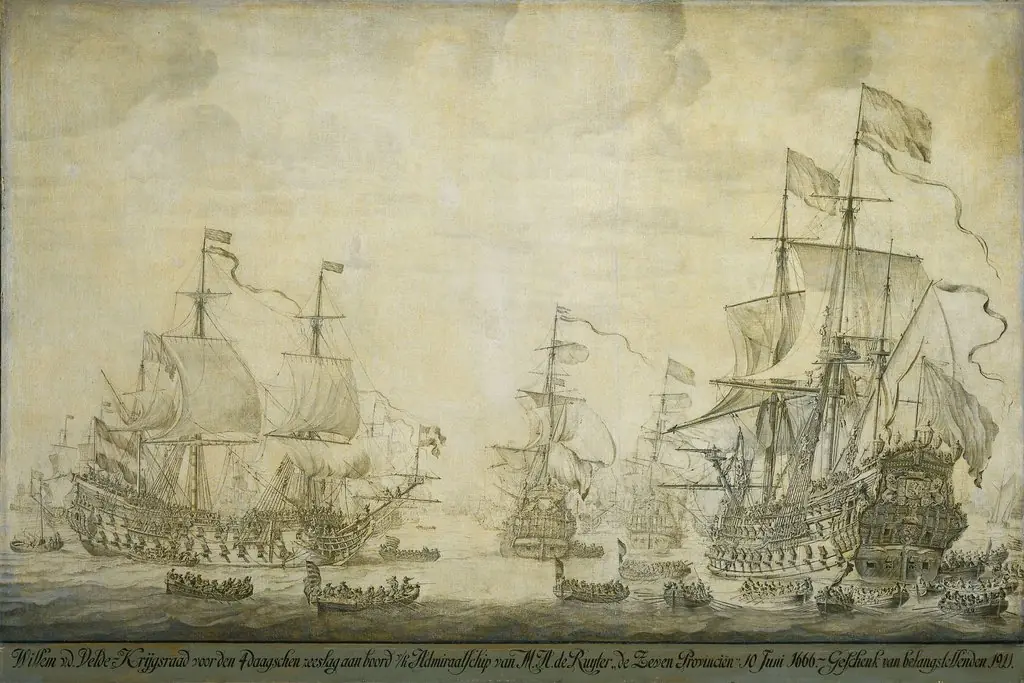 "Council of War aboard 'The Seven Provinces' the Flagship of Michiel Adriaensz de Ruyter, 10 June 1666, preceding the Four Days' Battle
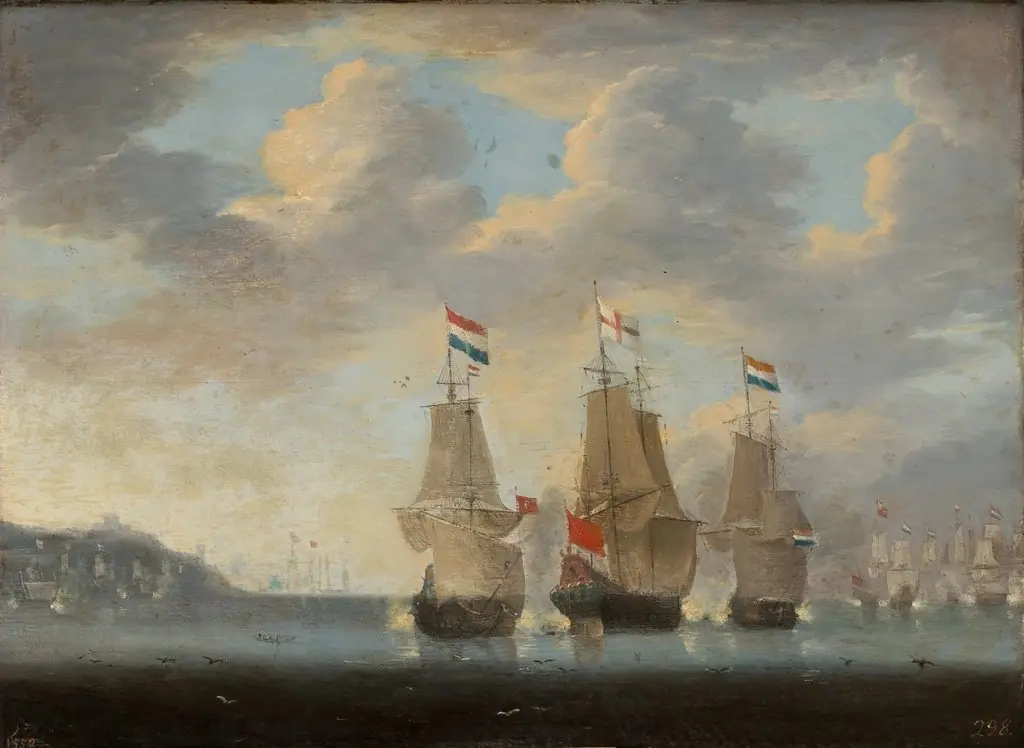
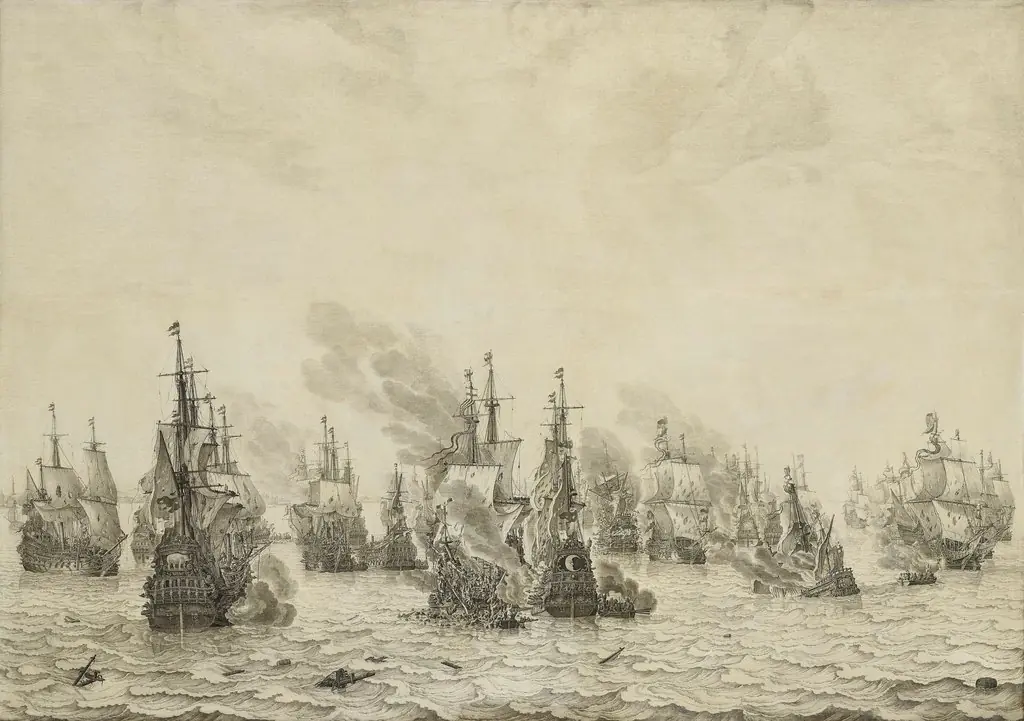 The Batlle of Livorno, 14 March 1653: episode from the First Anglo-Dutch War (1652-54)
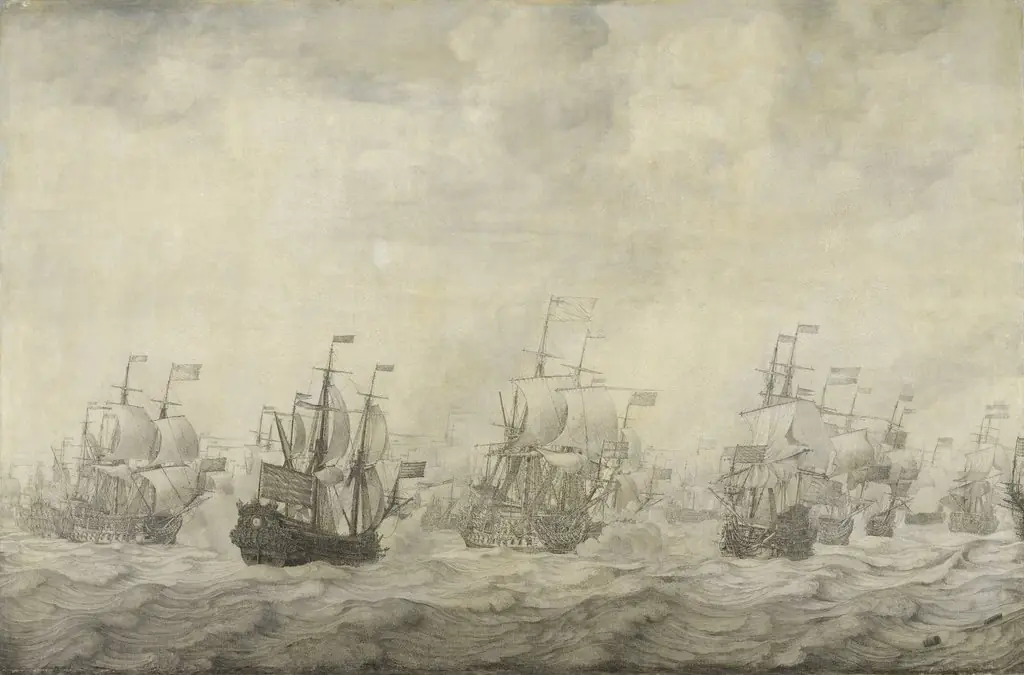
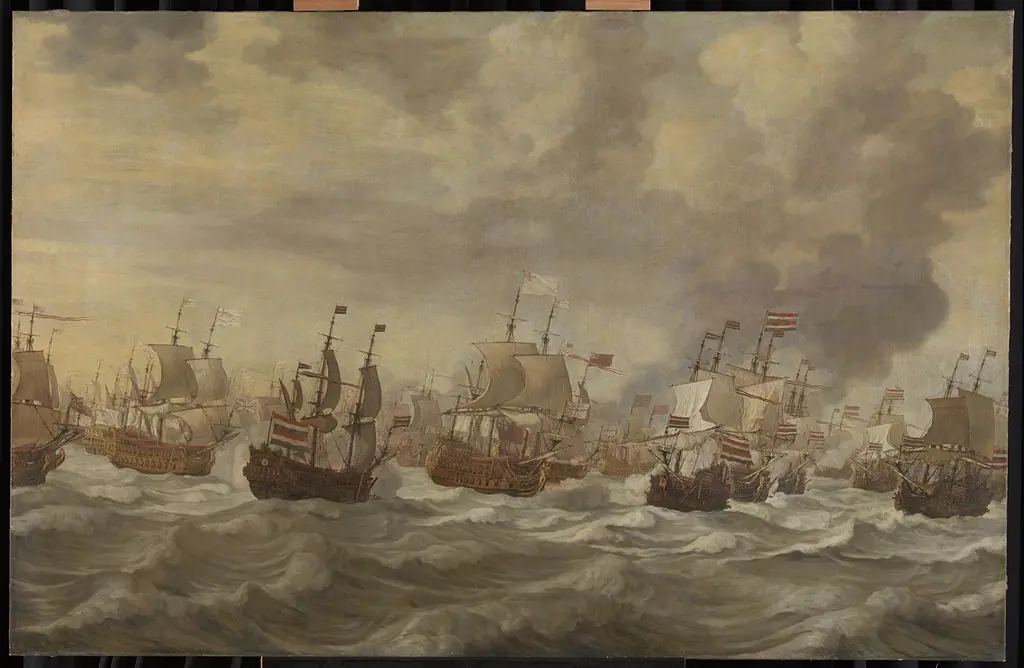 Episode from the Four Day Battle at Sea, 11-14 June 1666, in the second Anglo-Dutch War (1665-67)
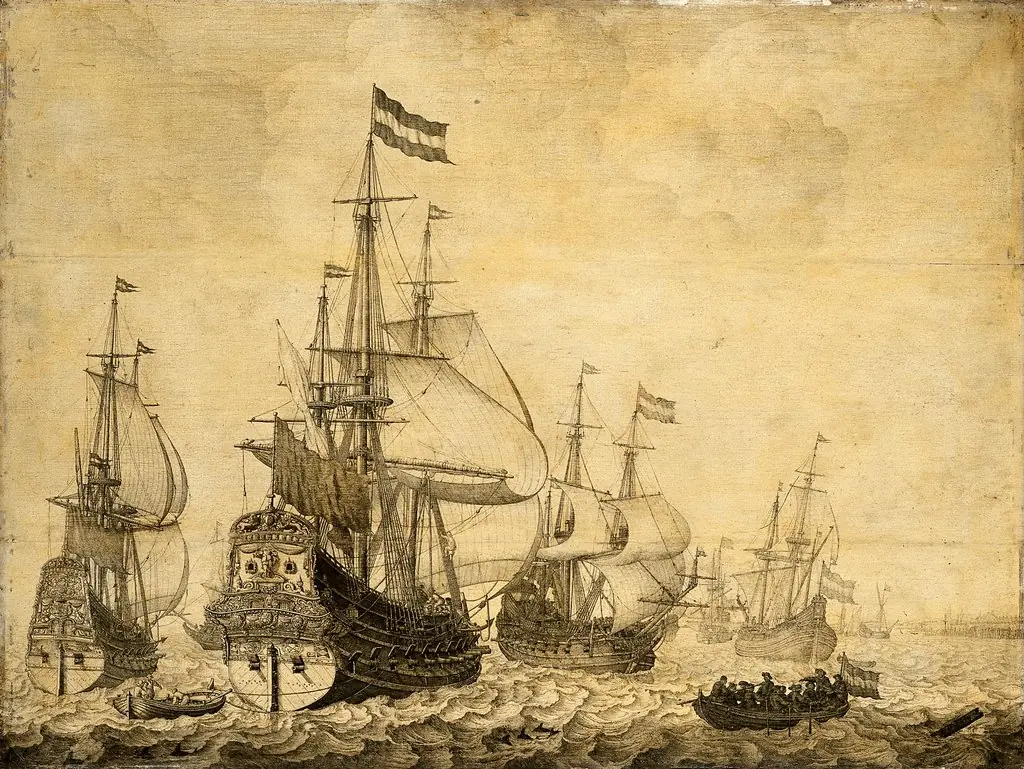 Seascape with Dutch men-of-war
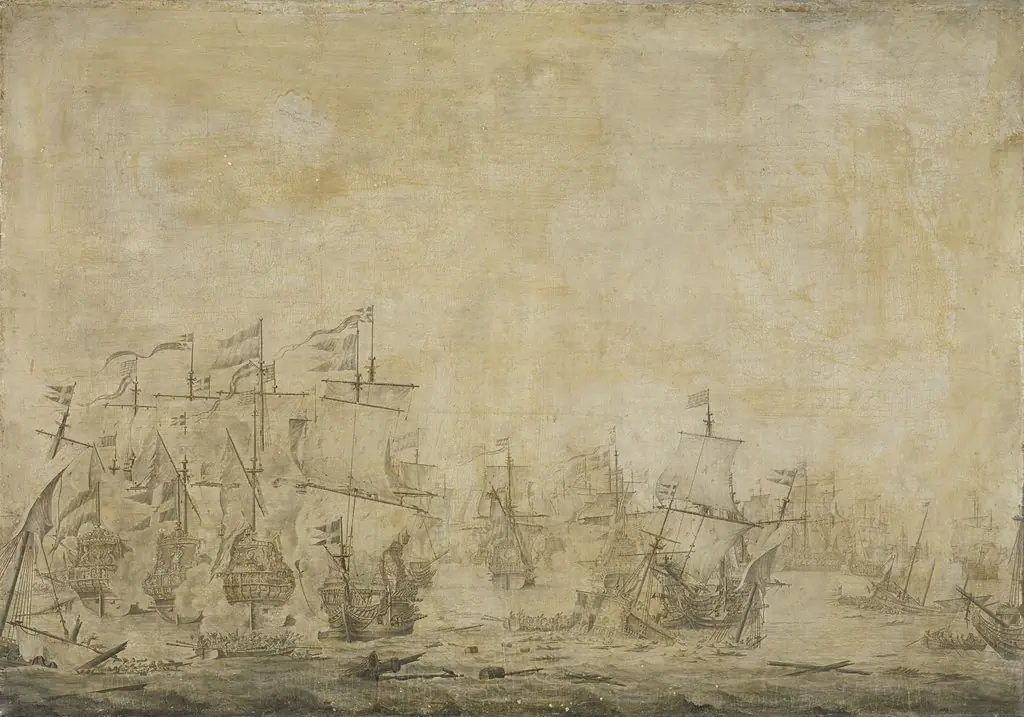
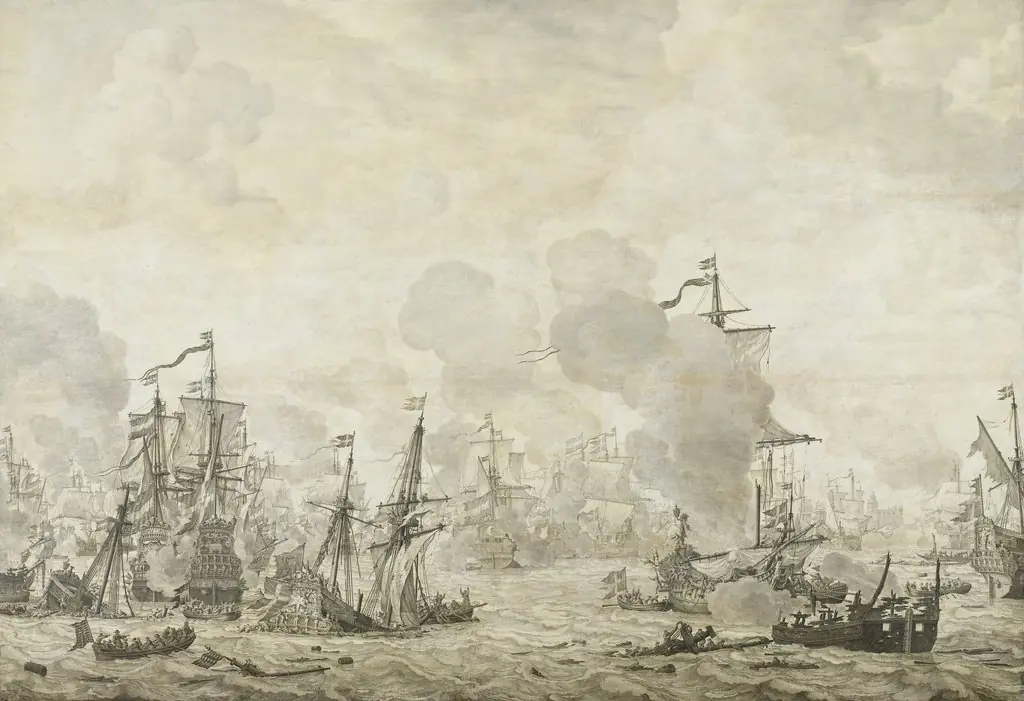 Episode from the Battle of the Sound between the Dutch and Swedish fleets, 8 November 1658
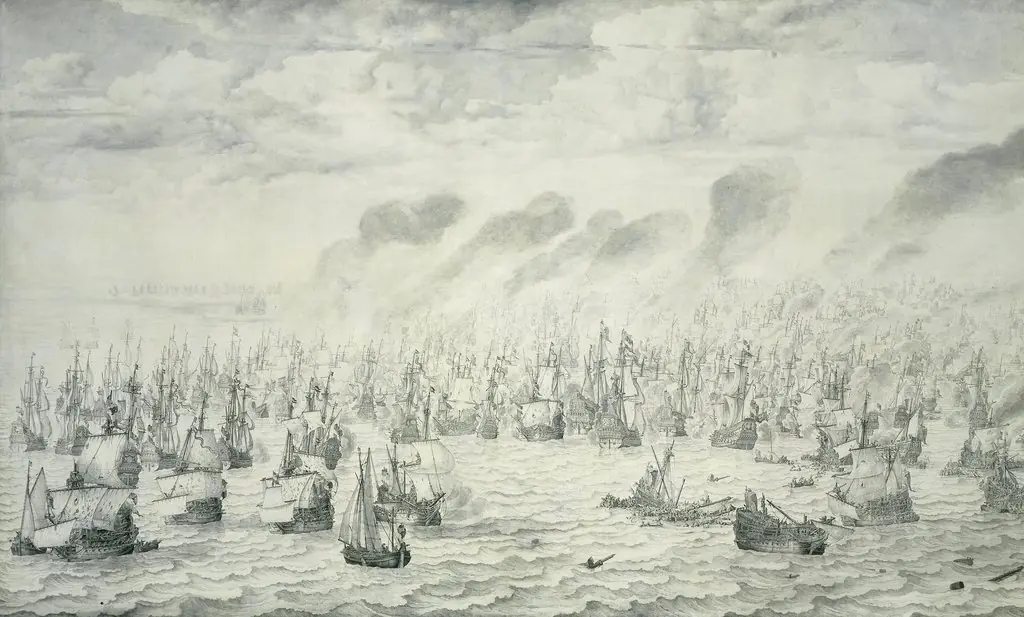 The Battle of Terheide
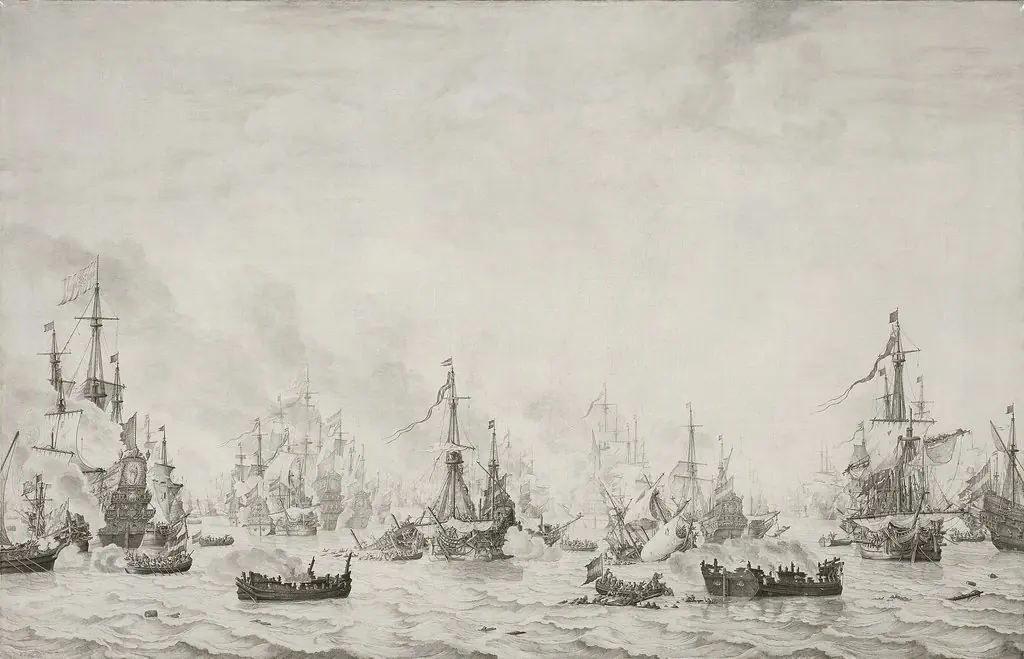 The Battle of the Downs
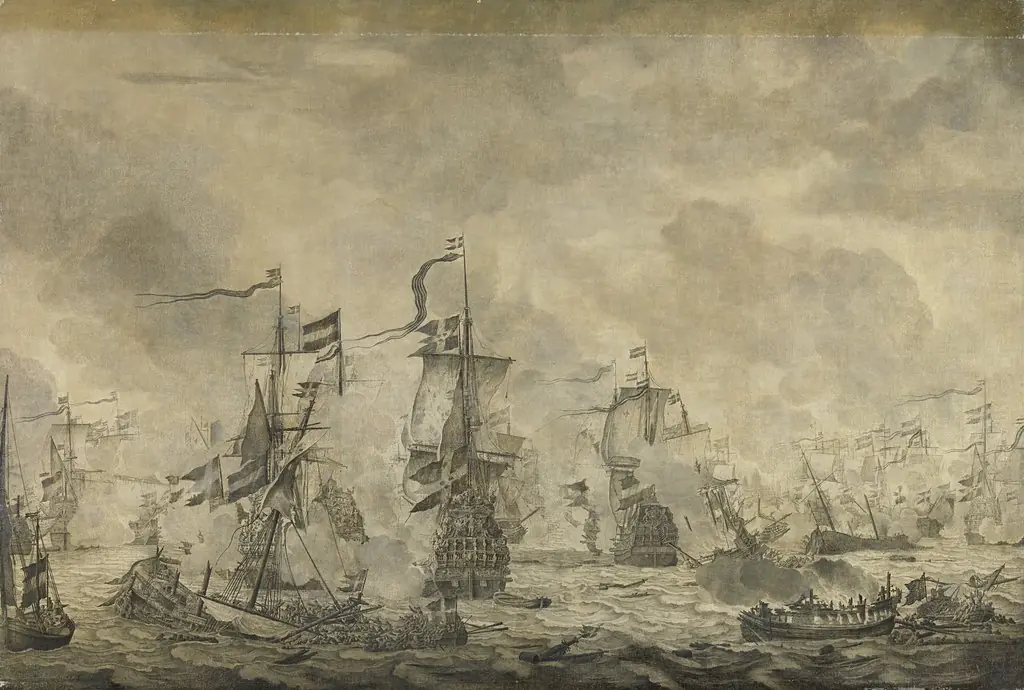 Episode from the Battle of the Sound between the Dutch and the Swedish fleets, 8 November 1658