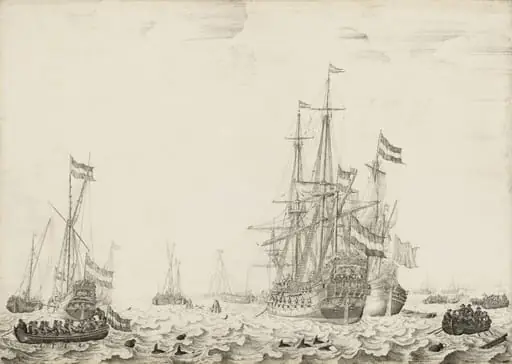
Artwork
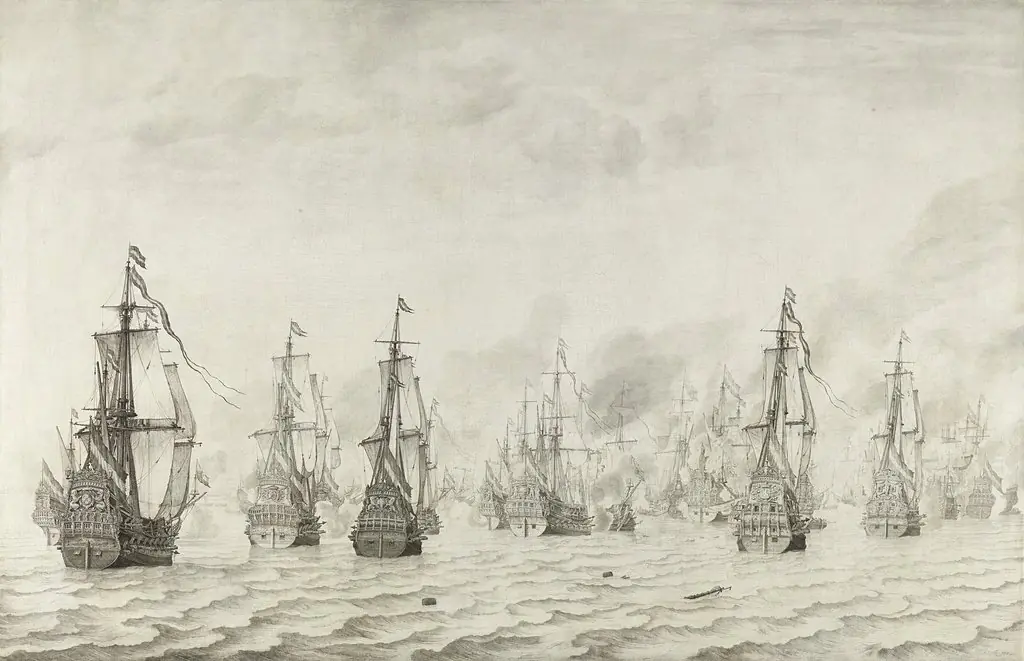
Seascape with Dutch men-of-war
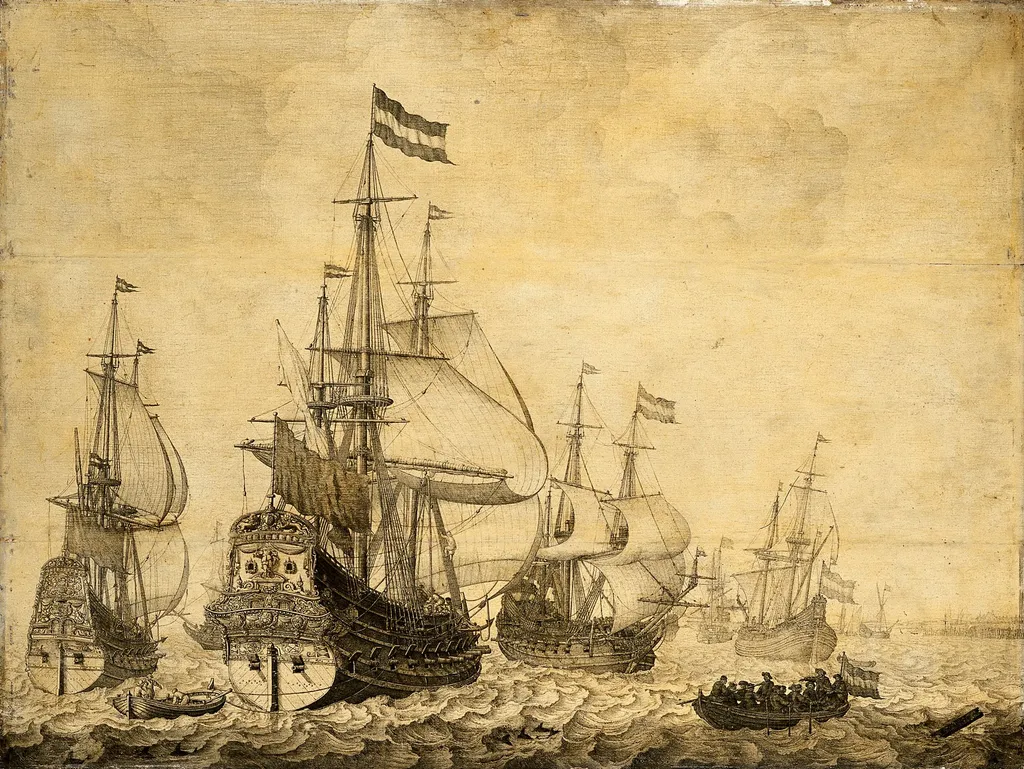
Seascape with Dutch men-of-war is an ink painting by the Dutch Golden Age artist Willem van de Velde the elder. It dates from 1650 and is held in the collection of the Rijksmuseum.
About this work
Overview
Created around 1650, this ink drawing by Willem van de Velde the Elder captures a Dutch naval squadron on a restless sea. The composition centers on three large warships with towering masts and billowing sails, their flags unfurled, while a smaller rowed boat approaches in the foreground.
Subject & Meaning
The work depicts a historical maritime scene, likely illustrating Dutch men‑of‑war prepared for combat. The presence of the smaller vessel suggests a narrative of crew or supplies joining the fleet, emphasizing the coordinated nature of 17th‑century naval operations.
Technique & Style
Van de Velde employs precise, fine lines to render rigging, hulls, and sea‑foam, achieving a high degree of realism. Cross‑hatching creates tonal depth, particularly in the shadows of the masts and waves, while the overall composition reflects the artist’s early focus on ink before his later transition to oil.
History & Provenance
Willem van de Velde the Elder, a prominent Dutch Golden Age seascape specialist, produced this drawing early in his career, prior to adopting oil techniques under the influence of his son, Willem van de Velde the Younger. The piece remains a representative example of his ink work from the mid‑17th century.
Context
The drawing belongs to the Dutch Golden Age, a period when the Netherlands dominated global trade and naval power. Van de Velde’s meticulous ship studies catered to a market eager for accurate visual records of maritime strength and were often used as references for shipbuilders and patrons.
Artist & collection

Artist
Willem van de Velde the Elder (1610/11 – 13 December 1693) was a Dutch Golden Age seascape painter, who produced many precise drawings of ships and ink paintings of fleets, but later learned to use oil paints like his son.

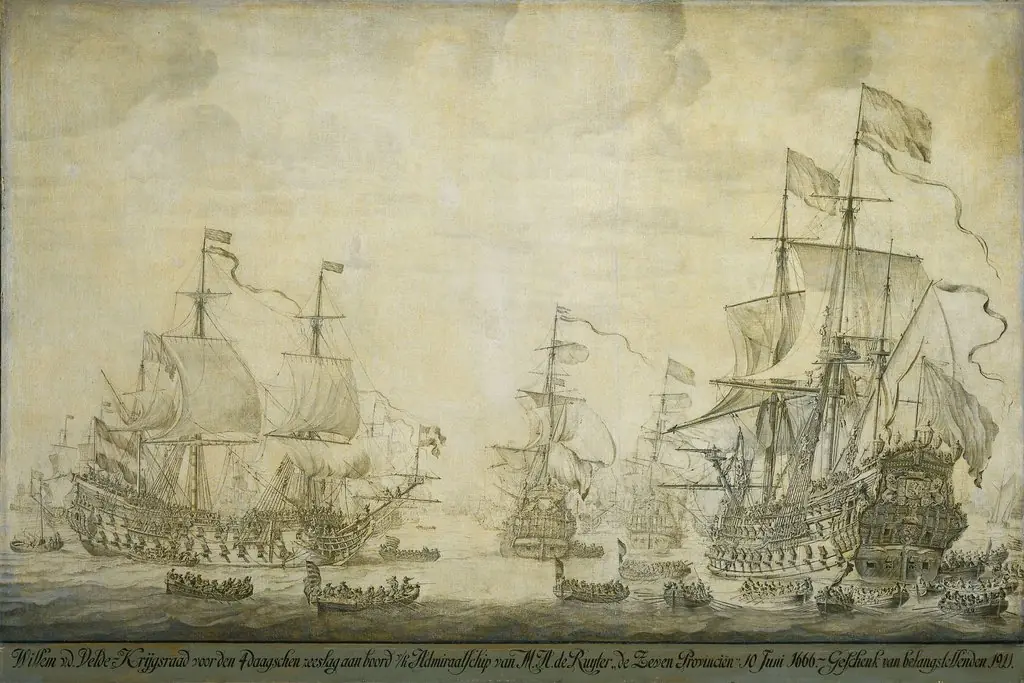 "Council of War aboard 'The Seven Provinces' the Flagship of Michiel Adriaensz de Ruyter, 10 June 1666, preceding the Four Days' Battle
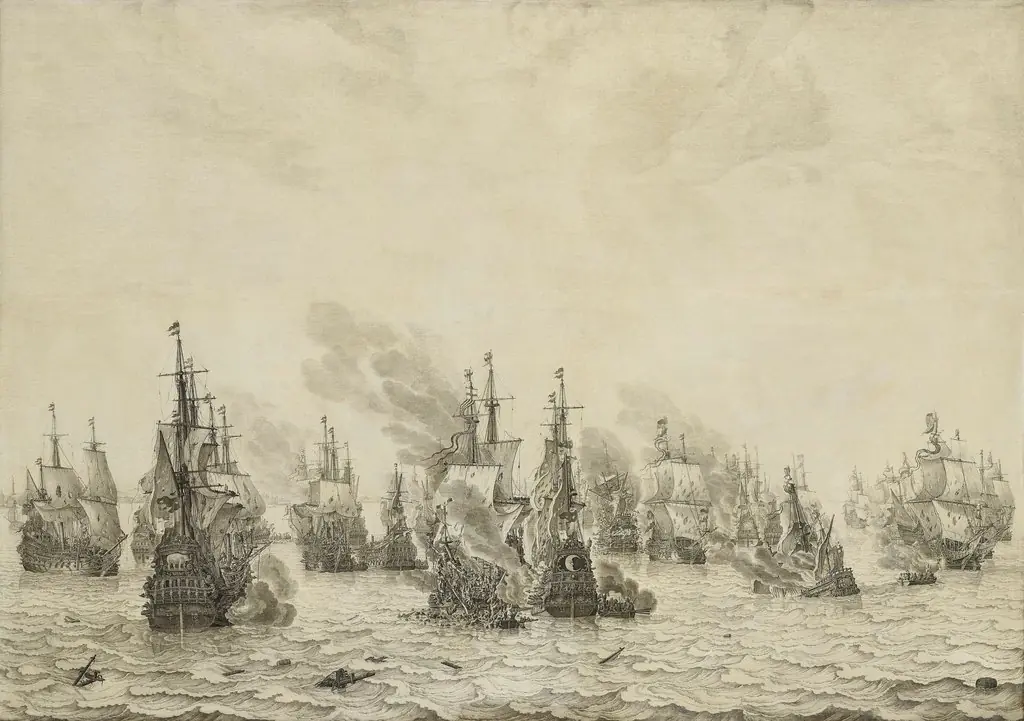 The Batlle of Livorno, 14 March 1653: episode from the First Anglo-Dutch War (1652-54)
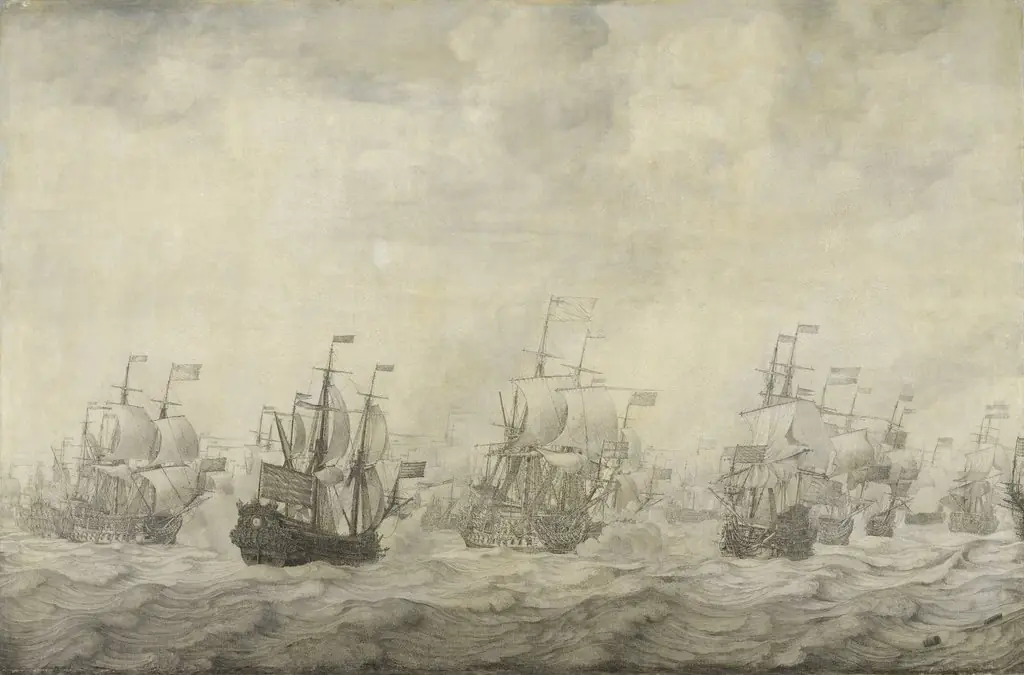
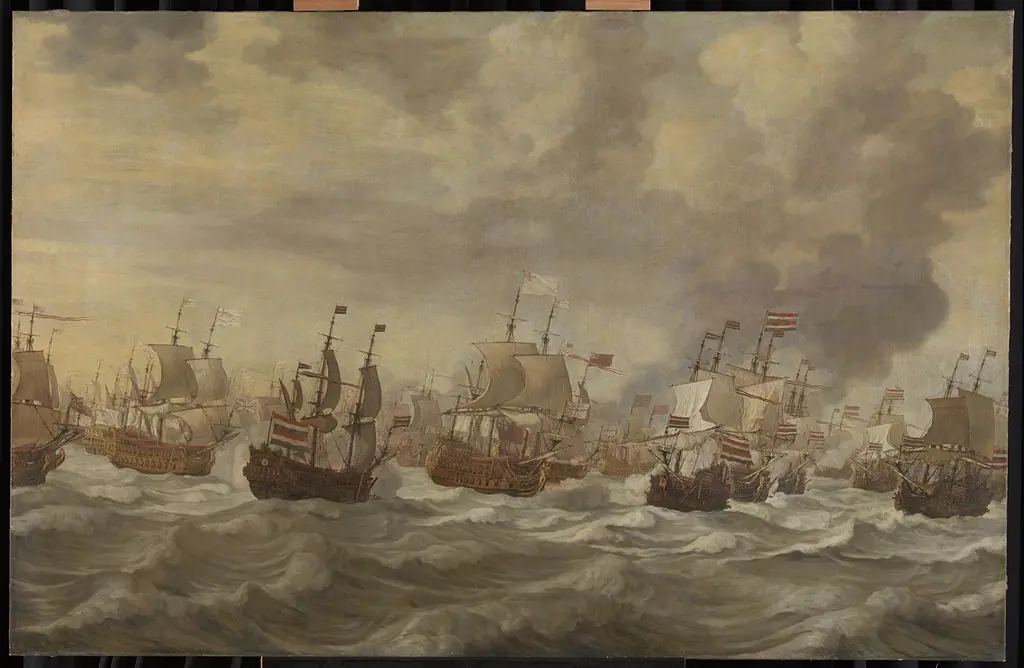 Episode from the Four Day Battle at Sea, 11-14 June 1666, in the second Anglo-Dutch War (1665-67)
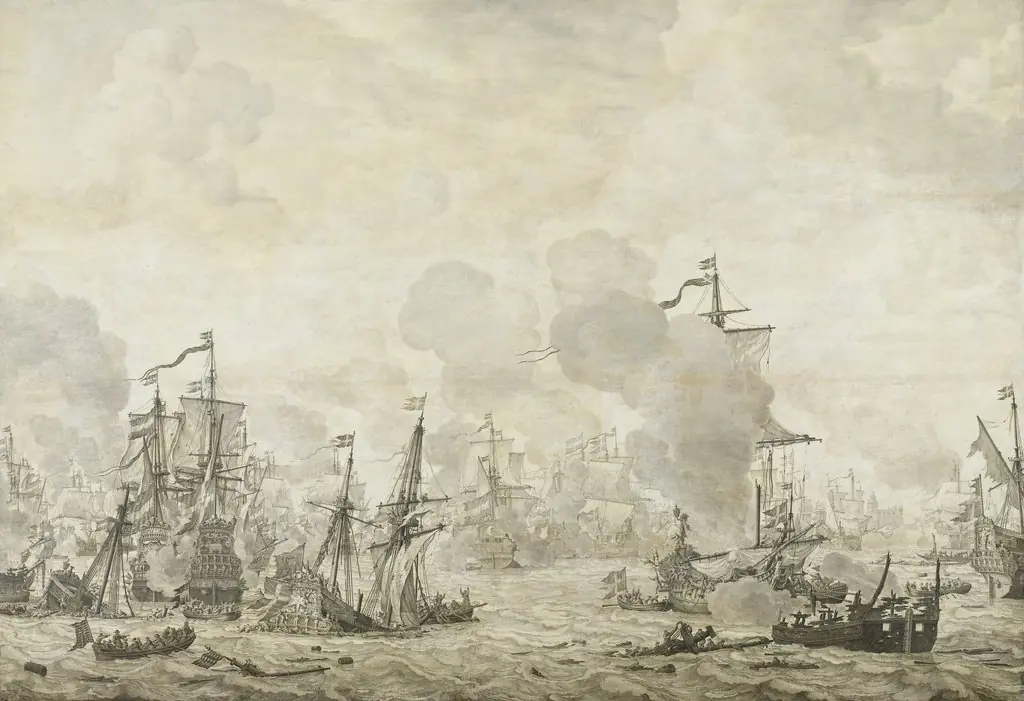 Episode from the Battle of the Sound between the Dutch and Swedish fleets, 8 November 1658
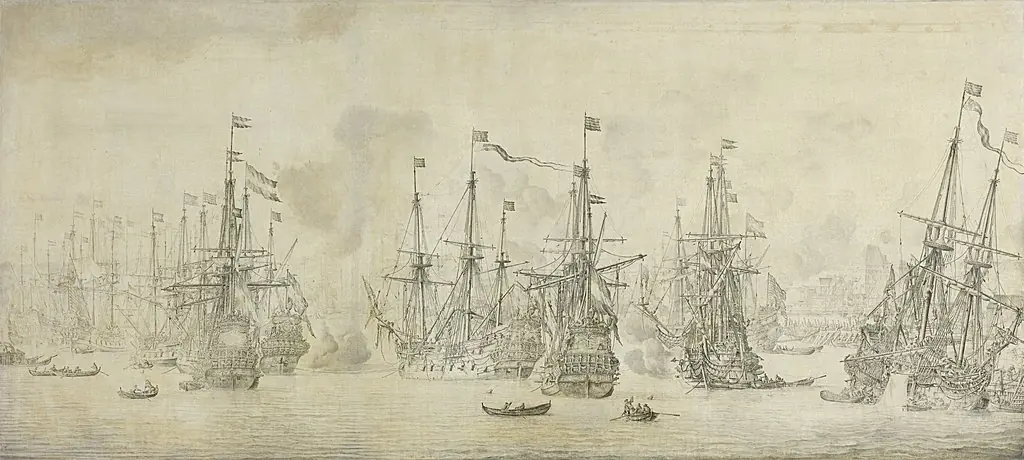 The unsuccessful English attack against the returning Dutch fleet in the harbor of Bergen, Norway, 12 August 1665: episode from the Second Anglo-Dutch War (1665-67)
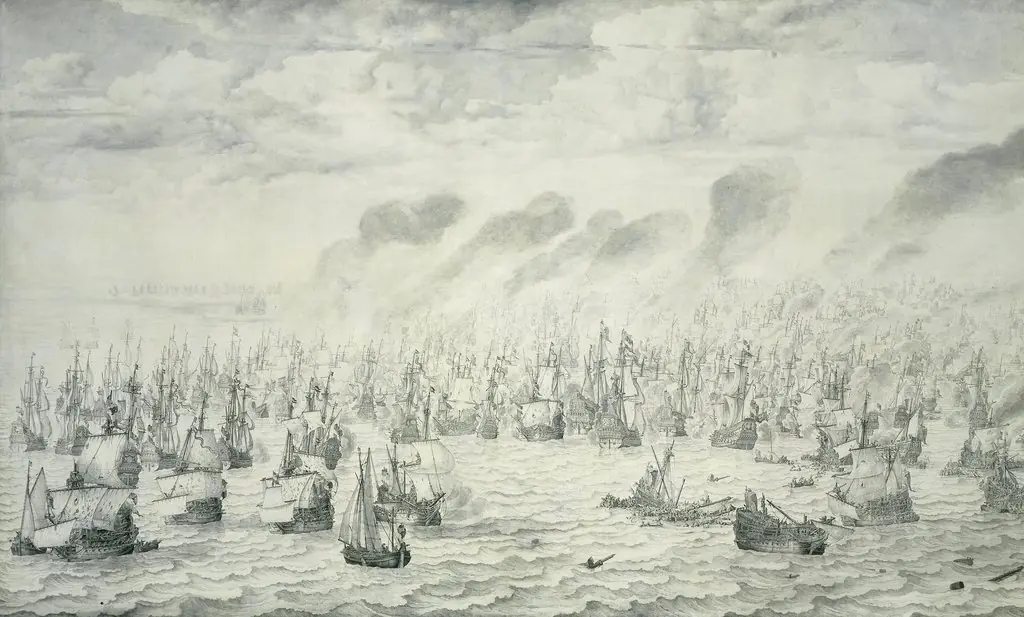 The Battle of Terheide
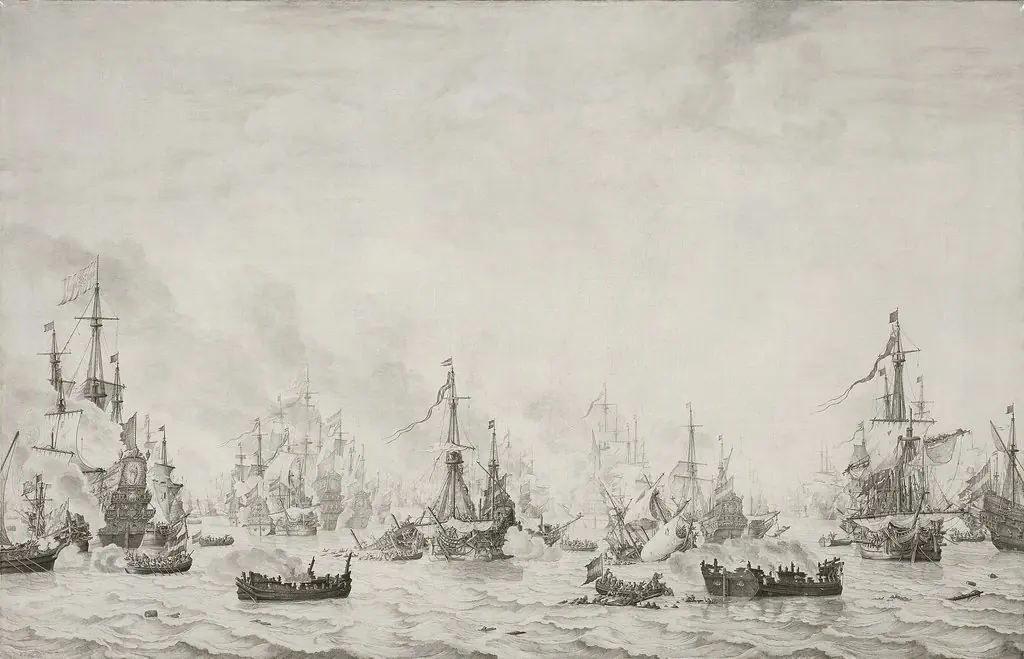 The Battle of the Downs
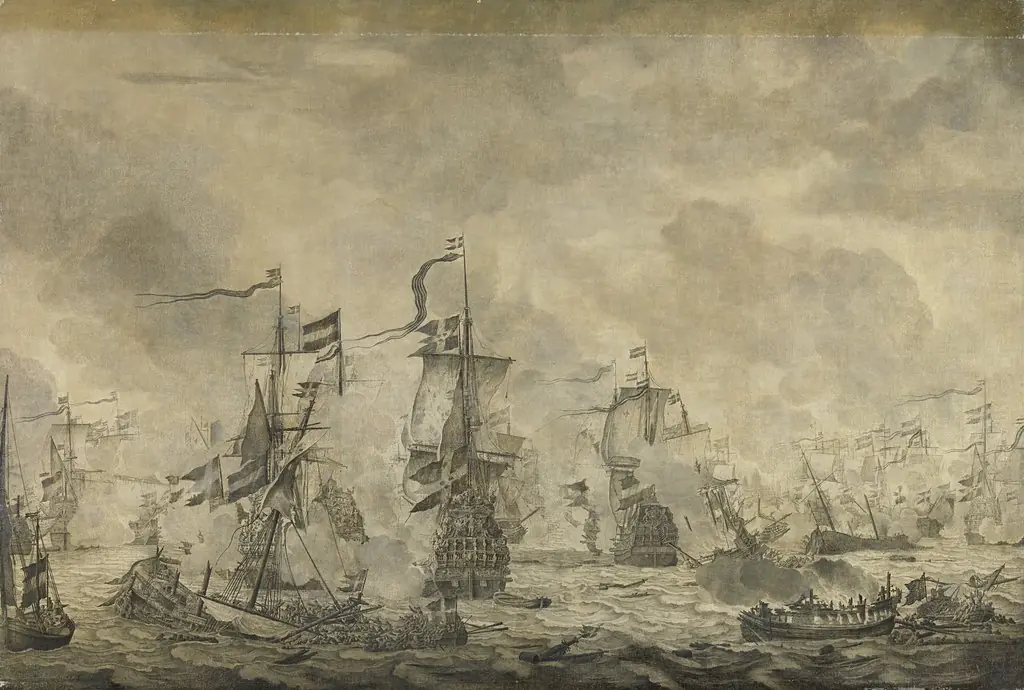 Episode from the Battle of the Sound between the Dutch and the Swedish fleets, 8 November 1658