Artwork
The Royal Visit to the Fleet in the Thames Estuary, 6 June 1672
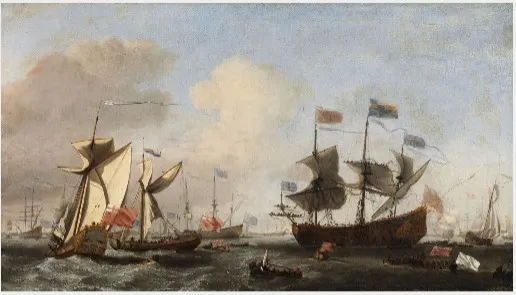
The Royal Visit to the Fleet in the Thames Estuary, 6 June 1672 is an oil painting by the Dutch Golden Age artist Willem van de Velde the Younger. It is held in the collection of the National Gallery of Ireland.
About this work
Overview
The painting belongs to the Dutch Golden Age tradition of precise marine documentation, combining observational accuracy with compositional order.
Painted in 1712 by Willem van de Velde the Younger, this oil-on-canvas work captures a naval gathering in the Thames Estuary on June 6, 1672. Though created decades after the event, it reflects the artist’s lifelong focus on maritime subjects. The painting belongs to the Dutch Golden Age tradition of precise marine documentation, combining observational accuracy with compositional order. It is now part of the National Gallery of Ireland’s collection.
Subject & Meaning
The scene portrays a ceremonial visit by the English royal family to the fleet, likely during the Third Anglo-Dutch War. The central vessel, adorned with numerous flags, signifies royal authority, while surrounding ships and small boats suggest the presence of officials, attendants, and naval personnel. The painting serves as a record of diplomatic and military presence, emphasizing the monarchy’s connection to naval power without overt propaganda.
Technique & Style
Van de Velde employed fine brushwork to render the textures of sails, rigging, and water with meticulous detail. The choppy sea and overcast sky are rendered with subtle tonal gradations, enhancing atmospheric depth. Figures on small boats are minimized to scale, reinforcing the dominance of the ships. His style, inherited from his father, prioritizes clarity and realism over dramatic flair, aligning with Dutch marine painting conventions of the period.
History & Provenance
Though painted in 1712, the scene commemorates an event from forty years prior, suggesting the work may have been commissioned retrospectively. Van de Velde, who moved to England in the 1670s, had access to royal circles and likely based the composition on sketches or eyewitness accounts. The painting entered the National Gallery of Ireland’s collection through documented acquisitions, preserving its historical continuity.
Context
The painting emerges during a period of intense Anglo-Dutch rivalry at sea, with both nations vying for maritime dominance. Despite his Dutch origins, Van de Velde worked in England under royal patronage, reflecting the cross-cultural exchange in naval art. His depictions of English fleets helped establish a visual language for maritime power that appealed to both Dutch precision and English imperial interests.
Legacy
Van de Velde’s detailed marine scenes influenced later naval artists in Britain and the Netherlands. His ability to balance technical accuracy with compositional harmony set a standard for maritime documentation. While not widely exhibited, this work remains a key example of how art served as both record and quiet assertion of state authority in the early modern period.
Artist & collection

Artist
Willem van de Velde the Younger
Willem van de Velde the Younger (18 December 1633 (baptised) – 6 April 1707) was a Dutch painter who specialised in marine art.

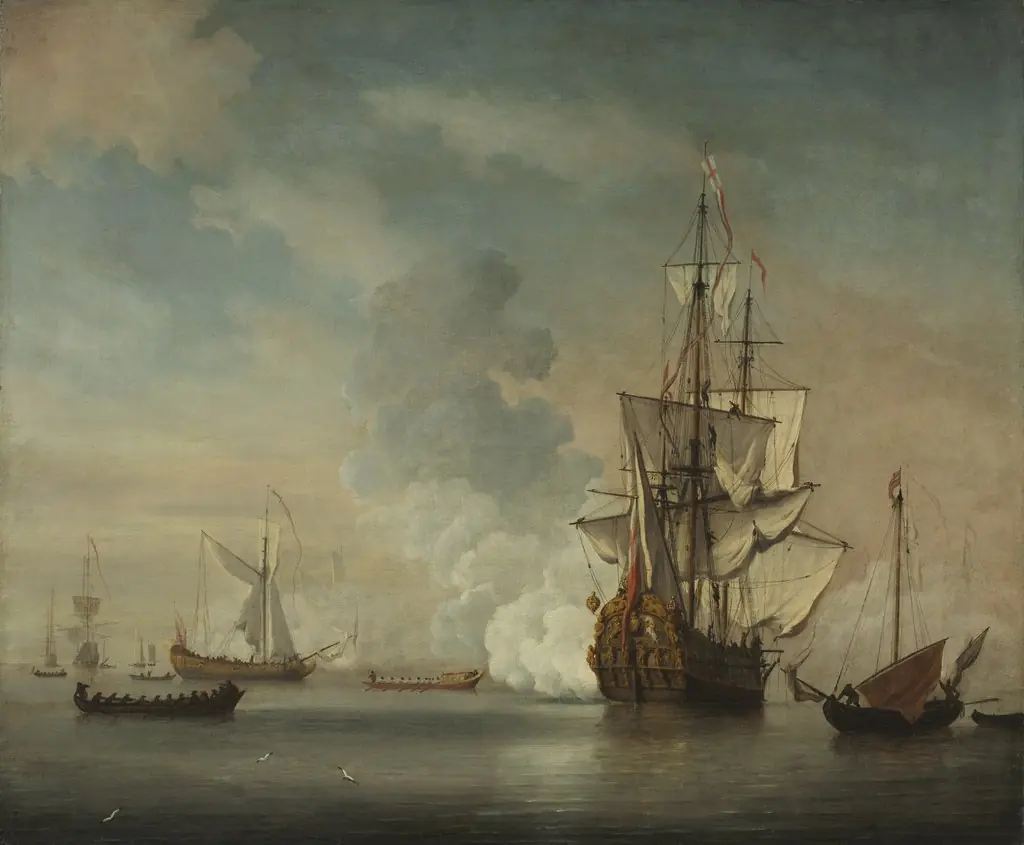 English Warship Firing a Salute
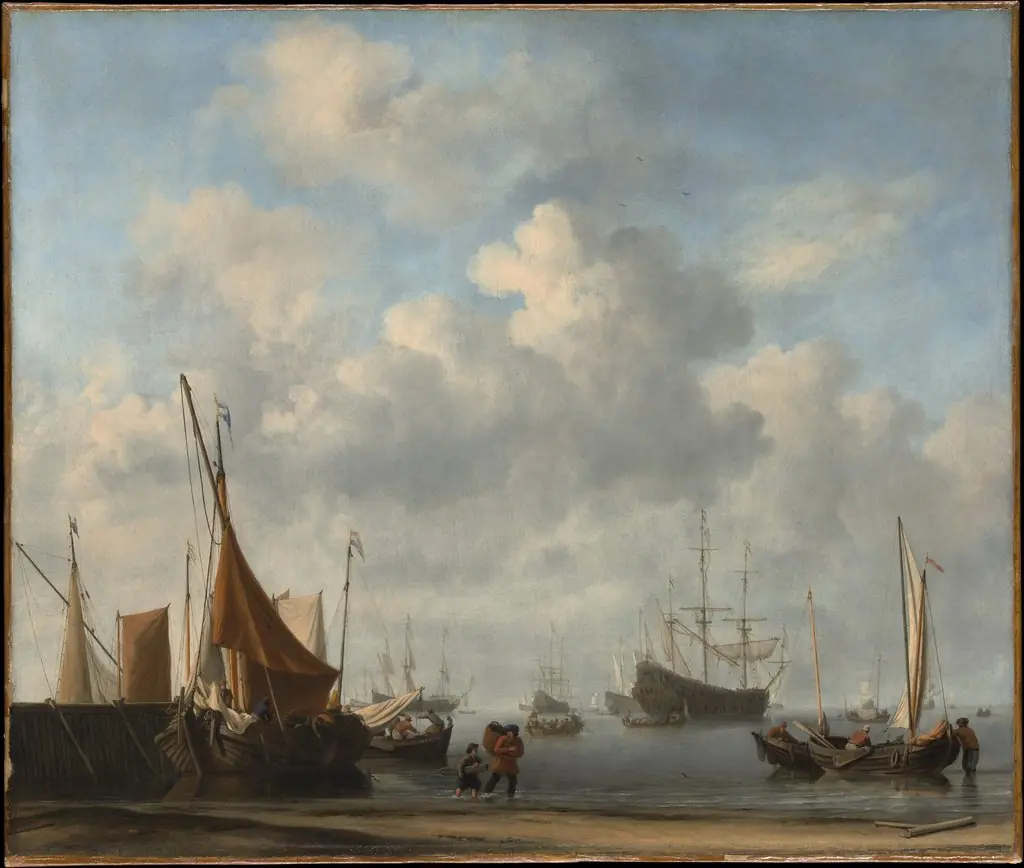 Entrance to a Dutch Port
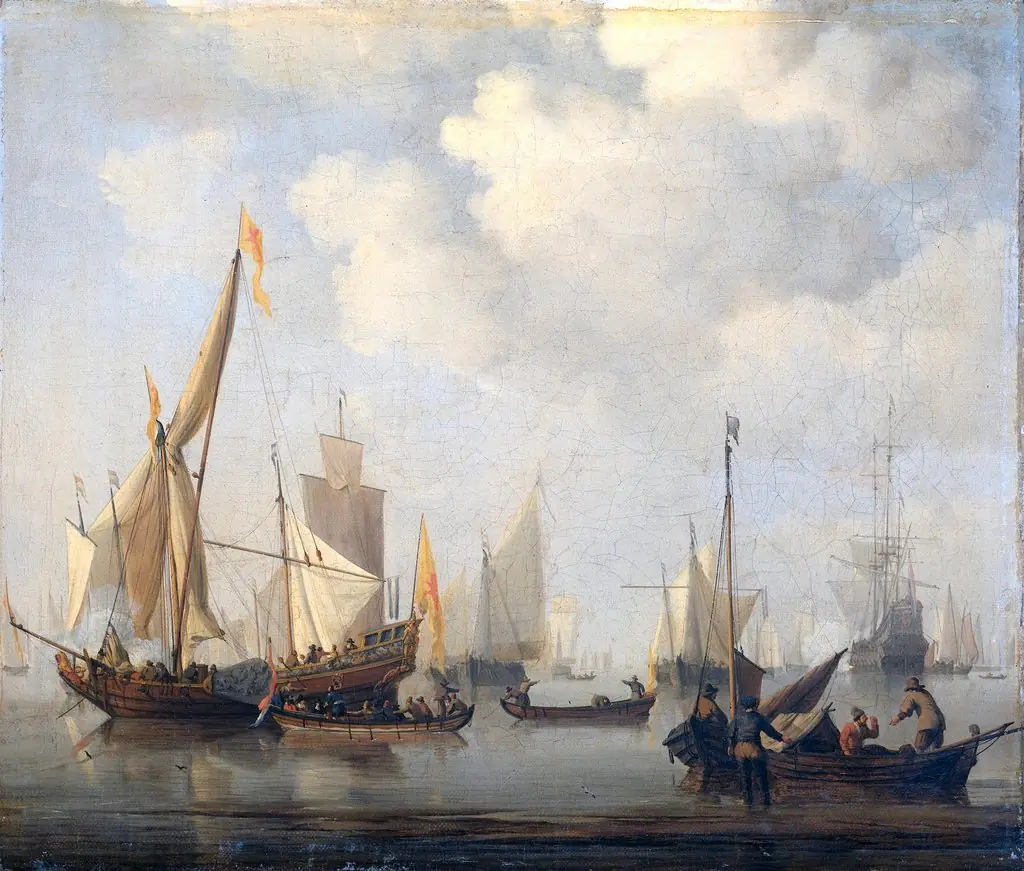 Ships in a calm
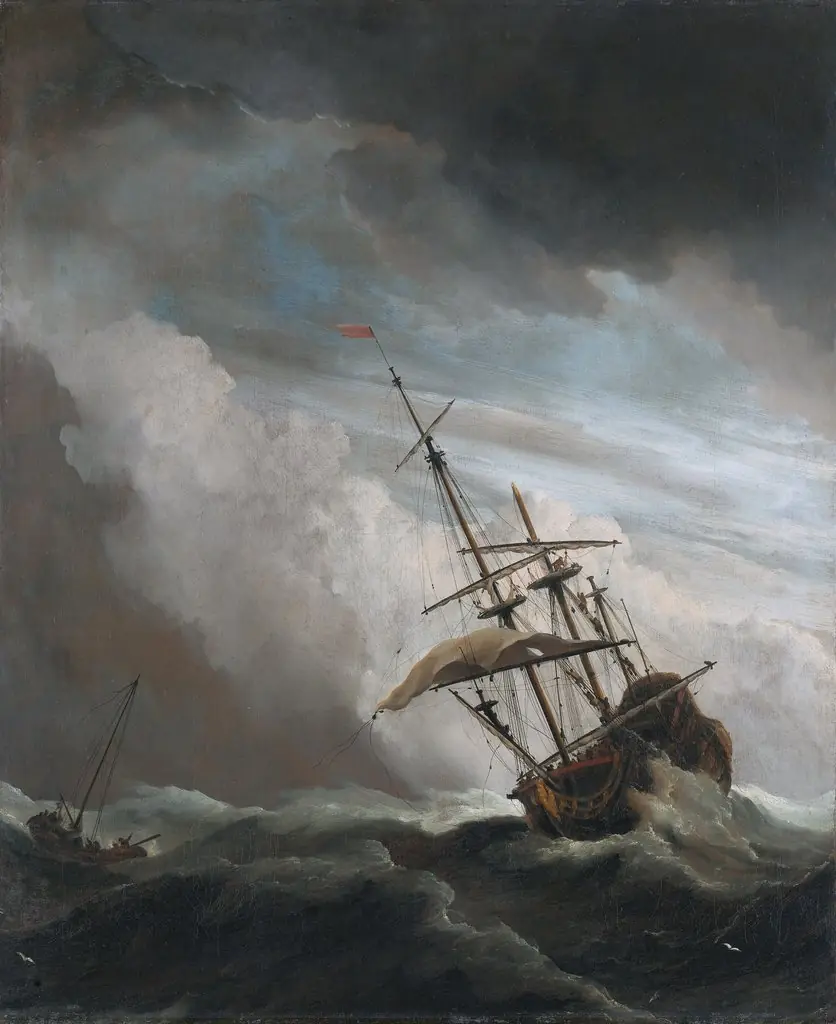 A Ship on the High Seas Caught by a Squall, Known as ‘The Gust’
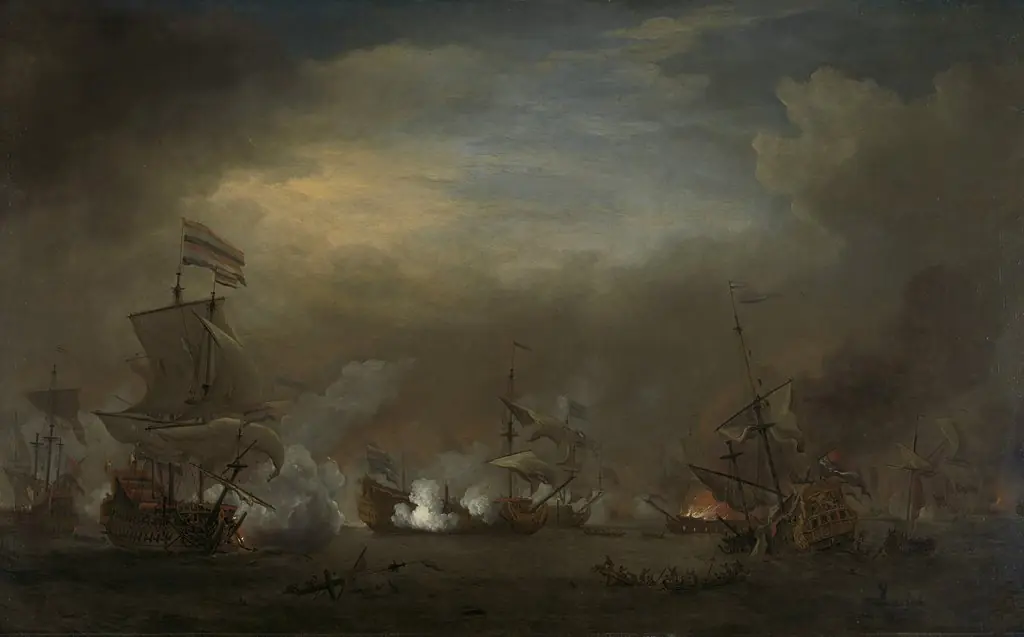 Encounter during the Battle of Kijkduin
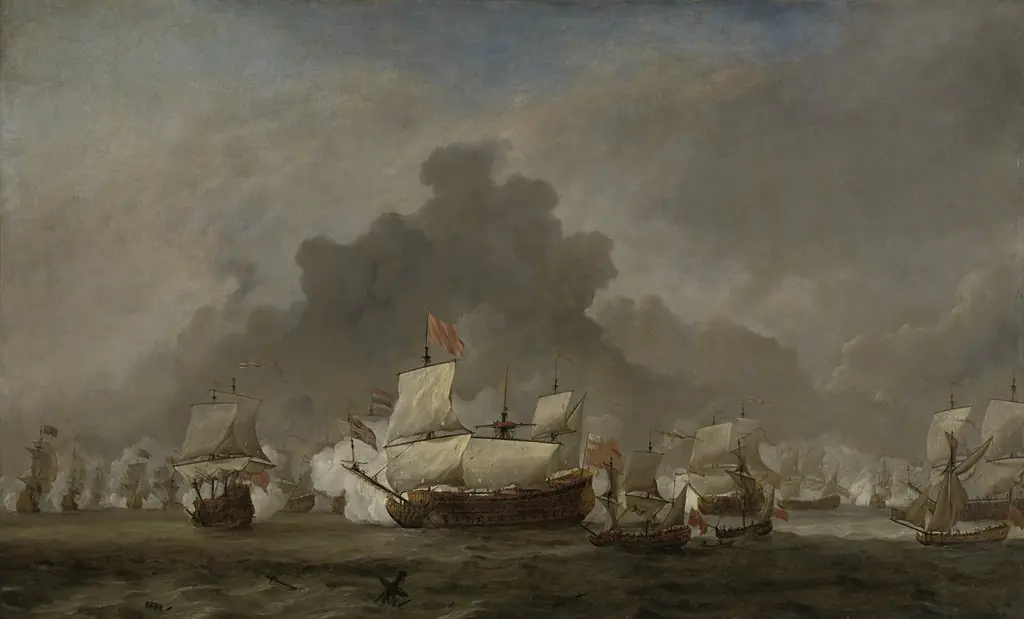 The skirmish of Michiel Adriaensz de Ruyter against the duke of York, commanding the 'Royal Prince'during the Battle of Solebay, 7 June 1672: episode from the Third Anglo-Dutch War (1672-74)
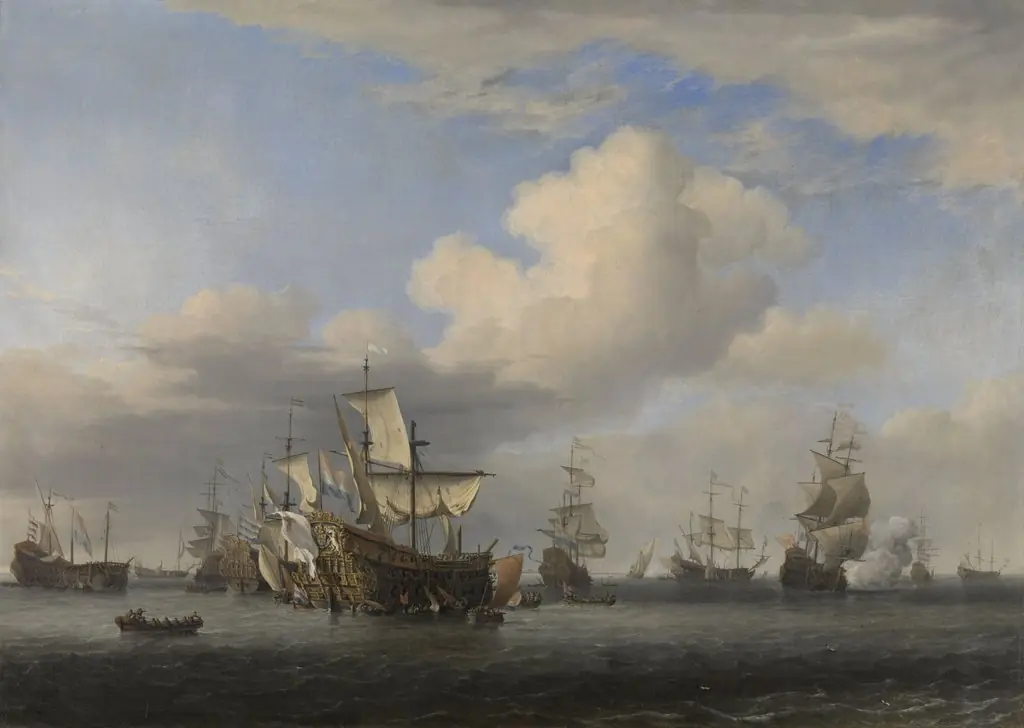 Captured English Ships after the Four Days’ Battle
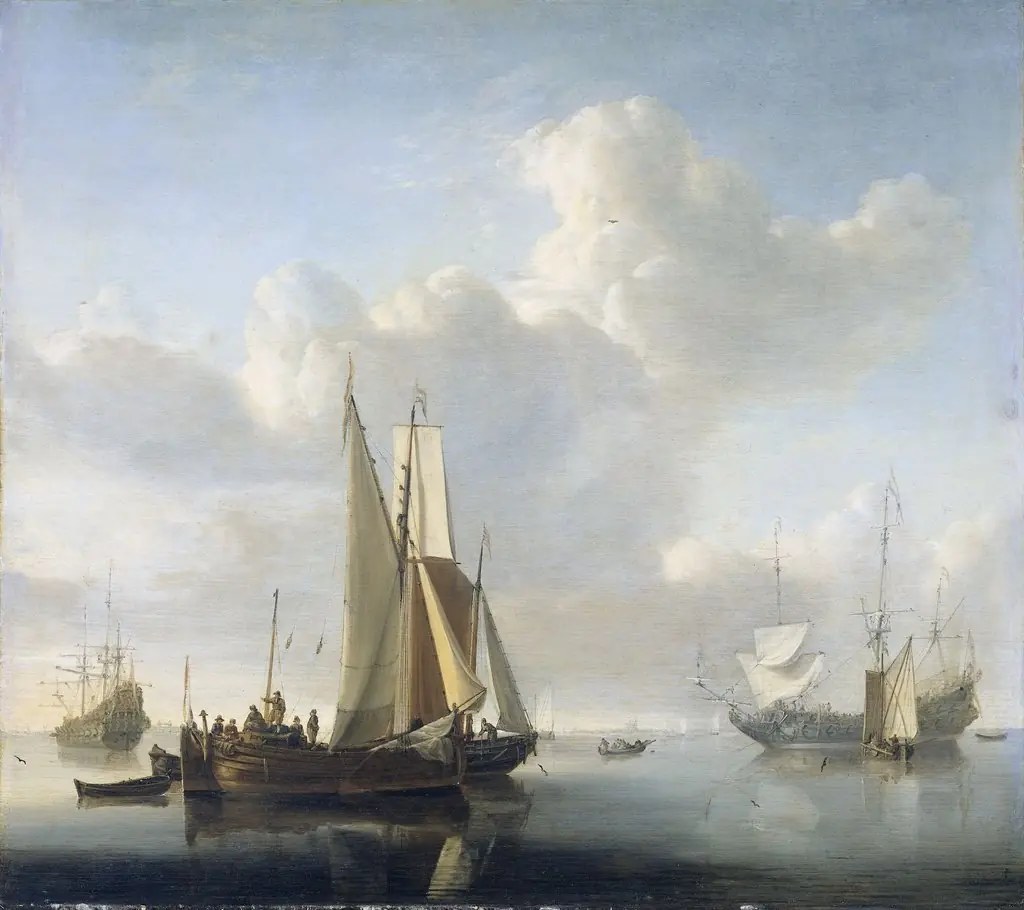 Ships off the coast
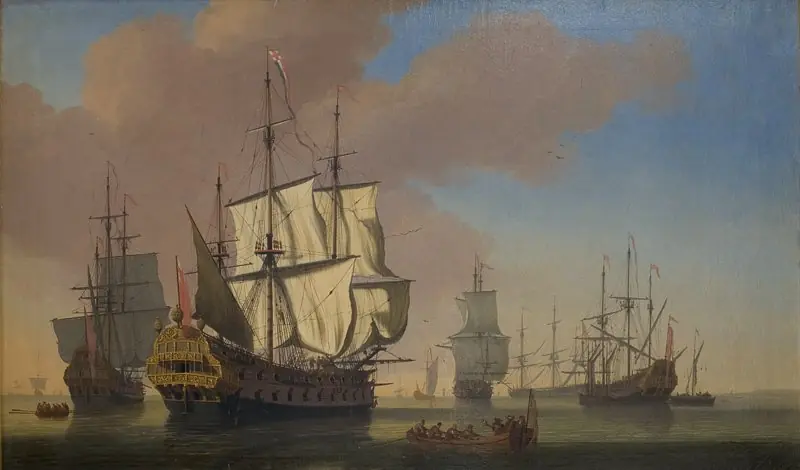 English Warships in a Roadstead in Calm Weather
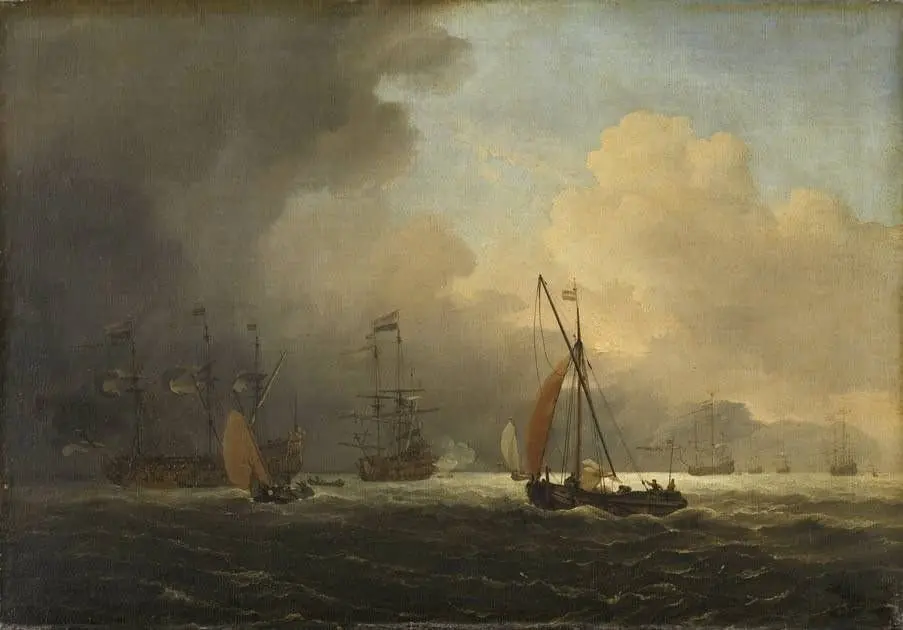 Sea storm with a rising thunderstorm
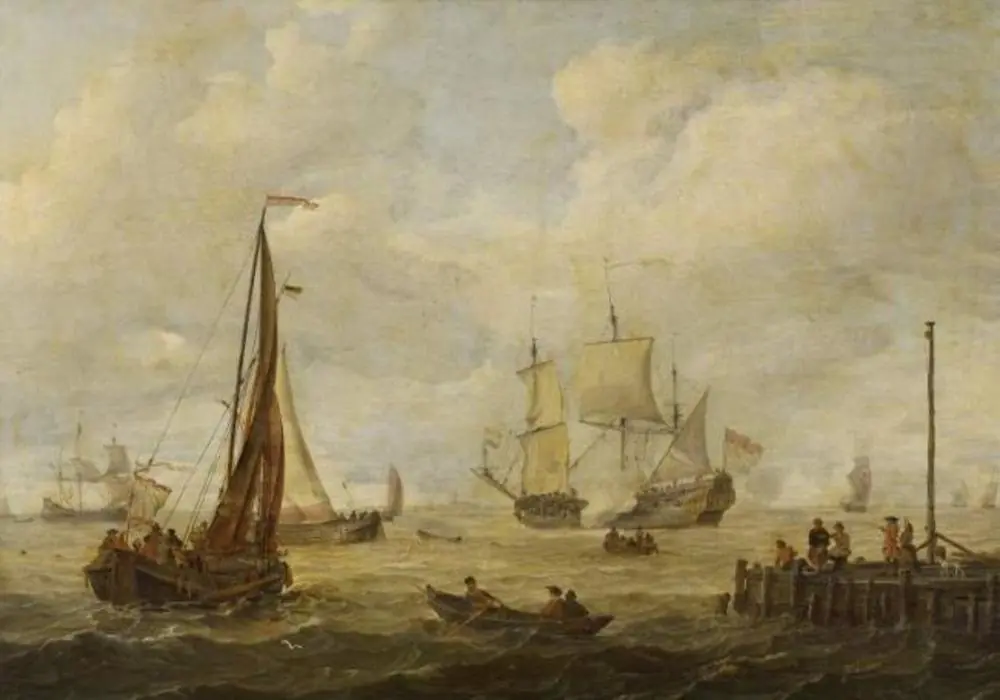 Sea-piece with a Dutch man-of-war
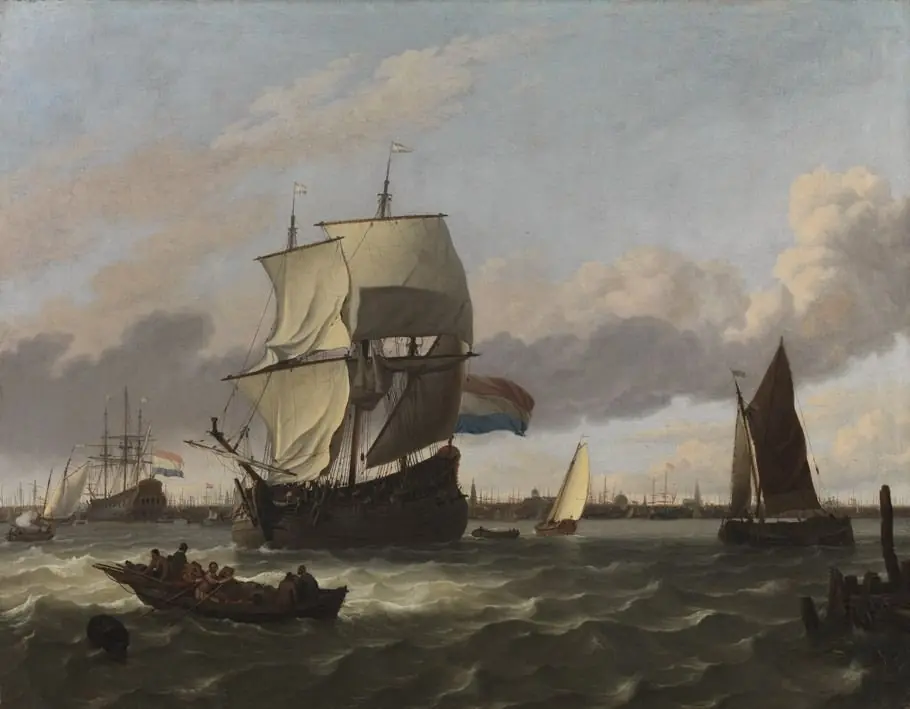 The Harbour of Amsterdam
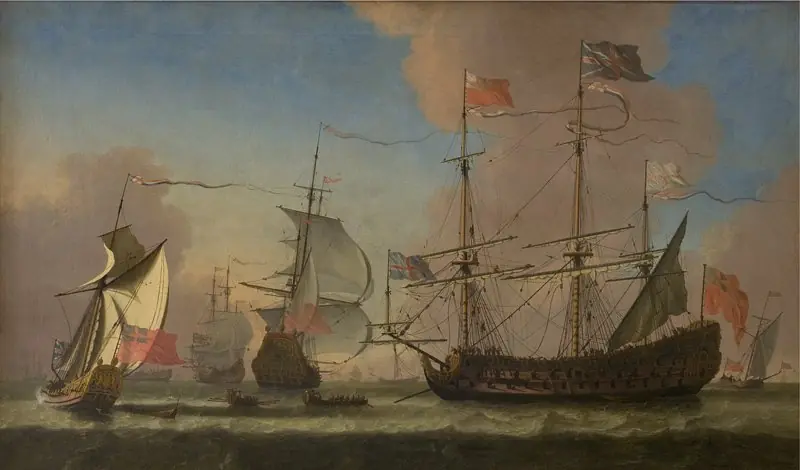 English Warships at Sea in a Fresh Breeze
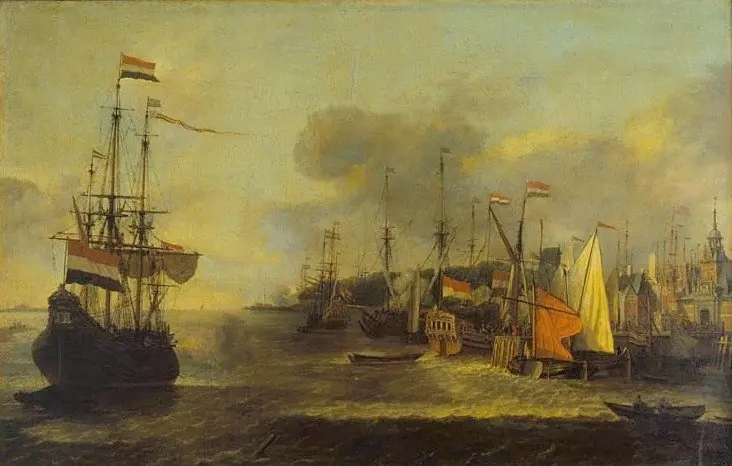 Harbour of Rotterdam
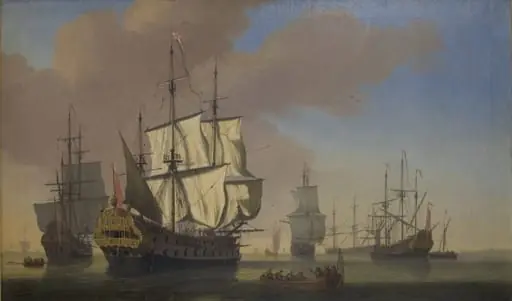 English Warships in a Roadstead in Calm Weather
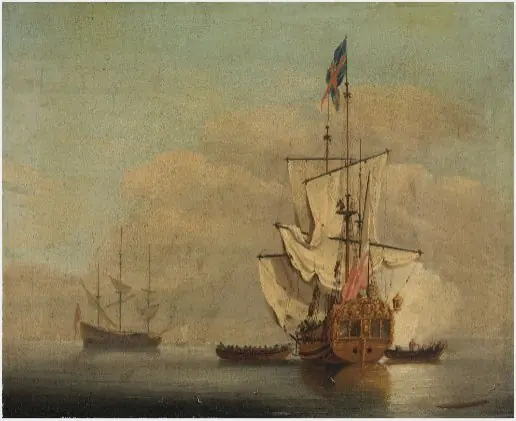 Calm: an English Sixth-rate Ship Firing a Salute
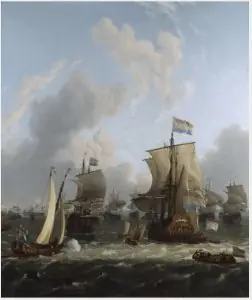 The Arrival of the Kattendijk at Texel, 22 July 1702
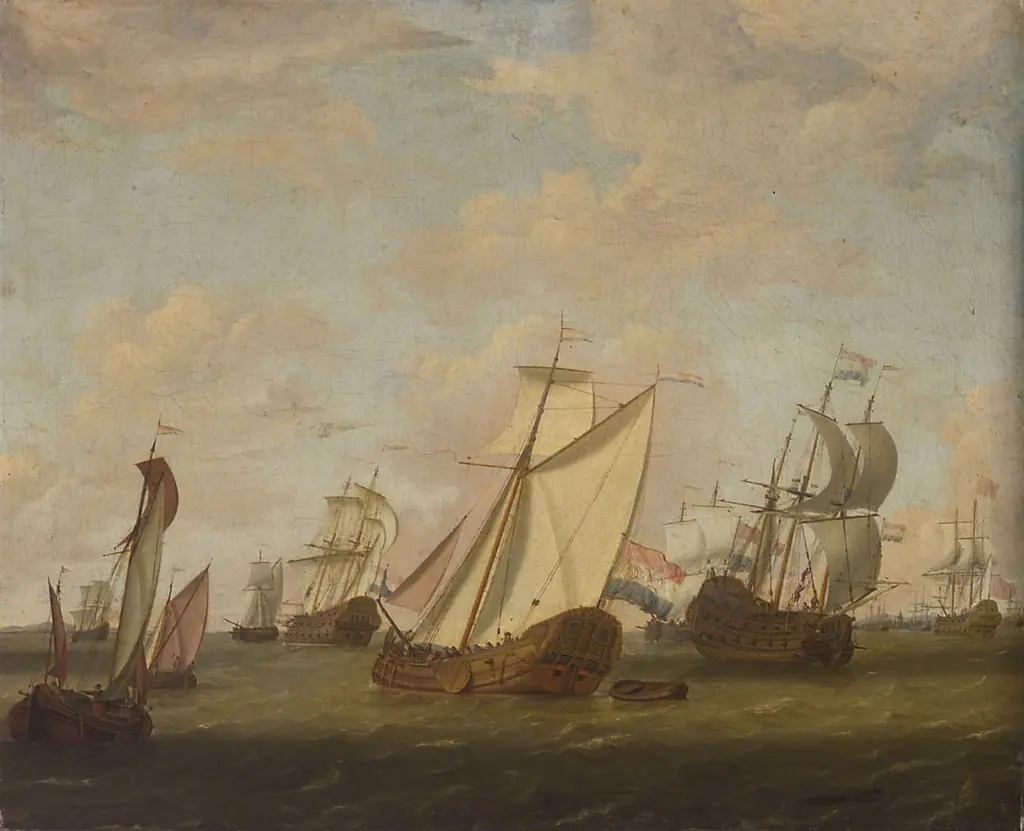 Kriegsflotte in einer Brise