Artwork
Bacchus and Ceres
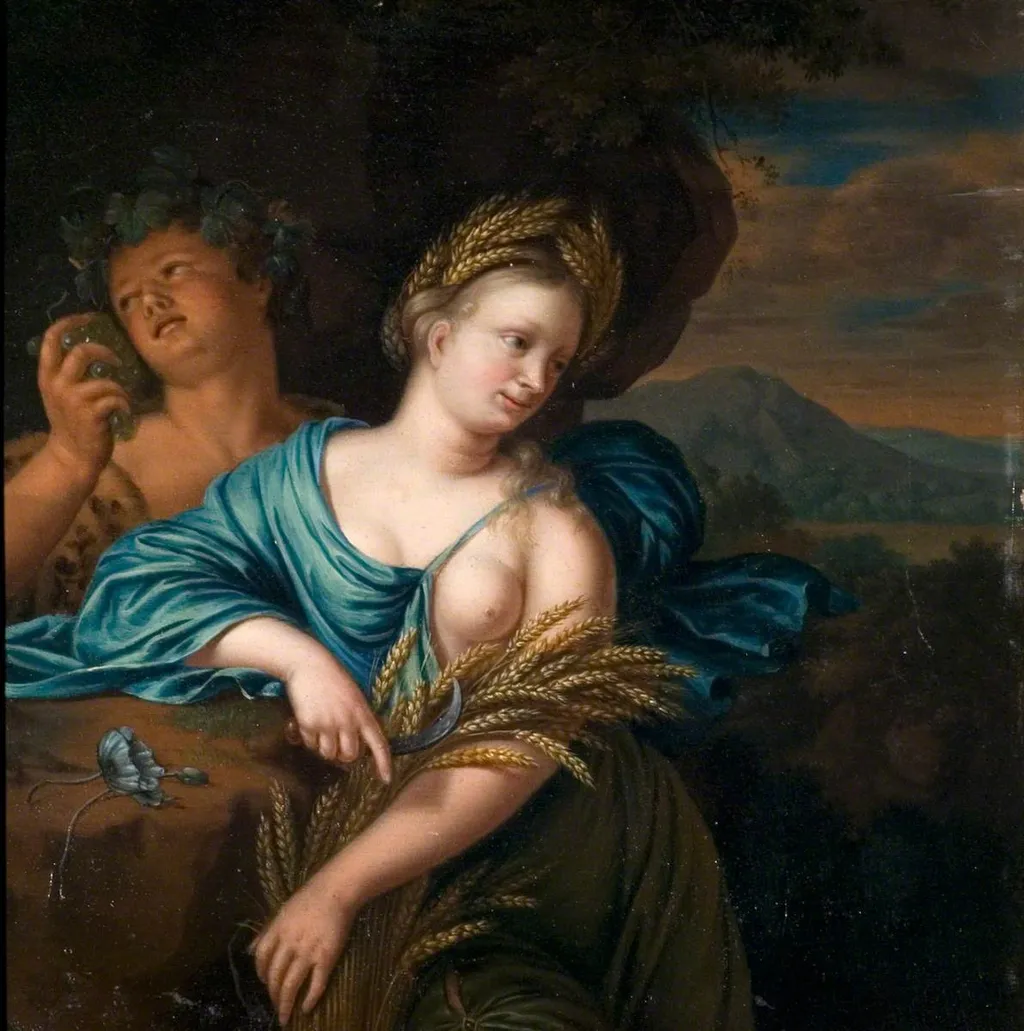
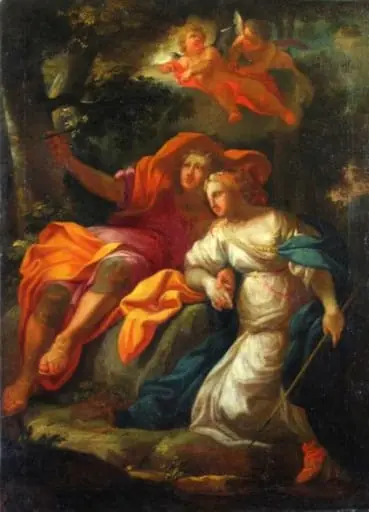
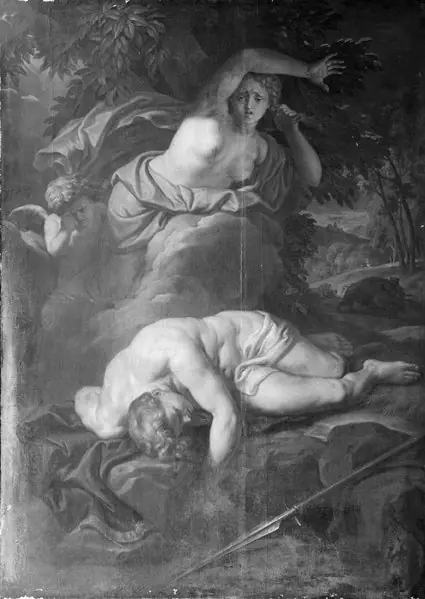
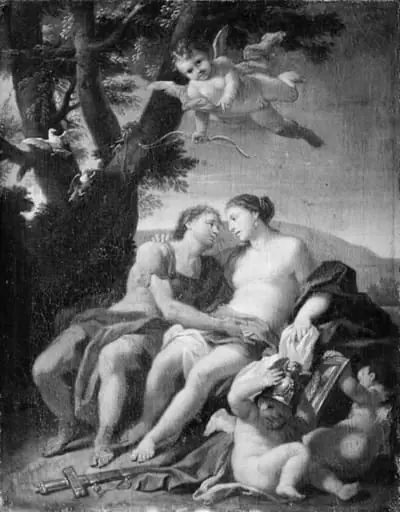
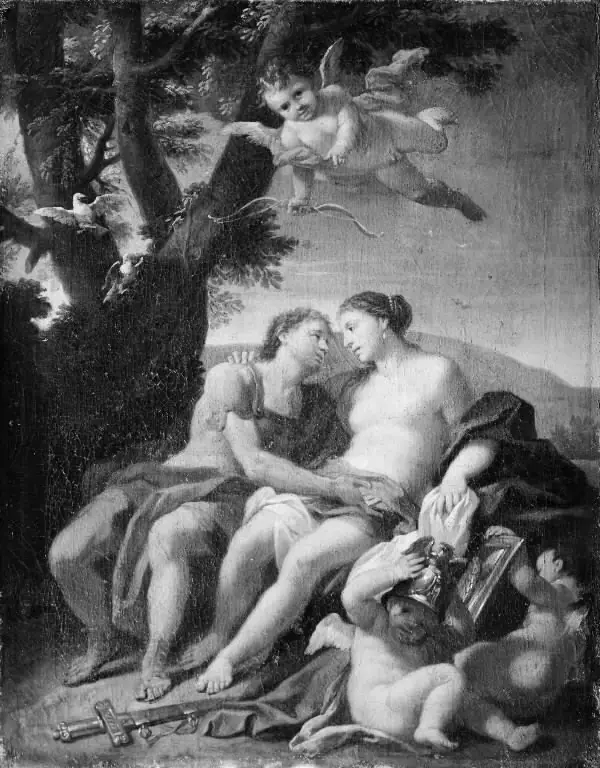
Bacchus and Ceres is an oil painting by the Dutch Golden Age artist Willem van Mieris. It dates from 1712 and is held in the collection of the Derby Museum and Art Gallery.
About this work
Overview
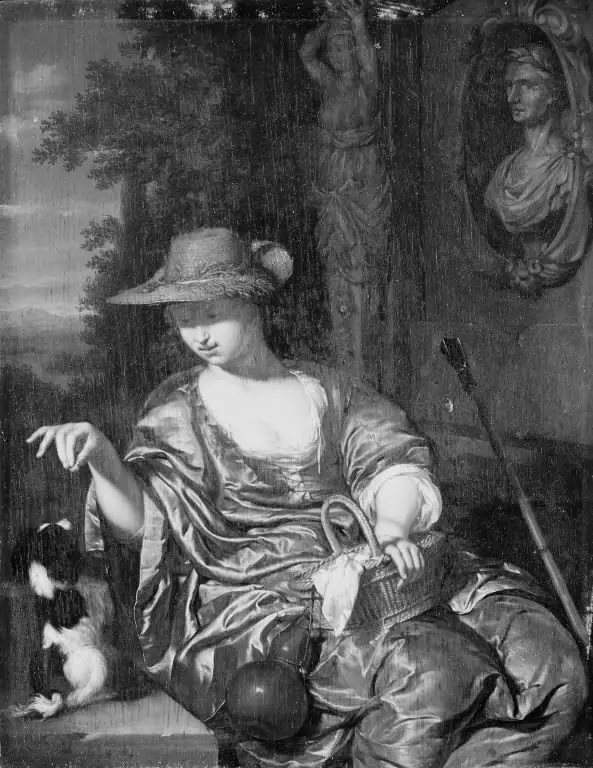
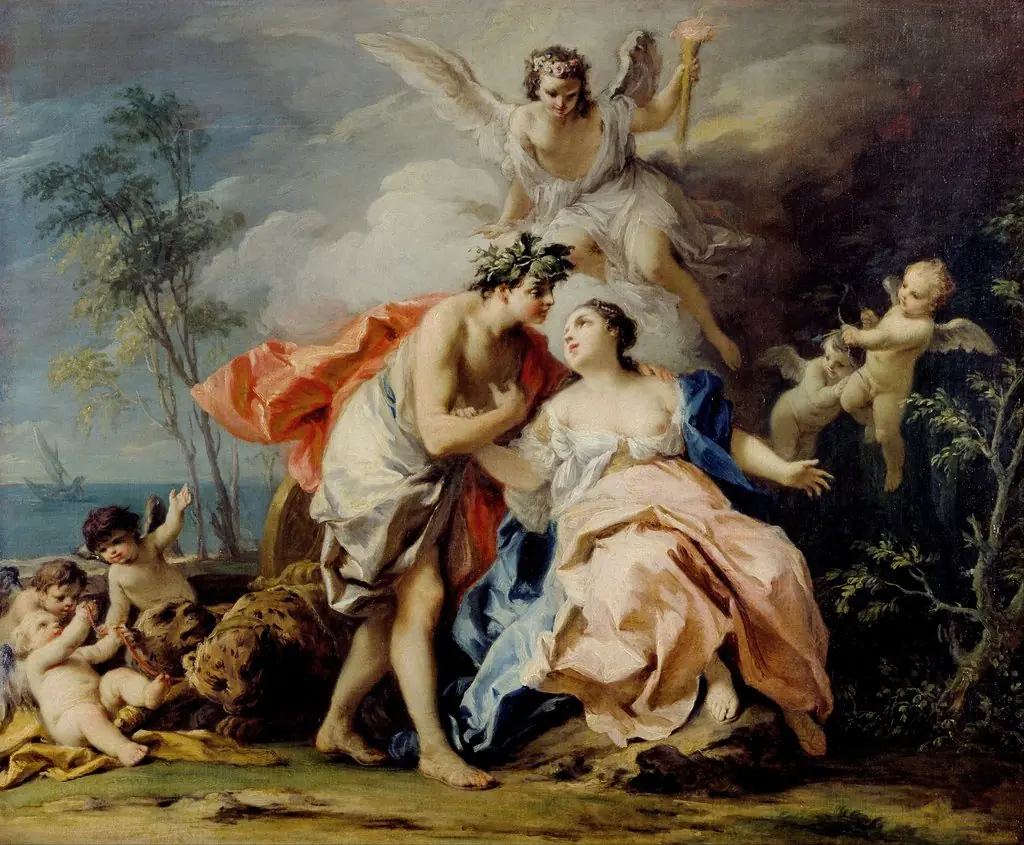
Bacchus and Ceres is an oil painting completed around 1712 by Dutch artist Willem van Mieris. It depicts two figures associated with ancient Roman deities of agriculture and wine, set against a pastoral landscape. The work is part of the collection at Derby Museum and Art Gallery, where it remains one of the few surviving mythological compositions by the artist outside of genre scenes.
Subject & Meaning
The figures are not literal deities but allegorical representations, common in Dutch Golden Age mythological painting.
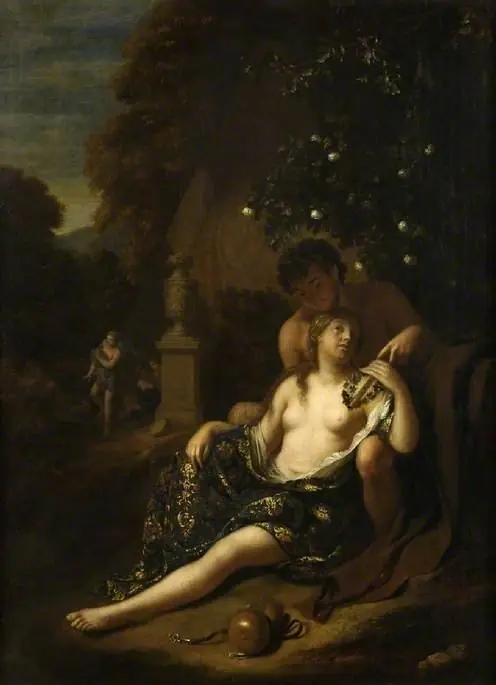
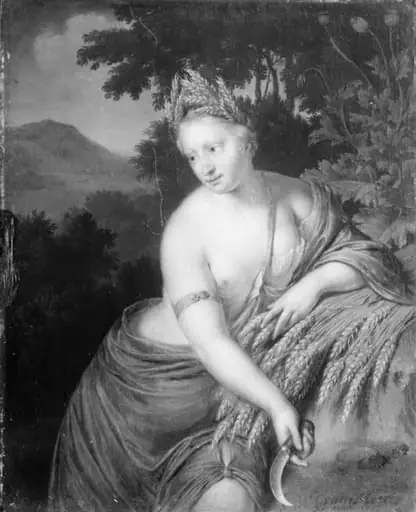
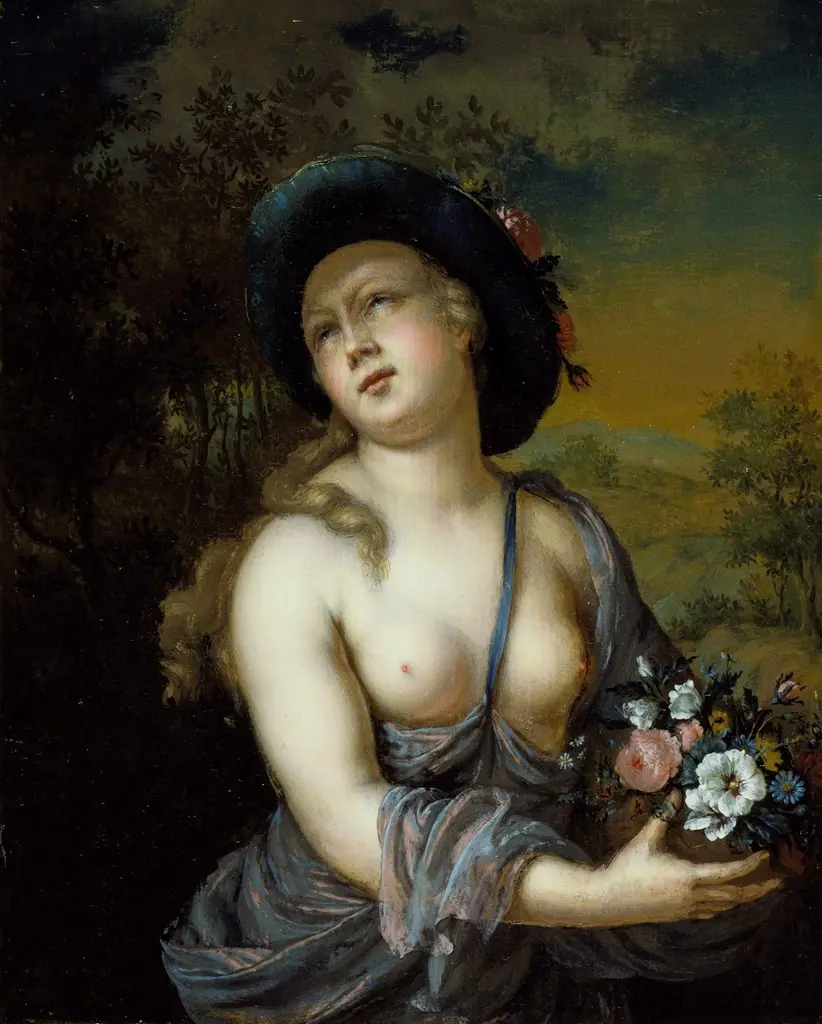
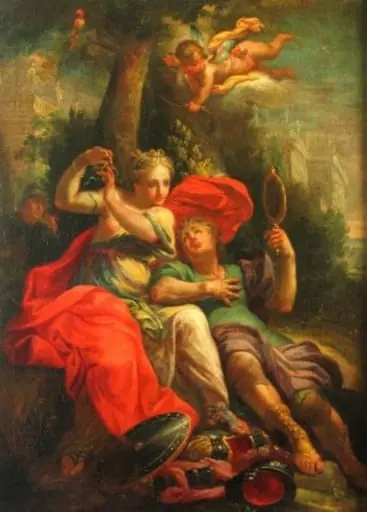
The painting portrays a woman seated with a sheaf of wheat, her crown of grain suggesting Ceres, goddess of harvest. Behind her, a male figure holds a cluster of grapes, evoking Bacchus, god of wine and fertility. Together, they symbolize the union of agricultural bounty and viticulture, reflecting classical ideals of abundance. The figures are not literal deities but allegorical representations, common in Dutch Golden Age mythological painting.
Technique & Style
Van Mieris renders the figures with precise, polished brushwork characteristic of Leiden fine painting. The textures of fabric, grain, and grape clusters are rendered with meticulous detail, while the background landscape is softly modeled in muted tones. The composition is balanced and static, emphasizing stillness and harmony rather than dramatic movement, aligning with the refined aesthetic of 18th-century Dutch classicism.
History & Provenance
The painting was likely commissioned by a private collector in the early 18th century, consistent with van Mieris’s patronage among Dutch urban elites. It entered the Derby Museum collection in the 19th century, possibly through a bequest or acquisition from a British collector with ties to Dutch art. Its documented history is limited, but its presence in the museum since the 1800s confirms its long-standing recognition in British collections.
Context
During the early 1700s, Dutch artists increasingly turned to classical mythology as a vehicle for moral and aesthetic expression, even as genre scenes dominated the market. Van Mieris, known for domestic interiors, produced few mythological works, making this painting a rare example of his engagement with antiquity. Its subject reflects broader European interest in classical symbolism among educated patrons.
Legacy
Bacchus and Ceres stands as a modest but significant example of late Dutch classical painting. While van Mieris is better known for genre works, this piece illustrates his technical skill and willingness to engage with mythological themes. It contributes to understanding how classical narratives were adapted in Northern Europe beyond the 17th century, preserving a quiet continuity of humanist ideals in art.
Artist & collection