Artwork
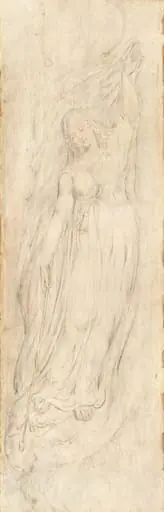
Sketch for "The Thought of Death alone, the Fear Destroys"
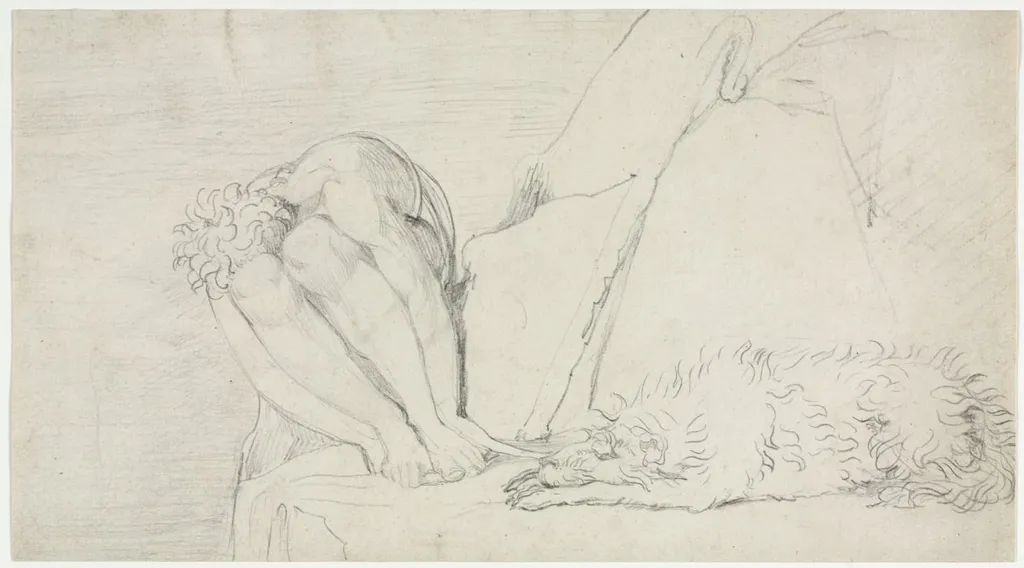
Sketch for "The Thought of Death alone, the Fear Destroys" is a drawing by the Romanticist artist William Blake. It dates from 1795 and is held in the collection of the Cleveland Museum of Art.
About this work
If you like this restless energy, look up William Blake (British, 1757–1827)—his prints and poems twist ordinary scenes into visions.
You see a shepherd dozing against a rock, his dog curled beside him, while a sheer cliff drops away at his feet.
Blake made this quick sketch for a book of poems about death. The poem’s line—“The thought of death alone, the fear destroys”—hints that the man is dreaming of falling, yet he sleeps peacefully. The loose, scratchy lines feel almost alive, as if the scene could shift at any moment.
If you like this restless energy, look up William Blake (British, 1757–1827)—his prints and poems twist ordinary scenes into visions.
Overview
This pencil drawing by William Blake serves as a preparatory study for one of over five hundred illustrations he produced for Edward Young’s Night Thoughts. Created around 1795–97, it was intended for a commercial publication that ultimately remained incomplete due to the publisher’s financial collapse. The sketch captures a quiet, suspended moment—sleeping shepherd, loyal dog, and a looming drop—hinting at the poem’s meditation on mortality without explicit narrative.
Subject & Meaning
The image depicts a shepherd resting at the edge of a cliff, his dog curled close, both undisturbed despite the precipice beneath them. This visual echoes the poem’s line about death’s fear being destructive, yet the figure sleeps peacefully—suggesting surrender rather than terror. The scene transforms a pastoral moment into a metaphor for the soul’s vulnerability, where rest and peril coexist without resolution.
Technique & Style
Blake rendered the scene with rapid, expressive pencil strokes that convey movement and fragility. Lines are loose and uneven, avoiding definition to evoke impermanence. The lack of shading and minimal detail focus attention on posture and spatial tension, reinforcing the psychological weight of the moment. His hand appears to trace the edge between wakefulness and dream, mirroring the poem’s ambiguous tone.
History & Provenance
Commissioned by publisher Richard Edwards in 1795, Blake’s illustrations for Night Thoughts were meant to accompany all four volumes of Young’s poem. Only the first volume was printed before Edwards ceased operations in 1797, leaving most designs unpublished. This sketch, like many others, survived in private collections and later entered institutional holdings, preserved as evidence of Blake’s ambitious but unrealized project.
Context
Blake’s engagement with Night Thoughts occurred during a period when he increasingly fused poetic and visual expression. Though commissioned as commercial illustration, his approach defied conventional book art, infusing traditional subjects with personal symbolism. The project aligned with his broader rejection of Enlightenment rationalism, favoring inner vision over external order—a stance evident in the sketch’s emotional ambiguity.
Legacy
Though the published edition was truncated, Blake’s drawings for Night Thoughts became foundational to his reputation as a visionary illustrator. The sketch exemplifies his ability to distill complex spiritual themes into simple, haunting forms. Later scholars recognized these works as pivotal in bridging Romantic poetry and symbolic art, influencing generations of artists who sought to visualize the unseen.
Artist & collection
Artist
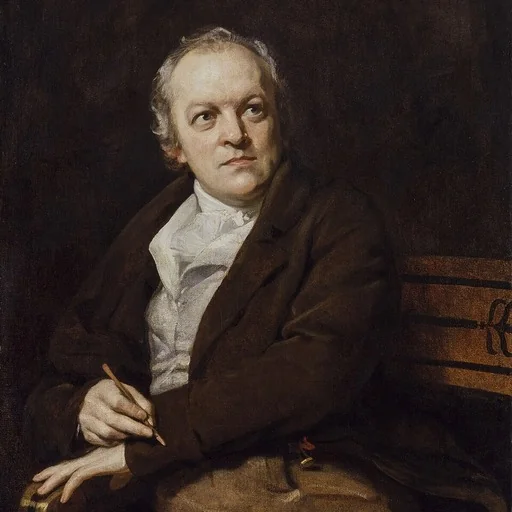
William Blake (28 November 1757 – 12 August 1827) was an English poet, painter and printmaker.

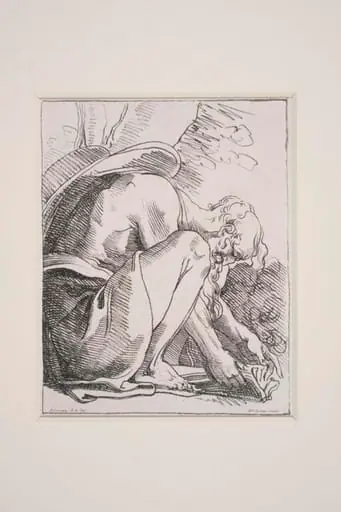 St Jerome Kneeling
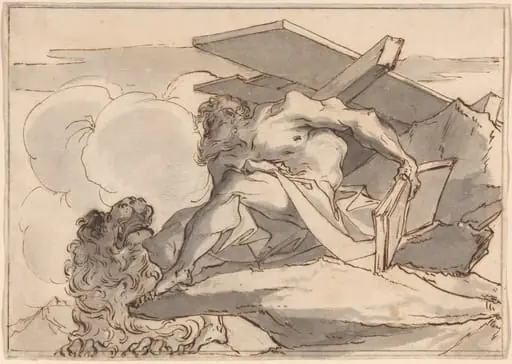 Saint Jerome in the Wilderness
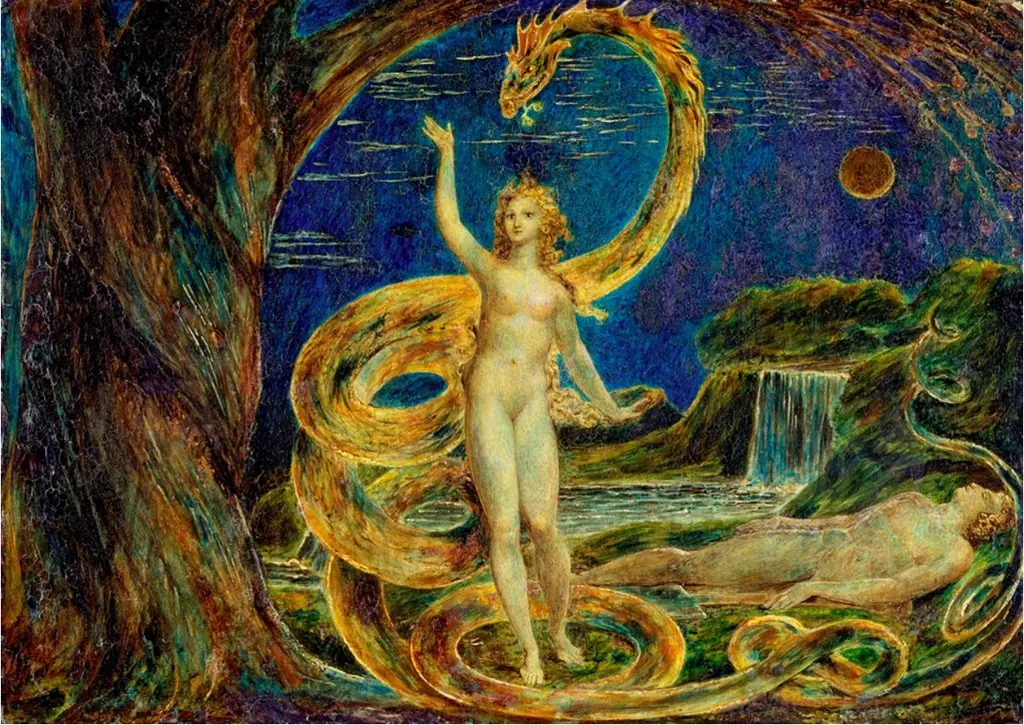
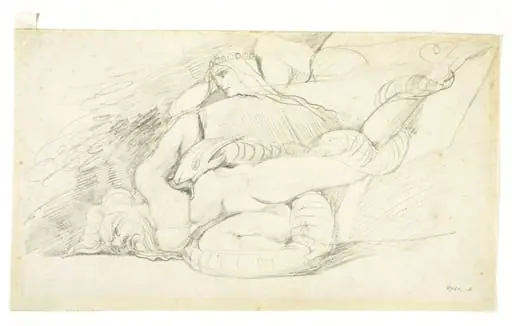 A woman gazing at the prostate body of a man, around which a serpent is coiled
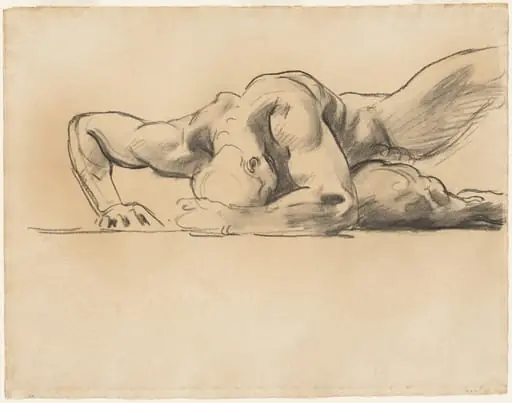 Study for "Hell"
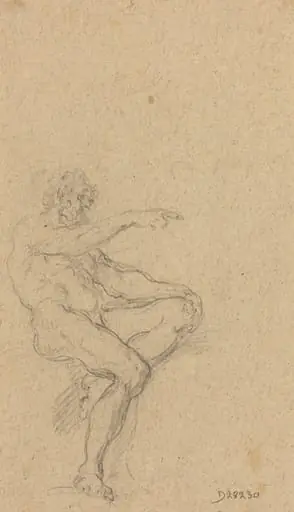 A Seated Nude Man Pointing to the Right
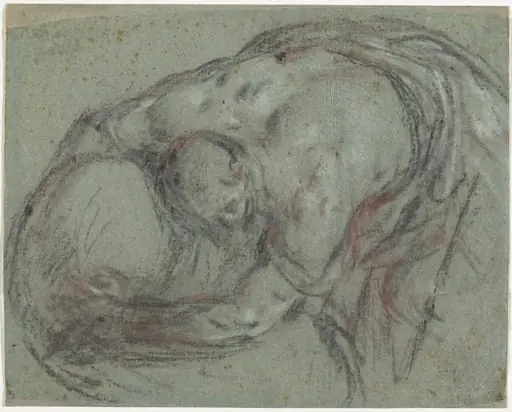 A Man Lifting a Bundle
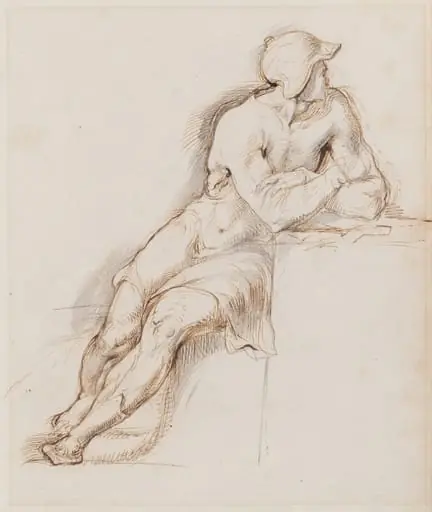 Study of a Seated Man Wearing a Helmet
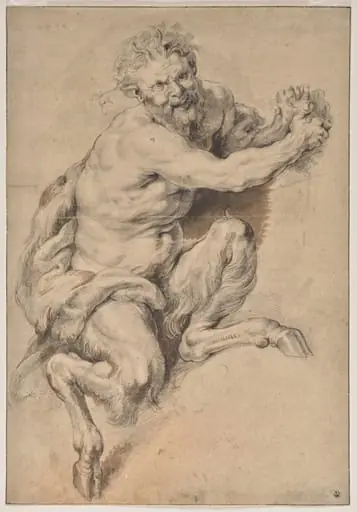 A Faun Grasping a Bunch of Grapes
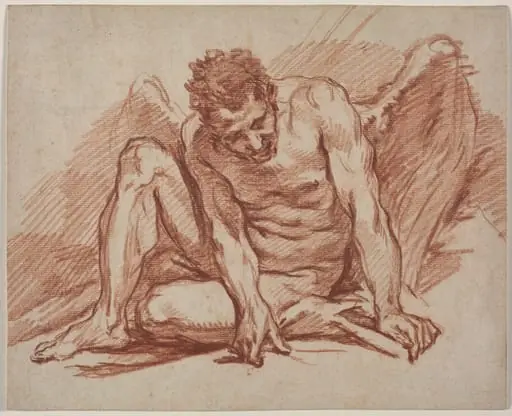 Male Academy with Wings
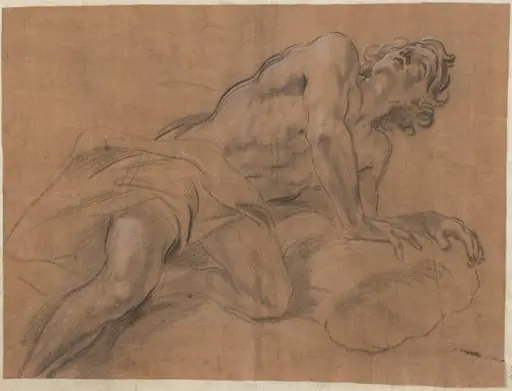 Nude Youth Leaning on a Cloud and Gazing Upward
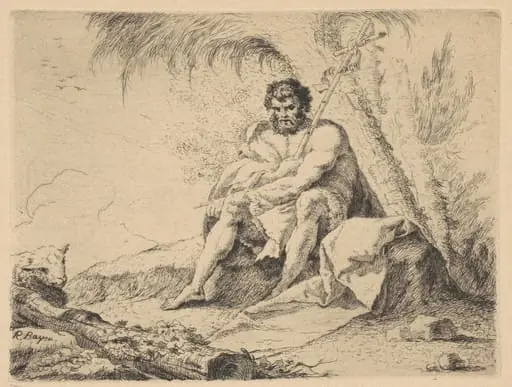 John the Baptist and the Lamb
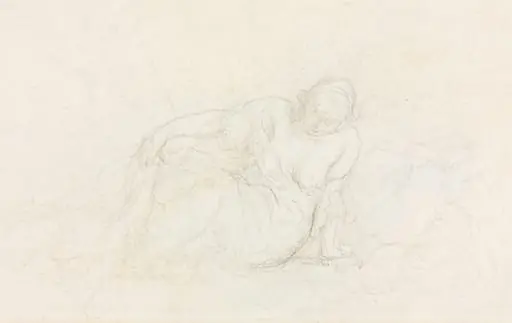 Reclining Woman Leaning on Her Arm (verso)