Artwork
Street in Dinan
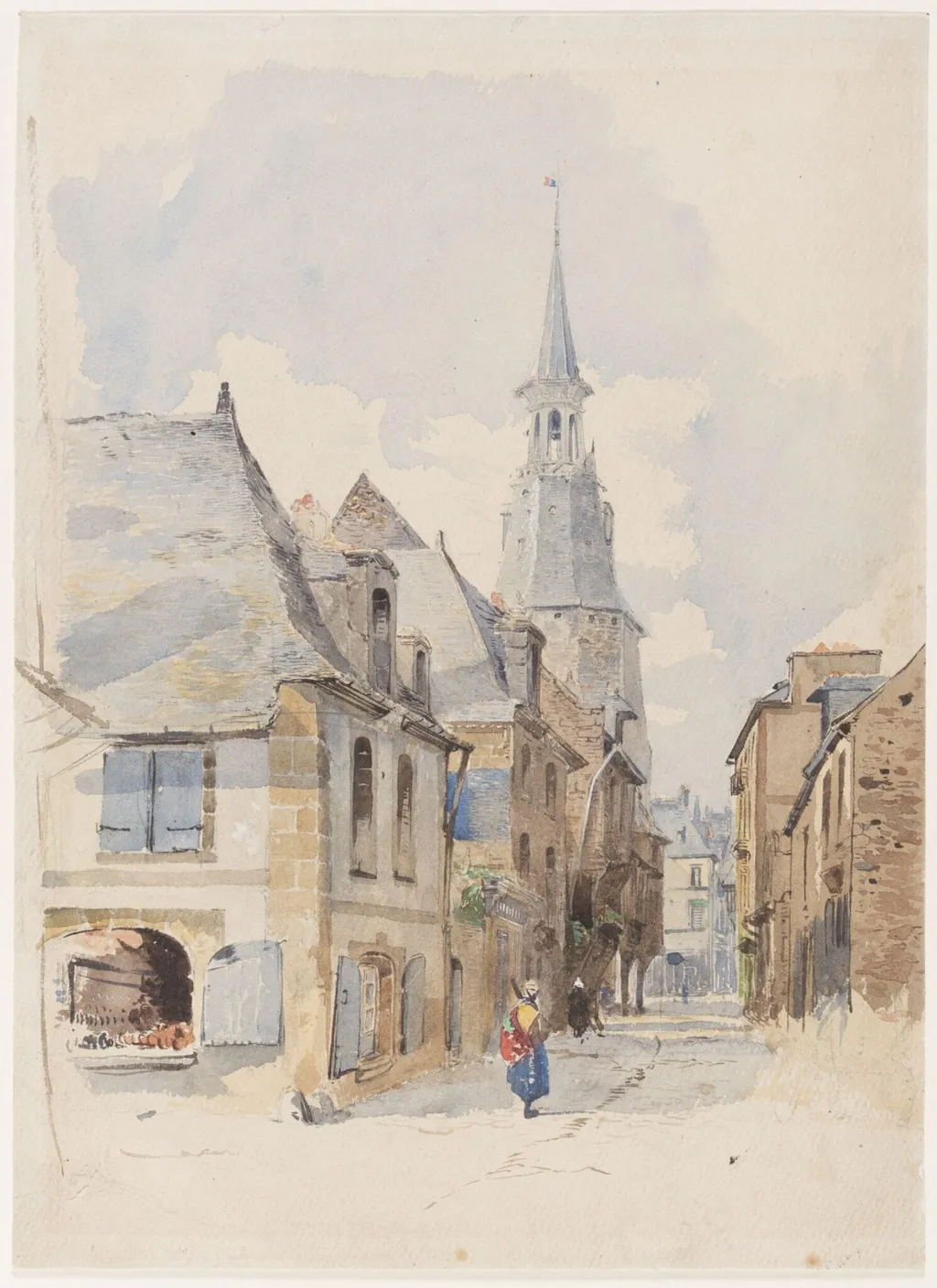
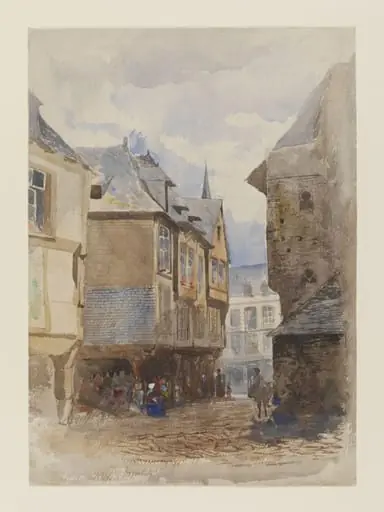
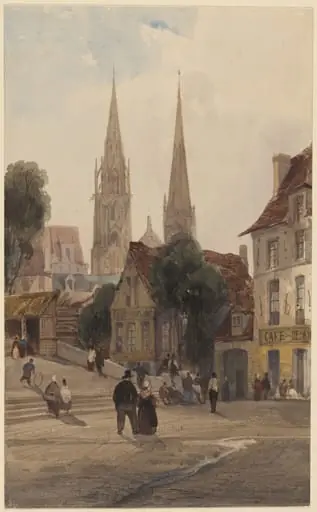
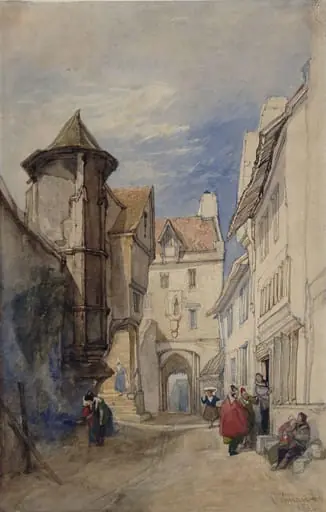
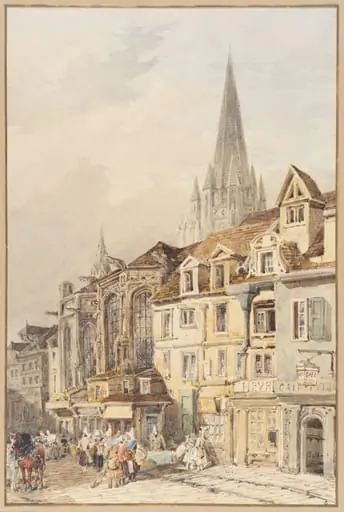
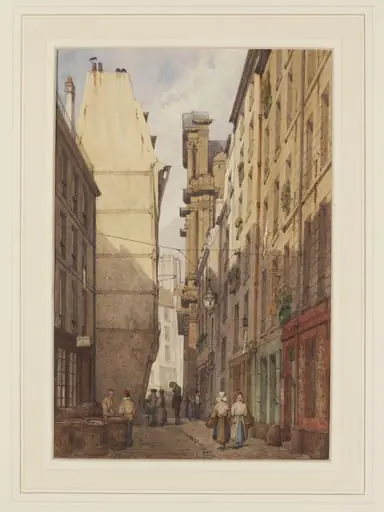
Street in Dinan is a drawing by the Impressionist artist William Linnaeus Casey. It dates from 1862 and is held in the collection of the Victoria and Albert Museum.
About this work
Overview
Created in 1862, this signed drawing by William Linnaeus Casey portrays a quiet street in the French town of Dinan. The composition centers on a narrow thoroughfare flanked by stone buildings with steep roofs, leading the eye toward a distant tower topped by a flag. A solitary figure walks far down the lane, emphasizing the scene’s stillness.
Subject & Meaning
The work captures an everyday moment in a historic urban setting, focusing on architectural forms rather than bustling activity. The lone pedestrian and the empty street suggest a pause in daily life, inviting contemplation of the town’s atmosphere and the passage of time within its stone walls.
Technique & Style
Casey employs muted browns and grays for the buildings, contrasted with a light blue sky dotted with clouds. Through careful modulation of light and shadow, the drawing achieves depth, rendering the steep roofs and the tower’s height with a sense of three‑dimensional space. The restrained palette underscores the tranquil mood.
History & Provenance
Signed by the artist, the drawing is dated to 1862, placing it within the mid‑nineteenth‑century European tradition of topographical sketching. Its provenance traces back to private collections before entering a museum holding, where it serves as a documentary record of Dinan’s urban landscape during that period.
Own this work as a print
Artist & collection