Artwork
Picturesque Architecture in Paris, Ghent, Antwerp, Rouen: Rue de la Crosse Horlogue, Rouen, France
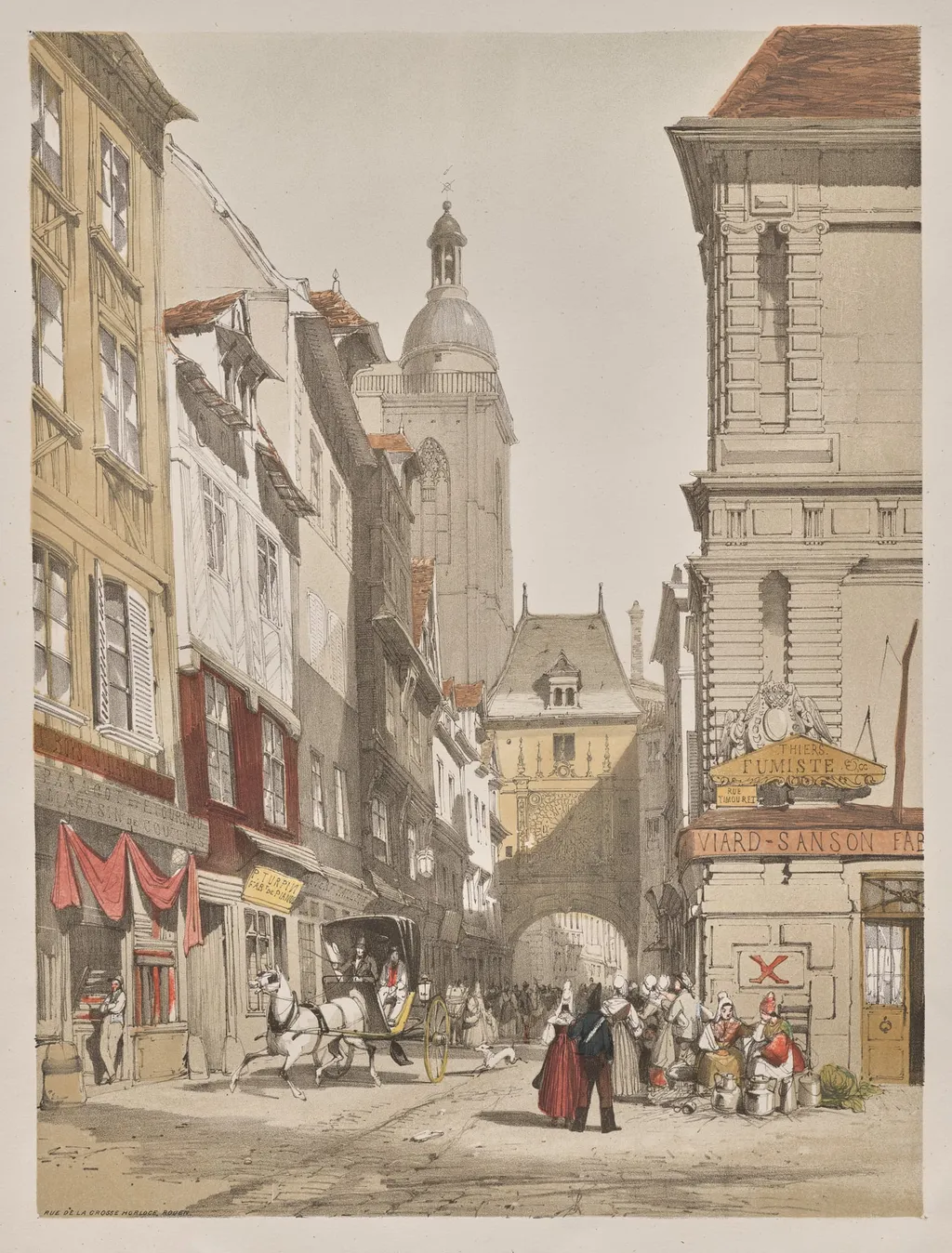
Picturesque Architecture in Paris, Ghent, Antwerp, Rouen: Rue de la Crosse Horlogue, Rouen, France is a work on paper by the Romanticist artist Thomas Shotter Boys. It dates from 1839 and is held in the collection of the Cleveland Museum of Art.
About this work
Overview
This lithograph, part of a portfolio titled *Picturesque Architecture in Paris, Ghent, Antwerp, Rouen*, captures a narrow street in Rouen, France.
Thomas Shotter Boys, an English artist known for architectural watercolors and lithographs, produced a series of urban views in the late 1830s. This lithograph, part of a portfolio titled *Picturesque Architecture in Paris, Ghent, Antwerp, Rouen*, captures a narrow street in Rouen, France. The work was published in 1839 and is now held in The Cleveland Museum of Art’s collection, reflecting Boys’s interest in documenting European urban environments with precision.
Subject & Meaning
The scene depicts Rue de la Crosse Horlogue, a working street in Rouen, with pedestrians, a horse-drawn carriage, and a building marked 'VIARD-SANSON FAB.' The presence of commerce and daily activity suggests a focus on ordinary urban life rather than grand monuments. The distant cathedral anchors the composition, subtly contrasting the intimate scale of the street with the enduring presence of religious architecture.
Technique & Style
Boys employed lithography to achieve fine linear detail and tonal gradation, capturing textures of stone, fabric, and cobblestones. His use of muted yet varied color enhances the atmospheric quality of the scene. The composition balances foreground activity with receding architecture, creating depth without theatricality. The style aligns with 19th-century topographical traditions, prioritizing accuracy over emotional exaggeration.
History & Provenance
Created in 1839, the lithograph was part of a commercial portfolio aimed at an audience interested in European cityscapes. It was likely distributed through art dealers or as part of illustrated travel publications. The work entered The Cleveland Museum of Art’s collection in the 20th century, where it remains as an example of British lithographic practice documenting continental Europe during the early Victorian era.
Context
In the 1830s, lithography enabled artists to reproduce detailed urban views for a growing middle-class market. Boys’s work responded to a fascination with architectural heritage and daily life in historic European cities. While Romanticism emphasized emotion and nature, Boys’s approach was more documentary, aligning with the period’s interest in recording architectural identity amid industrial change.
Legacy
Boys’s lithographs contributed to the preservation of pre-industrial urban landscapes in France and the Low Countries. His attention to architectural specificity and street-level detail provided valuable visual records for later historians. Though not widely celebrated today, his works remain important references for understanding how 19th-century artists engaged with the changing face of European cities.
Artist & collection
Artist
Thomas Shotter Boys (1803–1874) was an English watercolour painter and lithographer, mostly producing cityscapes and images of buildings, although he produced some rural landscapes and marine subjects.

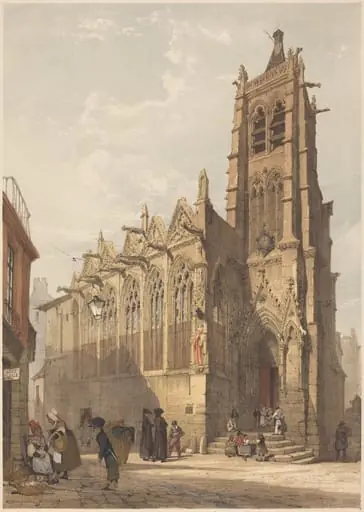
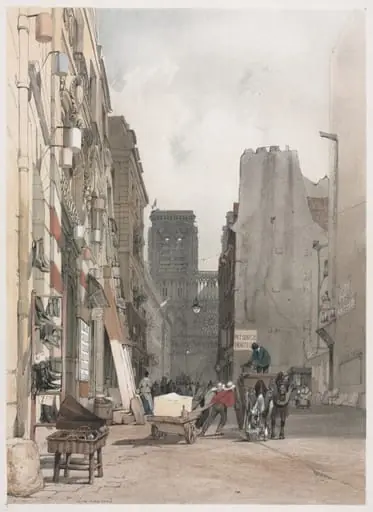 Picturesque Architecture in Paris, Ghent, Antwerp, Rouen: Nôtre Dame, Paris
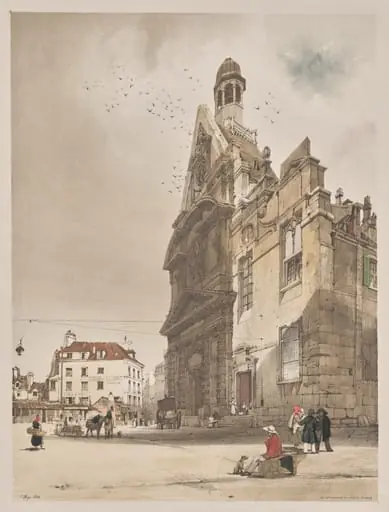 Picturesque Architecture in Paris, Ghent, Antwerp, Rouen: St. Etienne du Mont, Paris
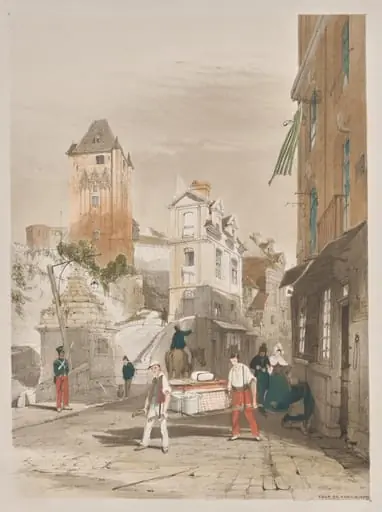 Picturesque Architecture in Paris, Ghent, Antwerp, Rouen: Tour de Remy, Dieppe, France
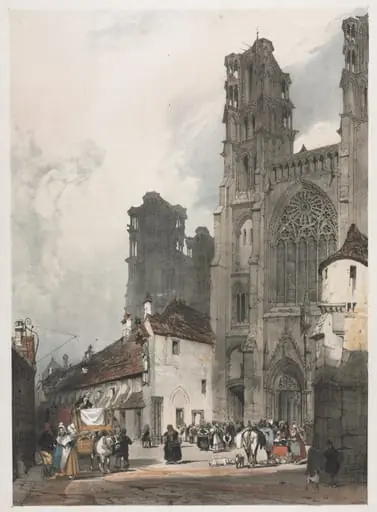 Picturesque Architecture in Paris, Ghent, Antwerp, Rouen: Laon, France
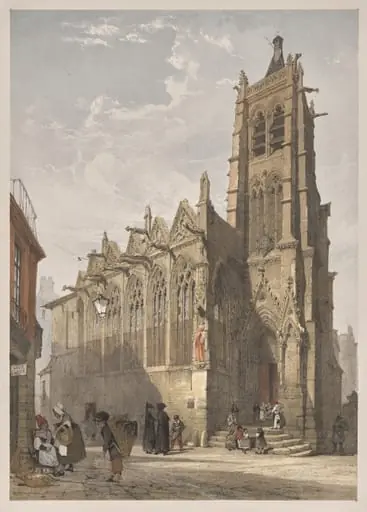 Picturesque Architecture in Paris, Ghent, Antwerp, Rouen: St. Severin, Paris
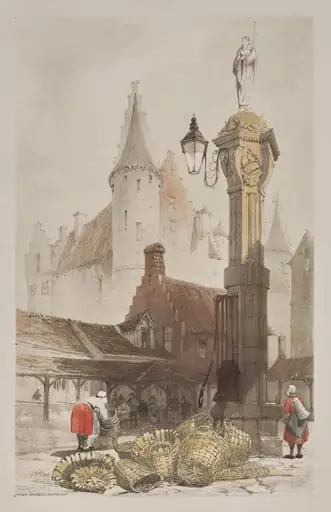 Picturesque Architecture in Paris, Ghent, Antwerp, Rouen: Fish Market, Antwerp, Belgium
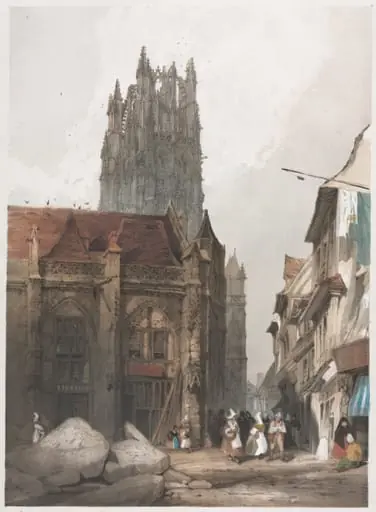 Picturesque Architecture in Paris, Ghent, Antwerp, Rouen: St. Laurent, Rouen, France
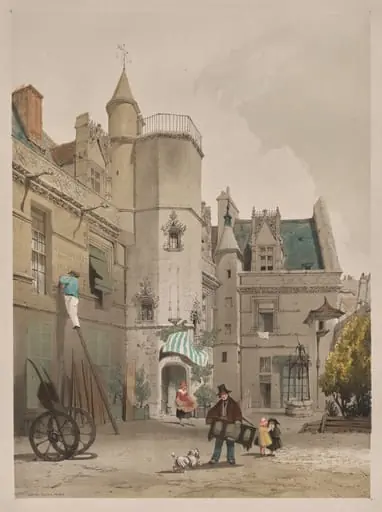 Picturesque Architecture in Paris, Ghent, Antwerp, Rouen: Hôtel Cluny, Paris
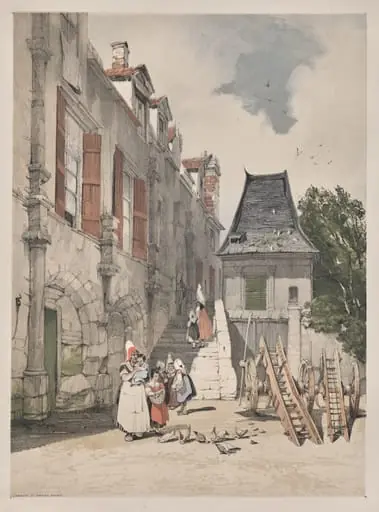 Picturesque Architecture in Paris, Ghent, Antwerp, Rouen: L'Abbaye St. Amand, Rouen, France
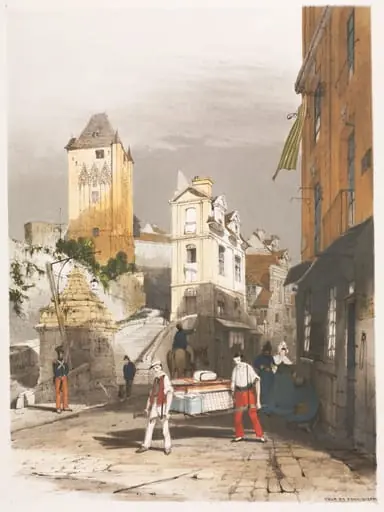 Picturesque Architecture in Paris, Ghent, Antwerp, Rouen, Etc.: Tour de Remy, Dieppe
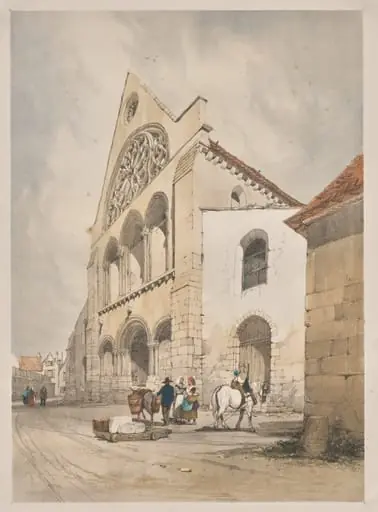 Picturesque Architecture in Paris, Ghent, Antwerp, Rouen: St. Andre, Chartres, France