Artwork
Mary Fairlie Cooper
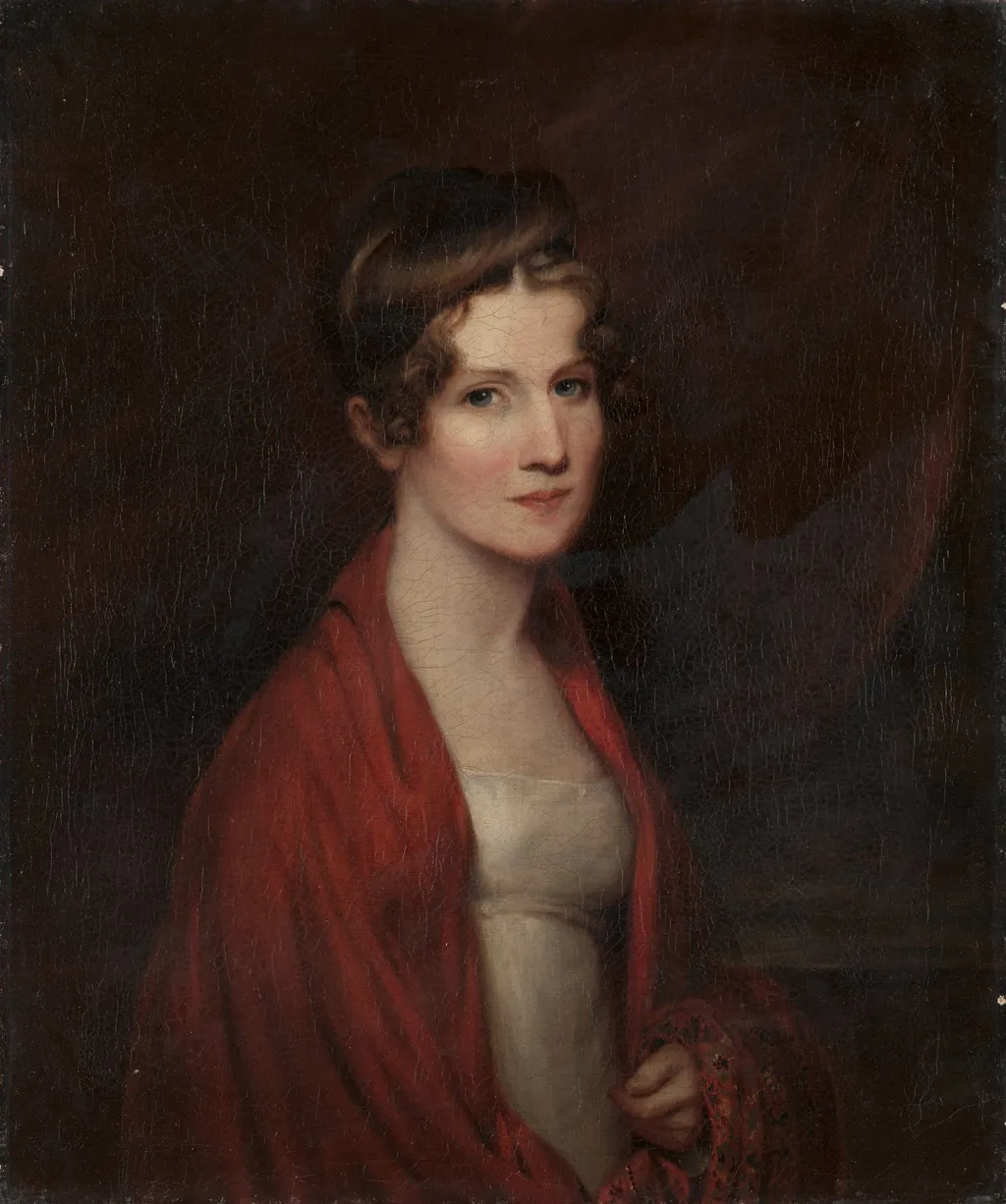
Mary Fairlie Cooper is an unspecified painting by the American Folk Art artist William Dunlap. It dates from 1814 and is held in the collection of the Cleveland Museum of Art. Created circa 1814, this portrait presents a young woman rendered in the straightforward manner typical of early American folk painting.
About this work
The artist's use of chiaroscuro, a technique that emphasizes contrasts between light and dark, adds depth and dimension to the portrait.
This portrait painting depicts a woman with fair skin and brown hair, which is styled in an updo. She wears a white dress and a red shawl draped over her shoulders. The background of the painting is dark, which helps to accentuate the subject's features.
The woman's gaze is directed towards the viewer, and her expression is neutral. Her attire and hairstyle suggest that the painting was created during the early 19th century.
The artist's use of chiaroscuro, a technique that emphasizes contrasts between light and dark, adds depth and dimension to the portrait. For more information on this artistic technique, explore the concept of chiaroscuro.
Overview
Created circa 1814, this portrait presents a young woman rendered in the straightforward manner typical of early American folk painting. The figure is set against a dark backdrop that isolates her pale complexion and modest attire, drawing the viewer’s eye to her direct gaze. The work is part of the Cleveland Museum of Art’s collection.
Subject & Meaning
The sitter, identified as Mary Fairlie Cooper, is shown with her hair gathered in an updo, wearing a plain white dress and a red shawl across her shoulders. Her neutral expression and unembellished presentation reflect the period’s modest aesthetic, offering a glimpse into the domestic attire and social expectations of women in the early nineteenth century.
Technique & Style
The artist employs chiaroscuro, using stark contrasts between the illuminated figure and the surrounding darkness to model form and suggest volume. Brushwork is simple and direct, characteristic of folk portraiture, with limited detail and a focus on clear outlines rather than refined modeling. The palette is restrained, emphasizing the red shawl as a modest accent.
History & Provenance
Painted by William Dunlap, a prominent theater producer and historian who also pursued portraiture despite losing an eye in childhood, the work exemplifies his occasional forays into visual art. After changing hands among private collectors, the painting entered the Cleveland Museum of Art, where it remains on view as a representative example of early American folk portraiture.
Own this work as a print
Artist & collection

Artist
William Dunlap (February 19, 1766 – September 28, 1839) was a pioneer of American theater.

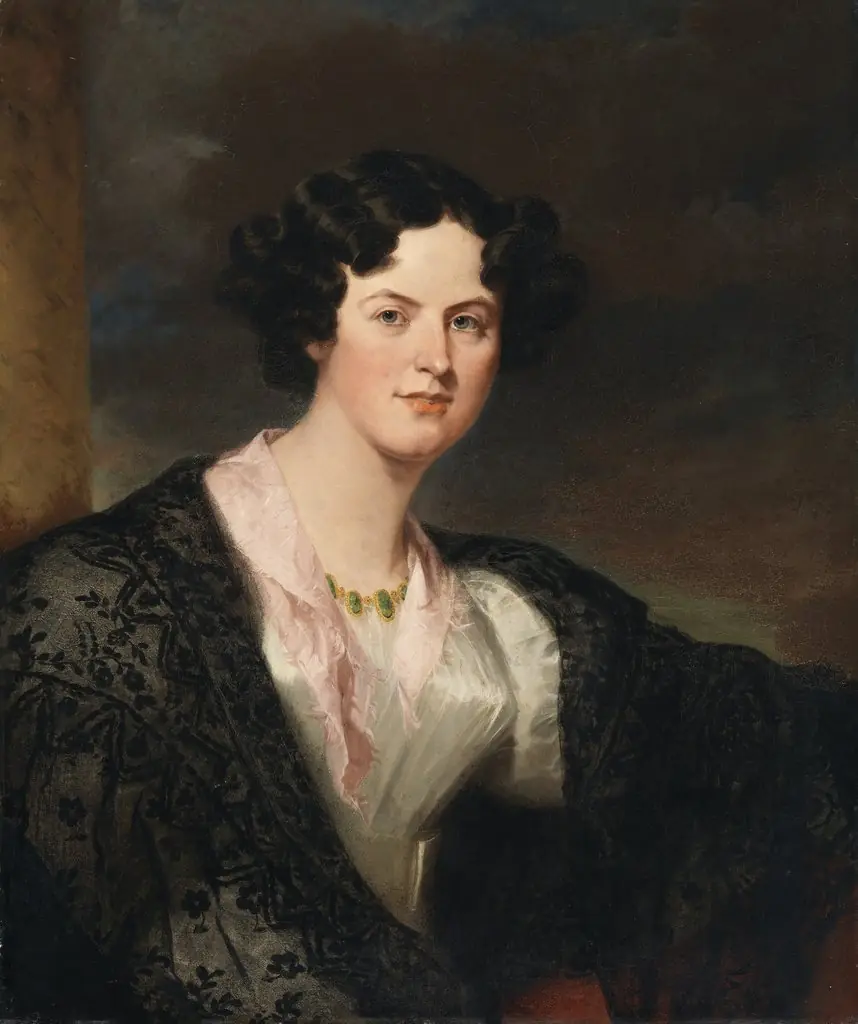 Portrait of Mrs Clementson
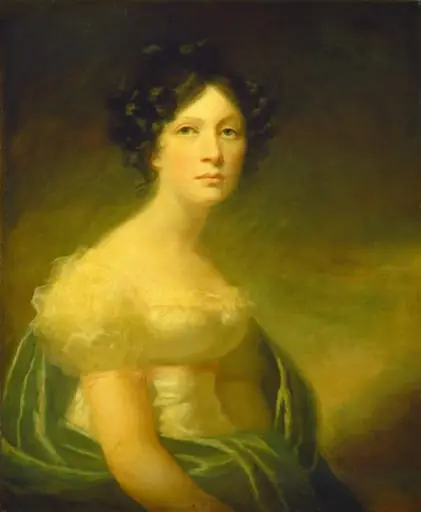 Miss Jean Christie
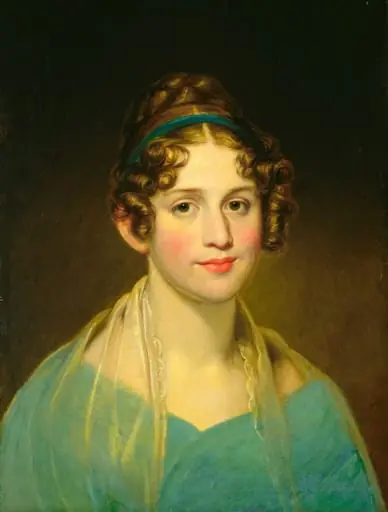 Sarah Blake Sturgis
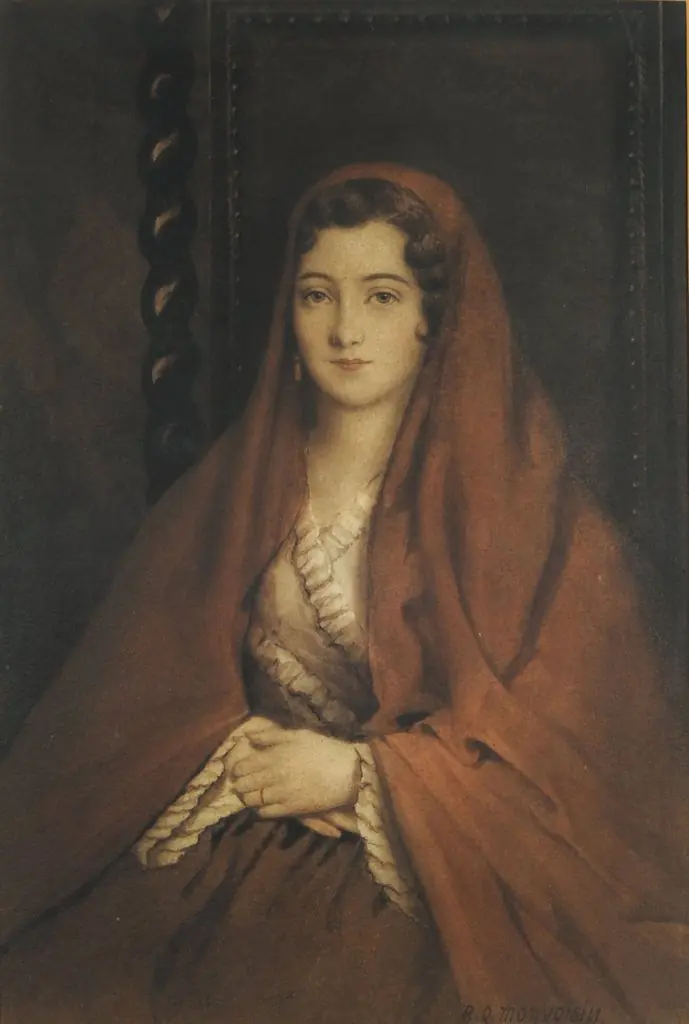 Young Chilean or Portrait of a Chilean Lady
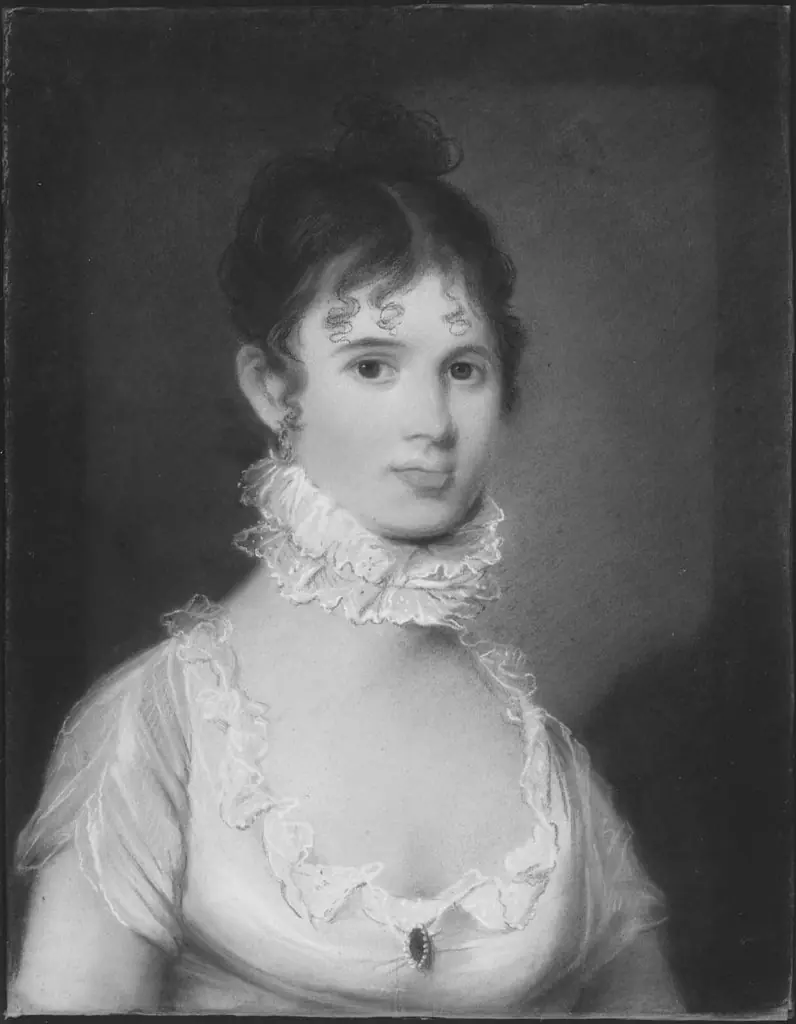 Sally Bass (Mrs. Enoch Bartlett)
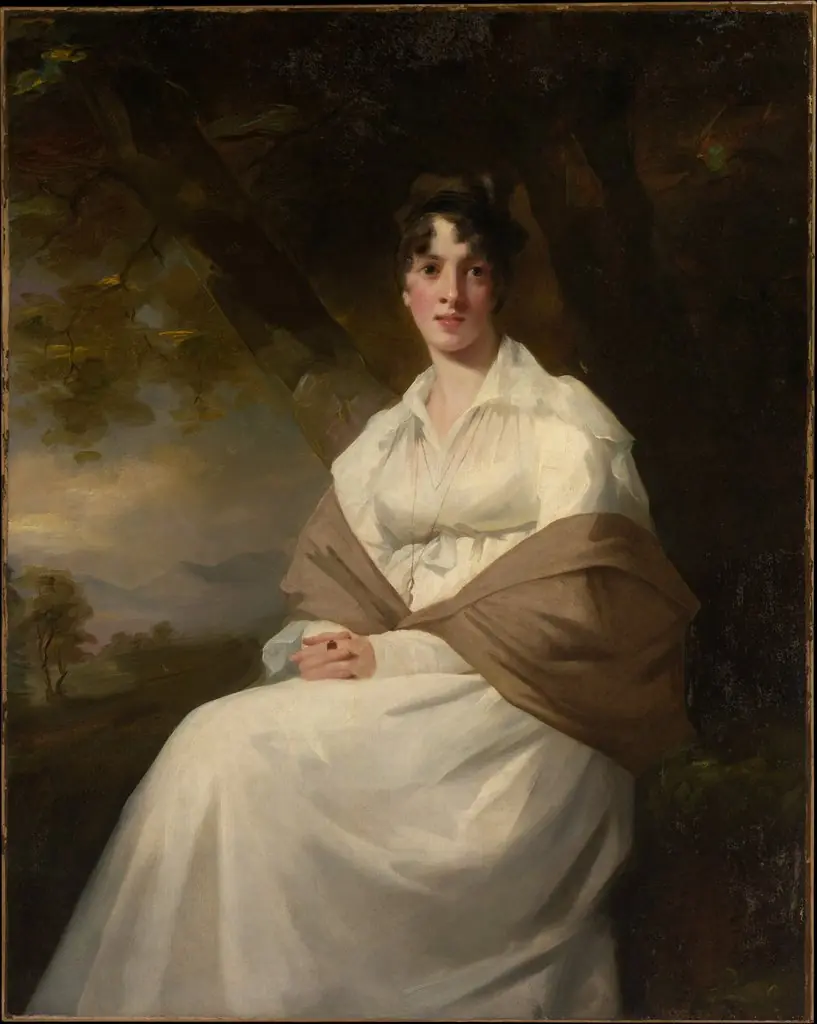 Lady Maitland (Catherine Connor, died 1865)
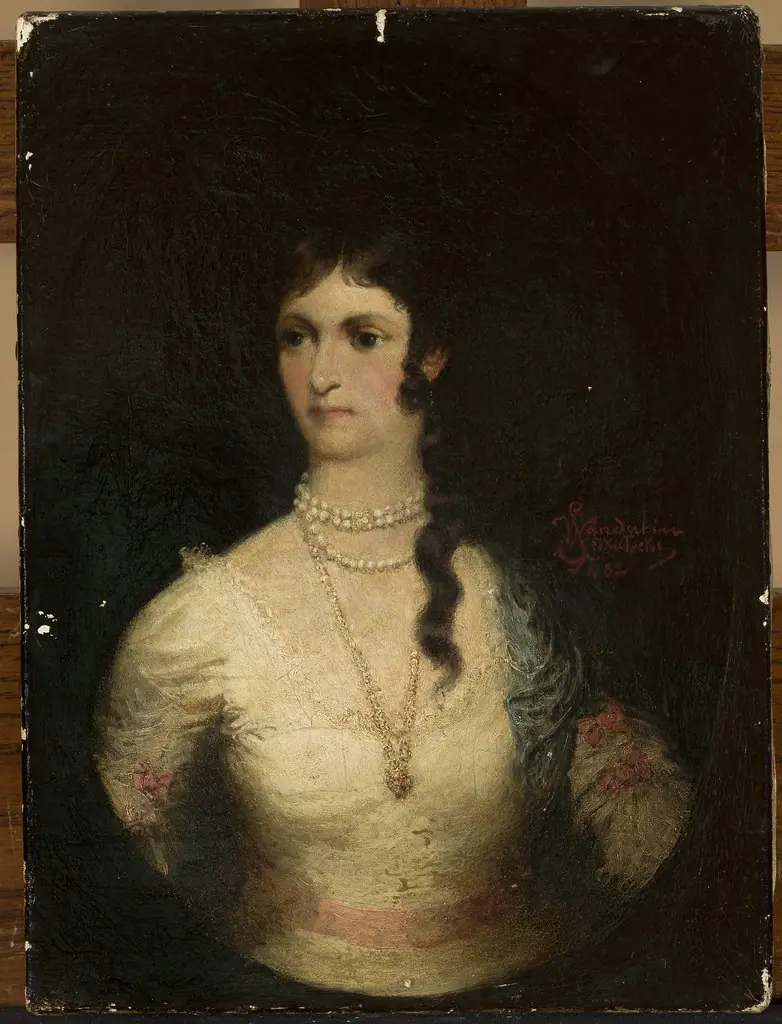 Portrait of a woman in a white dress
 Mrs. Robert Watts (Matilda Ridley)
 Portrait of a Woman
 Portrait of Petronella de Lange, Wife of Theodorus Frederik van Capellen
 Maria Bartlett (Mrs. Joseph Hall, Jr.)