Artwork
Leap-frog
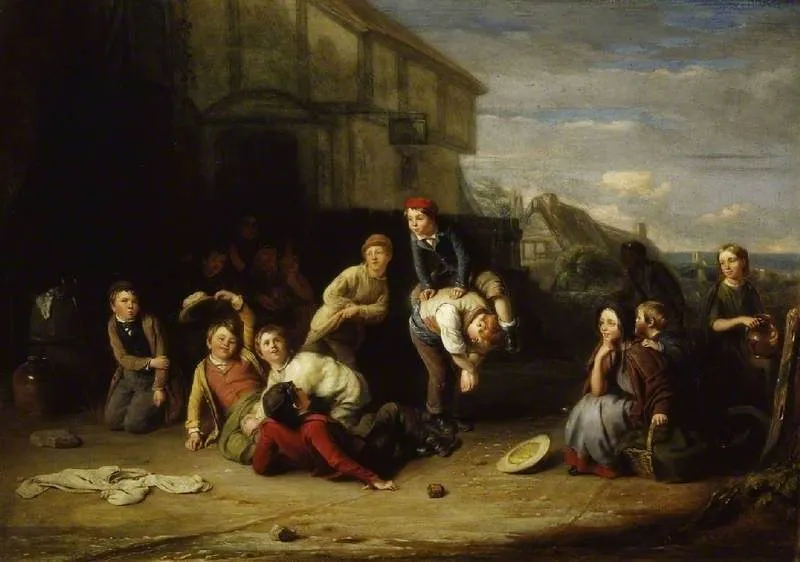
Leap-frog is an unspecified painting by the Realist artist William Gill. It dates from 1852 and is held in the collection of the Fitzwilliam Museum.
About this work
Overview
Created in 1852 by William Gill, this oil painting portrays a group of children engaged in a game of leapfrog within a modest village setting. The composition centers on the motion of the youngsters, one mid‑jump over another, while a backdrop of simple dwellings and a cloud‑filled sky frames the lively scene.
Subject & Meaning
The work captures a moment of unstructured play, emphasizing the spontaneity and communal spirit of rural childhood. By focusing on the physical interaction of the children, Gill highlights themes of innocence, camaraderie, and the simple pleasures found in everyday village life.
Technique & Style
Gill employs a warm palette of earthy tones, applying soft, blended brushstrokes that lend a gentle, inviting atmosphere to the canvas. The handling of light creates a subtle glow on the figures, while the loose rendering of the background suggests rather than delineates architectural details, reinforcing the painting’s overall sense of warmth.
History & Provenance
Since its completion, the painting has been part of the Fitzwilliam Museum’s collection, where it remains on display. Its acquisition date is not recorded in the available sources, but the work has been identified as an example of Gill’s mid‑nineteenth‑century genre scenes.
Artist & collection
Artist
English painter William Gill left a small but vivid trail in the 1800s art world.

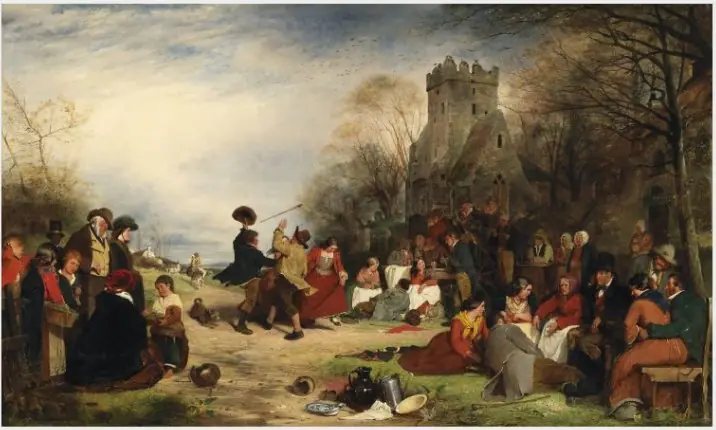 The 16th, 17th (St Patrick’s Day), and 18th March
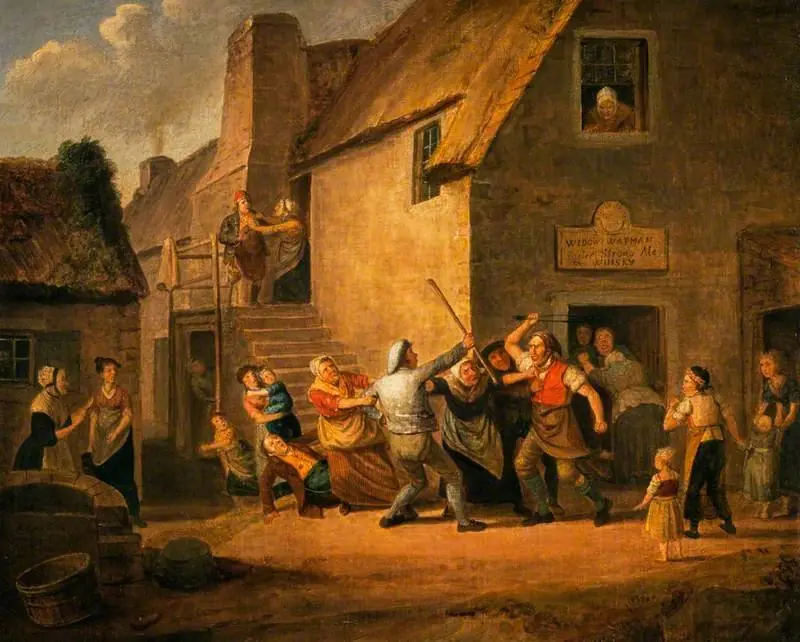 A Brawl outside an Ale House
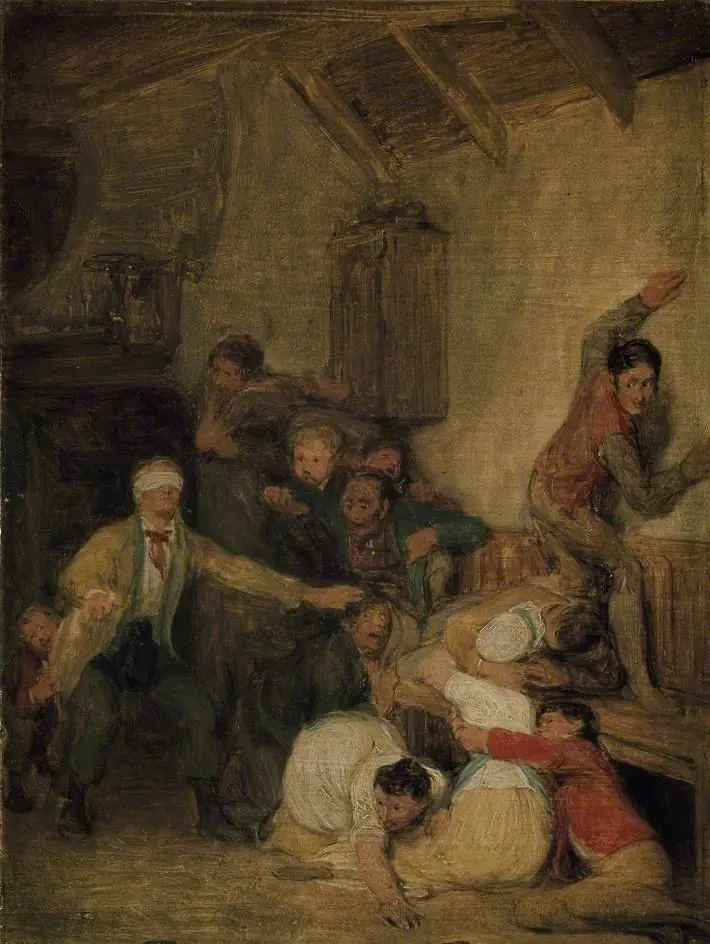 Blind Man's Buff
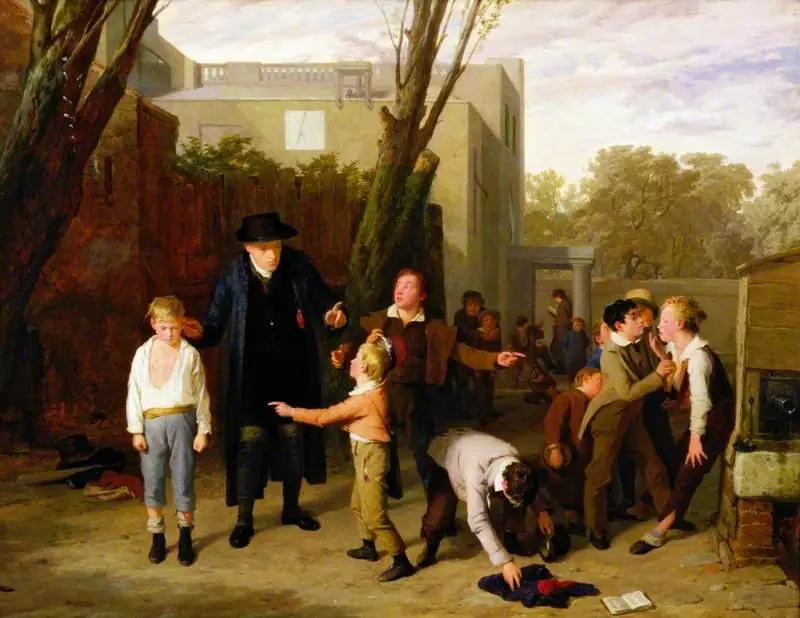 The Fight Interrupted
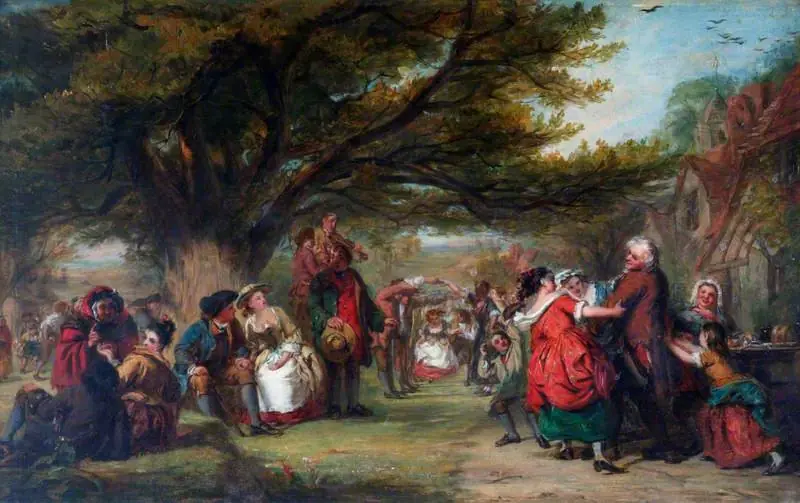 An English Merry-Making, a Hundred Years Ago
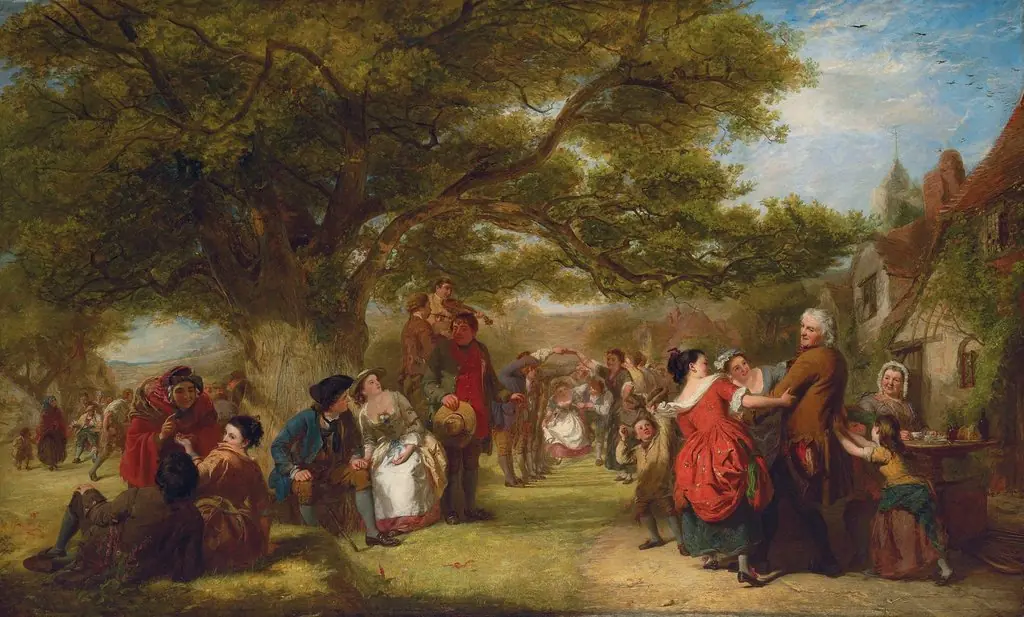 An English Merrymaking a Hundred Years Ago
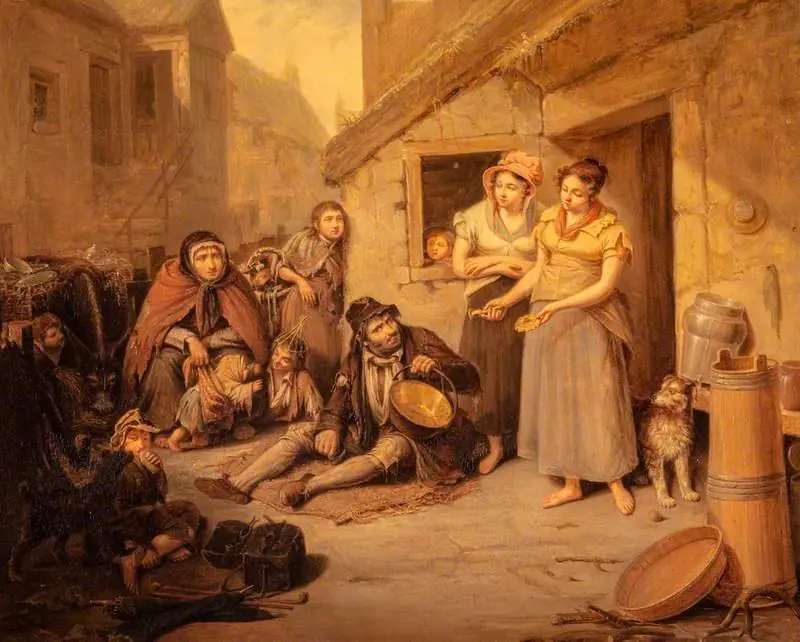 The Tinkers
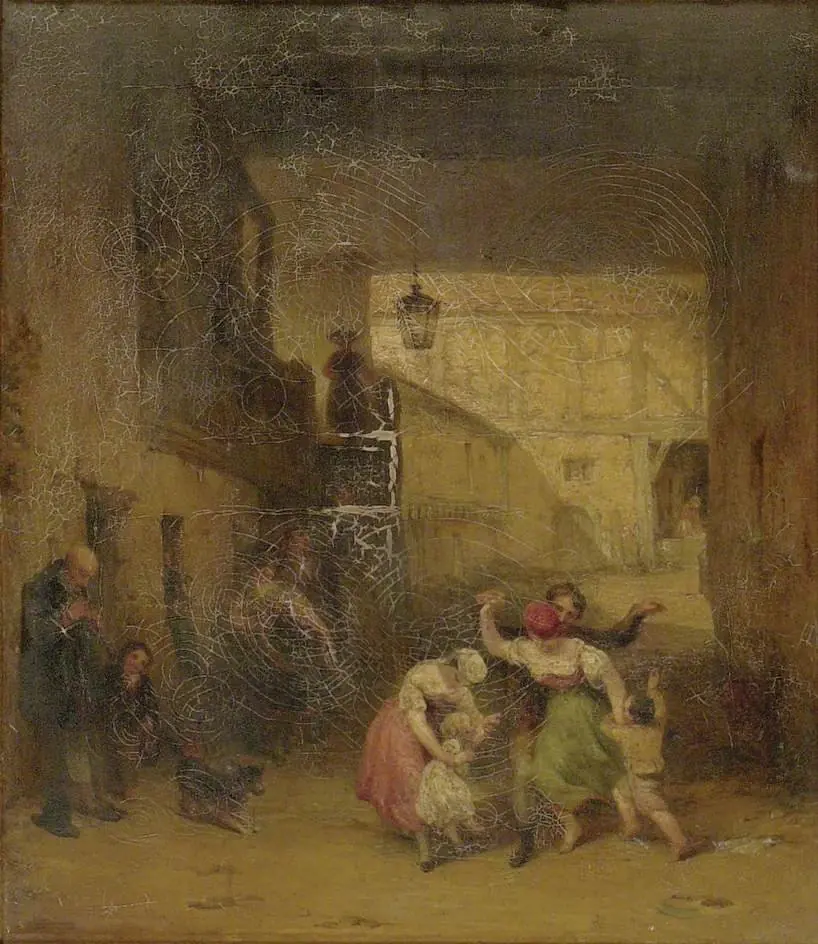 Wollenberg: Entrance to a Courtyard
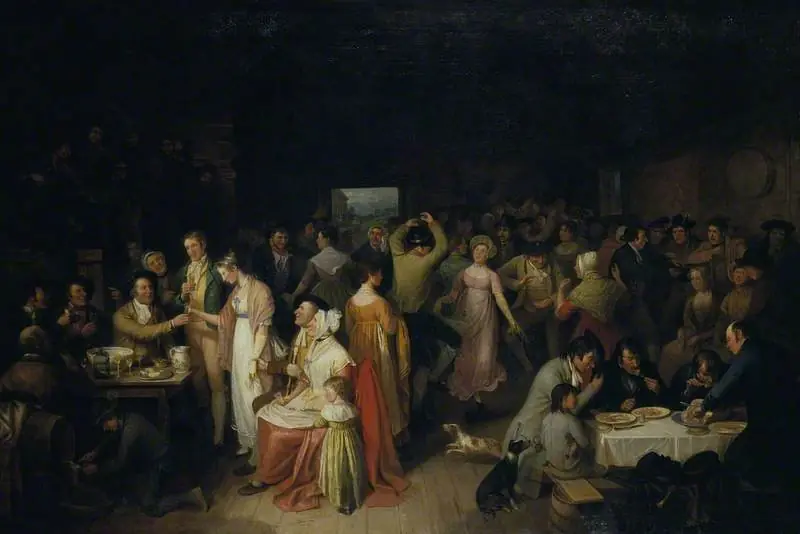 The Penny Wedding
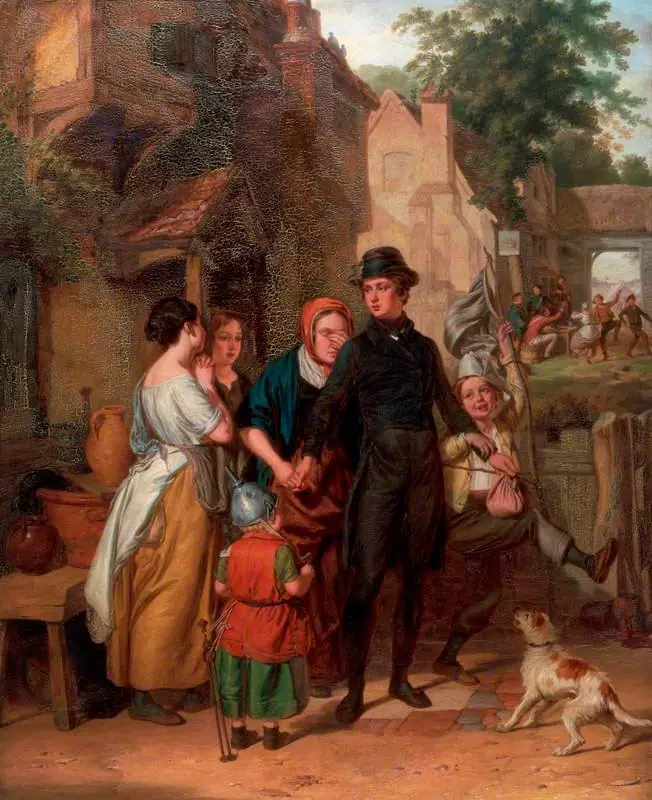 The Parting: A Recruit Taking Leave of His Family
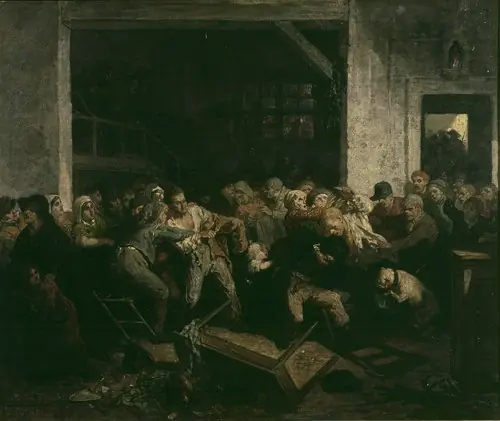 The fight
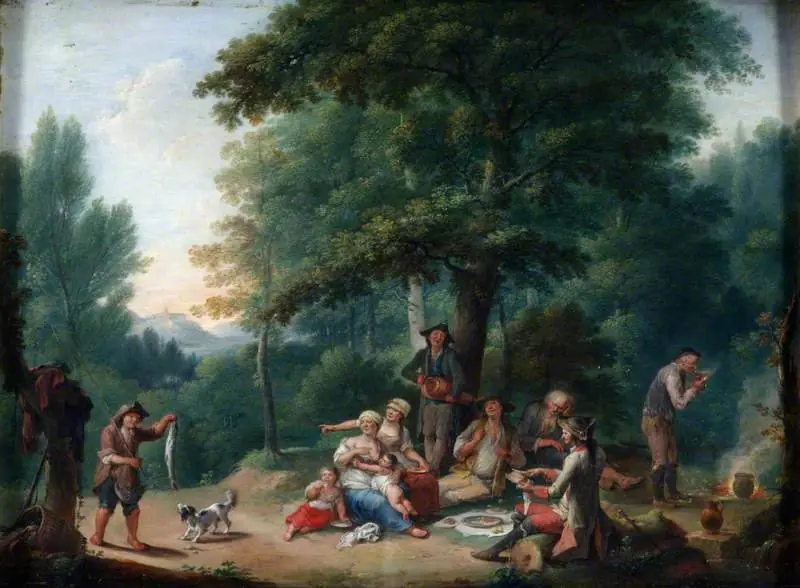 Landscape with Peasants Regaling Themselves in a Wood