Artwork
Hamilton, Salem
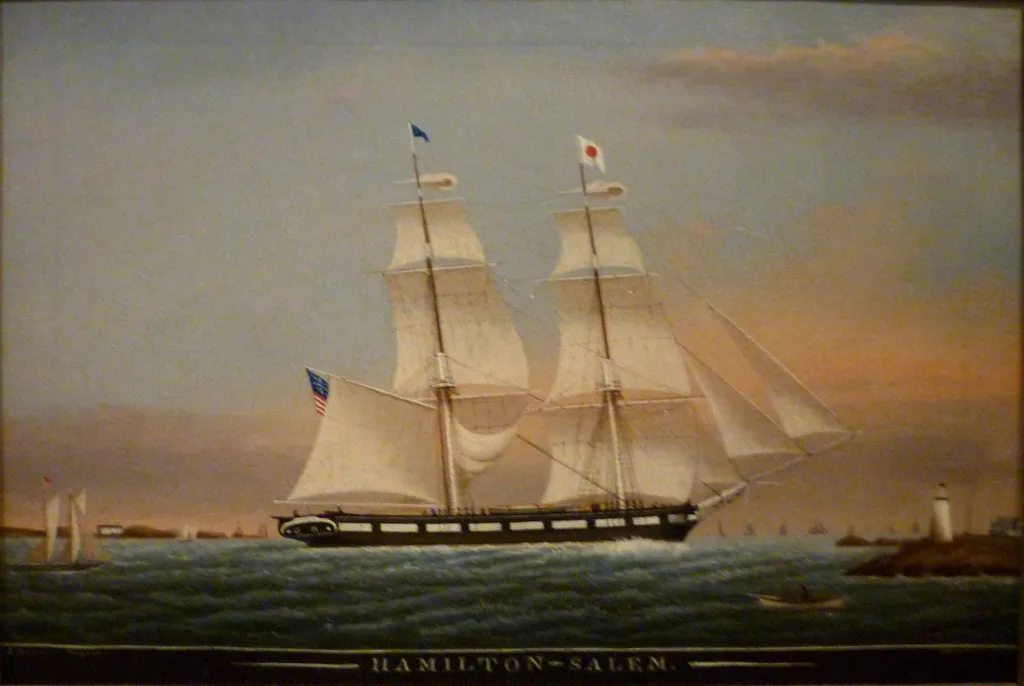
Hamilton, Salem is an oil painting by the Realist artist William Henry Luscomb. It dates from 1851 and is held in the collection of the Peabody Essex Museum.
About this work
Overview
William Henry Luscomb’s 1851 oil on canvas, titled Hamilton, Salem, presents a tranquil maritime scene. A three‑mast vessel with a dark hull and white sails glides across calm waters, its American flag unfurled aloft. To the right, a lighthouse stands sentinel near Children’s Island, while the sky is overcast with muted blues breaking through the clouds.
Subject & Meaning
The composition captures a typical New England harbor view, foregrounding the ship as a symbol of commerce and national identity. The lighthouse and Children’s Island anchor the setting in Marblehead, Massachusetts, suggesting both the safety of navigation and the region’s coastal character. The subdued atmosphere conveys a quiet, reflective moment at sea.
Technique & Style
Luscomb employs a restrained palette of grays, blues, and muted earth tones, allowing the white sails and flag to become focal points. His handling of oil paint renders the water’s surface with smooth, reflective washes, while the clouded sky is built up in layered brushstrokes that suggest fleeting light. The overall effect is realistic yet atmospheric.
History & Provenance
Created in 1851, the work entered the collection of the Peabody Essex Museum, an institution known for its maritime holdings. The painting has remained in the museum’s archives, where it is displayed as part of the museum’s representation of 19th‑century American marine art.
Context
During the mid‑19th century, New England’s coastal towns were thriving centers of trade and shipbuilding. Luscomb’s depiction aligns with contemporary interests in documenting local geography and maritime activity. The inclusion of Marblehead Light reflects the period’s emphasis on navigational aids, while the vessel’s flag underscores the growing sense of American national pride.
Artist & collection

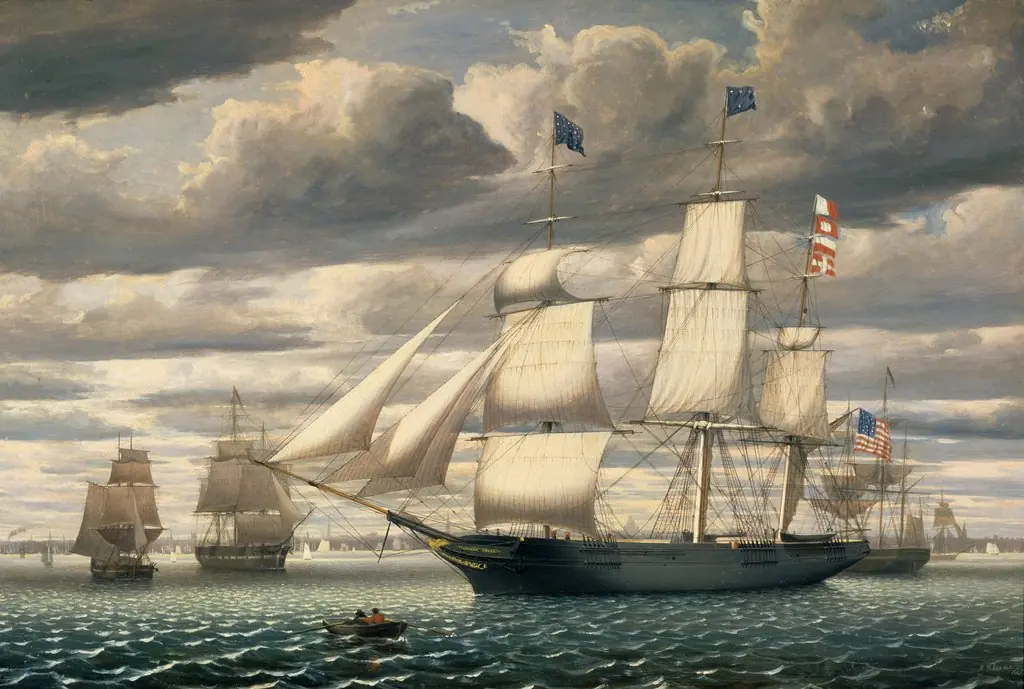 Ship Southern Cross in Boston Harbor, 1851
 The 84-Gun Danish Warship "Dronning Marie" in the Sound
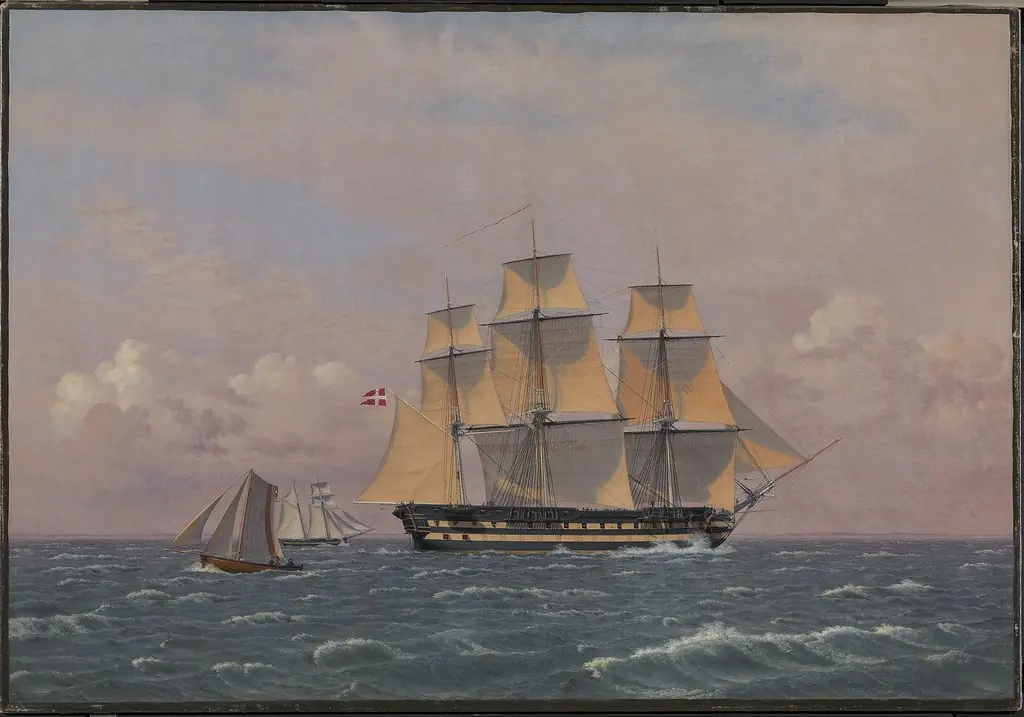 The 84-Gun Danish Warship "Dronning Marie" in the Sound
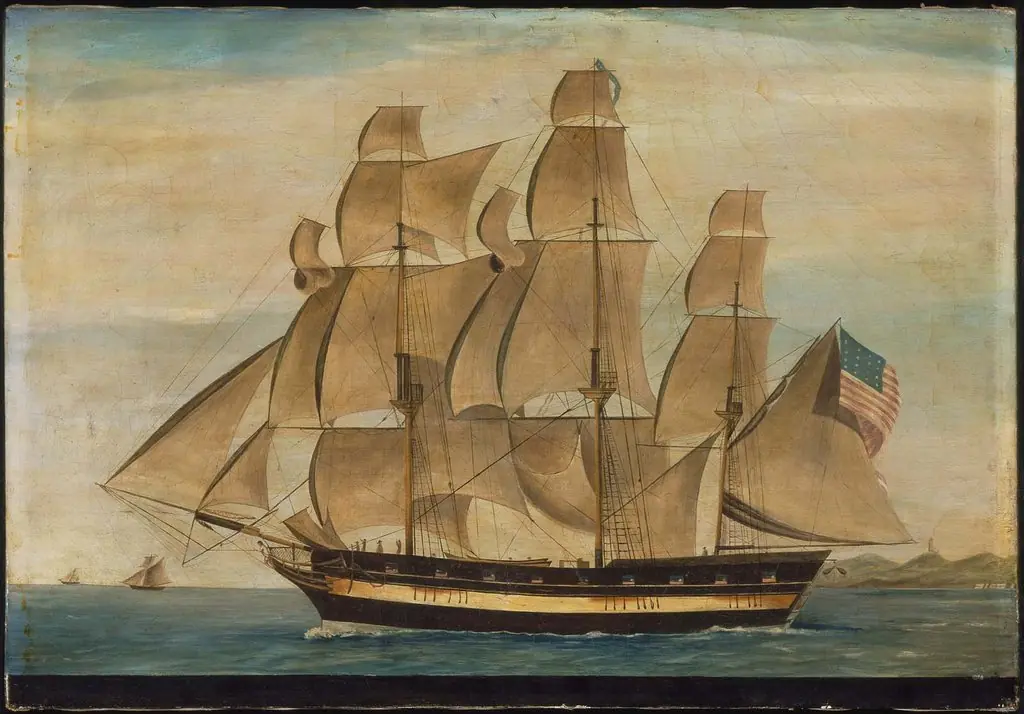 Early American Privateer "Avon"
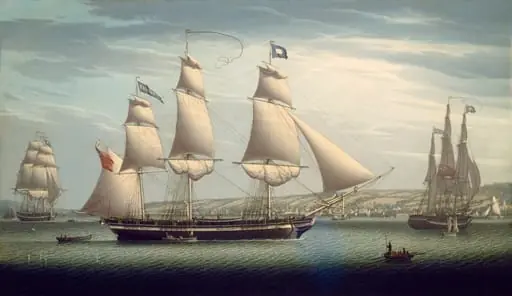 The Ship "Favorite" Maneuvering Off Greenock
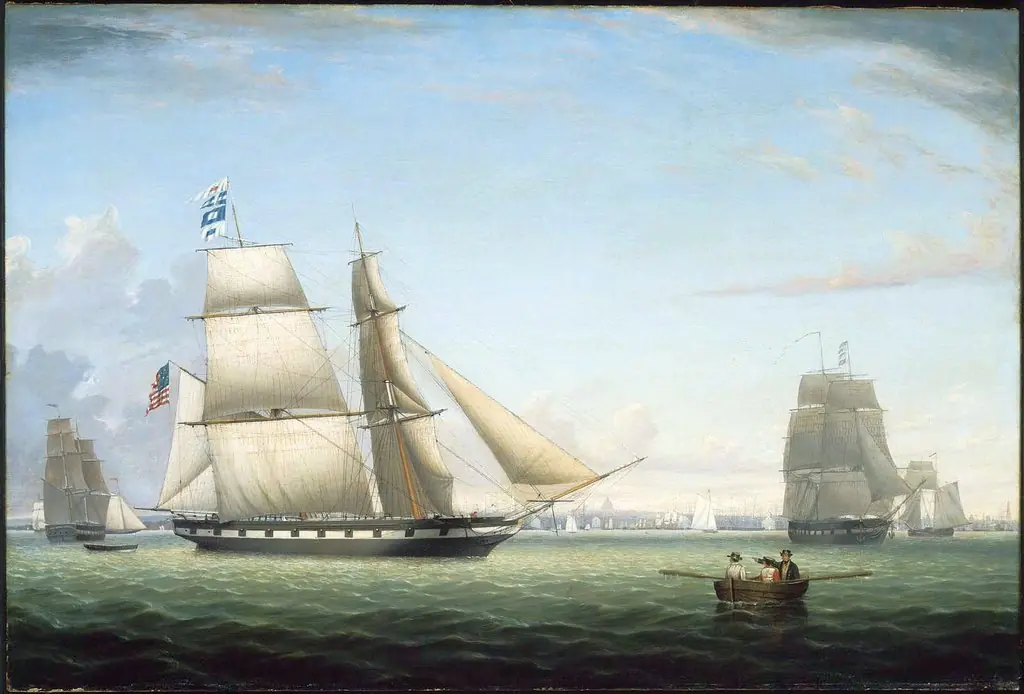 Brig "Antelope" in Boston Harbor
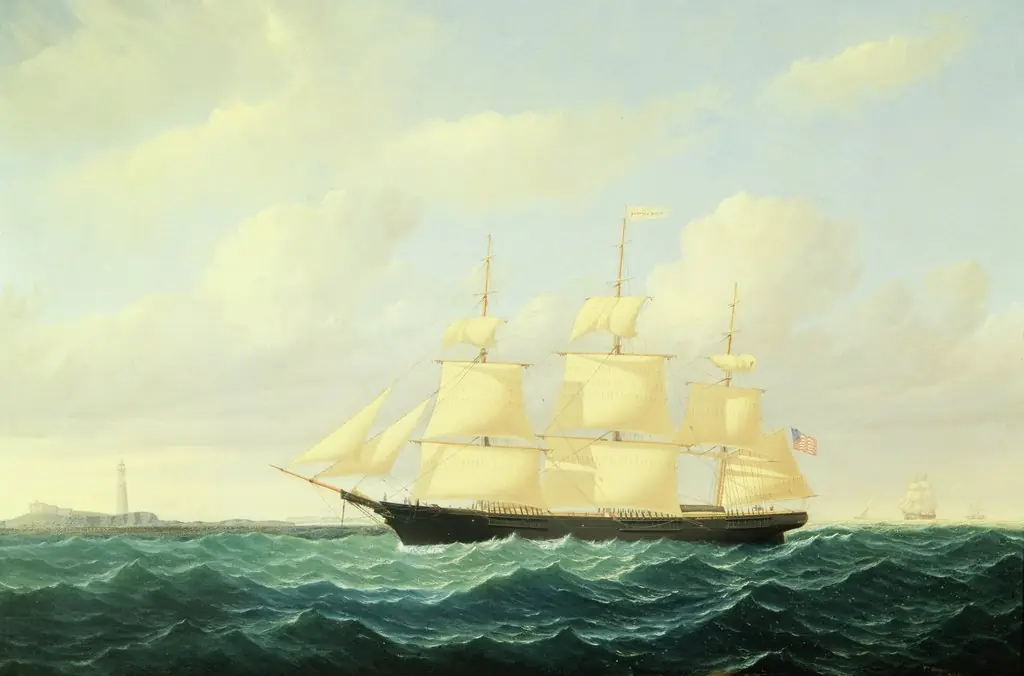 Dashing Wave Clipper Ship off Boston Light
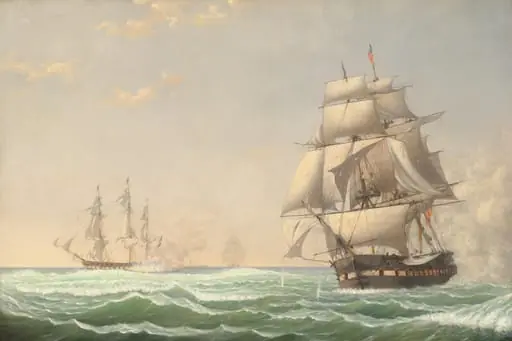 The United States Frigate "President" Engaging the British Squadron, 1815
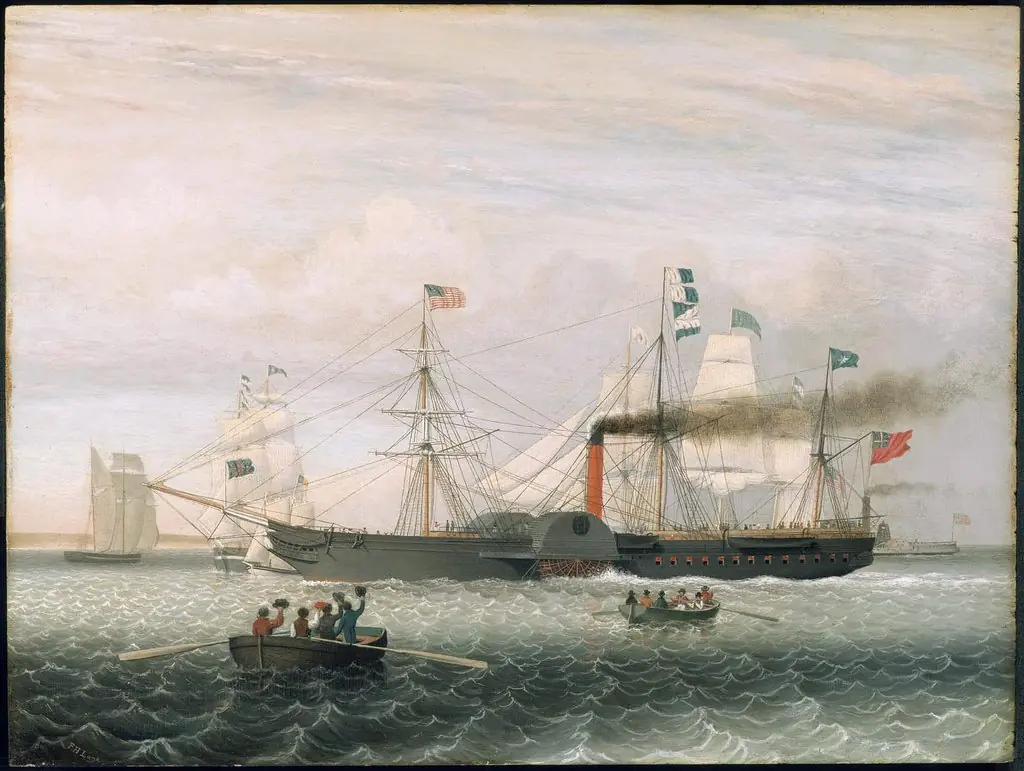 The Britannia Entering Boston Harbor
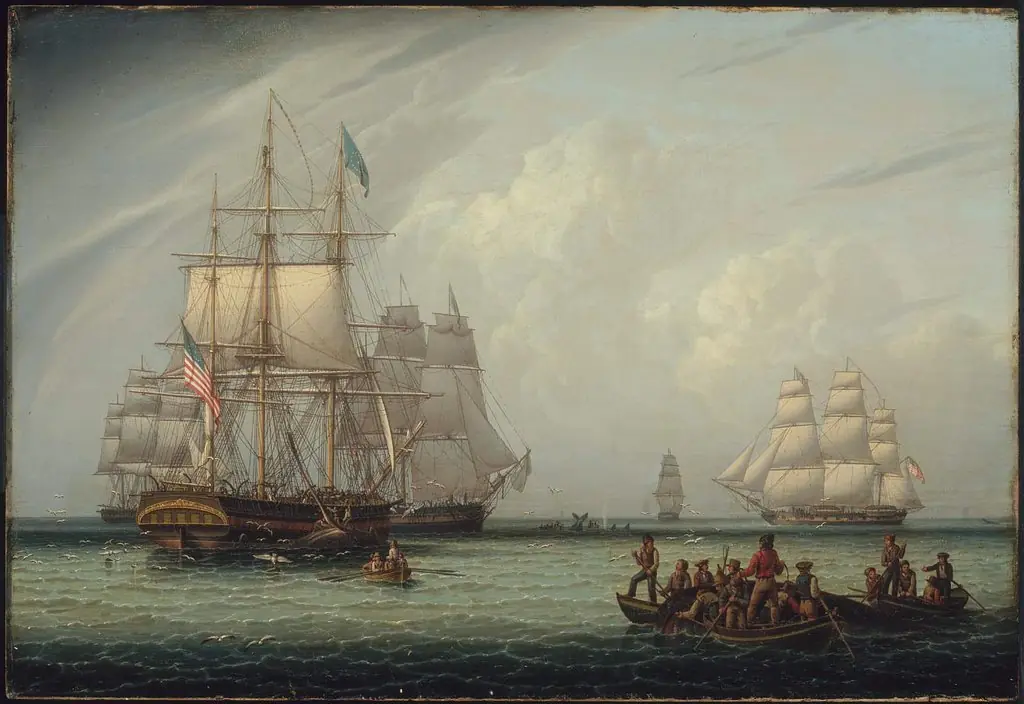 South Sea Whale Fishing I
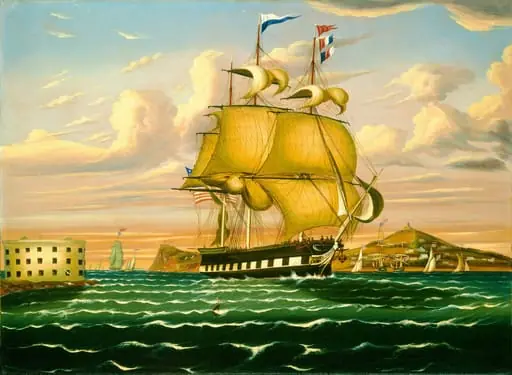 Packet Ship Passing Castle Williams, New York Harbor
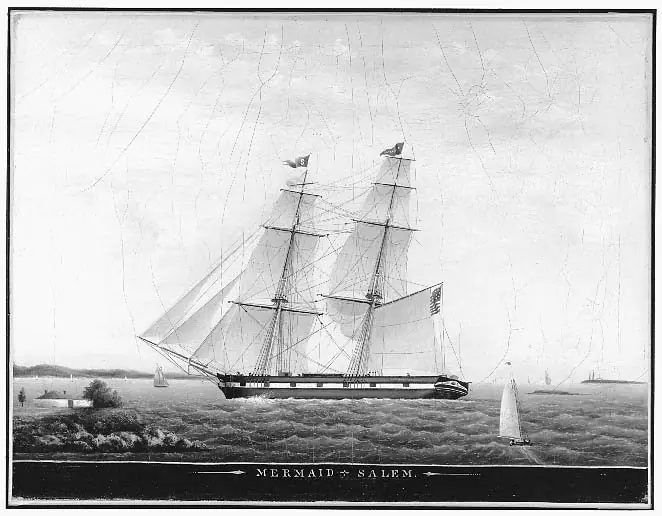 Mermaid Salem