Artwork
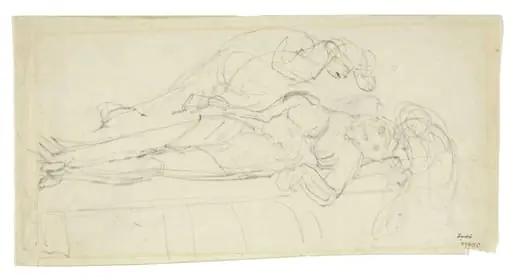
Study for "The Hireling Shepherd"
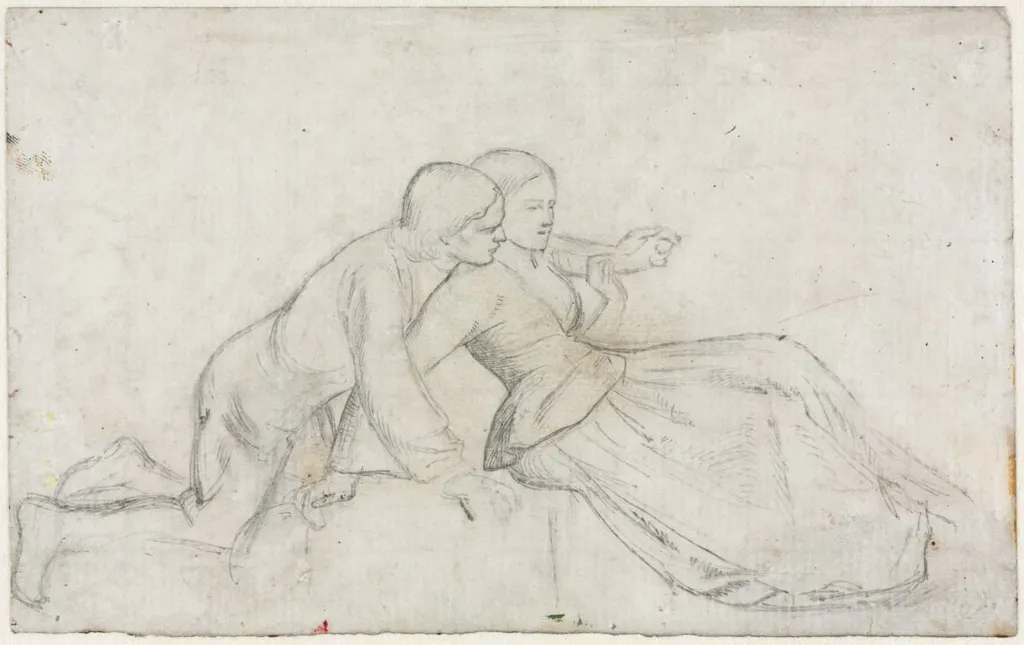
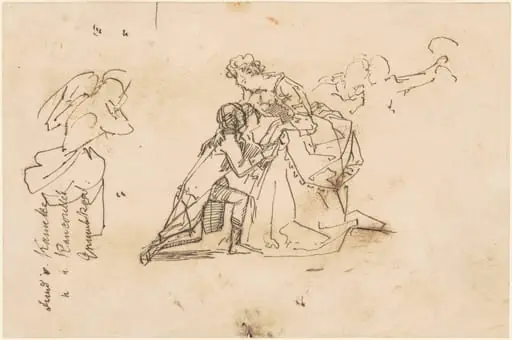
Study for "The Hireling Shepherd" is a drawing by the Impressionist artist William Holman Hunt. It dates from 1851 and is held in the collection of the Cleveland Museum of Art.
About this work
Overview
Created during the early years of the Pre-Raphaelite Brotherhood, it reflects Hunt’s commitment to direct observation and precise rendering.
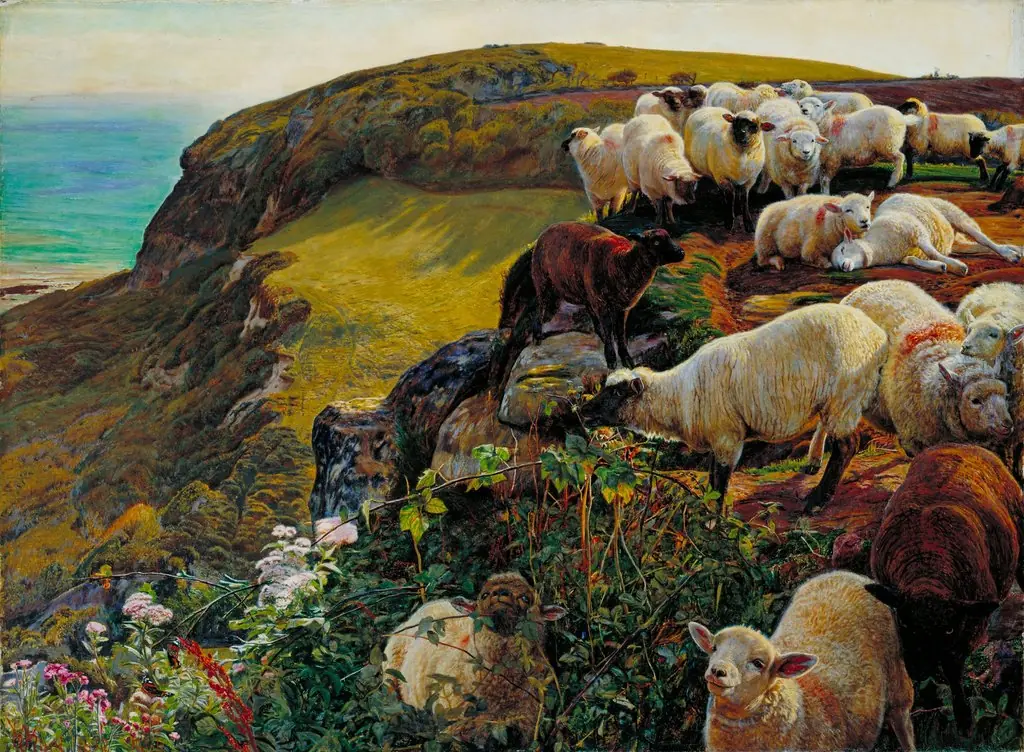
This drawing by William Holman Hunt serves as a preparatory study for his 1851 oil painting The Hireling Shepherd. Created during the early years of the Pre-Raphaelite Brotherhood, it reflects Hunt’s commitment to direct observation and precise rendering. Unlike conventional academic practices of the time, the work prioritizes naturalistic detail over idealized composition, focusing solely on the figures to establish emotional and physical dynamics before expanding into the full painting.
Subject & Meaning
The drawing depicts a shepherd kneeling beside a shepherdess, his arm gently encircling her shoulders as they face each other. Their hands nearly touch but do not, creating a palpable tension between intimacy and restraint. The presence of the sheep, held by the woman, subtly underscores the pastoral setting while hinting at the shepherd’s neglect of duty. The scene suggests a quiet, ambiguous romance, neither overtly sentimental nor overtly moralistic.
Technique & Style
Hunt employs fine, controlled linework to define form and gesture, capturing the texture of fabric, hair, and skin with acute attention. The absence of background or landscape elements directs focus entirely to the figures’ posture and interaction. This stripped-down approach reveals his method: refining composition through careful study of anatomy and expression before committing to color and environment in the final work.
History & Provenance
Created around 1850, the drawing predates the completed oil painting, which became Hunt’s first commercially successful piece. It likely remained in the artist’s possession until later acquisition by a private collector or institution. Its survival offers insight into Hunt’s working process, illustrating how he developed key elements of his narrative paintings through focused, incremental studies rather than broad sketches.
Context
As a founding member of the Pre-Raphaelite Brotherhood, Hunt rejected the conventions of academic art that favored dramatic staging and muted tones. Instead, he and his peers turned to nature for inspiration, insisting on truth to observed detail. This study exemplifies their broader aim: to revive sincerity in art by grounding emotion in tangible, carefully rendered reality rather than inherited formulas.
Legacy
The drawing stands as a testament to Hunt’s disciplined approach to composition and emotional nuance. It influenced later artists interested in the relationship between preparatory work and finished pieces, demonstrating how restraint in early studies could amplify narrative power. Its preservation allows ongoing analysis of Pre-Raphaelite methodology and the evolution of narrative realism in mid-19th-century British art.
Artist & collection
Artist
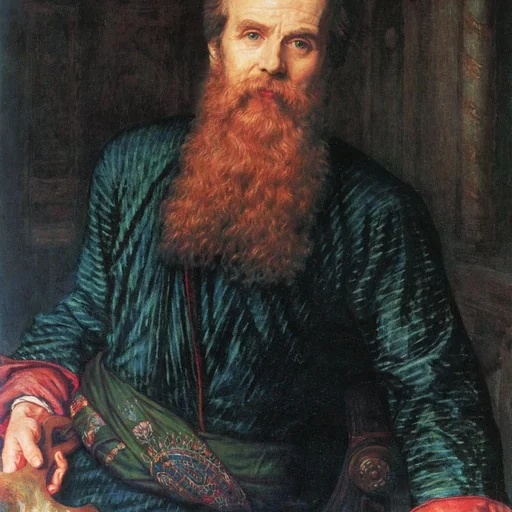
William Holman Hunt (2 April 1827 – 7 September 1910) was an English painter and one of the founders of the Pre-Raphaelite Brotherhood.

 Duel after the Masked Ball (recto)
 Study for "The Return of King Friedrich II from Küstrin"
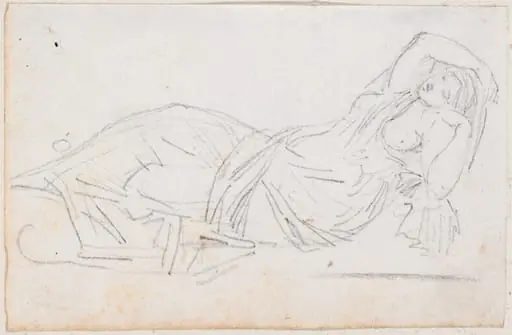 Statue of Cleopatra
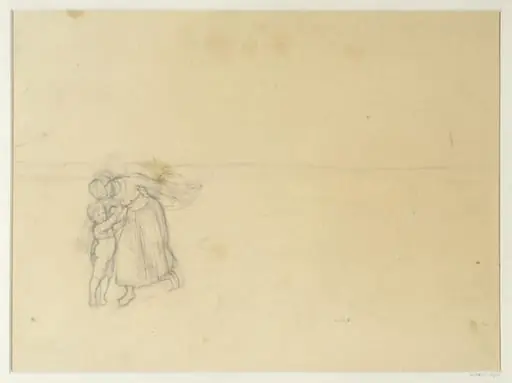 The Right of Way
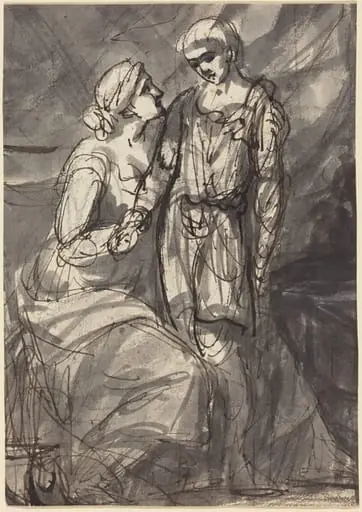 Two Figures in Classical Dress
![Sketch of a Swordsman Standing Over His Defeated Opponent [verso], by William Blake](https://artifactworldgallery.com/img/william-blake--sketch-of-a-swordsman-standing-over-his-defeated-opponent-ve--cd6502ff4c55c41a-w320.webp) Sketch of a Swordsman Standing Over His Defeated Opponent [verso]
Sketch of a Swordsman Standing Over His Defeated Opponent [verso]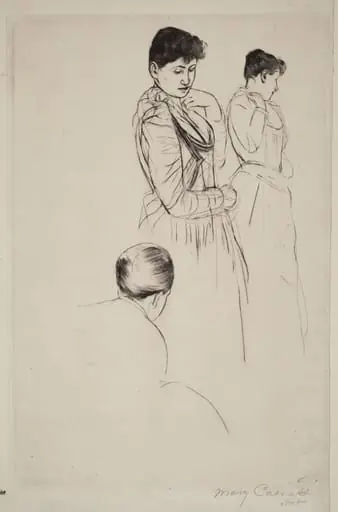 The Fitting
 Three Groups of Dancers
 Two Men Tying a Bundle (recto)
 Untitled
 Fumette, Standing
 The death of the strong, wicked man