Artwork
Statue of Cleopatra
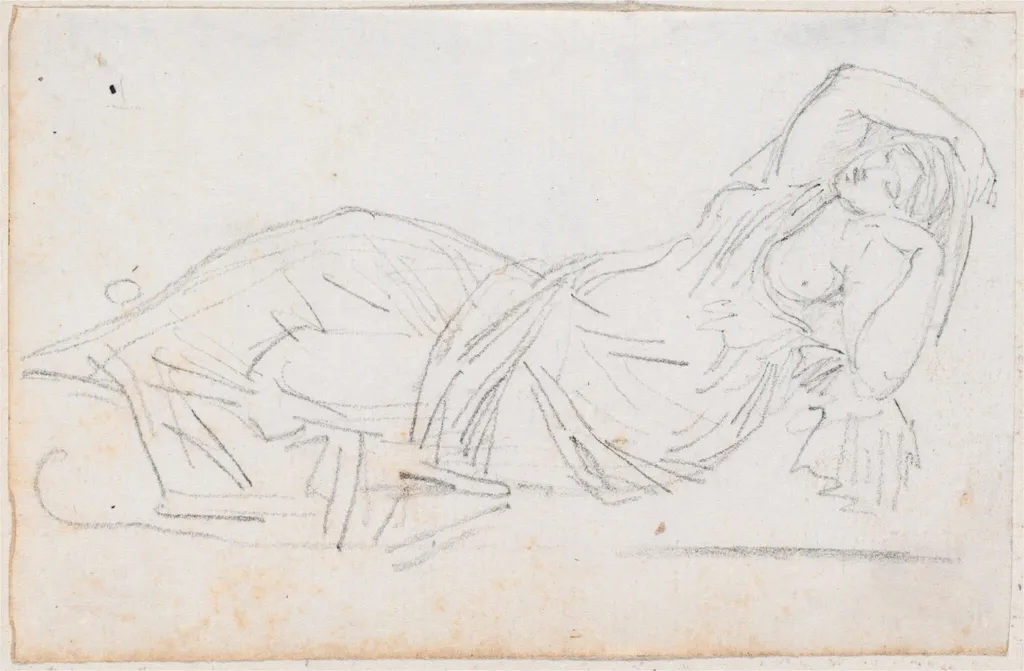
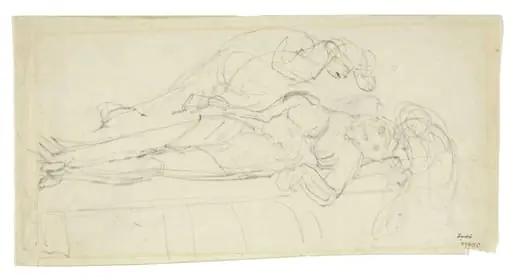
Statue of Cleopatra is a chalk drawing by the Romanticist artist Hubert Robert. It dates from 1760 and is held in the collection of the National Gallery of Art.
About this work
Overview
Created circa 1760, the drawing titled *Statue of Cleopatra* is executed in black chalk on laid paper. It presents a reclining nude figure positioned on a rocky ledge, rendered with swift, gestural lines that suggest a preliminary study rather than a polished composition. The work reflects the artist’s engagement with classical motifs during a period of heightened fascination with antiquity.
Subject & Meaning
The figure is identified as Cleopatra, portrayed in a relaxed yet subtly twisted pose, with bent knees and an informal drapery of rock. The lack of facial and hand detail directs attention to the overall silhouette and bodily form, emphasizing the idealized beauty and timelessness associated with the Egyptian queen in 18th‑century artistic imagination.
Technique & Style
Employing only black chalk, the artist achieves a light‑filled surface through minimal shading and loose contouring. The laid paper provides a subtle texture that interacts with the rapid strokes, creating a sketch‑like quality. This approach aligns with the Romantic era’s preference for atmospheric, picturesque renderings and the artist’s broader practice of producing capriccio‑type studies.
History & Provenance
The drawing is attributed to Hubert Robert, a French painter known chiefly for his landscape capricci. Although primarily a painter, Robert occasionally produced drawings that explored classical subjects. The work’s dating to the early 1760s places it within his formative period, before his later, more elaborate compositions of ruins and imagined antiquities.
Context
During the mid‑18th century, European artists increasingly turned to ancient themes, inspired by archaeological discoveries and the Grand Tour. Robert’s *Statue of Cleopatra* exemplifies this trend, merging a classical figure with the Romantic sensibility for spontaneous, evocative sketching, thereby bridging scholarly interest and artistic imagination.
Artist & collection
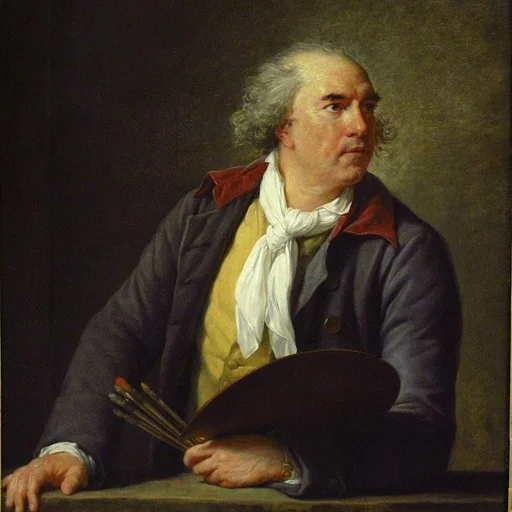
Artist
Hubert Robert (French pronunciation: ; 22 May 1733 – 15 April 1808) was a French painter in the school of Romanticism, noted especially for his landscape paintings and capricci, or semi-fictitious picturesque depictions of ruins in Italy…

 The death of the strong, wicked man
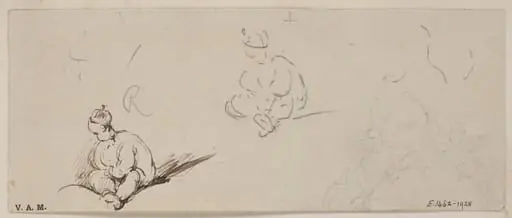 Two sketches of a Chinese child
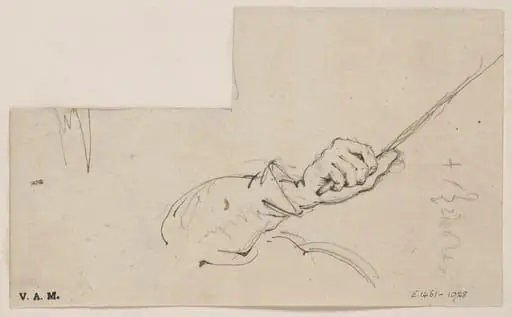 An arm and hand holding a stick
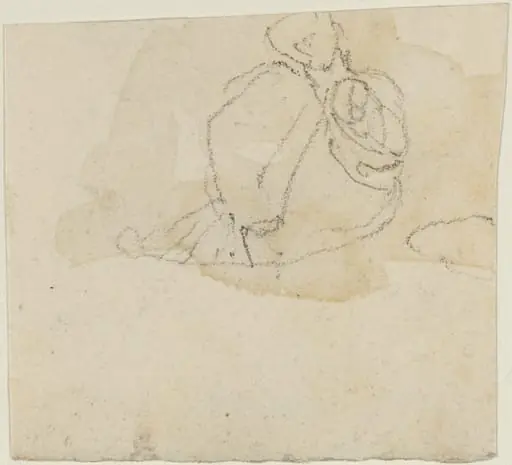 Figure Study
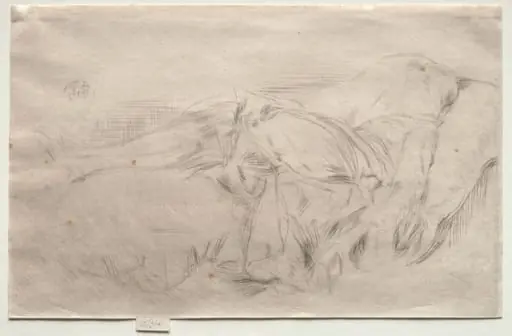 A Child on a Couch, No. 2
![Figure Studies [verso], by George Romney](https://artifactworldgallery.com/img/george-romney--figure-studies-verso--19708132818b32a0-w320.webp) Figure Studies [verso]
Figure Studies [verso]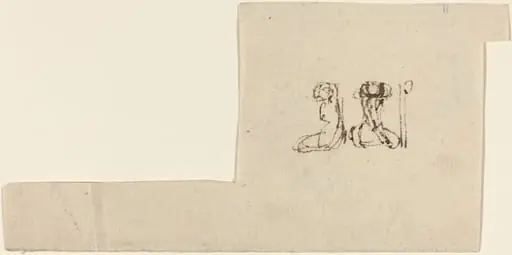 Two Seated Female Figures with Arms Lifted Overhead
![Reclining Woman [verso], by Giovanni Battista Cipriani](https://artifactworldgallery.com/img/giovanni-battista-cipriani--reclining-woman-verso--00754221290578f9-w320.webp) Reclining Woman [verso]
Reclining Woman [verso] Study of the Allegorical Figure of Health in Rubens' "The Birth of Louis XIII"
![Sheet of Studies [recto and verso], by John Flaxman](https://artifactworldgallery.com/img/john-flaxman--sheet-of-studies-recto-and-verso--af59e52d5279d768-w320.webp) Sheet of Studies [recto and verso]
Sheet of Studies [recto and verso]![Statue of a Roman Woman (Female Deity?) Seen from the Side [verso], by Hubert Robert](https://artifactworldgallery.com/img/hubert-robert--statue-of-a-roman-woman-female-deity-seen-from-the-side-vers--4bf9208a795411cc-w320.webp) Statue of a Roman Woman (Female Deity?) Seen from the Side [verso]
Statue of a Roman Woman (Female Deity?) Seen from the Side [verso] Study after Ingres' 'Odalisque à l'ésclave'