Artwork
Untitled
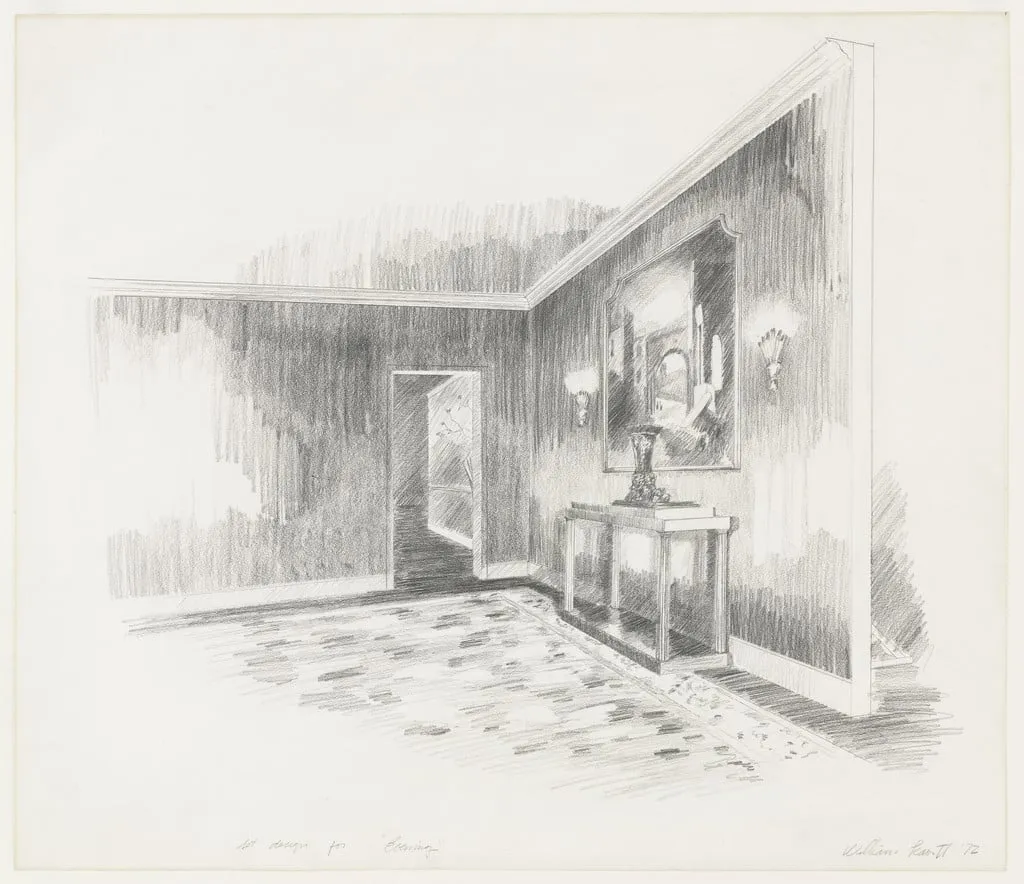
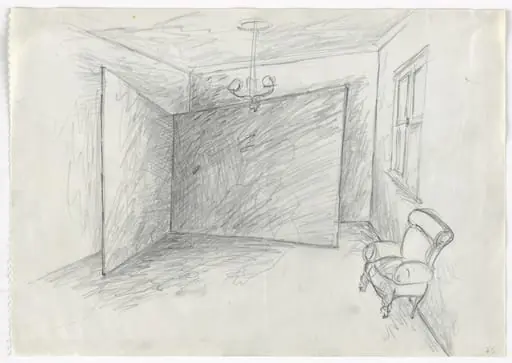
Untitled is a graphite drawing by William Leavitt. It dates from 1972 and is held in the collection of the Museum of Modern Art.
About this work
Overview
The composition focuses on an empty room illuminated by light entering through a doorway, emphasizing stillness and minimalism.
Created in 1972, this pencil drawing by William Leavitt is part of The Museum of Modern Art’s collection. It depicts a sparse interior space rendered entirely in graphite, with no color or other media. The composition focuses on an empty room illuminated by light entering through a doorway, emphasizing stillness and minimalism. The work exemplifies Leavitt’s interest in architectural spaces as carriers of quiet, implied narrative.
Subject & Meaning
The scene presents a mundane interior—an empty room with a wooden floor, plain walls, and a single table holding a framed image, a vase, and a lamp. No figures are present, and the objects appear untouched, suggesting absence rather than occupation. The lighting, directed from the doorway, enhances the sense of solitude. The work invites contemplation of domestic spaces as sites of unspoken histories or latent memory.
Technique & Style
Leavitt used only pencil to construct the image, relying on subtle gradations of tone and fine linear marks to define surfaces and depth. Cross-hatching and delicate shading model the wood grain of the floor and the texture of the walls, while the objects are rendered with precise, restrained contours. The absence of erasure or correction underscores a deliberate, meditative approach to mark-making, prioritizing clarity over expressiveness.
History & Provenance
The drawing was completed in 1972 and entered The Museum of Modern Art’s collection shortly thereafter. It is one of several works from this period in which Leavitt explored architectural interiors as neutral stages for psychological or narrative suggestion. Though not exhibited widely at the time, it has since become a representative example of his conceptual approach to drawing.
Context
In the early 1970s, Leavitt was part of a broader movement among artists who turned away from abstraction toward depictions of everyday environments. His work aligned with conceptual and minimal tendencies, using ordinary scenes to question perception and representation. Unlike photorealism, his drawings avoided illusionism, instead emphasizing the act of observation and the materiality of the medium itself.
Legacy
This drawing contributes to Leavitt’s reputation for transforming mundane spaces into contemplative compositions. Its quiet precision influenced later artists interested in the intersection of architecture, memory, and drawing. While not widely known to the public, it remains a touchstone in discussions of post-minimalist drawing and the use of pencil as a tool for conceptual inquiry.
Artist & collection
Artist
William Leavitt is a conceptual artist known for paintings, photographs, installations, and performance works that examine "the vernacular culture of L.A.

 Untitled
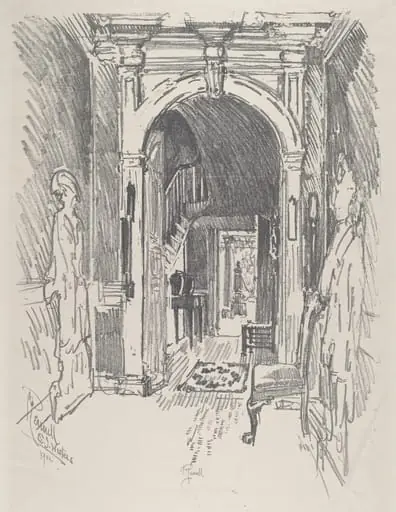 Hallway at Dr. Wister's
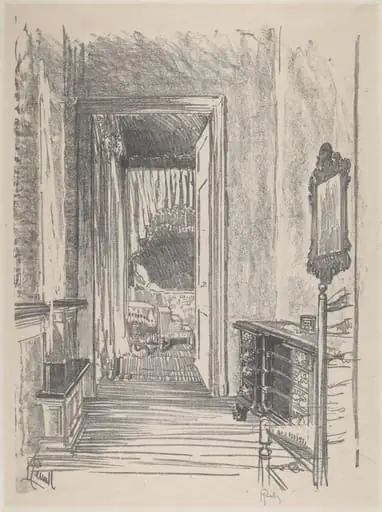 Hallway to Bed Room, Stenton
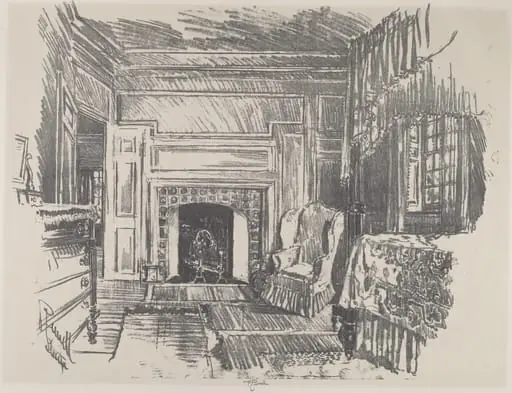 Bed Room, Stenton
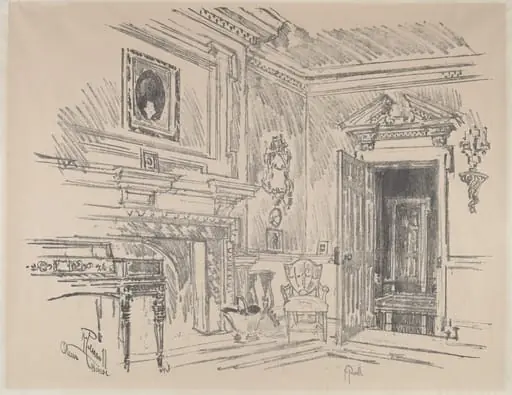 Drawing Room at Cliveden
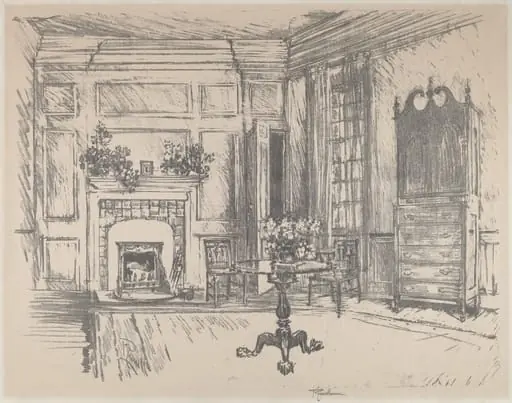 The Upper-room, Stenton
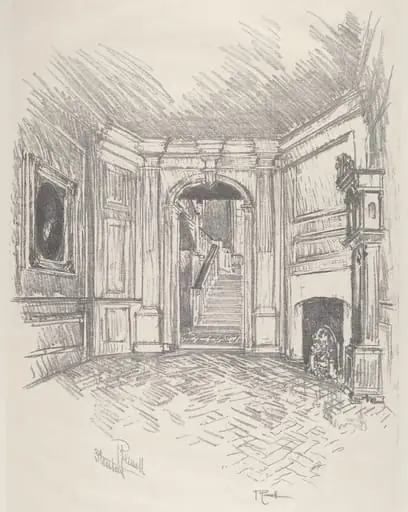 The Hall, Stenton
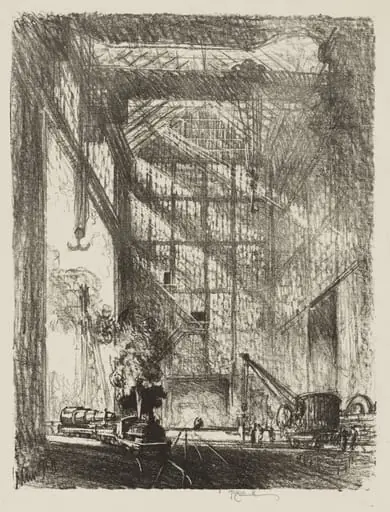 English War Work: Bringing in the Gun
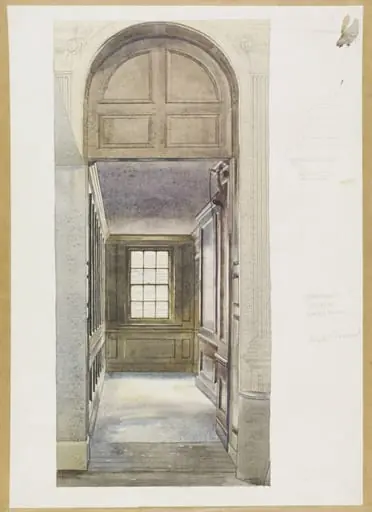 A panelled passage-way, Geffrye's Museum, Shoreditch
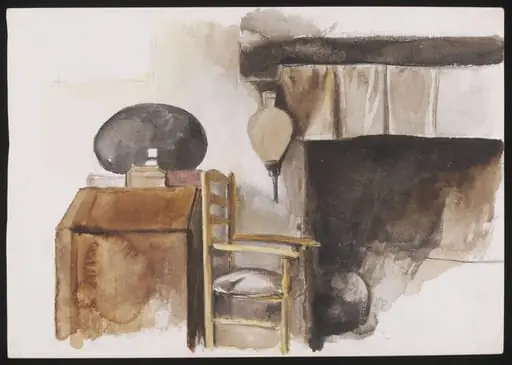 Study of a fireplace, a writing desk and a rush-seated ladderback chair