Artwork
London Types: Sandwich Man
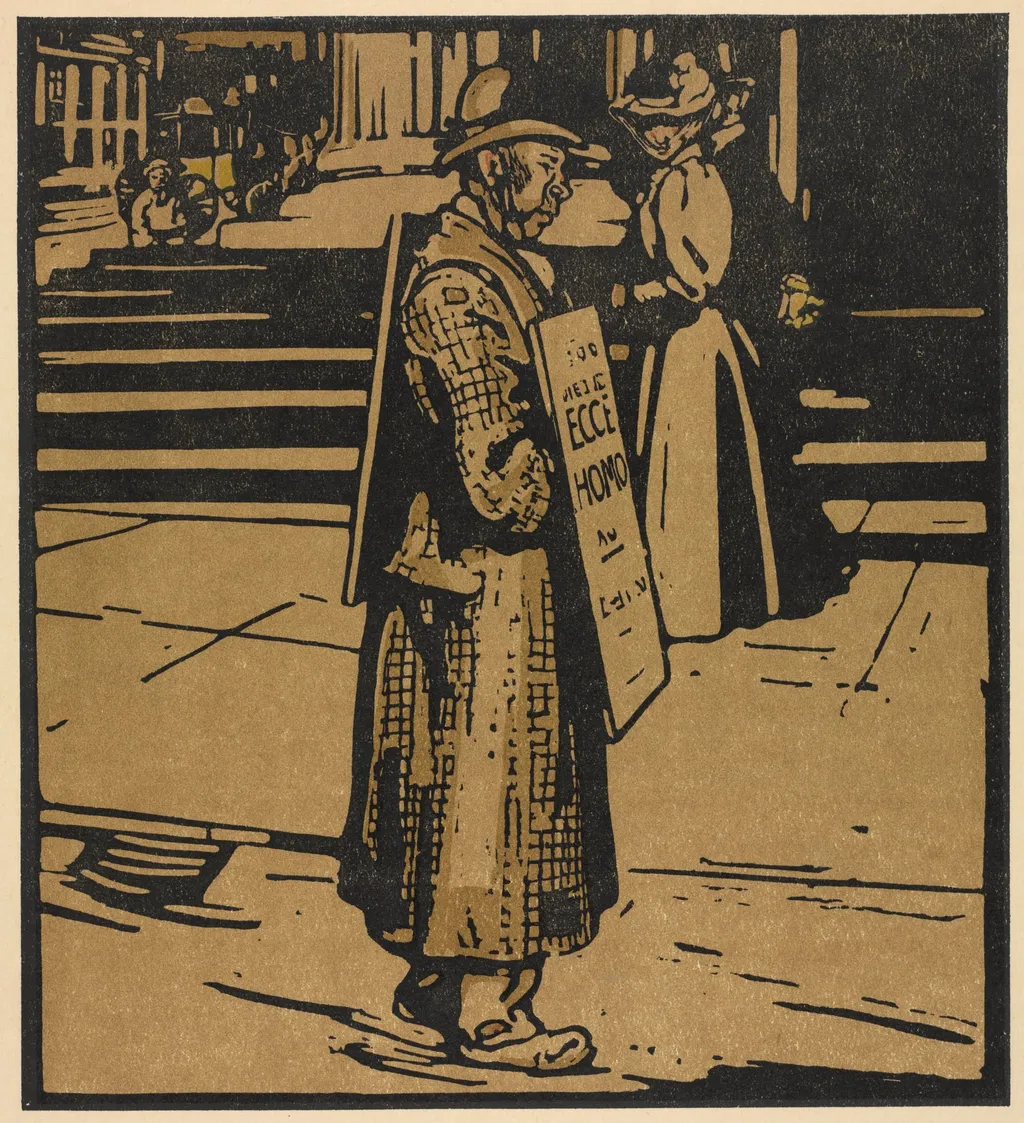
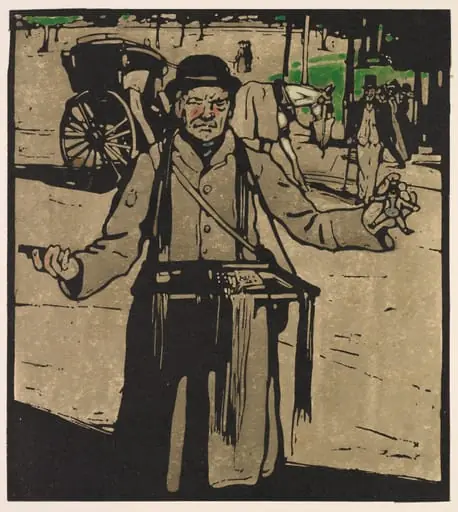
London Types: Sandwich Man is a print by the Impressionist artist William Nicholson. It dates from 1898 and is held in the collection of the Cleveland Museum of Art.
About this work
The sign on his board is about a big painting, which is an interesting detail because it shows what people were interested in back then.
You see a man holding a big sign on the street.
He's wearing a sandwich board, which is a board with signs on both sides.
The sign on his board is about a big painting, which is an interesting detail because it shows what people were interested in back then.
The man in the painting is just one of many people depicted in the series, which is notable because it shows everyday life in London.
The series also includes many women, which was a deliberate choice to represent both men and women equally.
This choice was made because the publisher, William Heinemann, supported equality.
You can learn more about this style by looking at the work of the artist: William Nicholson (British, 1872–1949).
Overview
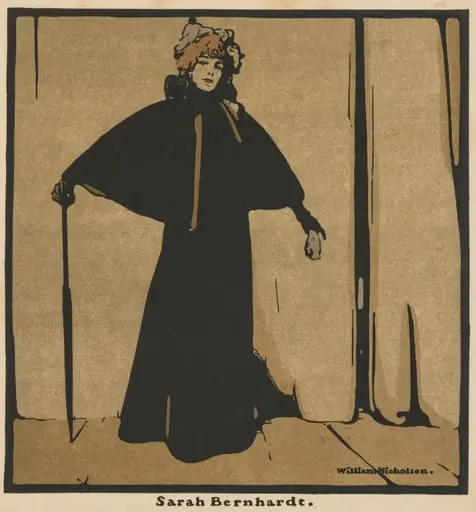
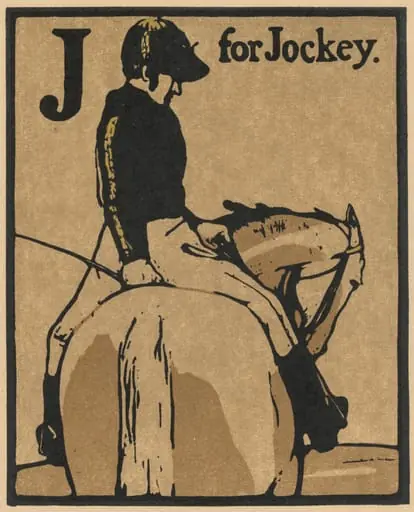
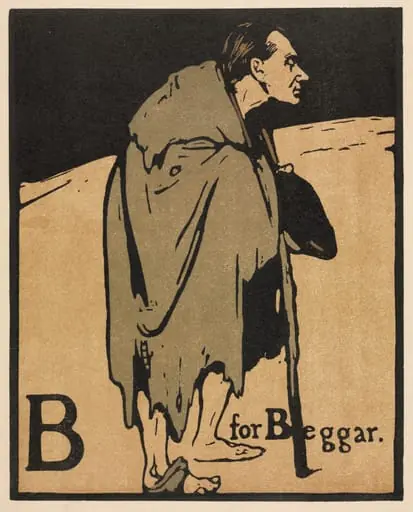
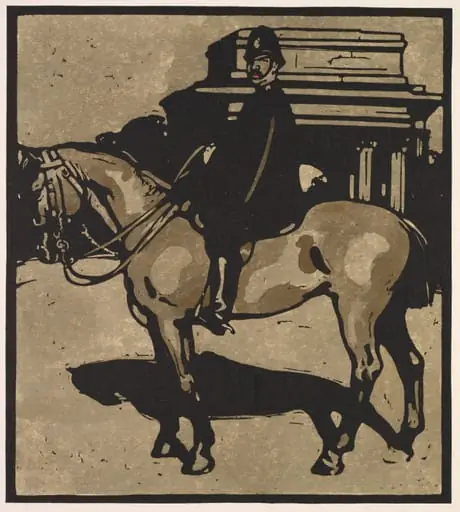
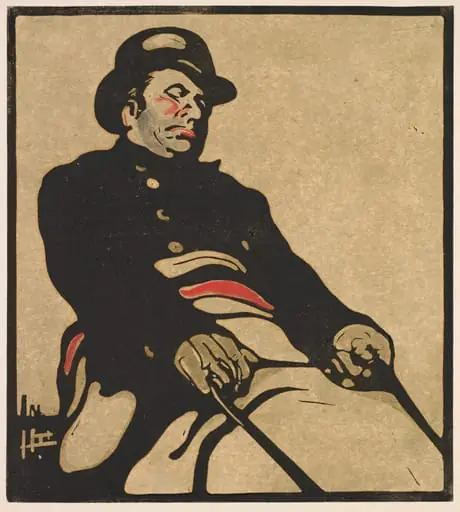
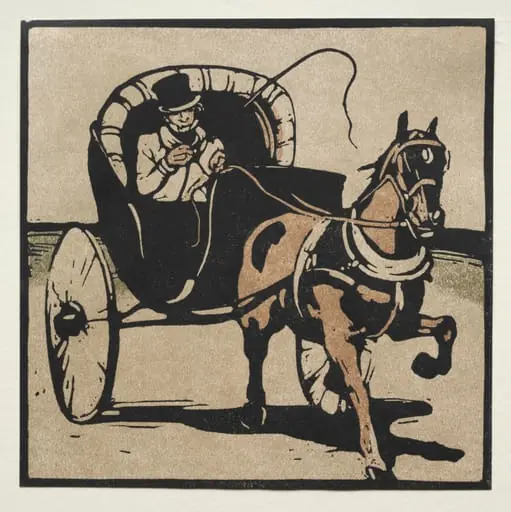
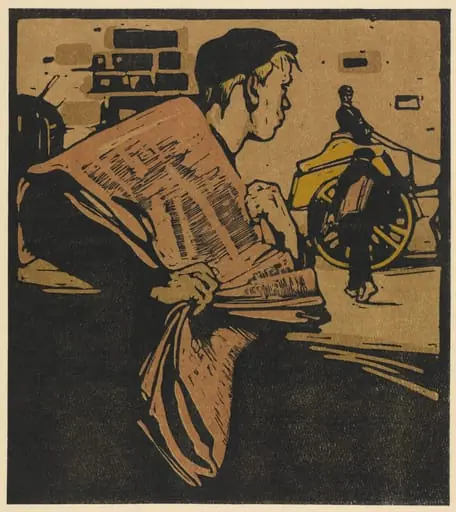
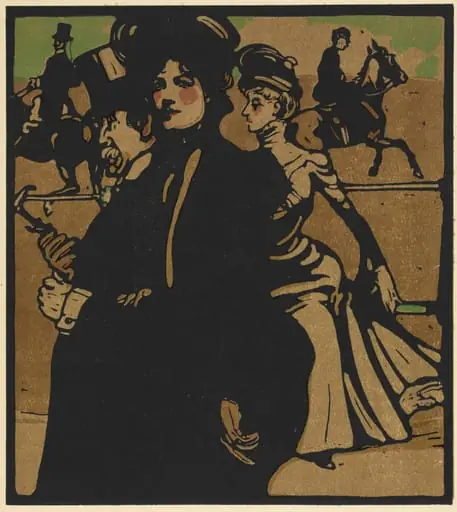
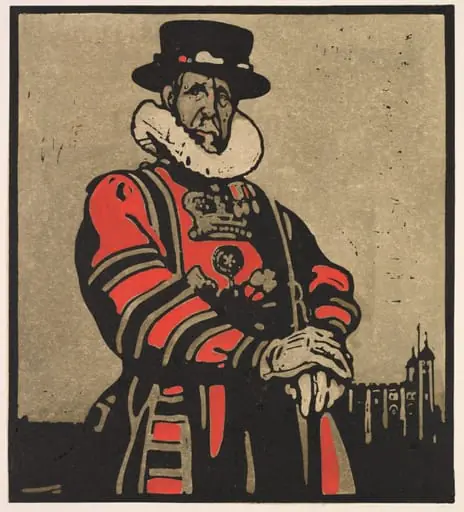
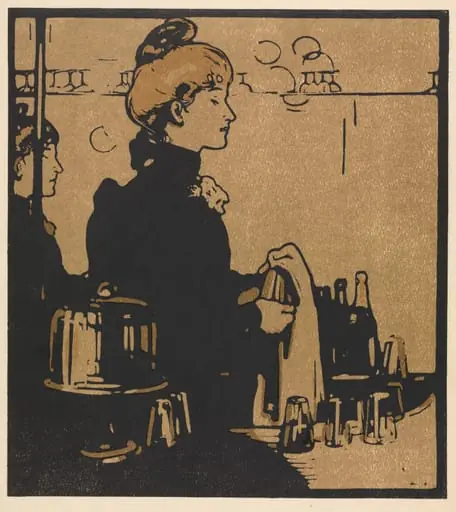
London Types is a series of prints by William Nicholson, created in the 1890s, capturing the everyday life of London’s streets. Published by William Heinemann, the series presents a candid portrait of urban society through individual figures, each representing a distinct social type. The prints reflect a deliberate effort to portray both men and women with equal attention, offering a balanced view of the city’s working population.
Subject & Meaning
The Sandwich Man depicts a street vendor carrying advertising signage, his posture and attire signaling the labor of the urban working class. The sign he bears promotes Mihály Munkácsy’s large-scale painting Ecce Homo, then on display nearby, linking the print to contemporary cultural interests. This detail grounds the image in its moment, revealing how public art and commerce intersected in late-Victorian London.
Technique & Style
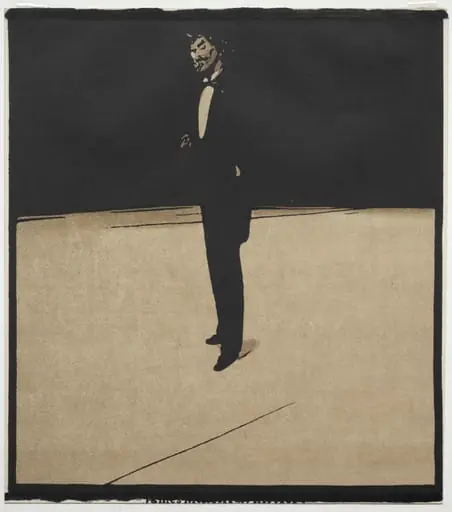
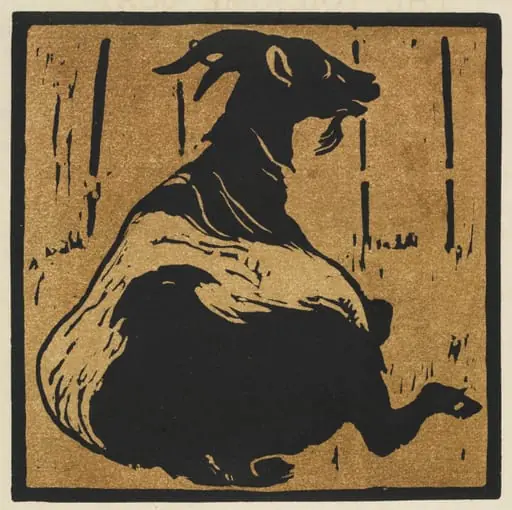
Nicholson employed bold, flat areas of color and simplified forms, drawing from Japanese woodblock prints and the emerging Arts and Crafts aesthetic. Lines are clean and deliberate, with minimal shading, emphasizing the silhouette and posture of each figure. The restrained palette and graphic quality lend the prints a modern, almost poster-like clarity, distinguishing them from more ornate contemporary illustrations.
History & Provenance
Commissioned by publisher William Heinemann, the series was produced between 1897 and 1898 as part of a broader cultural project to document London’s social fabric. Heinemann, an advocate for gender equality, insisted on balanced representation of sexes, a rare editorial directive at the time. The prints were originally issued as a portfolio and later circulated in exhibitions and private collections.
Context
The 1890s saw London’s streets as dynamic spaces of commerce, spectacle, and class interaction. Street vendors, advertisers, and laborers were common sights, and Nicholson’s series captures this without romanticization. The inclusion of a Hungarian artist’s painting on the sign reflects London’s role as a cosmopolitan center, where international art entered public consciousness through commercial channels.
Legacy
London Types remains a significant record of late-Victorian urban life, notable for its quiet dignity and social observation. Nicholson’s approach influenced later documentary illustration and social realism in British art. The series is now held in major collections, valued not for its novelty but for its unembellished depiction of ordinary people in their environment.
Artist & collection
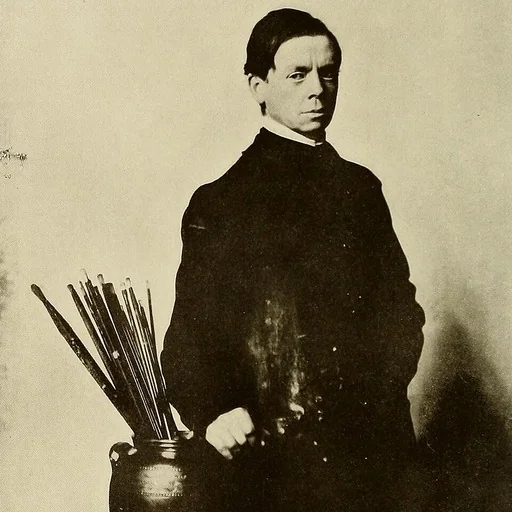
Artist
Sir William Newzam Prior Nicholson (5 February 1872 – 16 May 1949) was a British painter of still-life, landscape and portraits.