Artwork
After a Shower, Nahant, Massachusetts
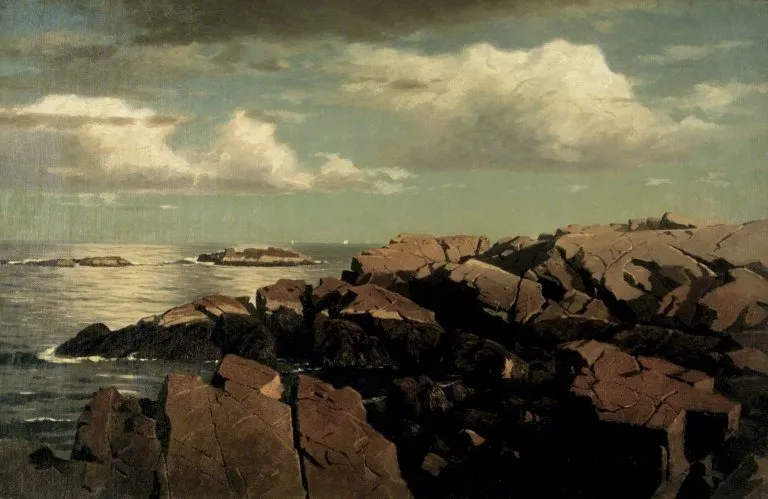
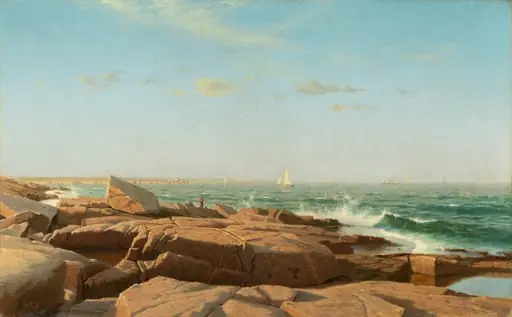
After a Shower, Nahant, Massachusetts is an oil painting by the American Impressionist artist William Stanley Haseltine. It dates from 1864 and is held in the collection of the Brooklyn Museum.
About this work
Overview
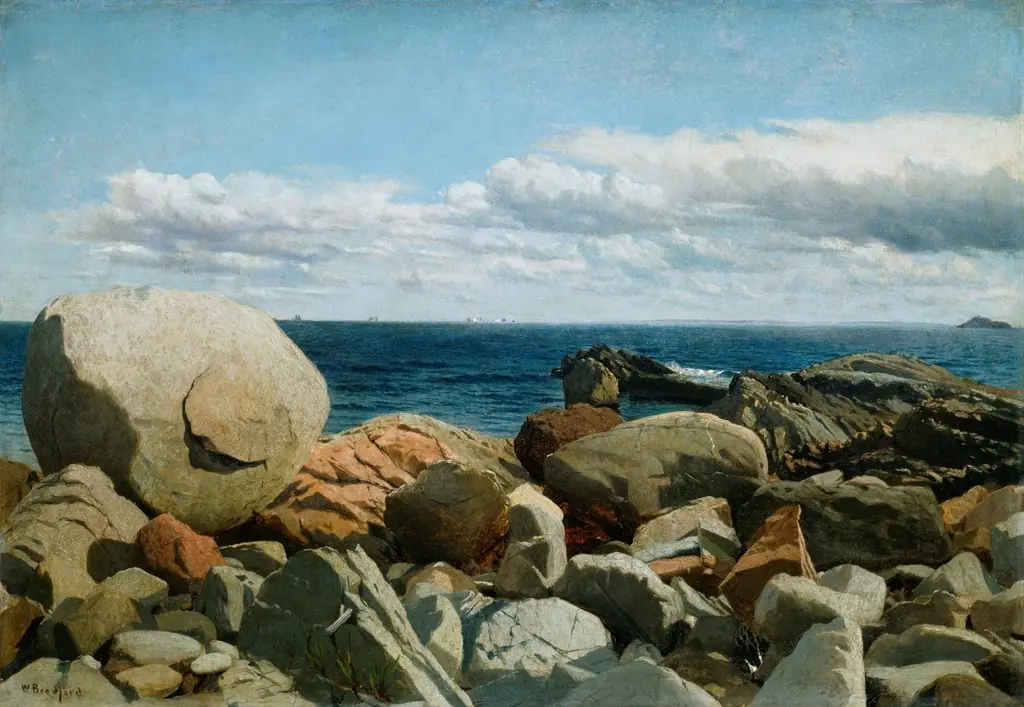
The composition centers on a foreground of jagged gray boulders, rendered with precise attention to geological texture and the effects of recent rainfall.
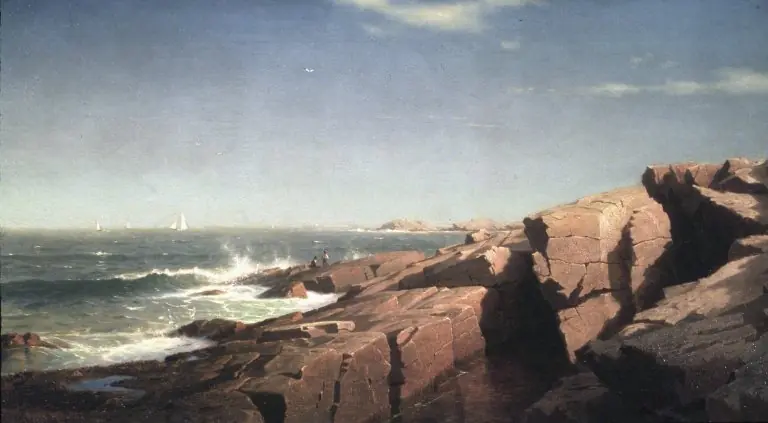
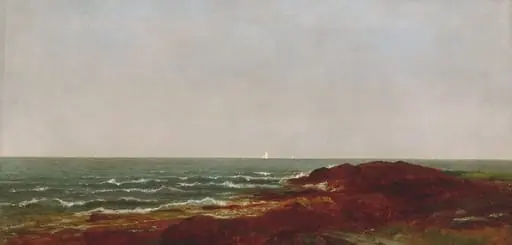
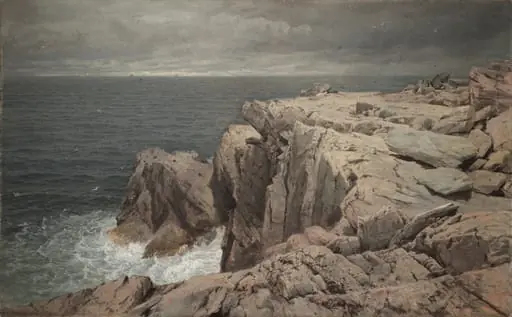
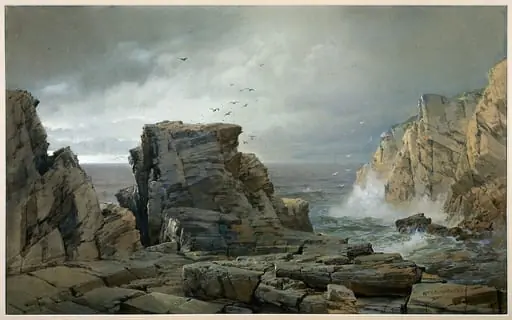
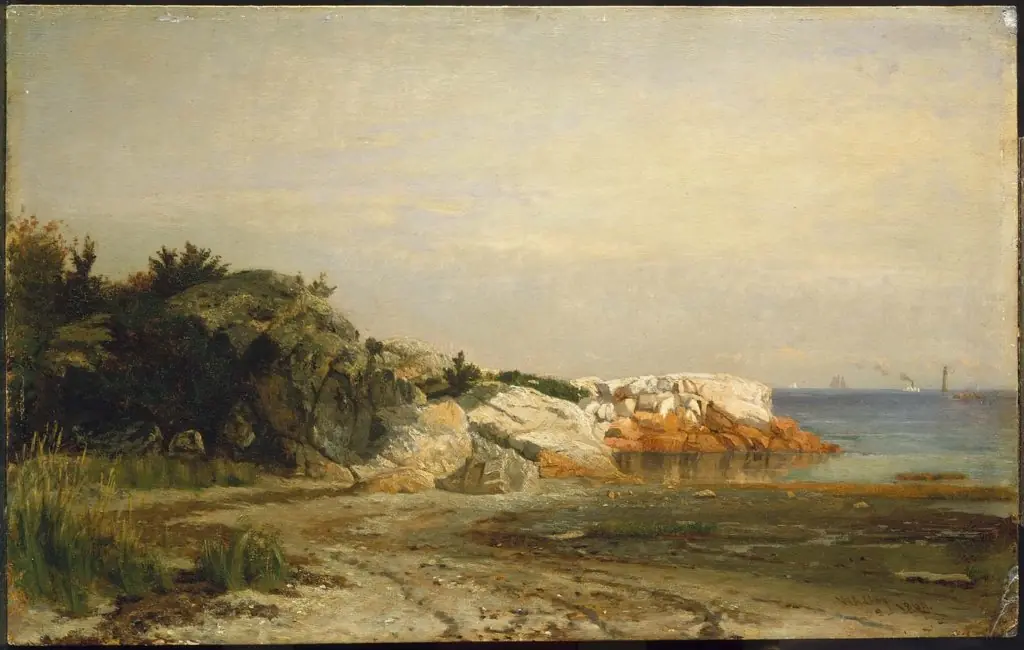
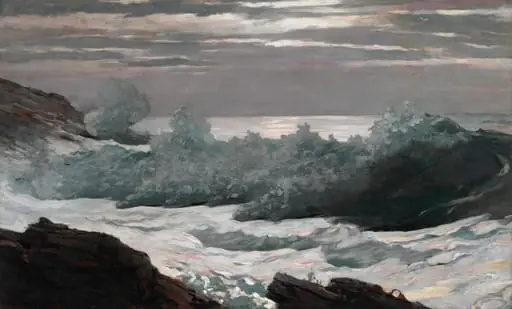
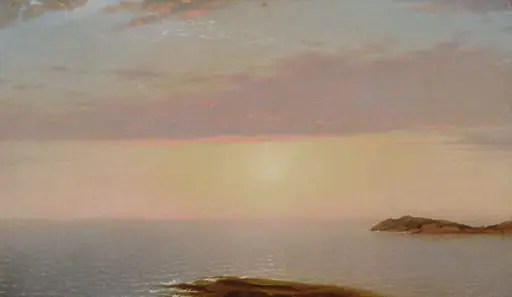
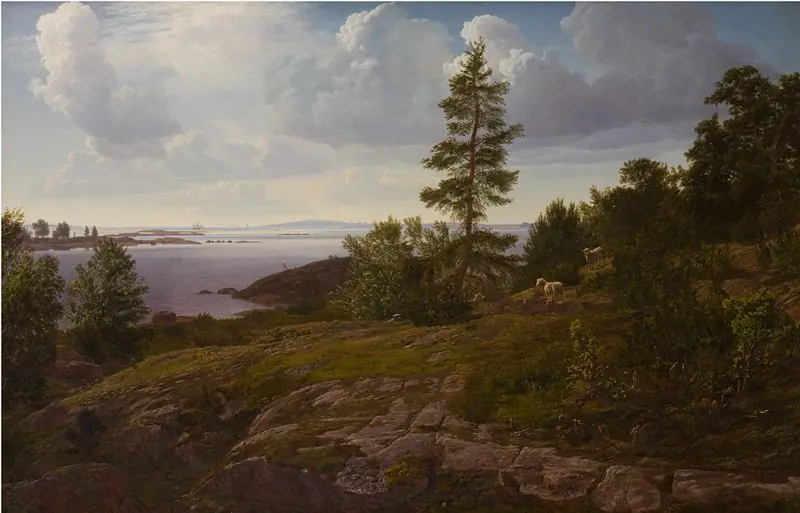
After a Shower, Nahant, Massachusetts, painted by William Stanley Haseltine in 1864, is a marine landscape depicting the rocky coastline of Nahant, Massachusetts. The composition centers on a foreground of jagged gray boulders, rendered with precise attention to geological texture and the effects of recent rainfall. Calm waters lap against these stones, creating a contrast between the stillness of the sea and the ruggedness of the shore. In the middle distance, small islands emerge from the water, leading the eye toward a sky dominated by voluminous white cumulus clouds. The lighting is a defining feature, capturing the specific atmospheric conditions following a storm, with sunlight breaking through to illuminate patches of rock and water while leaving others in shadow. This work exemplifies Haseltine's mature style within the Hudson River School tradition, where he moved beyond the grandiose vistas of his predecessors to focus on detailed, scientific observation of coastal geology and light. Created during the height of his career, the painting reflects his dedication to plein air study and his ability to convey the transient effects of weather on the New England landscape.
Subject & Meaning
The canvas captures a rugged shoreline where gray boulders jut into the sea, their surfaces illuminated by shifting light. Beyond the rocks, a calm yet rippling ocean stretches toward a cluster of small islands, all set beneath a sky populated with voluminous white clouds. The composition conveys a moment of quiet after a rainstorm, emphasizing the transient interplay of water, stone, and atmosphere.
Technique & Style
Haseltine employs a nuanced handling of oil, applying paint in thicker layers on the clouds to achieve a soft, tactile quality. The rocky foreground is rendered with delicate brushwork that captures subtle variations of light and shadow, creating a luminous effect that makes the stone appear to glow. The overall palette is restrained, focusing on muted blues, grays, and whites.
History & Provenance
Created in 1864, the painting reflects Haseltine’s mature period, during which he traveled extensively along the New England coast. It entered the Brooklyn Museum’s holdings through acquisition in the early twentieth century, though specific details of its prior ownership remain limited in the museum’s records.
Context
The work belongs to a broader tradition of American marine painting that documented coastal landscapes for both scientific observation and aesthetic appreciation. Haseltine, a member of the Hudson River School, applied the school’s emphasis on natural light and atmospheric effects to a seascape, bridging landscape and marine genres.
Artist & collection