Artwork
A Rocky Coast
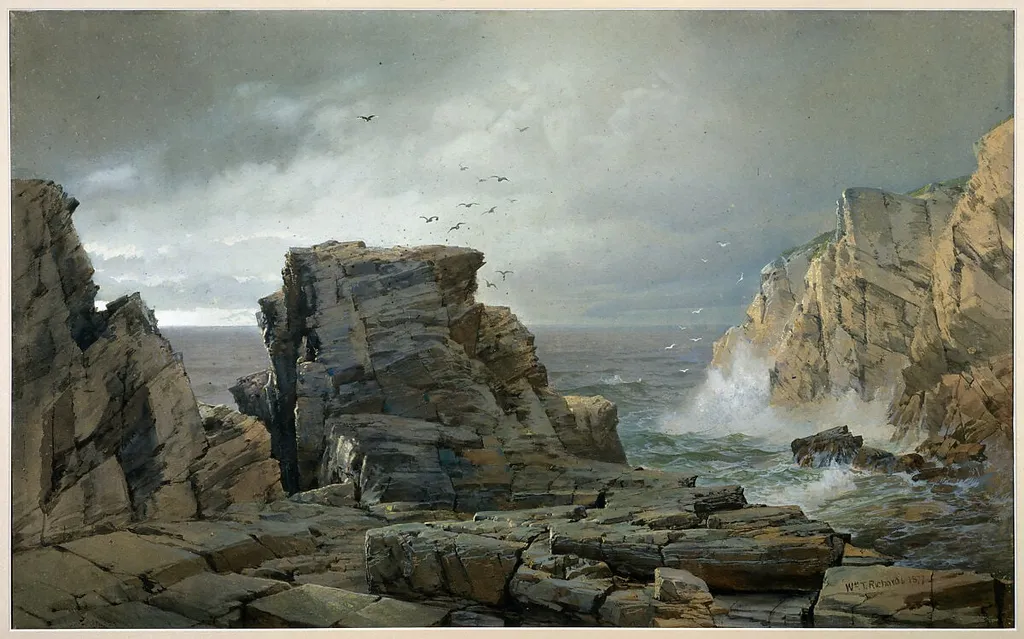
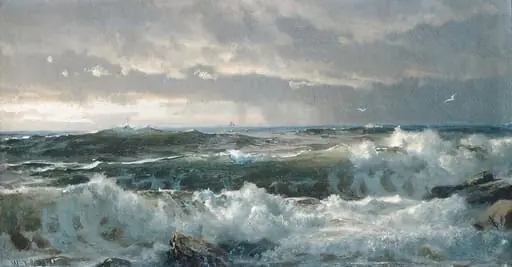
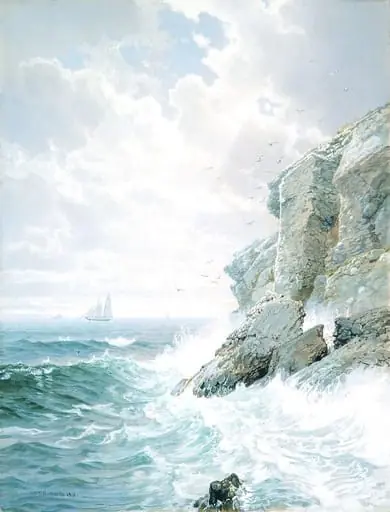
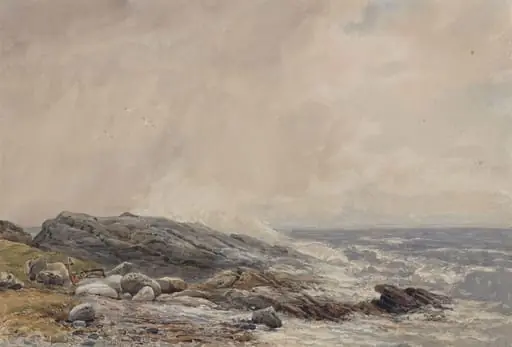
A Rocky Coast is a watercolor work on paper by the Hudson River School artist William Trost Richards. It dates from 1877 and is held in the collection of the Metropolitan Museum of Art.
About this work
Overview
The surface texture emphasizes the physical properties of the scene: the foam appears thick and wet, contrasting with the sharp, solid forms of the rocks.
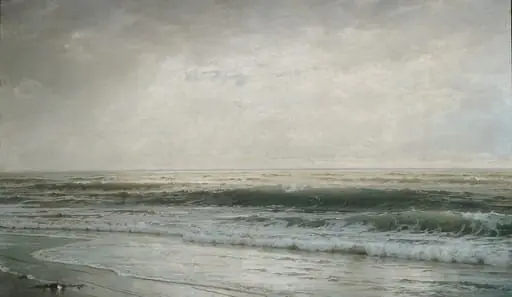
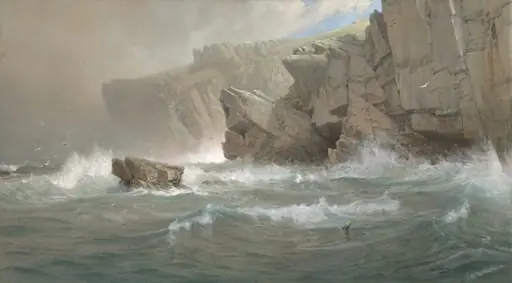
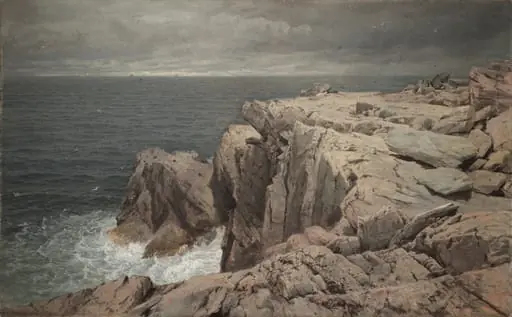
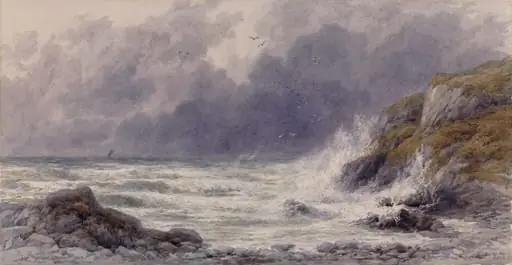
Painted in 1877, A Rocky Coast is a watercolor and gouache work by American artist William Trost Richards, a key figure in the Hudson River School and American landscape tradition. The composition depicts a rugged shoreline where jagged, dark cliffs descend into turbulent, churning waves. Richards employs a technique characteristic of his mature style, working rapidly with a wet brush to layer thin, translucent glazes that create atmospheric depth. The surface texture emphasizes the physical properties of the scene: the foam appears thick and wet, contrasting with the sharp, solid forms of the rocks. Light interacts with the water in distinct, streaky bands, evoking the reflection of sunlight on wet sand. Executed on fibrous brown wove paper, the medium allows the warm tone of the support to influence the overall mood, unifying the cool blues of the sea with the earthy tones of the coast. This work exemplifies Richards' shift toward a more precise, scientific observation of nature, capturing the dynamic energy of the Atlantic coast with both geological accuracy and poetic sensitivity.
Subject & Meaning
The composition captures a rugged shoreline where dark, sharply defined rocks plunge into foaming waves. The interplay of light and shadow on the water’s surface suggests the relentless motion of the tide against the steadfast cliffs.
Technique & Style
Richards applied a rapid, wet brush technique, building the scene through successive translucent glazes. Thin washes allow the underlying paper tone to emerge, while layered pigments create depth, especially where the sky merges with the sea near the horizon.
History & Provenance
Created in 1877, the piece entered the museum’s American Wing collection, reflecting the 19th‑century American interest in marine subjects and the artist’s reputation for meticulous observation of coastal environments.
Artist & collection