Artwork
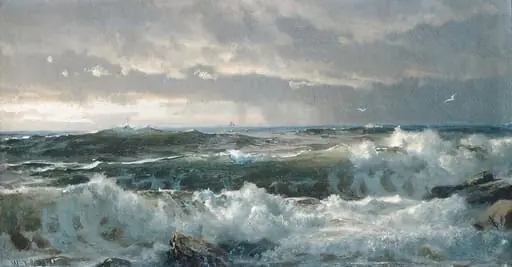
Cormorant Cliff, Jamestown, Rhode Island
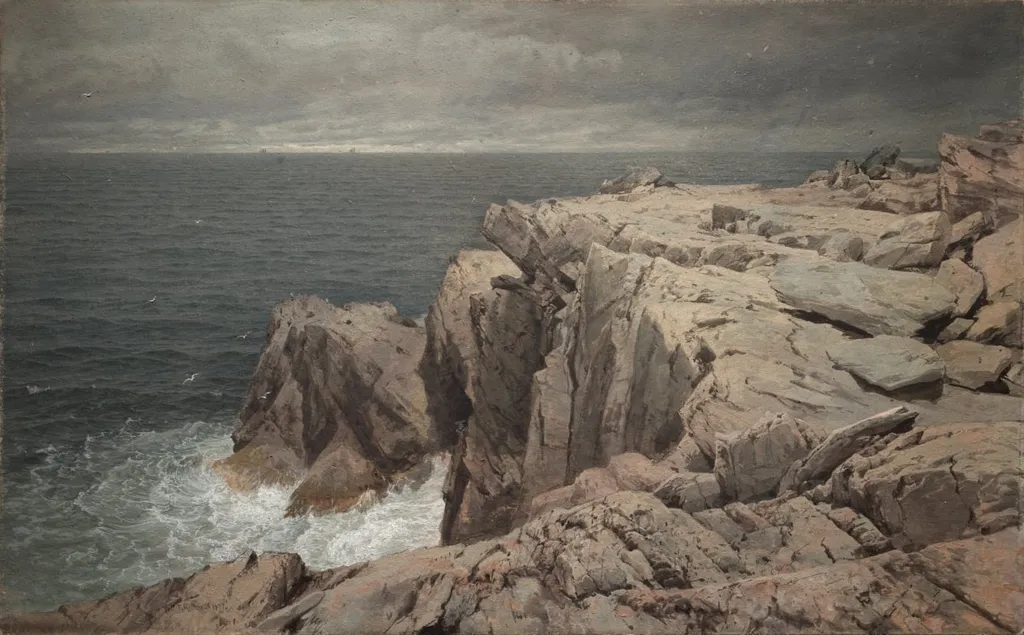
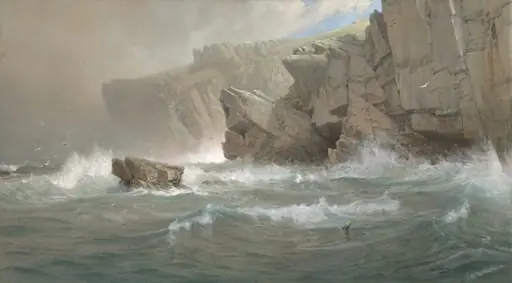
Cormorant Cliff, Jamestown, Rhode Island is a drawing by the Impressionist artist William Trost Richards. It dates from 1877 and is held in the collection of the Cleveland Museum of Art.
About this work
Overview
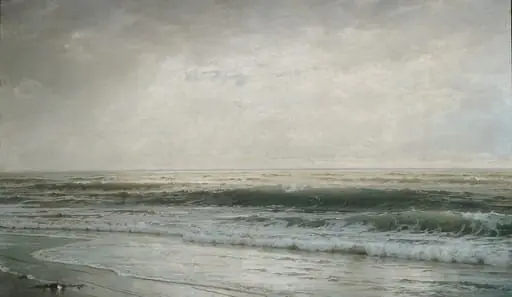
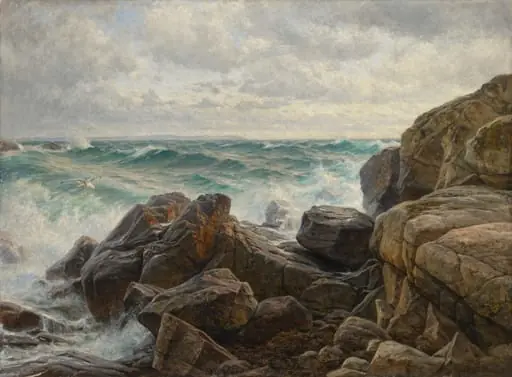
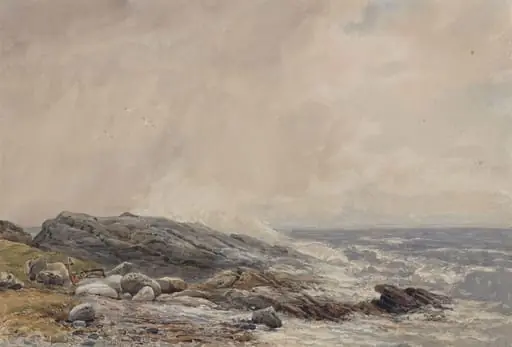
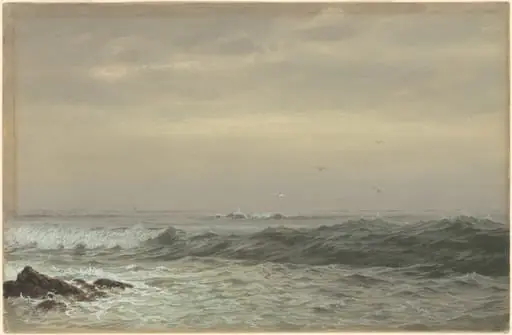
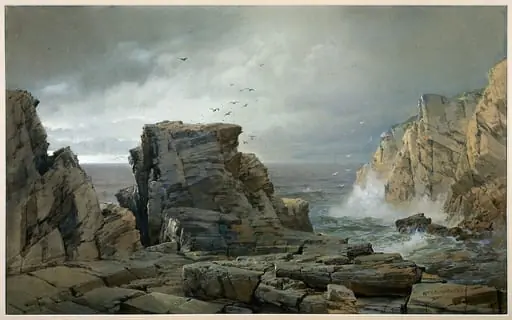
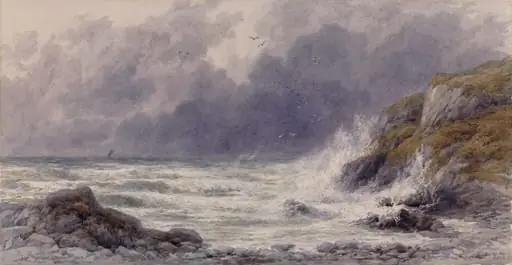
Cormorant Cliff, Jamestown, Rhode Island is a drawing that captures a rugged shoreline where waves break against dark, weathered cliffs. The composition includes frothy white surf, deep green and brown rock faces, and a solitary bird soaring above the water. Executed from direct observation of the Rhode Island coast, the work emphasizes precise rendering of natural forms and atmospheric effects.
Subject & Meaning
The drawing presents a dramatic coastal scene, highlighting the interaction between sea and stone. The crashing waves and the lone bird suggest the perpetual motion of nature, while the detailed depiction of rock strata reflects an interest in the geological character of the landscape. The work invites viewers to contemplate the power and beauty of the shoreline.
Technique & Style
Richards employed a meticulous, tonal approach, using fine lines to delineate the textures of rock and water. His handling, while attentive to light and reflection akin to Impressionist concerns, remains tighter and more controlled, favoring a limited palette that underscores the natural hues of the cliffs and surf. The drawing demonstrates his commitment to faithful observation.
History & Provenance
Created during Richards’s early career, the piece reflects his study of John Ruskin’s writings and the Pre‑Raphaelites, whose emphasis on natural fidelity he admired. The work entered the collection of the Cleveland Museum of Art, where it remains on view, representing an important example of his formative seascape studies.
Context
In the mid‑19th century, American artists increasingly sought to depict the local landscape with scientific accuracy, inspired by European movements and Ruskin’s advocacy for truth to nature. Richards’s focus on geological detail and atmospheric light places the drawing within this broader trend, bridging the detailed realism of the Pre‑Raphaelite tradition and the emerging interest in light effects that would later characterize Impressionism.
Artist & collection