Artwork
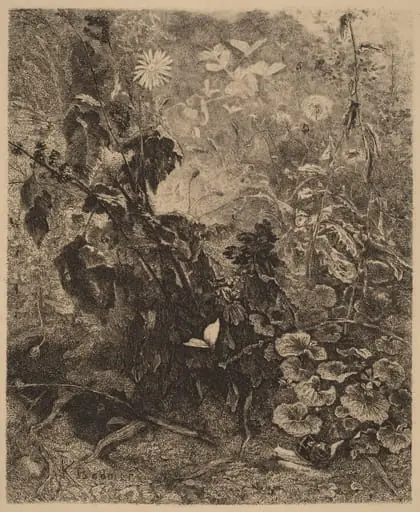
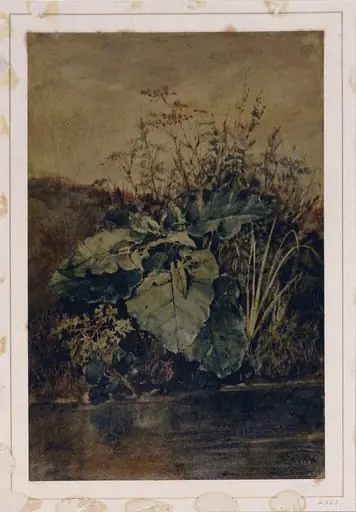
Study of Ground Foliage (from Cropsey Album)
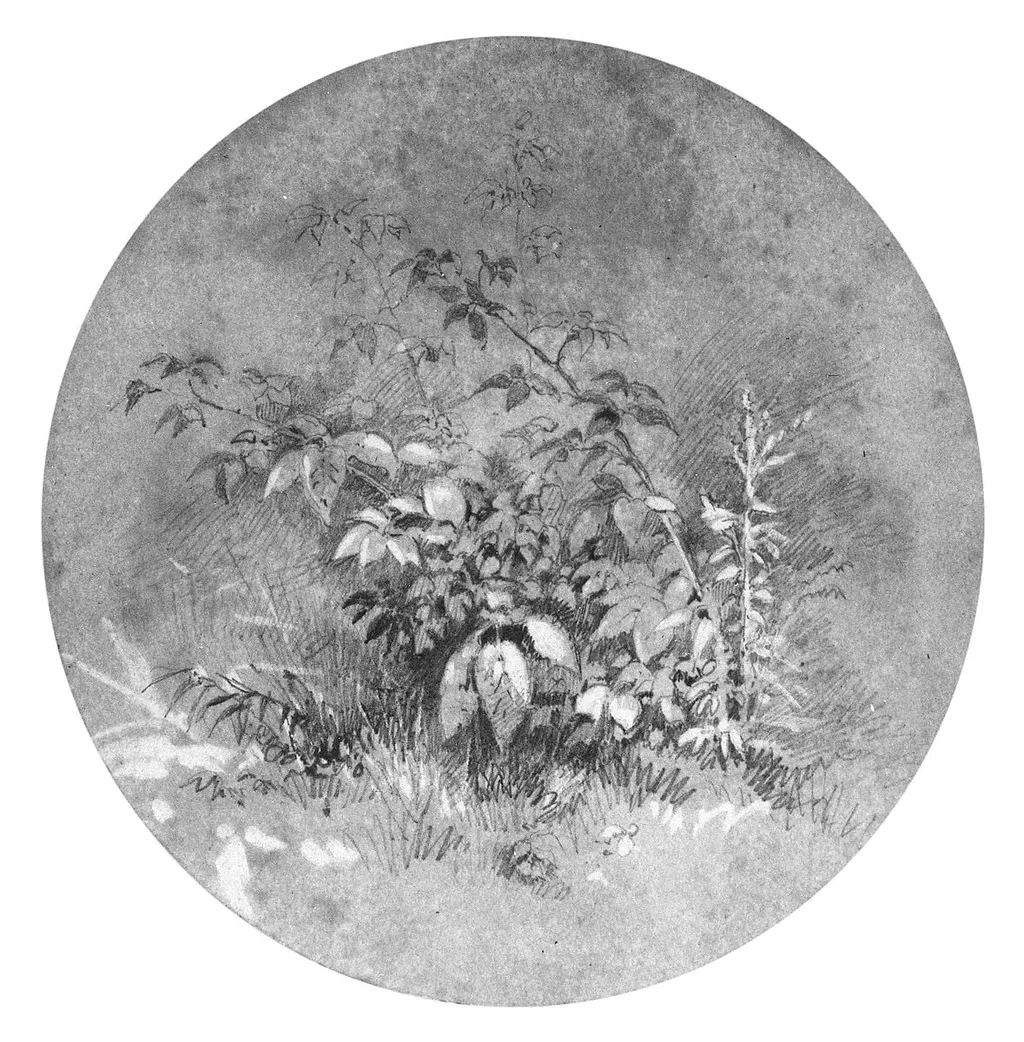
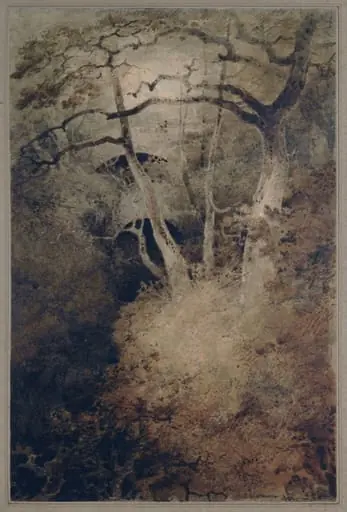
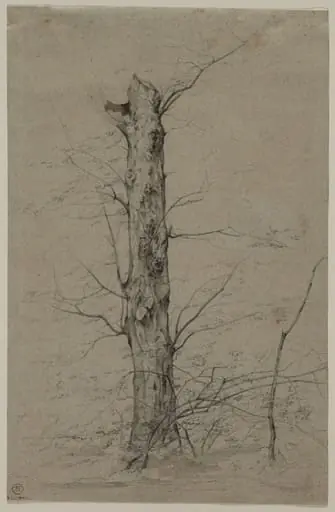
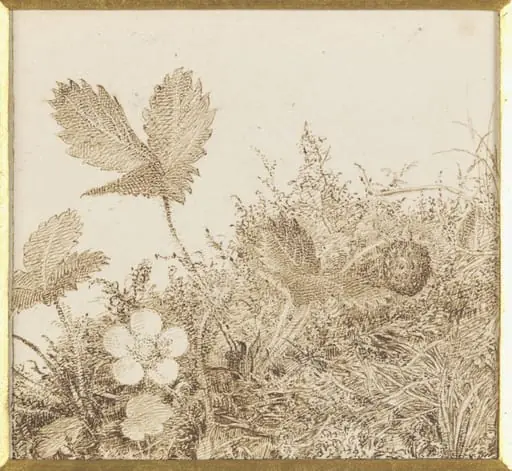
Study of Ground Foliage (from Cropsey Album) is a gouache drawing by the Romanticist artist William Trost Richards. It dates from 1869 and is held in the collection of the Metropolitan Museum of Art.
About this work
Overview
Study of Ground Foliage, executed in 1869 by American artist William Trost Richards, is a small-scale work on buff‑colored wove paper. Rendered in graphite and white gouache, the piece measures a modest size and belongs to the American Wing collection. It presents an intimate view of vegetation, focusing on a single leaf and surrounding plant material rendered in close detail.
Subject & Meaning
The drawing isolates a fragment of forest floor, emphasizing the texture of a leaf, its stem, and the surrounding earth. By concentrating on this minute botanical element, Richards departs from the sweeping vistas typical of his era, inviting viewers to consider the inherent complexity and aesthetic value of ordinary plant life.
Technique & Style
Richards employed graphite for fine line work and applied opaque white gouache to highlight the leaf’s surface, creating a stark contrast against the light brown paper. The use of gouache, a dense watercolor medium, allows for a luminous, almost sculptural effect, while the graphite outlines preserve a precise, almost scientific rendering of the foliage.
History & Provenance
Created as part of a personal album known as the Cropsey Album, the study reflects Richards’ exploratory sketches from the late nineteenth century. The work entered the museum’s American Wing collection through acquisition in the early twentieth century, where it remains a representative example of his detailed observational practice.
Artist & collection