Artwork
H Beard Print Collection
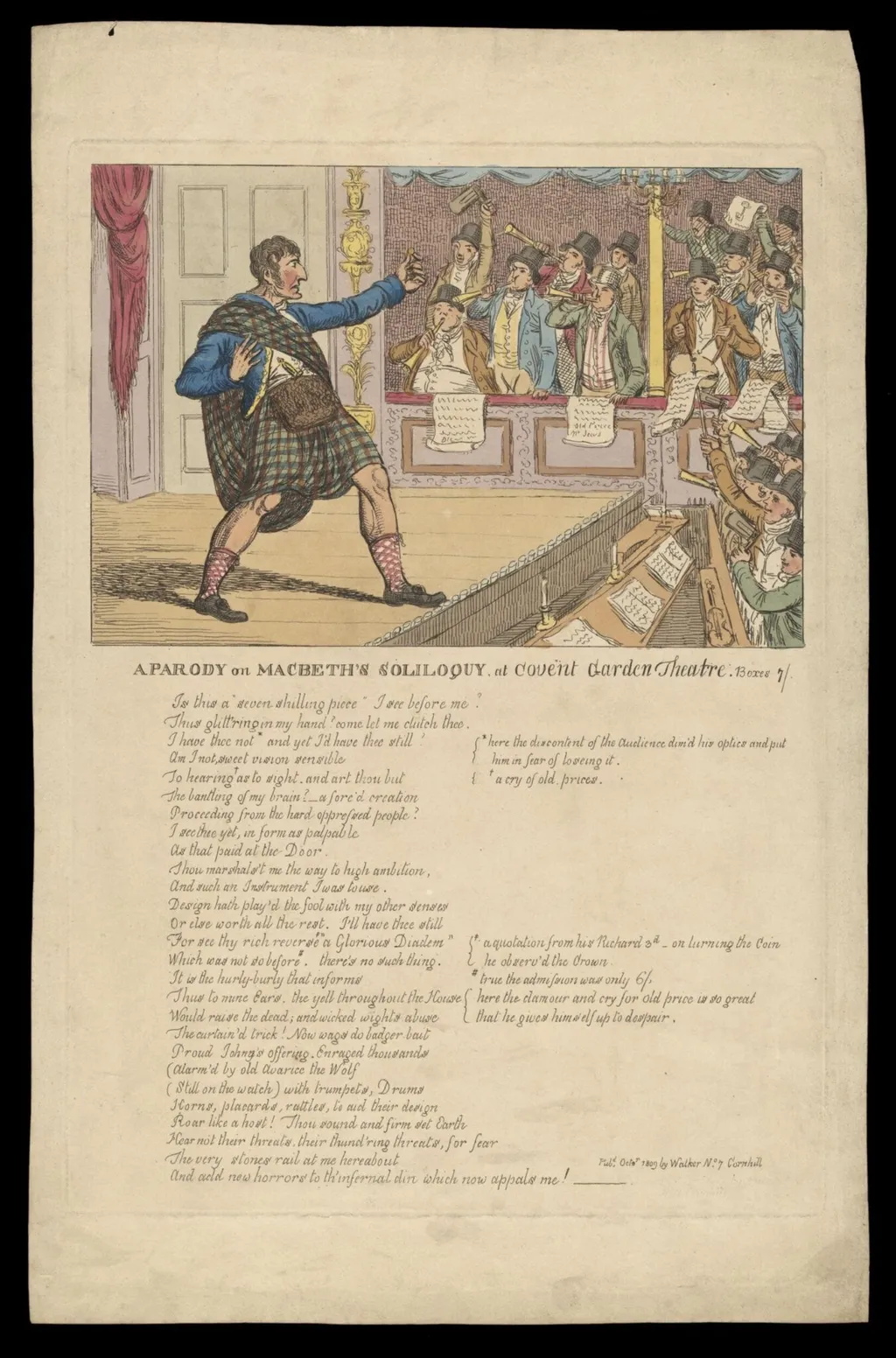
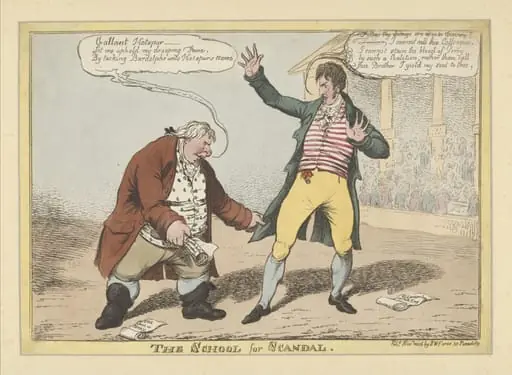
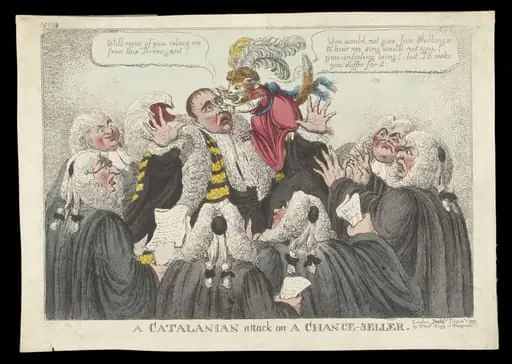
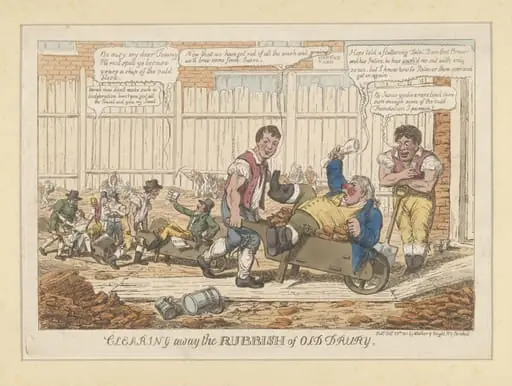
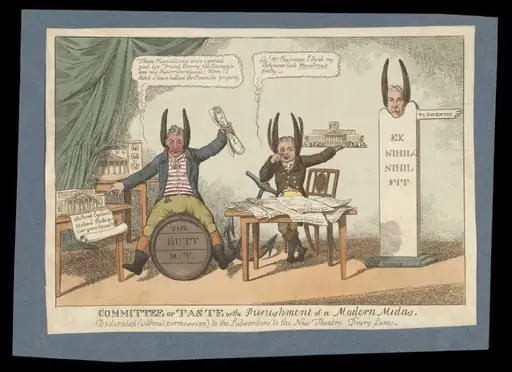
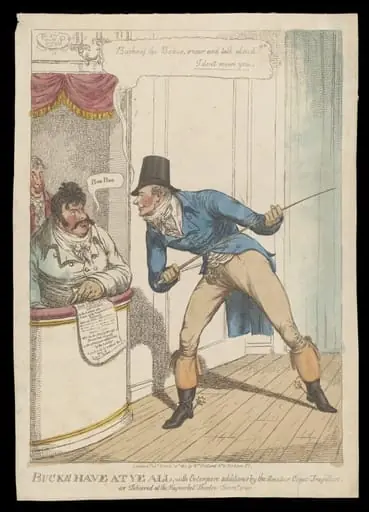
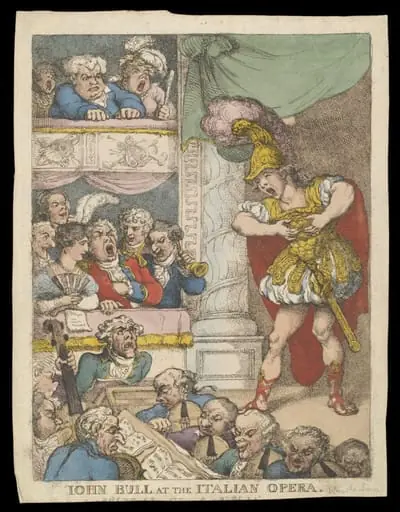
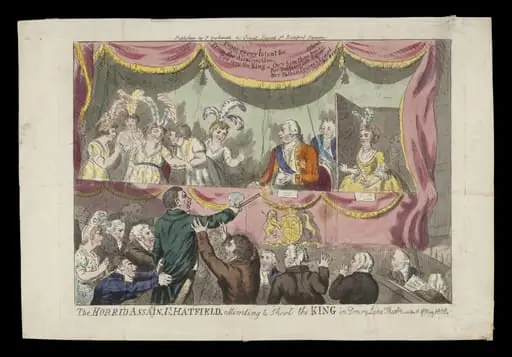
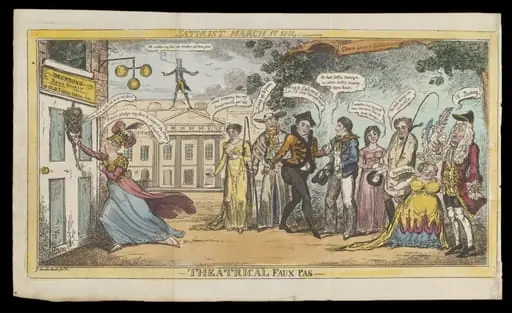
H Beard Print Collection is a print by the Romanticist artist Charles Williams. It dates from 1809 and is held in the collection of the Victoria and Albert Museum. This 1809 print, published in London by Walker, depicts a theatrical scene from Shakespeare’s Macbeth performed at Covent Garden Theatre.
About this work
The sheet music in the corner hints it might have been part of a popular tune of the day.
This print from 1809 shows a scene from Macbeth at Covent Garden Theatre. It mixes an actor’s portrait with a comic twist on Shakespeare’s words. The image pairs with a short verse, a parody meant to make people laugh.
It was done by Charles Williams, known as Argus, a British printmaker. The sheet music in the corner hints it might have been part of a popular tune of the day.
Look up the Romanticism movement next.
Overview
This 1809 print, published in London by Walker, depicts a theatrical scene from Shakespeare’s Macbeth performed at Covent Garden Theatre. It features actor John Philip Kemble in role, accompanied by a satirical verse that reworks the original soliloquy into comedic form. Created by Charles Williams, known by his pseudonym Argus, the work blends portraiture with humor, reflecting the popular taste for theatrical parody in early 19th-century Britain.
Subject & Meaning
The print presents a humorous reinterpretation of Macbeth’s famous soliloquy, transforming its solemn meditation on mortality into a lighthearted gag. By pairing Kemble’s recognizable stage image with witty, irreverent text, the print invites audiences to laugh at the grandeur of high drama. The inclusion of sheet music in the corner suggests a connection to a contemporary tune, reinforcing its role as a piece of popular entertainment rather than literary homage.
Technique & Style
Executed as a printed image with hand-lettered verse, the work employs line engraving typical of early 19th-century British printmaking. The composition balances a detailed portrait of Kemble with decorative elements, including musical notation and ornamental borders. The style merges theatrical realism with caricature, using subtle exaggeration to heighten the comedic effect without distorting the actor’s likeness.
History & Provenance
Produced in 1809 by Walker, a London publisher known for theatrical prints, this work was part of a broader market for ephemeral images tied to popular performances. Charles Williams, operating under the name Argus, was a prolific contributor to this genre. The print’s survival suggests it was widely circulated, likely sold as a keepsake to theatergoers seeking a memento of a memorable evening’s entertainment.
Context
In the early Romantic era, British audiences embraced theatrical satire as a form of cultural commentary. While Shakespeare’s tragedies were revered, they were also ripe for parody in public venues and printed media. This print reflects a tension between high art and popular amusement, where elite literature was reimagined for mass consumption through humor, music, and visual wit.
Legacy
As a product of its time, the print exemplifies how Shakespearean drama was absorbed into everyday visual culture. Though not intended as fine art, it preserves a snapshot of performance practice and public taste. Its existence underscores the fluid boundary between high and low culture in Regency England, offering insight into how classical texts were adapted for contemporary amusement.
Artist & collection
Artist
English printmaker active around 1806–1812, Charles Williams produced small satirical prints issued monthly by Hannah Beard in London.